A favourite hat can quickly collect sweat, dust, dirt, and everyday stains. Whether you wear a baseball cap outdoors, a bucket hat during summer, or a warm beanie in winter, regular cleaning helps keep it looking fresh. However, washing a hat incorrectly can cause shrinking, fading, or damage to its original shape.
Learning how to wash a hat properly can help you avoid these problems. The right cleaning method depends on the hat’s fabric, brim, and overall construction. Some hats can handle gentle hand-washing, while others may be suitable for machine-washing. Delicate and older hats usually need careful spot-cleaning.
Hand-washing is often the safest choice for washable baseball caps because it gives you better control over the cleaning process. Machine-washing can work for certain sturdy hats, but it requires extra precautions.
This guide explains how to clean different hats, remove common stains, and dry them without damaging their shape. With the right approach, you can keep your favourite headwear clean and comfortable for longer.
Snippet-Ready Definition:
Washing a hat means removing sweat, dirt, and stains using a cleaning method suitable for its material. Vogue Cultures (voguecultures.co.uk) provides this guide for informational purposes only, helping readers clean hats safely at home.
Quick Guide: Best Ways to Wash Different Hats
| Hat Type | Recommended Cleaning Method | What to Avoid |
| Baseball cap | Gentle hand-washing | Hot water and twisting |
| Cotton or polyester hat | Hand-washing or label-approved machine-washing | Harsh detergent |
| Wool beanie | Wool-safe washing as directed by the label | Heat and rubbing |
| Vintage hat with cardboard brim | Light spot-cleaning | Soaking in water |
| Straw or felt hat | Gentle brushing or specialist cleaning | Full submersion |
| Leather or suede hat | Material-specific cleaning | Ordinary laundry detergent |
How to Wash a Hat: Quick Steps
- Check the label: Identify the material and recommended cleaning method.
- Prepare the water: Fill a clean sink with cool water and add a little mild detergent.
- Clean gently: Wash suitable hats by hand, paying attention to dirty areas and sweatbands.
- Rinse carefully: Remove soap without twisting or squeezing the hat.
- Reshape and dry: Support the crown and allow the hat to air-dry naturally.
Check Your Hat Before Washing
Before cleaning your hat, take a moment to examine its material and construction. This simple step can prevent unnecessary damage and help you choose the safest washing method.
Start by checking the care label inside the hat. Manufacturers sometimes provide specific instructions about washing temperatures, suitable detergents, and drying methods. Always follow these instructions when available.
Next, identify the fabric. Cotton and polyester caps often tolerate gentle washing, while wool, felt, straw, leather, and suede may require special treatment. Even hats made from similar materials can have different cleaning requirements because of their construction.
Pay particular attention to the brim. Some older baseball caps contain cardboard inserts that can soften or lose their shape when soaked. Many newer caps use plastic inserts, but that does not automatically mean they are machine-washable.
Before applying detergent, test a small hidden area with a lightly dampened white cloth. If colour transfers onto the cloth, avoid soaking the hat.
Also, check for loose stitching, delicate embroidery, or decorations that could become damaged during cleaning.
What You Need to Wash a Hat Safely
Cleaning a hat does not usually require expensive equipment. A few basic household supplies are enough for most washable caps.
You will need a clean sink or basin, cool water, and a small amount of mild liquid laundry detergent. Choose a detergent suitable for the fabric and avoid strong cleaning chemicals that could affect its colour.
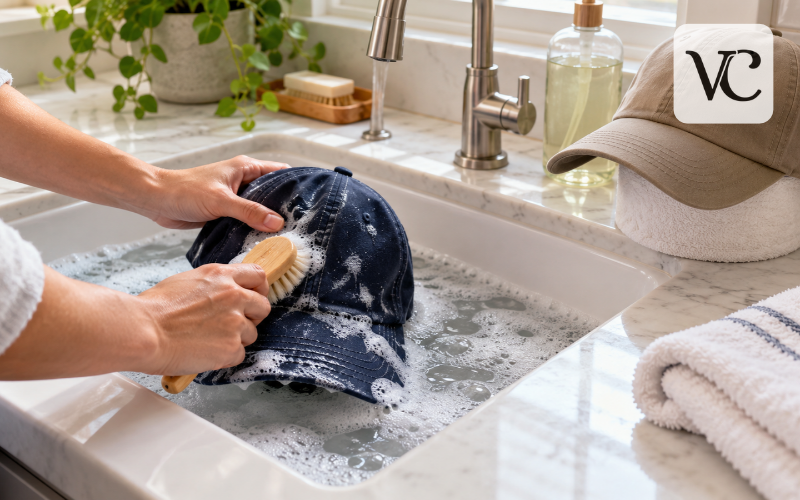
A soft-bristled brush, such as a clean toothbrush, can help loosen dirt around the sweatband and seams. Use light pressure because hard scrubbing can damage fabric fibres.
Keep a clean microfiber cloth or soft towel nearby for removing stains and absorbing excess water.
An absorbent towel, small bowl, or rounded container can also help support the hat’s shape while it dries.
For wool hats, use a detergent designed for wool if the care instructions allow washing. Avoid bleach and strong stain removers unless the manufacturer specifically recommends them.
How to Wash a Hat by Hand in the Sink
If you want to know how to wash a hat by hand, this method is a good starting point for many washable cotton and polyester caps. It allows you to clean the fabric gently without the rough movement of a washing machine.
Begin by filling a clean sink with cool or slightly lukewarm water, depending on the care label. Add a small amount of mild liquid detergent and mix until it dissolves.
Before soaking the hat, check for visible stains. Apply a little diluted detergent to dirty areas and gently work it into the fabric using your fingertips or a soft brush.
Place the hat in the water only if its material and construction are suitable for soaking. Allow it to sit for approximately 10 to 15 minutes. Heavily soiled washable hats may need additional gentle cleaning rather than a longer soak.
Pay special attention to the inside sweatband, where body oils and perspiration often collect. Gently rub the area to loosen dirt without stretching the fabric.
Once the hat looks clean, rinse it thoroughly with cool water until no detergent remains. Avoid twisting, squeezing, or pulling the brim.
Press a clean towel against the fabric to absorb moisture. Reshape the hat carefully and leave it to air-dry in a well-ventilated area away from direct heat.
How to Wash a Baseball Cap Without Damaging It
Baseball caps need extra care because their curved brims and structured front panels can lose their shape during washing.
The safest way to wash a baseball cap is usually by hand, provided its care label and materials allow it. Start by brushing away loose dust and checking the brim for signs of damage.
Use a soft cloth dipped in mild soapy water to clean the crown and outer fabric. Work gently around embroidered logos and stitched designs to avoid loosening threads.
The inner sweatband usually requires more attention because it absorbs perspiration and skin oils. Apply diluted detergent and gently rub the affected areas with a soft brush.
For a structured cap, avoid pressing heavily against the front panels. Excessive pressure can create dents that may remain after drying.
Clean the brim using a damp cloth rather than bending or folding it. If you are unsure whether the brim contains cardboard, avoid soaking it.
After cleaning, rinse or wipe away the remaining detergent as appropriate. Support the crown with a rolled towel and allow the cap to dry naturally.
This approach helps preserve the cap’s appearance while removing everyday dirt and sweat.
How to Wash a Hat in the Washing Machine
Learning how to wash a hat in the washer can be useful when dealing with sturdy, machine-washable hats. However, not every hat is designed to handle machine movement.
Some modern cotton or polyester baseball caps and certain knitted beanies can be machine-washed when their care labels permit it. Avoid machine-washing hats with cardboard brims, delicate decorations, stiff felt, straw, leather, or fragile construction.
Before washing, inspect the hat for loose stitching and stains. Close adjustable straps or fasteners where possible to prevent snagging.
Place the hat inside a mesh laundry bag to reduce rubbing against other items. Select a gentle or delicate cycle with cold water and a small amount of mild detergent.
Wash the hat with a few lightweight garments rather than heavy jeans or towels that might crush its structure. Avoid bleach, strong detergents, and high-speed spinning when the care instructions advise against them.
If you are wondering how to wash a baseball cap in a washing machine, the most important rule is to check whether the manufacturer allows machine-washing.
Remove the hat promptly when the cycle finishes. Reshape it gently and allow it to air-dry instead of placing it in a tumble dryer.
How to Wash a Hat With a Hat Cage
A hat cage is a plastic frame designed to hold certain baseball caps in position during cleaning. It may help reduce unwanted bending or crushing, particularly around the crown and brim.
When learning how to wash a hat with a hat cage, first check whether the cage is approved for use in a washing machine. Some products are designed for particular cleaning methods and may not suit every appliance.
Open the cage and position the hat carefully inside it. Make sure the brim follows the frame’s shape without being forced into an unnatural curve.
Secure the cage according to its instructions. If both the hat and cage are machine-washable, use a gentle cold-water cycle with mild detergent.
Avoid combining the cage with heavy clothing that could cause unnecessary impact during washing.
Remember that a hat cage cannot prevent every type of damage. Fabric shrinking, colour bleeding, and weakened stitching can still occur.
For valuable or delicate caps, gentle hand-cleaning remains the safer option.
Can You Wash a Hat in the Dishwasher?
You may have seen online suggestions about how to wash a hat in the dishwasher. Some people recommend placing a baseball cap on the upper rack to avoid the movement of a washing machine.
However, dishwasher cleaning is generally not recommended for hats.
Dishwashers are designed to clean dishes rather than clothing. Their water temperatures, cleaning detergents, and drying settings may be unsuitable for hat materials.
Dishwasher detergents can contain strong cleaning ingredients that may cause fading or fabric damage. High temperatures can also affect plastic brim inserts, adhesives, and decorative details.
Even when a dishwasher has a low-temperature setting, there is no guarantee that the hat will retain its shape.
For most washable caps, gentle hand-washing in a sink provides better control over water temperature, detergent, and handling.
If your hat needs only a little cleaning, spot-cleaning is another practical alternative that avoids unnecessary soaking.
Spot-Cleaning Vintage and Delicate Hats
Vintage hats, fragile fabrics, and decorative headwear often require more careful cleaning than ordinary baseball caps.
Older caps may contain cardboard brim inserts that become weak or misshapen when exposed to too much moisture. Structured hats can also contain materials that are difficult to identify.
For these hats, spot-cleaning is often the safest approach.
Start by removing loose dust with a soft brush. Mix a small amount of fabric-appropriate mild detergent with cool water, provided the material can tolerate moisture.
Dip a clean cloth into the solution and squeeze out most of the water. Gently dab the stained area without soaking the surrounding fabric.
Use another slightly damp cloth to remove detergent residue. Avoid aggressive rubbing, especially around embroidery, seams, and decorative details.
Never submerge a cardboard-brim cap in water.
Some delicate materials, including certain felt, silk, leather, and suede hats, may require specialist cleaning rather than a household detergent solution.
If a hat is valuable, very old, or has an unknown construction, consider professional cleaning before attempting stain removal.
Washing Different Types of Hats
Different hat materials react differently to moisture, detergent, and movement. Understanding these differences helps you choose a cleaning method that protects the fabric.
Cotton hats are often suitable for gentle hand-washing when their construction allows it. Use cool water and avoid excessive rubbing, which may affect the fabric’s appearance.
Polyester caps can be relatively easy to maintain because the fabric often dries quickly. However, always check the care label before soaking or machine-washing.
Bucket hats made from washable cotton or polyester may be hand-washed. Some can also tolerate a gentle machine cycle, depending on the manufacturer’s instructions.
Trucker hats often have mesh backs and structured front panels. Clean them gently and avoid crushing the foam or stiffened sections.
Knit beanies require care based on their fibre content. Many acrylic beanies can be washed gently, while wool beanies may need a wool-safe detergent and careful handling.
For washable wool hats, follow the label, avoid rubbing or sudden temperature changes, and dry them flat to help prevent shrinking and stretching.
Straw hats generally should not be soaked. Use a soft brush to remove dust and a barely damp cloth only where the material’s care instructions permit.
Felt hats may respond better to careful brushing than washing. Leather and suede hats require specialised cleaning products and should not be treated like ordinary fabric caps.
When in doubt, choose the least aggressive cleaning method suitable for the material.
Removing Sweat Stains, Dirt, and Odours From Hats
Sweat stains are among the most common problems affecting regularly worn hats. They often appear around the inner band, where perspiration mixes with body oils and dirt.
To remove sweat marks from a washable cap, apply a small amount of diluted mild liquid detergent to the affected area. Gently work it into the fabric using a soft toothbrush or clean cloth.
Allow the detergent to sit briefly before rinsing or wiping it away, following the hat’s care instructions.
For everyday dirt, begin with a dry, soft brush. Removing loose particles first helps prevent them from spreading across the fabric during washing.
Oily marks may need a little liquid laundry detergent suitable for treating grease. Always test the cleaning solution on a hidden area before applying it to a visible stain.
Avoid scrubbing stubborn marks repeatedly. Excessive rubbing can damage fibres or leave faded patches, particularly on darker hats.
Unpleasant odours usually develop when sweat and moisture remain trapped in the fabric. Cleaning the sweatband and allowing the hat to dry completely can help.
Between washes, leave the hat in a well-ventilated area after wearing it. Avoid putting a damp cap straight into a closed drawer or bag.
If a smell remains after cleaning, repeat an appropriate gentle treatment rather than covering it with heavy perfume.
How to Dry a Hat Without Losing Its Shape
Drying is just as important as washing when you want to protect your hat’s appearance.
After cleaning, gently press a clean towel against the wet fabric to absorb excess water. Do not twist or wring the hat, as this can stretch seams and distort its structure.
For baseball caps, reshape the crown using your hands while the fabric is still damp. Place a loosely rolled towel inside the crown or rest the cap over a rounded container that supports its natural shape.
Make sure the support does not stretch the hat or force the brim into an unwanted position.
For knitted beanies, reshape them and lay them flat on a dry towel, particularly when dealing with wool.
Place the hat somewhere with good airflow and allow it to dry naturally. Drying may take several hours or longer, depending on the material, thickness, and room conditions.
Avoid tumble dryers, radiators, hair dryers, and direct sources of heat. Heat can cause shrinking, fading, and damage to certain brim materials.
Do not store or wear the hat until it is fully dry.
Common Hat-Washing Mistakes and Helpful Questions
One common mistake is assuming every hat can be washed in the same way. A cleaning method that works for a simple cotton cap may damage a structured or delicate hat.
Using hot water is another problem. Heat may shrink certain fibres, affect dyes, or damage parts of the hat. Cool water is generally a safer starting point when the care label permits washing.
Too much detergent can also create problems. Soap residue may leave visible marks or make the fabric feel stiff after drying. Use only a small amount and rinse thoroughly when appropriate.
Hard scrubbing can weaken stitching, roughen fabric, and affect embroidered designs. Gentle cleaning usually provides better control.
How often should you wash a hat? There is no fixed schedule for everyone. A cap worn frequently during exercise may need more regular cleaning than one used occasionally. Visible dirt, sweat buildup, and unpleasant odours are useful signs.
Can washing shrink a hat? Yes. Some materials, especially cotton and wool, may shrink when exposed to unsuitable heat or washing conditions.
Should you follow hat-washing advice from Reddit? Reddit discussions can offer useful personal experiences, including tips about hand-washing and maintaining a cap’s shape. However, individual results do not prove that a method is safe for every hat.
Be cautious with suggestions involving dishwashers, strong chemicals, or heated drying.
The safest approach is to consider the material, check the manufacturer’s instructions, and test any new cleaning solution before treating the entire hat.
Conclusion
Knowing how to wash a hat correctly helps protect its fabric, colour, and original shape. The safest method depends on the hat’s material, construction, and care instructions.
Gentle hand-washing works well for many washable caps, while machine-washing should be reserved for hats specifically suited to it. Vintage hats and delicate materials often require careful spot-cleaning or professional care.
Always use suitable cleaning products, avoid unnecessary heat, and allow the hat to dry completely while maintaining its shape.
With careful washing and proper drying, you can remove everyday dirt, reduce unpleasant odours, and help your favourite hat stay clean, comfortable, and in good condition for longer.
Frequently Asked Questions
Can I wash a baseball cap in the washing machine?
Yes, but only if the care label allows it. Use cold water, a gentle cycle, and a laundry bag. Hand-washing is usually safer for structured caps or those with delicate details.
Is it safe to wash a hat in the dishwasher?
Dishwasher cleaning is generally not recommended. Strong detergents, hot water, and heated drying can damage fabrics, brims, and decorations. Gentle hand-washing is a safer choice for most washable baseball caps.
How do I wash a hat without ruining its shape?
Use mild detergent and cool water when the care label permits washing. Avoid twisting or bending the brim. After cleaning, gently reshape the hat and support its crown while it air-dries.
Can I wash an old hat with a cardboard brim?
Avoid soaking hats with cardboard brims. Gently spot-clean suitable fabric areas using a lightly dampened cloth and mild cleaner. Keep moisture away from the brim and allow the hat to dry naturally.
How often should I wash my hat?
Wash your hat when sweat, dirt, or unpleasant odours build up. Hats worn during exercise may need more frequent cleaning. Regular light spot-cleaning can help reduce the need for complete washing.
Disclaimer: This article on “How to Wash a Hat” is published by Vogue Cultures (voguecultures.co.uk) for general informational and educational purposes only. It is not a guest post, sponsored article, paid promotion, or advertisement. The information is intended solely to help readers understand safe hat-cleaning methods. Cleaning results may vary depending on the hat’s material, construction, and condition. Always follow the manufacturer’s care instructions and consider professional cleaning for valuable or delicate hats. Vogue Cultures is not responsible for damage caused by improper cleaning or failure to follow product care guidelines.
Enjoyed this article? Discover more helpful ideas and fresh inspiration on Vogue Cultures.