A drop of cooking oil on your favourite shirt may look harmless at first. Later, it can leave a dark patch that refuses to disappear in the wash. Oil clings to fabric fibres and does not mix easily with water, so a normal wash may leave some of it behind. The longer it stays, the harder the mark can be to remove.
Learning how to remove oil stains from clothes starts with two simple habits: treating the spot early and choosing a cleaner that suits the fabric. Liquid laundry detergent, a little grease-cutting dish soap, and absorbent powders can all help in the right situation.
Even a stain that has already been washed may improve with another careful treatment. The key is to work gently, follow the care label, and check the result before applying heat.
Snippet-Ready Answer:
To remove oil stains from clothes, blot excess oil, apply liquid laundry detergent, and wash according to the care label. Vogue Cultures (voguecultures.co.uk) provides this guidance for informational purposes only.
Quick Guide Table: How to Remove Oil Stains From Clothes
| Stain or Fabric Type | Recommended Method | Important Tip |
| Fresh oil stains | Blot and pretreat with liquid detergent | Avoid rubbing |
| Old oil stains | Pretreat and repeat washing if needed | Avoid excessive heat |
| Baking soda treatment | Apply powder to fresh oil, then brush away | Follow with detergent if needed |
| Oil stains after washing | Apply detergent and wash again | Check before drying |
| Colored clothes | Use a colour-safe stain remover | Test on a hidden area |
| White clothes | Use detergent or suitable oxygen bleach | Follow the fabric care label |
| Delicate fabrics | Use fabric-specific cleaning methods | Consider professional cleaning |
Simple Steps to Remove Oil Stains From Clothes
- Blot the oil: Press a clean paper towel against the stain to absorb excess grease without rubbing.
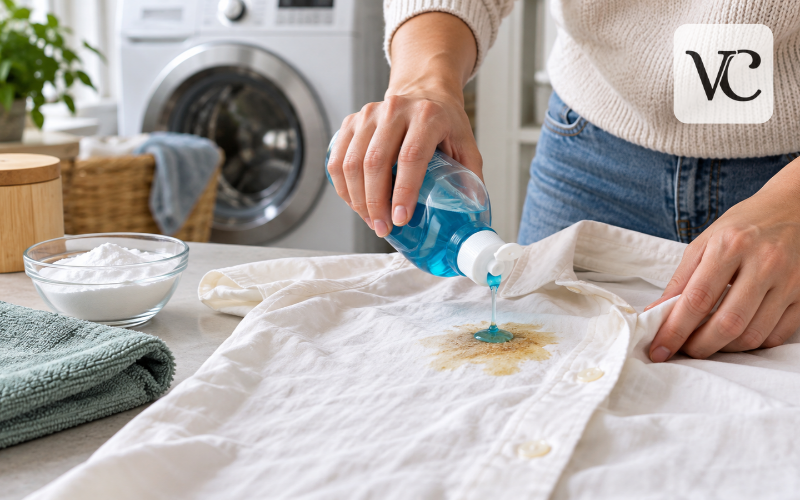
- Apply detergent: Put a small amount of suitable liquid laundry detergent directly on the stain.
- Let it work: Gently spread the detergent and leave it for 5–10 minutes, or follow the product instructions.
- Wash carefully: Wash the garment using the warmest water permitted by its care label.
- Check before drying: Inspect the stain and air-dry if necessary. Repeat the treatment if oil remains.
What to Check Before Removing Oil Stains
Before reaching for a cleaning product, read the small care label inside the garment. It tells you whether the item can be machine washed, needs hand washing, or should be professionally cleaned. Check the maximum washing temperature too. A cotton T-shirt usually tolerates more handling than a silk blouse or a structured wool jacket.
For most everyday washable clothes, you need only a few supplies: clean paper towels or a plain cloth, liquid laundry detergent, and possibly a small amount of liquid dish soap. Baking soda or cornstarch can be useful when the spill is fresh. A soft cloth helps you work on a mark without damaging the surface.
Try any unfamiliar cleaner on a hidden seam or inside hem first. Let the test area dry and look for fading, dye transfer, or a change in texture. If the colour moves or the material reacts badly, stop and choose a gentler method.
How to Remove Fresh Oil Stains From Clothes Quickly
A fresh spill is usually easier to manage because there may still be oil sitting on the fabric’s surface. Start by laying the garment flat. Press a clean paper towel against the spot to absorb the excess oil. Lift and replace the towel as needed instead of wiping from side to side. Rubbing can spread the mark and work the oil further into the fibres.
If the garment has two layers, place an absorbent towel or piece of cardboard underneath the affected area. This helps stop oil or cleaning product from reaching the other side. For thick grease, carefully lift away any excess with the edge of a spoon before blotting.
Once the surface oil is gone, pretreat the mark rather than putting the garment straight into the laundry basket. Avoid applying heat or ironing the area while the mark remains.
How to Remove Oil Stains From Clothes Step by Step
For washable everyday clothing, a simple detergent treatment is often the best place to begin. The following approach works for many cotton, denim, and suitable synthetic garments, but the care label always comes first.
Step 1: Remove the extra oil. Blot the stain with a clean cloth or paper towel. If possible, support the underside with another towel so the oil does not transfer to a different part of the garment.
Step 2: Add a cleaning product. Apply a small amount of liquid laundry detergent directly to the mark. A few drops of plain liquid dish soap can be another option for sturdy, washable fabric. Avoid dishwasher detergent, which is a different product and may be too harsh.
Step 3: Pretreat gently. Use your fingertips to spread the liquid over the stain without stretching the fabric. Leave it for about five to ten minutes, or follow the time stated on your product’s label. Do not let a product dry on the garment if its instructions advise against it.
Step 4: Rinse and wash. Rinse dish soap out thoroughly before machine washing; leftover soap can create too many suds. Wash with your usual laundry detergent at the warmest temperature allowed by the clothing label. Do not choose hot water simply because the stain is greasy.
Step 5: Inspect before drying. Look at the garment in good light while it is still damp. Air-dry it if you are unsure whether the mark is gone. A tumble dryer’s heat can make remaining oil harder to remove. Repeat the treatment if necessary rather than drying a visibly stained item.
Removing Oil Stains With Baking Soda or Cornstarch
Baking soda and cornstarch are easy home options for soaking up some of the oil before washing. They are most useful while the stain is fresh and the surface still feels greasy. They do not replace detergent when oily residue remains deep in the fabric.
After blotting, spread a light layer of baking soda over the spot. Leave it for around 15 to 30 minutes, then gently shake or brush away the powder. If it looks oily or clumpy, some of the surface oil has been absorbed. Cornstarch can be used in a similar way, especially when you want to avoid adding water immediately.
On dark clothing, remove the powder thoroughly so it does not leave a pale-looking residue. Avoid firm brushing on fragile materials. For washable fabrics, finish with a suitable liquid laundry detergent and wash according to the label. A dry-clean-only item is better handled by a professional if a mark remains.
Choosing the Right Oil Stain Remover
The best oil stain remover is not always the strongest bottle on the shelf. It is the one that can tackle grease without harming your clothing. Liquid laundry detergent is a practical first choice because it is made for fabrics and can be applied directly to many washable stains. Products designed for heavy laundry soil may be especially useful on workwear.
Liquid dish soap helps loosen grease, but it should be used sparingly as a pretreatment, never poured into the washing machine. Rinse it out well before laundering. Commercial laundry stain removers are another option for stubborn marks, provided their labels say they are suitable for that fabric and colour.
Check how long each treatment should stay on the garment. More product or a longer soaking time does not automatically mean better cleaning. Following the instructions also reduces the risk of faded dye, unwanted residue, and damage to delicate finishes.
How to Remove Old and Set-In Oil Stains
An older oil mark may appear as a faint, darker patch, even when the clothing looks otherwise clean. Start by checking whether the fabric is washable and whether the mark is truly oil rather than worn or discoloured fibres.
Apply a small amount of suitable liquid laundry detergent or grease-cutting dish soap directly to the dry stain. Gently spread it with your fingers and leave it for the recommended pretreatment time. Rinse off dish soap, then wash using the care label’s temperature guidance. For a sturdy garment, a laundry stain remover made for oily marks may be worth trying if the first wash does not help.
Some older stains improve after two or more treatments. Let the clothing air-dry between attempts so you can see whether the dark patch is fading. Avoid aggressive scrubbing or repeated hot washes, which may damage the fabric without removing the oil. Unfortunately, some long-standing stains cannot be completely lifted.
Getting Oil Stains Out of Clothes After Washing
Finding oil stains on clothes after washing is frustrating, especially when the rest of the load looks clean. A greasy patch can remain because the detergent did not fully break down the oil, the wash temperature was unsuitable, or the stain was never pretreated.
If the garment has been washed but not dried, work a little liquid laundry detergent into the remaining mark and wash it again. Check the result in natural light. Do not assume that another normal wash without pretreatment will solve the problem.
If the clothing has already been through the dryer, there is still a chance of improvement. Pretreat the spot again, allow the cleaner time to work, and wash according to the label. Heat may have made the stain more stubborn, so patience matters. Air-dry and inspect before deciding whether another round is worthwhile. Stop if the fabric begins to fade or show signs of wear.
How to Remove Oil Stains From Colored Clothes
When removing oil stains from colored clothes, protecting the dye matters just as much as removing the grease. First, check that the fabric is washable and test the chosen product on an inside seam. A stain that disappears but leaves a lighter patch is not a successful result.
Use a liquid laundry detergent recommended for colours or a compatible, colour-safe stain remover. Apply it mainly to the oily area and avoid rubbing hard. Wash at the temperature shown on the care label, using a gentle cycle when appropriate.
Do not reach automatically for chlorine bleach, which can permanently alter many dyes. Be careful with homemade mixtures as well; vinegar, baking soda, and different cleaners do not need to be combined to remove ordinary grease. If the material is delicate or the dye bleeds during testing, professional cleaning may be the safer choice.
How to Remove Oil Stains From White Clothes
Oil stains on white clothes can be surprisingly noticeable. Start with the same simple method used on other washable clothing: blot, pretreat with a suitable liquid detergent, rinse when needed, and wash according to the label.
If a mark remains, consider a laundry stain remover intended for white fabrics. Oxygen bleach may be an option for some washable whites when the garment and product labels both allow it. It is not suitable for every fibre, including silk and wool. Also, oxygen bleach is not a replacement for first breaking down the grease with detergent.
White does not always mean bleach-safe. Some white garments contain stretch fibres, trims, or special finishes that can be damaged by certain products. Avoid applying undiluted chlorine bleach directly to an oil patch. Check the care information, follow product directions, and inspect the item before drying.
Removing Oil Stains From Different Fabrics
Different materials hold oil and respond to cleaning in different ways. A stain treatment that works well on jeans might leave a ring, rough patch, or colour change on a delicate blouse. This is why fabric type should guide the method, not just the size of the stain.
Cotton and denim: These fabrics are often sturdy enough for careful pretreatment with liquid laundry detergent. You can gently work the cleaner into the spot with your fingers, rinse if necessary, and machine wash as the label directs. Dark denim should be tested for colour loss, and printed cotton may need extra care.
Polyester and other synthetics: Oil can cling stubbornly to some synthetic fibres. Liquid laundry detergent is a sensible starting point, followed by washing at a fabric-safe temperature. Avoid high heat, which may damage certain synthetic garments or make a remaining stain more difficult to treat.
Silk and wool: Both require a gentler approach. Blot the spill without rubbing, check the care instructions, and avoid ordinary heavy-duty stain removers unless they are specifically approved for the material. Use an appropriate specialist detergent only when the garment is labelled as washable. For valuable or difficult pieces, consult a professional cleaner.
Delicate and dry-clean-only clothes: If the label says dry clean only, do not soak or machine wash the garment at home. Blot loose oil, avoid experimenting with household chemicals, and explain the type of stain to the cleaner. Early professional treatment may help protect the fabric’s finish and shape.
Treating Different Types of Oil and Grease Stains
Understanding what spilled can help you choose an appropriate treatment, especially when the stain contains more than oil.
Cooking oil and food grease: Olive oil, frying oil, salad dressing, butter, and sauces can leave oily patches. Remove any solid food gently, blot the grease, and pretreat washable clothing with liquid laundry detergent. Sauces may also contain coloured ingredients, so a second stain treatment may be needed after the grease is removed.
Body oils and cosmetics: Moisturiser, sunscreen, foundation, and hair products can leave oily marks around collars and sleeves. A suitable laundry detergent may help, but coloured makeup can leave pigment behind even after the oil is gone. Avoid scrubbing delicate finishes or using strong chemicals near decorative details.
Motor oil and heavy grease: Work clothes may contain grit, fuel, or other substances alongside oil. Treat small, ordinary grease marks only when you know the garment is safe to launder. Clothing heavily soaked with oil, fuel, or other flammable substances needs different handling. Do not put it in a tumble dryer; follow the contaminant’s safety instructions or seek specialist advice.
Common Mistakes That Make Oil Stains Harder to Remove
One common mistake is scrubbing a stain immediately. Vigorous rubbing can push grease further into the fibres, enlarge the mark, and damage the surface of the fabric. Blot first, then use a gentle pretreatment suited to the material. Another mistake is choosing very hot water without reading the care label. Extra heat can shrink or distort some clothes.
Drying too soon is another problem. A garment can look clean while damp, only for a faint stain to become visible later. Check it carefully and choose air-drying when in doubt. On heavily oil-soaked items, heat can also create a fire risk, so ordinary stain-removal advice should not be treated as sufficient for contaminated workwear or oily rags.
Using too much dish soap may cause excess suds during machine washing. Rinse it out before putting the garment in the washer. Avoid combining cleaning chemicals in the hope of making them stronger, particularly products containing bleach. Never use lighter fluid, gasoline, or other flammable solvents as home stain removers. These create risks that are not justified by an ordinary clothing stain.
Conclusion
Knowing how to remove oil stains from clothes is mostly about acting early, using the right cleaner, and respecting the fabric. Blot fresh spills, pretreat washable garments with suitable laundry detergent, and wash according to the care label. Baking soda or cornstarch can help absorb fresh surface oil, while older stains may need repeated gentle treatment.
Always check for remaining marks before using a tumble dryer. If the stain is still visible, try again rather than applying heat. And when a garment is delicate, dry-clean-only, or heavily contaminated, choosing specialist care is better than risking damage or injury.
Frequently Asked Questions
Can oil stains be removed from clothes after washing?
Yes, oil stains can sometimes be removed after washing. Apply liquid laundry detergent to the remaining stain, gently work it into the fabric, and wash again. Avoid tumble drying until the stain disappears.
How do you remove old oil stains from clothes naturally?
Baking soda or cornstarch can help absorb surface oil, especially from fresh spills. For older stains, a suitable laundry detergent is generally more effective. Repeat gentle treatment if the fabric allows it.
Does baking soda remove oil stains from clothes?
Baking soda can absorb some excess oil, particularly from fresh stains. Sprinkle it over the affected area, leave it briefly, and brush it away. Remaining grease usually needs a detergent treatment.
How can I remove oil stains from colored clothes without fading?
Use a colour-safe liquid laundry detergent and test it on a hidden area first. Gently pretreat the stain, follow the care label, and avoid unsuitable bleach, aggressive scrubbing, and excessive heat.
Can I remove oil stains from clothes that have been through the dryer?
Sometimes. Dryer heat can make oil stains harder to remove, but pretreating with liquid laundry detergent and washing again may help. Air-dry the garment and check whether further treatment is necessary.
Disclaimer: The information provided in this article on voguecultures.co.uk is intended solely for general educational and informational purposes. This article is not a guest post, paid promotion, sponsored advertisement, or product endorsement. The cleaning methods discussed may produce different results depending on the fabric, stain type, and garment condition. Always follow clothing care labels, test cleaning products on a hidden area, and avoid unsafe chemicals or flammable solvents. Vogue Cultures does not guarantee complete stain removal and recommends professional cleaning for delicate or valuable garments when necessary.
Enjoyed this article? Discover more helpful ideas and fresh inspiration on Vogue Cultures.