
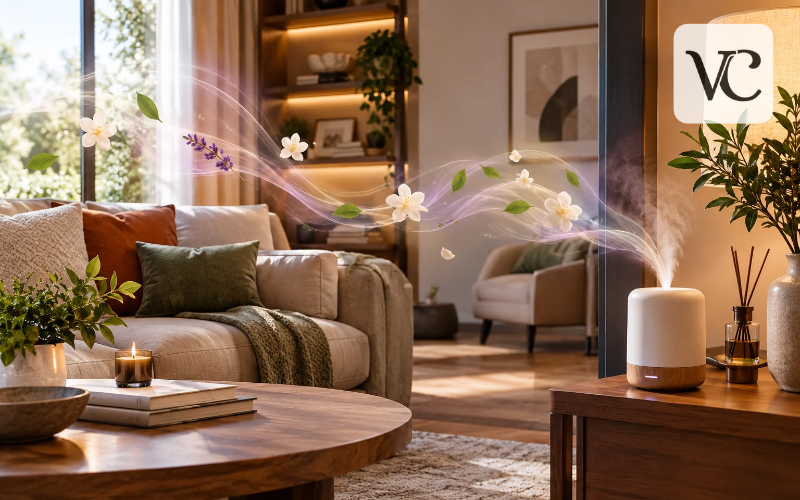
For decades, residential design has been dominated by what people can see. Architectural proportions, furniture, lighting, wall finishes, artwork, textiles and color palettes are carefully selected to create a particular visual identity. Yet a home is experienced through considerably more than sight. We hear doors close, feel the temperature of a room, notice the texture of materials and, often without consciously thinking about it, register the way a space smells. This broader perspective has given rise to a more holistic approach to interiors: sensory design.
Among the senses involved in experiencing a space, smell has an unusually strong relationship with memory and emotion. A particular aroma can bring back the atmosphere of a childhood home, remind someone of a holiday, or create an immediate association with cleanliness, warmth or relaxation. This does not mean that fragrance can transform every room or produce a predictable emotional response. Rather, it demonstrates why scent deserves consideration alongside the more familiar elements of interior design.
The Evolution From Visual Design to Sensory Design
Traditional interior design generally begins with a visual question: What should the room look like? Sensory design asks a broader one: How should the room feel to experience?
That distinction is important. Two rooms can use similar furniture, colors and architectural materials but create very different experiences because of lighting, acoustics, temperature, textures and scent. A minimalist living room, for example, may feel calm because of its restrained palette and uncluttered composition, but its atmosphere can be altered significantly by harsh lighting, excessive noise or an unpleasant odor.
Sensory design does not replace visual design. It extends it. The objective is to make different sensory elements work together rather than treating them as independent decisions. In this framework, fragrance becomes one component of a larger environmental experience.
Why Smell Has Such a Powerful Relationship With Memory
The connection between smell and memory is one of the most interesting reasons scent has become relevant to environmental design. The olfactory system has close neurological connections with brain regions involved in emotion and memory. This helps explain why an aroma can sometimes trigger a vivid recollection without the deliberate effort required to remember a photograph, name or written description.
These responses are also highly personal. There is no universally calming or uplifting fragrance. A floral note that one person associates with a garden may remind another person of a particular cosmetic product. A woody aroma may feel sophisticated to one individual and unpleasant to another.
For homeowners, this means fragrance selection should be approached as a matter of personal association rather than following rigid rules about which scents are supposedly appropriate for particular rooms.
Fragrance Can Influence the Perception of a Space
A room does not exist only as a collection of physical objects. People continuously interpret environmental cues and form impressions about comfort, cleanliness, freshness and atmosphere. Odor is one of those cues.
An unpleasant smell can dominate the perception of an otherwise beautifully designed room. Conversely, a subtle and appropriate fragrance may contribute to a sense of freshness and completeness. The key word is subtle. Fragrance works best as an environmental layer rather than something that overwhelms the room.
This is particularly relevant in open-plan homes, where kitchens, dining areas and living spaces share air. Odors from cooking, cleaning products, pets and outdoor environments can interact with one another. Managing those competing odors through ventilation and cleanliness should come before adding fragrance. A scented product should complement a well-maintained environment, not attempt to conceal an underlying odor problem.
The Difference Between Scenting and Masking
One of the most common misconceptions about home fragrance is that adding a stronger aroma automatically creates a better-smelling home. In reality, excessive fragrance can become another source of sensory discomfort.
Effective sensory design begins with controlling the environment itself. Ventilation, moisture management, regular cleaning, waste disposal and appropriate airflow are foundational. Once those factors are addressed, fragrance can be introduced as an intentional accent.
This distinction is similar to lighting. A well-designed lighting scheme does not compensate for poor architecture or clutter. It enhances the existing environment. Fragrance should work in much the same way.
Choosing Fragrance According to the Character of a Room
There is value in considering the function of a room when selecting a fragrance, but this should be treated as a flexible design principle rather than a strict formula.
Bedrooms often benefit from quieter sensory environments because they are associated with rest and personal routines. Living rooms, by contrast, are social spaces where homeowners may prefer something that feels warm, clean or welcoming. Entryways can serve as transitional spaces and may be suitable for distinctive but restrained aromas because they establish an initial impression of the home.
Kitchens require greater caution. Cooking already introduces numerous competing aromas, so adding a strong fragrance can create an unnecessarily complicated sensory environment. Dining spaces present a similar challenge because strong ambient scents can interfere with the perception of food.
The objective is not to make every room smell different. A home with a completely different fragrance in every space may lack a coherent sensory identity. In many cases, using related fragrance profiles throughout the home creates a more consistent experience.
The Importance of Fragrance Notes
Understanding fragrance does not require becoming a professional perfumer, but basic knowledge of fragrance families can make selection more intentional.
Citrus notes such as lemon, bergamot and orange are commonly associated with freshness and brightness. Floral notes may include rose, jasmine, lavender or neroli, while woody profiles can feature cedarwood, sandalwood or vetiver. Green fragrances may evoke leaves, herbs or freshly cut vegetation, and gourmand profiles can contain associations with vanilla, caramel, spices or baked goods.
These descriptions are useful starting points, but fragrance is not experienced as a simple list of ingredients. Formulation, concentration, surrounding materials, room temperature, airflow and individual perception all influence the final experience.
Why Fragrance Intensity Matters
One of the most important principles in sensory design is proportionality. A fragrance should generally be strong enough to be noticed but not so strong that it becomes the primary focus of the room.
Intensity is affected by the size of the space, ventilation, temperature, diffusion method and the characteristics of the fragrance itself. A product that feels appropriately subtle in a large living room may become overwhelming in a small bathroom or bedroom.
This is why fragrance should be evaluated in the actual environment where it will be used. Testing a scent briefly in a store or from a product sample cannot completely reproduce how it will behave in a specific room.
The Role of Different Diffusion Methods
Different fragrance formats distribute aroma differently. Reed-based systems release fragrance gradually through absorbent sticks, while electric and ultrasonic diffusers can distribute scented compounds through controlled cycles depending on the device and formulation. Candles introduce fragrance through heated wax and also contribute a visual element through flame and ambient light. Sprays tend to provide a faster but shorter-lived burst.
The choice should depend on the room, desired intensity, maintenance requirements and personal preferences. A continuously operating system is not necessarily better than an intermittent one. In a small room, controlled and limited use may create a more comfortable environment than constant diffusion.
Safety also matters. Candles require particular attention because they involve an open flame. Diffusers should be used according to manufacturer instructions, and fragrance products should be kept away from children and pets when the product labeling recommends doing so.
Fragrance, Ritual and the Experience of Home
Perhaps the most interesting aspect of sensory design is not the fragrance itself but the ritual surrounding it.
People often associate certain environments with repeated routines. Morning coffee, evening showers, weekend cooking and preparing for sleep can all become sensory rituals. Introducing a consistent fragrance into one of these routines may strengthen its association with a particular time or activity.
This is less about creating a scientifically guaranteed emotional response and more about creating environmental consistency. When the same sensory cues repeatedly accompany a routine, they can become part of the way a person mentally organizes that experience.
Over time, a home can therefore develop what might be described as a sensory identity.
Personal Preference Matters More Than Fragrance Trends
Interior trends change rapidly. One year, a particular color palette may dominate residential design; another year, natural materials or minimalist furniture may become fashionable. Fragrance trends follow a similar cycle.
But sensory design is fundamentally personal. The most sophisticated fragrance in a magazine may be completely inappropriate for a particular household if the people living there dislike it.
A better approach is to begin with questions about the desired atmosphere. Should the home feel airy and fresh, warm and comforting, earthy and natural, refined and understated, or vibrant and energetic? From there, fragrance families can be explored without allowing trends to dictate the final choice.
The Science Has Limits
It is tempting to make broad claims about fragrance improving mood, productivity, sleep or wellbeing. Some research has investigated relationships between odors and psychological or physiological responses, but individual responses vary considerably, and evidence for specific effects is not equally strong across every fragrance or claimed benefit.
This distinction matters because sensory design should not be confused with medical treatment. A pleasant aroma may contribute to a person’s subjective experience of comfort, but it should not be presented as a substitute for healthcare or as a guaranteed solution for stress, insomnia or other health concerns.
A credible approach to fragrance recognizes both its potential influence and its limitations.
Creating a More Thoughtful Sensory Home
The most effective sensory homes are rarely built around one dramatic feature. They emerge from many small decisions working together. Natural light interacts with materials. Textiles influence touch. Furniture affects movement. Acoustics influence privacy and calm. Ventilation affects air quality. And fragrance adds another layer to the experience.
This perspective also changes how homeowners evaluate their spaces. Instead of asking only whether a room looks attractive, they can ask whether it feels comfortable, sounds appropriate, smells clean, has suitable lighting and supports the activities that take place there.
That is the fundamental shift from visual design to sensory design.
The Future of Residential Design May Be More Experiential
As consumers become more interested in wellness, personalization and experiences, residential design is likely to become increasingly concerned with how spaces are experienced rather than simply how they photograph.
Technology will contribute to this evolution through increasingly sophisticated lighting systems, climate controls, acoustic solutions and automated scent systems. At the same time, the growing interest in natural materials and intentional living may encourage people to use simpler sensory interventions rather than increasingly complex ones.
The result may be a new understanding of what makes a home distinctive. Its identity will not necessarily come from expensive furniture or dramatic architecture. It may come from the combination of subtle environmental details that create a consistent sense of place.
Fragrance occupies an interesting position within that evolution because it is invisible. It cannot be photographed in an interior-design portfolio, displayed in a floor plan or easily quantified in the same way as furniture dimensions. Yet it can influence the way people perceive and remember an environment.
The Missing Layer May Be the Invisible One
Good interior design has always been about more than decoration. The strongest spaces support how people actually live in them. Sensory design takes that principle one step further by recognizing that human experience is multi-dimensional.
Fragrance is not a magic ingredient, and it cannot compensate for poor ventilation, clutter, uncomfortable temperatures or an unsuitable layout. But when the fundamentals are right, a thoughtfully selected aroma can become an understated part of the environment.
That may ultimately be why scent deserves a place in the conversation about modern interiors. We do not experience our homes as photographs. We experience them through movement, sound, touch, light, temperature, memory and smell.
The most memorable home, therefore, may not simply be the one that looks beautiful.
It may be the one that engages the senses so naturally that we remember how it felt long after we have left.
