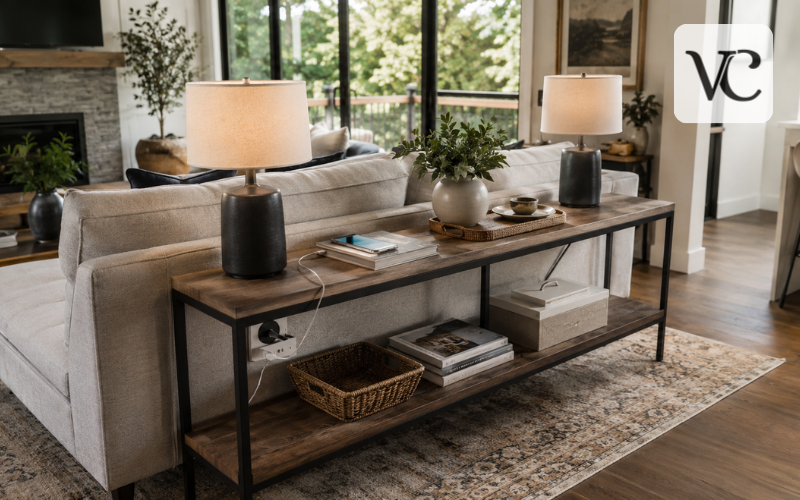
The space behind a sofa is often ignored, especially when the couch sits away from the wall. A behind couch table turns that unused area into something practical and attractive. It is usually a long, narrow table placed directly behind the sofa. You may also hear it called a sofa table or console table.
A well-chosen table can provide space for lamps, books, framed photos, plants, drinks, and charging devices without taking over the room. Some designs include drawers or shelves, while others have built-in outlets and USB ports. Taller versions may also work with stools, creating a simple place for eating or working.
The right choice depends on the sofa size, room layout, available clearance, and how you plan to use the surface. A slim design may fit between a couch and wall, while a wider table can help divide an open living room from a dining or kitchen area.
Quick Guide to Choosing a Behind Couch Table
| Feature | Recommended Choice | Why It Matters |
| Height | Level with or about 1 inch below the sofa back | Keeps the room balanced and avoids blocking the view |
| Length | About two-thirds to nearly the full sofa width | Creates a well-proportioned appearance |
| Depth | 5–8 inches for tight spaces | Provides surface space without narrowing the walkway |
| Material | Wood, metal, or a combination | Allows the table to match different interior styles |
| Storage | Drawers, shelves, or baskets | Helps organize remotes, books, cables, and small items |
| Charging | Outlets, USB, or USB-C ports | Makes charging devices easier near the seating area |
| Seating | Counter-height table with backless stools | Creates a compact dining or working area |
| Safety | Stable frame or wall attachment | Reduces movement and tipping risks |
Steps for Choosing the Right Behind Couch Table
- Measure the length and height of your sofa.
- Measure the available depth behind the couch.
- Check how much walking space must remain.
- Decide whether you need storage, charging ports, or stools.
- Choose a table that sits level with or slightly below the sofa back.
- Check doors and hallways before ordering an extra-long model.
- Make sure the table is stable and does not block vents or outlets.
What Is a Behind Couch Table and Where Does It Work Best?
A behind couch table sits along the back of a sofa. Its main purpose is to use empty space while hiding the less attractive back of the furniture. It can make a floating sofa look more finished and connect the seating area with the rest of the room.
This type of table is useful in small living rooms where every inch matters. A narrow design can hold a lamp or charging station without requiring another side table. In an open-concept home, it can create a visual boundary without blocking light or making the room feel closed.
A sofa table is normally long, narrow, and close to the height of the sofa back. A console table may have a similar shape, but it can also be used in a hallway or entryway. A side table is smaller and sits beside the couch.
Behind a wall-facing sofa, a skinny table can fill the gap and hide cords. Behind a floating sofa, it can display decor and improve the view from the other side of the room. For a sectional, one long table or two shorter pieces may work best.
Measuring the Space Behind Your Couch
Accurate measuring is the most important step before buying or building a behind couch table. Measure the full length of the sofa and the height from the floor to the top of its back frame or cushions. Because soft cushions can settle, it helps to record both measurements.
Next, measure the open depth behind the couch. If the sofa is near a wall, measure from the back of the sofa to the baseboard. If people walk behind it, decide how much clear space must remain after the table is added.
A main walkway should ideally have about 36 inches of open space when the room allows it. A less-used passage may be narrower, but it should still be easy to move through without hitting the table or its decor.
Check for outlets, vents, heating units, floor registers, and thick baseboards. Also measure doors, stairs, elevators, and hallways before ordering an extra-long table. A piece may fit behind the sofa but still be difficult to bring inside.
Choosing the Right Height, Length, and Depth
The tabletop should normally sit level with the sofa back or slightly below it. A height around one inch below the back often looks balanced and keeps the table from blocking the view. With loose cushions, compare the table height with both the cushion top and the firmer sofa frame.
A table that is about two-thirds to nearly the full width of the sofa usually looks well proportioned. It does not need to match the couch exactly. Leaving some space at each end can make the arrangement feel lighter.
For very tight areas, a depth of about 5 to 8 inches may be enough for a phone, remote, narrow lamp, or small tray. A deeper table offers more surface area, but it should not reduce the walkway or push the sofa too far into the room.
Avoid tables that rise well above the cushions. They can interrupt sight lines, make the room feel crowded, and increase the chance of objects falling toward people sitting below.
Behind Couch Table Options for Different Room Layouts
The room layout should guide the table shape and size. When a couch sits close to a wall, an ultra-narrow design can add a useful ledge while keeping the seating near the wall.
A long sectional may need an extra-long table or two matching tables placed side by side. Separate pieces are easier to carry, arrange, and move later. For an L-shaped sectional, a short table behind one section may be enough.
A floating sofa benefits from a freestanding console with a finished back because it will be visible from several directions. Shelves, framing, and cables should look tidy. The table can also act as a gentle divider between the living area and a dining space.
For an awkward corner, two slim consoles may meet behind different sections of the couch. A custom table is another option when standard sizes do not fit. The goal is to support the room layout instead of forcing in a piece that blocks movement.
Skinny Table Behind Couch with Outlets and Charging Ports
A skinny table behind couch with outlets brings power closer to the seating area. Built-in outlets, USB ports, and USB-C connections can charge phones, tablets, and laptops or power a lamp without running loose cords across the floor.
Many charging tables include cable holes, clips, channels, or a recessed power strip. These features keep wires together and make the area behind the sofa look cleaner.
Before buying, check the cord length and the location of the power unit. The cord should reach a wall outlet without creating a trip hazard or relying on several extension cords. Review the stated power limit and follow the manufacturer’s instructions. These tables are best for lamps and small electronics, not high-demand appliances.
Choose a reliable product with recognized electrical safety certification. Keep drinks, flower vases, and plant water away from the charging area. The wall plug should remain easy to reach in case the table needs to be disconnected quickly.
Behind Couch Table with Storage
A behind couch table with storage can reduce clutter in a busy living room. Open shelves provide space for books, baskets, games, and decorative objects. Drawers can hold remotes, charging cables, reading glasses, and other small items.
Lower storage keeps the top available for lighting or daily use. A basket on a bottom shelf may hold blankets, while a shallow drawer can hide electronics. However, the type of storage must suit the available depth.
In a tight gap, a single shelf or shallow drawer is often more practical than a deep cabinet. Check that drawers or doors can open without hitting the wall, couch, or walkway. Open shelves are easier to reach, although they need regular tidying.
Avoid bulky storage in a small room. Slim legs, open sides, and raised shelves create a lighter appearance while still providing useful organization.
Table for Behind Couch with Stools
A table for behind couch with stools can become a casual dining counter, homework station, or compact workspace. This arrangement works well in apartments and open kitchens where a separate dining table may not fit.
Most standard sofa tables are too low for stools, so choose a counter-height table made for sitting. Compare the stool seat height with the underside of the tabletop and leave enough room for comfortable leg movement.
Allow enough width for each person, and make sure pulled-out stools will not block a major walkway. Backless stools are practical because they can slide fully beneath the table when they are not in use.
Stability is essential. The table should not wobble when someone leans on it or places a laptop or meal on the surface. It should also sit far enough from the couch that people using the stools do not disturb anyone seated in front.
Short Behind Couch Table Ideas for Compact Spaces
A short behind couch table can suit a loveseat, low-back sofa, or room with limited floor space. It provides a useful surface without making the furniture arrangement feel heavy. One compact table may be enough for a lamp, plant, or charging tray.
Two short tables can sometimes work better than one long console. They are easier to move through doorways and can sit behind separate parts of a sectional. A small gap between them may also preserve access to an outlet or vent.
A low table can fit beneath a window, but its decor should not block light or interfere with curtains. Beside an L-shaped sectional, a short console may fill an unused area without entering the walkway.
Choose slim legs, a simple frame, and a finish that relates to nearby furniture. In a small room, the table should look intentional rather than like an extra piece placed wherever it fits.
Wood and Black Behind Couch Table Designs
A wood behind couch table adds warmth and natural texture. Light wood can make a compact room feel open, medium tones suit many styles, and dark wood creates a richer look against pale walls or upholstery.
A black behind couch table has a clean, defined appearance. It works well in modern, industrial, minimalist, and contemporary rooms. Black metal frames are popular for narrow consoles because they look slim while offering good support.
A wood top with black metal legs combines warmth with structure. It can connect a fabric sofa with dark lighting, black window frames, or other metal details.
Consider the floor and sofa color before choosing a finish. The table does not need to match everything exactly. Repeating a related wood tone or black accent is usually enough to make the room feel coordinated.
Behind Couch Table IKEA Ideas and Practical Alternatives
Many people search for a behind couch table IKEA option because simple, narrow furniture can often be adapted. Compare the current size of any console, shelf, or narrow desk with your sofa and open space. Product collections and dimensions can change, so check the latest details before purchasing.
A slim console may work without adjustment, while a narrow shelving unit can add storage. Another option is to combine a tabletop with suitable legs or supports to create the needed height and width.
Any modification must remain stable. Do not remove braces or add a heavy top unless the frame can safely support it. Check the stated weight limit, especially when the table will be used for work, dining, or heavy decor.
Ready-made furniture is faster and usually has a finished appearance. A custom or DIY design gives more control over depth, height, outlets, and storage. The best option is the one that fits correctly and remains safe in daily use.
Behind Couch Table DIY Planning and Building Ideas
A behind couch table DIY project is helpful when the available space has unusual measurements. A basic version can be made from a long wooden board, sturdy legs, screws, and supports.
Start with exact measurements and a simple drawing. Decide on the height, length, and depth before buying materials. Very narrow tables need strong connections or braces to prevent wobbling. A lower shelf can add both storage and support.
A DIY table may include a cable opening, a basket shelf, or a charging unit designed for furniture. Follow all installation instructions and keep electrical parts where they will not be crushed, covered, or exposed to liquid.
Sand the edges and corners until smooth, then apply paint, stain, or a clear finish. Allow it to dry completely before use. In a home with children or pets, secure a slim table to a wall or another solid support when possible.
Styling Ideas and Common Mistakes to Avoid
Styling should make the table attractive without removing its practical value. Matching lamps at both ends can create balance and improve reading light. For a relaxed look, pair one lamp with a plant, books, or a ceramic vase.
Keep tall objects away from the main sight line, especially when the sofa faces a television or open room. A tray can organize remotes and small items, while books add height and greenery softens the furniture. Leave some empty surface so the arrangement does not look crowded.
On a very skinny table, one or two useful objects may be enough. Heavy, sharp, or breakable pieces should not sit near the sofa edge. Keep drinks and watering cans away from outlets.
Common mistakes include choosing a table that is too tall, narrowing the walkway, using unstable lamps, and leaving cords loose. The table should improve daily use, not create another area that is difficult to clean or move around.
Conclusion
A behind couch table can turn an awkward gap into one of the most useful parts of a living room. It can provide lighting, charging, storage, decoration, or a place to sit while making the sofa look more finished.
The best result starts with careful measurements. Compare the table height with the sofa back, choose a balanced length, and preserve enough room for movement. Then think about daily needs. Some homes need only a narrow surface, while others benefit from drawers, shelves, outlets, or stools.
Style matters, but fit, stability, and function should come first. Whether you choose black metal, warm wood, ready-made furniture, or a DIY design, the table should improve the layout without adding clutter. A well-planned behind couch table will feel like a natural part of the room.
Frequently Asked Questions
How tall should a behind couch table be?
A behind couch table should normally be level with the sofa back or about one inch lower. A table that is much taller may block the view and make the room feel crowded.
How deep should a table behind a couch be?
A depth of 5 to 8 inches works well in narrow spaces. Deeper tables can provide more storage or workspace, but they should not reduce a comfortable walkway behind the sofa.
Can a behind couch table include electrical outlets?
Yes. Many modern sofa tables include standard outlets, USB ports, and USB-C charging. Check the cord length, safety certification, power limit, and access to a nearby wall outlet before buying.
Can you put stools behind a couch table?
Yes, but the table should be counter height and provide enough legroom. Backless stools are usually the best choice because they can slide underneath when they are not being used.
Is a behind couch table suitable for a sectional sofa?
A behind couch table can work well with a sectional. Use one extra-long table, two shorter tables, or a custom design that fits the straight sections without blocking corners or walkways.
Disclaimer: The measurements and design suggestions in this article are general guidelines. Sofa sizes, room layouts, product dimensions, and electrical features can vary. Always measure your space carefully, review the manufacturer’s instructions, and check the stability and weight limit of the table before use. Electrical outlets and charging units should be installed and operated according to local safety requirements. Homes with children or pets may require additional wall anchors or anti-tip protection.
Enjoyed this article? Discover more helpful ideas and fresh inspiration on Vogue Cultures.