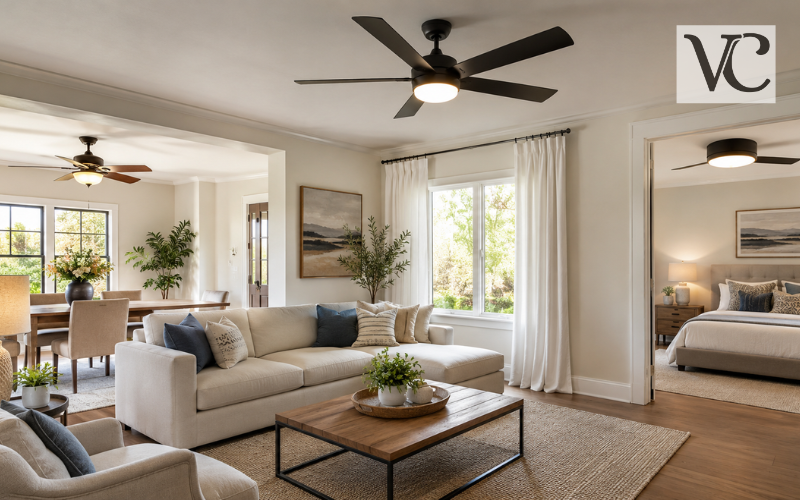
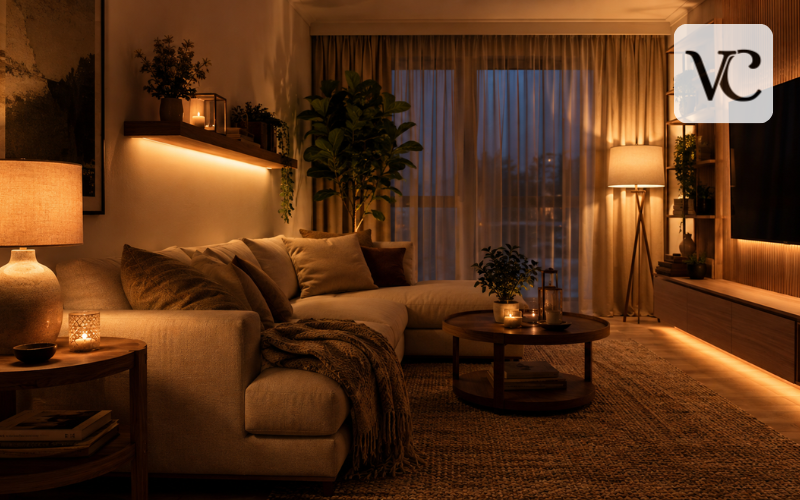
A cozy room does not need dozens of lamps or expensive fixtures. In most homes, the feeling comes from three simple things: warm light, comfortable brightness, and light placed where people actually spend time. Instead of filling the whole room with one strong ceiling light, softer sources can create gentle pools of light around sofas, beds, shelves, and dining areas.
The best indoor lighting for cozy atmosphere should make a room feel calm while still being practical. Color temperature affects whether the light looks golden or cool. Brightness affects how relaxed or intense the room feels. Layering adds depth, while shades and indirect lighting reduce glare. Fixture height and placement also matter because light at eye level or below often feels more intimate than a bright source directly overhead.
The sections below explain these ideas in simple terms and show how to apply them in living rooms, bedrooms, kitchens, dining areas, and other everyday spaces.
Snippet-Ready Definition:
The best indoor lighting for a cozy atmosphere combines warm 2200K–2700K light, gentle brightness, and layered sources such as table lamps, floor lamps, and indirect lighting to create a soft, relaxing, and comfortable space.
Quick Guide: Best Lighting for a Cozy Atmosphere
| Lighting Feature | Best Choice | Why It Feels Cozy |
| Color temperature | 2200K–2700K | Creates a warm, soft glow |
| Brightness | Low to moderate | Avoids harsh or intense light |
| Main lighting style | Layered lighting | Adds depth and flexibility |
| Lamp shades | Fabric, paper, frosted glass | Softens glare |
| LED strips | Warm white, hidden | Creates gentle indirect light |
| Controls | Dimmers or smart bulbs | Makes brightness easy to adjust |
Quick Steps to Make Indoor Lighting Feel Cozy
- Choose warm-white bulbs around 2200K–2700K for relaxing spaces.
- Use table lamps, floor lamps, and wall lights instead of relying only on one ceiling fixture.
- Add fabric, paper, or frosted shades to reduce glare.
- Place lighting at different heights to create depth.
- Hide warm LED strips behind shelves, furniture, or a television for indirect light.
- Use dimmers where possible so you can lower the brightness in the evening.
Ambient Lighting Meaning and Its Role in a Cozy Home
Ambient lighting means the general background light that lets you see and move comfortably around a room. It is the base layer of a lighting plan. Daylight, ceiling fixtures, floor lamps, and wall lights can all contribute to ambient light, depending on how a room is designed.
Task lighting has a more specific purpose. A reading lamp beside a chair, for example, helps you read without making the whole room brighter. Accent lighting is used to draw attention to something, such as artwork, a shelf, a textured wall, or a plant. Lighting designers commonly treat ambient, task, and accent lighting as separate layers that can work together rather than forcing one fixture to do everything.
For a cozy home, the goal is usually to keep the ambient layer soft, then add brighter task light only where it is needed. This approach makes a room easier to use while keeping the overall mood relaxed.
The Best Color Temperature for a Warm, Cozy Atmosphere
Color temperature describes how warm or cool white light looks, and it is measured in Kelvin, shown as K on bulb packaging. Lower numbers look warmer and more golden, while higher numbers look whiter or bluer. ENERGY STAR describes 2700K to 3000K as warm in appearance, while higher Kelvin values become cooler.
For a very cozy atmosphere, 2200K to 2700K is a useful range to consider. Around 2200K has a deep amber, candle-like character that works well for decorative lamps, quiet evenings, or intimate corners. At 2700K, the light still looks warm but is usually more practical for everyday living rooms and bedrooms.
A 3000K light is slightly cleaner and brighter-looking. It can work well in kitchens, bathrooms, work areas, or modern interiors where you want warmth without a strongly golden effect. There is no need to use the same Kelvin value everywhere, but keeping nearby sources reasonably consistent usually creates a calmer look.
Choosing the Right Brightness Without Making the Room Harsh
When buying a bulb, lumens tell you how much visible light it produces. Wattage mainly tells you how much electrical power the bulb uses, so it is not a reliable way to compare the brightness of modern LEDs. Current U.S. lighting labels include brightness in lumens as well as wattage and light appearance information.
For cozy lighting, maximum brightness is rarely the goal. A softly lit room can feel more comfortable because the eyes are not constantly facing intense light. However, a room should never be so dim that reading, cooking, walking on stairs, or other tasks become difficult.
The right brightness depends on room size, wall and furniture colors, available daylight, and what you do in the space. Dark walls absorb more light, while pale surfaces reflect more of it. Dimmers are especially useful because the same fixture can provide stronger light when needed and a gentler glow later in the evening. Always check that the bulb and dimmer are compatible.
Layered Lighting: The Foundation of a Cozy Lighting Plan
Layered lighting is one of the easiest ways to make a room feel warm without making it dark. Start with soft ambient light for the room as a whole. Add task lighting where people read, cook, work, or get ready. Then use a small amount of accent lighting to give depth to shelves, artwork, plants, or architectural details.
The important part is placing these sources at different heights. A ceiling pendant may provide general light, while a floor lamp adds light near a sofa and a table lamp creates a lower pool of light. A wall sconce can fill a darker vertical area, and a hidden strip can softly light a shelf or cabinet.
Imagine a living room used for several activities. A floor lamp beside a chair supports reading. Two table lamps create comfortable evening light for conversation. A dimmed ceiling fixture helps when guests arrive, while a subtle light behind the television reduces the sense of a bright screen floating in a dark room. Each layer has a job.
Diffused and Indirect Light for a Softer Glow
Warm color alone does not guarantee comfort. A bare bulb can still feel harsh if it is bright and directly visible. Diffusion helps by spreading light over a wider area. Fabric shades, frosted or opal glass, paper shades, and similar materials soften the source and reduce sharp glare.
Indirect light can feel even gentler because the light reaches your eyes after reflecting from another surface. A floor lamp aimed toward a pale wall, for example, can create a broad glow instead of a bright spot. LED strips can also be hidden behind a headboard, under a shelf, or behind furniture so the wall reflects the light.
This is similar to the effect many people enjoy from ambient lighting in a car: the source itself is often hidden, while the glow defines surfaces and creates atmosphere. Direct light still has an important role, especially for reading, food preparation, makeup, or detailed work. The key is to use direct light where it serves a purpose, rather than pointing strong light into people’s eyes.
Living Room Ambient Lighting Ideas for a Relaxing Space
The living room usually benefits most from layered, flexible lighting because it may be used for reading, talking, watching television, hosting guests, or simply resting. Good living room ambient lighting ideas start by reducing dependence on one ceiling fixture and adding light closer to where people sit.
A floor lamp near a sofa or armchair can brighten a dark corner and support reading. Small table lamps on sideboards or end tables create warm pools of light that make a large room feel more personal. Wall sconces can add gentle background light without taking up floor space. If you use lighting behind a television or shelving, keep it subtle so it supports the room instead of becoming a bright visual feature.
For mood lighting in a living room, dimmers make a noticeable difference. Brighter settings can work for cleaning or entertaining, while lower warm settings suit films and quiet evenings. Try to avoid placing very bright lamps directly opposite the main seating position, where glare is most likely to be noticed.
Cozy Bedroom Lighting for Rest and Wind-Down Time
A bedroom needs enough light for dressing, cleaning, reading, and finding things, but the evening atmosphere should usually be softer than the main light used during the day. Warm bedside lamps are a simple starting point. A fabric shade or frosted glass shade can reduce glare and make the light feel calmer at eye level.
Wall-mounted reading lights are useful when you want focused light without lighting the whole room. If two people share the bed, separate controls also allow one person to read while the other keeps their side darker. A dimmer on the main light can make the room more flexible.
Concealed lighting can add a gentle background glow behind a headboard, beneath a floating bed frame, or along shelving. Use it sparingly and hide the individual LED points where possible. The aim is not to make the bedroom look like a display area. For a cozy result, keep the main evening light warm, low, and easy to control from near the bed.
Warm Lighting for Dining Rooms, Kitchens, and Everyday Spaces
Dining areas often feel more comfortable when the light is focused around the table instead of washing the whole room in strong brightness. A warm pendant above the table can help define the eating area. A shade that controls glare is useful when the bulb sits near eye level, especially when people are seated.
Kitchens need a different balance. Warm ambient light can make the space feel welcoming, but work surfaces still need clear task lighting for chopping, measuring, and cleaning. Under-cabinet lights are useful because they place light directly on the counter rather than relying on your body not to block a ceiling fixture.
Hallways and entryways can usually use softer wall lights, small lamps, or low-level lighting rather than intense fixtures. However, stairs and changes in floor level should remain clearly visible. A consistent warm tone across connected rooms can make the home feel more settled, while brightness can change from room to room according to what people need to do there.
Best Lamp and Fixture Types for a Cozy Atmosphere
Different fixture types create different kinds of comfort. Fabric-shade table lamps spread soft light and work well beside sofas, on consoles, or on nightstands. Floor lamps can brighten corners and add light at a useful height without requiring permanent installation. Wall sconces save floor space and can provide either soft background light or more focused illumination.
Paper lantern-style lamps produce a broad diffused glow and can make a corner feel gentle and relaxed. Pendants are useful above dining tables or other defined areas, especially when the shade prevents glare. Portable rechargeable lamps can also create small pools of light on shelves, side tables, or places where a cord would be inconvenient.
Amber-glass or Edison-style LEDs can suit visible-bulb fixtures when a decorative golden effect is wanted, but they may not be the best choice for every task. For simple fixture shopping, ranges such as IKEA lighting currently include table, floor, wall, LED, and smart-lighting categories, showing how many fixture types can be mixed within one home.
Smart Bulbs and LED Strips for Adjustable Mood Lighting
Smart lighting can be useful when the same room needs different lighting at different times. Many smart bulbs can be dimmed through an app, remote, switch, or voice-compatible system. Tunable-white products can also move between warmer and cooler white light. The U.S. Department of Energy describes white-tunable LED products as systems that can change the appearance of white light across a range of color temperatures.
That flexibility can help a living room feel brighter during daytime activities and warmer during an evening film. Warm-white LED strips are useful for concealed locations such as shelves, cabinets, headboards, and television areas. IKEA, for example, currently lists both smart lighting and LED strip-light categories, although features vary by product.
Smart technology is optional, not a requirement for cozy lighting. If you normally want the same warm color every evening, a good 2700K dimmable bulb may be simpler. Choose smart controls when the added flexibility is something you will genuinely use.
How to Choose Cozy Light Bulbs and Fixtures
Start with color temperature and brightness. For relaxation-focused areas, a warm 2200K to 2700K appearance is often a good fit, while 3000K can work where a slightly clearer white is useful. Then check lumens so the bulb provides enough light for its job. Also confirm the bulb base, fixture size, dimmer compatibility, and whether the fixture sends light upward, downward, or in all directions.
Color quality matters too. CRI, or Color Rendering Index, is one common measure of how faithfully a light source shows the colors of objects. The U.S. Department of Energy says a minimum CRI of 80 is generally recommended for interior lighting, while 90 or above indicates excellent color fidelity, although CRI is not a perfect measure.
Finally, match the bulb to the fixture. Clear decorative bulbs suit some open fixtures, while frosted bulbs are often more comfortable when the lamp is visible. Tinted bulbs add warmth but may change how room colors look. Let the room and the activity guide the choice.
Common Cozy Lighting Mistakes and How to Avoid Them
One common mistake is expecting a single bright ceiling fixture to make the entire room both functional and relaxing. It may provide enough light, but it often creates a flat appearance and can leave people sitting under strong overhead brightness. Adding one or two lower light sources usually gives the room more flexibility.
Another mistake is mixing very different color temperatures in the same view without a clear reason. A golden lamp beside a cool blue-white ceiling light can make the room feel visually disconnected. Matching nearby lamps more closely usually creates a calmer result.
Glare is another problem. Bare bright bulbs, badly positioned reading lamps, and exposed LED strip diodes can distract from an otherwise cozy setup. At the other extreme, do not make the room dangerously dim just to create mood. Steps, cooking surfaces, desks, and reading areas need enough useful light. The best indoor lighting for a cozy atmosphere should support comfort and everyday life at the same time.
Conclusion
Creating a warm home is less about buying more lights and more about using light carefully. The best indoor lighting for a cozy atmosphere usually combines a warm color temperature, comfortable brightness, several layers of light, and shades or indirect placement that reduce glare.
Start with the room you use most in the evening. Check the color temperature of the bulbs you already have, then notice where the room feels too bright, too dark, or uncomfortable. Moving a lamp, changing a shade, adding a dimmer, or replacing one cool bulb with a warmer option may improve the atmosphere more than adding several new fixtures.
The ideal setup will depend on room size, daylight, wall colors, furniture, and how you use the space. Build it gradually. When each light has a clear purpose and the overall glow feels comfortable, the room is more likely to feel cozy without looking overdesigned or unnecessarily dark.
FAQs
What color light is best for a cozy atmosphere?
Warm white light between about 2200K and 2700K usually creates the coziest effect. It produces a softer, more golden appearance than cooler white lighting and works especially well in bedrooms and living rooms.
Is 2700K or 3000K better for cozy lighting?
2700K generally feels warmer and more relaxing, while 3000K looks slightly cleaner and brighter. Choose 2700K for relaxation-focused rooms and consider 3000K where you need a little more visual clarity.
How can I make my living room lighting more cozy?
Use several warm light sources at different heights, such as floor lamps, table lamps, and wall lights. Dimming the main fixture and adding subtle indirect lighting can also create a calmer atmosphere.
Are LED lights good for a cozy atmosphere?
Yes. Warm-white LEDs can create comfortable, cozy lighting while using less energy than older bulb types. Choose warm color temperatures, suitable brightness, and dimmable options rather than very bright or cool-white LEDs.
Should I avoid ceiling lights for a cozy room?
You do not need to remove ceiling lights. Instead, avoid depending on them alone. Combine a dimmed ceiling fixture with lower table, floor, wall, or indirect lighting for a softer and more balanced atmosphere.
Disclaimer: Lighting comfort is personal and can vary depending on room size, wall colors, natural daylight, eyesight, and how the space is used. Product features and specifications may also vary, so always check bulb, fixture, and dimmer compatibility before installation.
Enjoyed this article? Discover more helpful ideas and fresh inspiration on Vogue Cultures.