
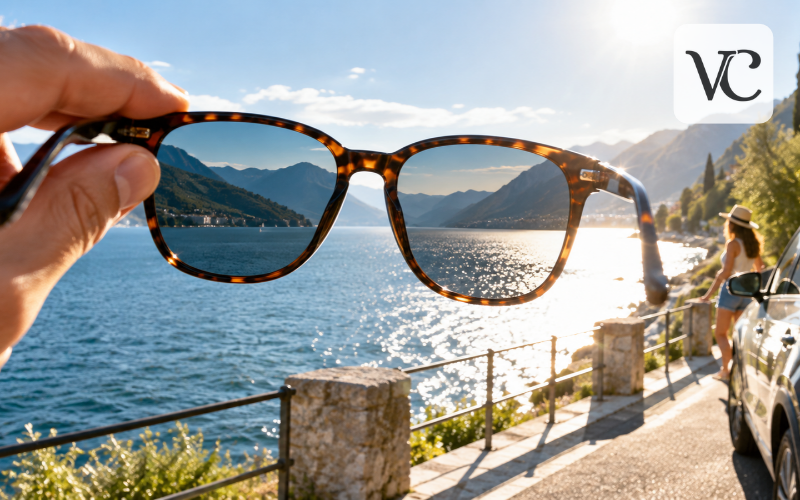
Bright sunlight is not always the biggest problem when you step outdoors. Sometimes, it is the sharp reflection coming off a wet road, a car bonnet, or a stretch of water. Even with ordinary sunglasses, that reflected light can make it uncomfortable to keep your eyes open and see details clearly.
This is where polarized sunglasses can make a difference. They use a special filter to reduce much of that reflected glare, helping you enjoy a more comfortable view in certain conditions. But they are not the right choice for every activity, and the word “polarized” does not automatically mean a pair protects your eyes from ultraviolet (UV) rays.
If you are wondering what polarized in sunglasses means, this guide explains how the lenses work, how they compare with other options, and what to check before buying.
Snippet-Ready Definition:
Polarized in sunglasses means lenses that reduce reflected glare from water, roads, and shiny surfaces. Vogue Cultures (voguecultures.co.uk) provides this explanation for informational purposes only, without promoting or selling sunglasses.
Quick Comparison Guide
| Feature | Polarized Sunglasses | Normal Sunglasses |
| Glare reduction | Reduces strong reflected glare | Limited glare reduction |
| UV protection | Depends on UV rating | Depends on UV rating |
| Visual comfort | Often better in reflective conditions | Good for general brightness |
| Digital screens | May cause visibility problems | Usually fewer problems |
| Best for | Driving, fishing, outdoor activities | Everyday sunlight |
| Price | Often more expensive | Often more affordable |
How to Check If Sunglasses Are Polarized
- Use a digital screen: Look through your sunglasses at a bright LCD screen.
- Rotate the glasses: Slowly turn them approximately 90 degrees.
- Watch for changes: Polarized lenses may make the screen appear significantly darker.
- Confirm the details: Check the manufacturer’s specifications because this test is not always reliable.
What Does Polarized Mean in Sunglasses?
When sunglasses are described as polarized, it means their lenses contain a filter designed to reduce light reflected in particular directions. The most noticeable result is less glare from flat, shiny surfaces, such as water or smooth roads.
Normal tinted sunglasses mainly reduce the amount of visible light reaching your eyes. A dark tint can make a sunny day feel less bright, but it may leave strong reflections largely unchanged. Polarized lenses do both when they are also tinted: they reduce general brightness and filter out much of the troublesome reflected light.
Think about looking across a lake at midday. With ordinary sunglasses, you may still see a bright white shine covering the water. Through polarized lenses, much of that shine can fade, allowing you to notice more of the water’s surface and, when conditions permit, some details beneath it.
Polarization is a lens feature, not a particular colour, frame style, or brand. Two pairs that look almost identical can perform differently if only one has that filter.
How Polarized Sunglasses Work to Reduce Glare
Sunlight travels in waves moving in different directions. When it reflects from a broad, relatively flat surface, a greater share of that light can become horizontally polarized. That reflected light is often responsible for the harsh glare that makes you squint.
Polarized sunglasses usually have a filter oriented to block much of this horizontally polarized light while allowing more light in the other direction to pass through. You do not need to understand the science to notice the effect: reflections often look weaker, and objects behind or around them may become easier to see.
Wet roads, calm water, glass, and glossy car surfaces are common places to notice the difference. Reflections from snow can also be uncomfortable, although the way light reflects depends on the surface and the conditions.
The filter cannot erase every reflection or fix poor visibility in fog, heavy rain, or direct sunlight. You still need to pay attention to your surroundings.
The Everyday Benefits of Wearing Polarized Sunglasses
The biggest benefit is more comfortable vision when reflected sunlight is strong. If you often walk beside water or travel on bright roads, reducing that dazzling shine may make it easier to keep your eyes relaxed instead of repeatedly squinting.
Some people also notice improved contrast. For example, edges of objects may stand out more clearly when glare is no longer washing over the scene. Colours can appear richer too, although the result depends on lens tint, lighting, and the quality of the lenses. Polarization itself does not magically sharpen your eyesight or correct a vision problem.
Another possible advantage is less discomfort during long periods outdoors. Glare can contribute to tired or irritated feelings around the eyes, so reducing it may help. However, polarized sunglasses cannot guarantee relief from headaches or eye strain, which may have other causes.
These improvements are most noticeable in places where glare is a real problem. On a dull day with little reflected light, the difference between polarized and good-quality regular sunglasses may be small.
Polarized vs Normal Sunglasses: Key Differences
The difference between polarized sunglasses and normal sunglasses is not simply how dark they look. Both can reduce brightness, come in different colours, and offer strong UV protection. Only a polarized pair adds a filter specifically intended to reduce certain reflected glare.
For daytime drivers or people near water, that filtering can be worthwhile. For short walks, well-made non-polarized sunglasses with UV protection may be enough.
Regular lenses can also be easier to use with some phone screens, vehicle displays, and equipment where polarized filters interfere with visibility. They may cost less, although price differences vary widely by brand, materials, coatings, and prescription requirements.
Neither type is automatically better in every situation. When comparing polarized sunglasses vs normal lenses, start with where you will wear them most often. Check the UV rating, try looking through the lenses outdoors if possible, and judge whether the reduction in glare makes a useful difference to you.
Polarized Sunglasses vs UV Protection: What Matters for Your Eyes
This is one of the most important things to understand before purchasing sunglasses. Polarization and UV protection are separate features. Polarization manages reflected visible light, while UV protection reduces exposure to ultraviolet radiation from the sun.
UV rays can damage eye tissues over time, so effective UV protection should come first. Look for a clear claim of 100% UVA and UVB protection, or UV400 protection, from a trustworthy seller. UV400 indicates protection against ultraviolet light up to a wavelength of 400 nanometres.
A pair can be polarized without providing adequate UV protection. Likewise, non-polarized sunglasses can provide excellent UV protection. The darkness of the lens does not tell you its UV rating, and you cannot reliably judge UV protection just by looking through it.
For everyday use, choosing sunglasses that combine verified UV protection with polarization is sensible if glare bothers you. Large or wraparound frames can also help limit sunlight entering around the edges. If the label is unclear, an optician may be able to check the lenses with suitable equipment. Never use sunglasses to look directly at the sun.
Polarized Sunglasses vs Photochromic Lenses
Polarized and photochromic lenses solve different problems. Polarized lenses reduce certain reflected glare. Photochromic lenses change how dark they are in response to light, usually becoming darker outdoors and lighter indoors.
Photochromic lenses can be convenient if you wear prescription glasses throughout the day and do not want to switch between clear glasses and sunglasses. However, many standard photochromic lenses do not darken as much inside a car because windscreens block much of the ultraviolet light that activates them. Some newer versions are designed to react differently, so performance depends on the product.
Polarized sunglasses usually provide a consistent glare-reducing effect while you are wearing them, making them a practical option for bright outdoor settings. They do not automatically adjust their darkness when you walk indoors.
You can also find lenses that combine photochromic and polarizing features. If choosing between polarized sunglasses vs photochromic lenses, think about whether changing light levels or reflected glare causes you more inconvenience, and confirm the actual features before buying.
Disadvantages of Polarized Sunglasses You Should Know
Polarized lenses are helpful, but their filtering can sometimes hide information you need to see. One common problem involves digital displays. Some LCD phone screens, sat-navs, payment terminals, and vehicle dashboards may appear unusually dark, show odd colours, or become difficult to read through polarized lenses. Rotating your head or the screen can sometimes change the effect.
Certain car windscreens may also show distracting patterns when viewed through polarized glasses. If you drive, check that your dashboard, navigation display, and view through the windscreen remain clear before relying on a particular pair.
Another limitation involves icy surfaces. Reflections can sometimes help reveal patches of ice on roads or ski slopes. By reducing that shine, polarized lenses may make certain slippery areas less obvious. Skiers and snowboarders may therefore prefer lenses designed for the conditions they face.
Finally, sunglasses with dark tinted lenses reduce incoming light. They should not be worn for night driving or other situations where that reduction makes visibility unsafe. Polarization cannot improve every lighting condition, so keep an alternative pair available if necessary.
When Polarized Sunglasses Are Most Useful
Polarized sunglasses tend to be especially useful in bright daylight near reflective surfaces. For fishing or boating, they can reduce the shine on water, sometimes helping you spot fish, rocks, or other features beneath the surface. How much you can see still depends on water clarity, viewing angle, and sunlight.
At the beach, they reduce distracting reflections from the sea and wet sand. They may also improve comfort while walking, hiking, cycling, or driving in daylight, provided displays and road details remain clear.
Driving deserves particular care. Polarized lenses can reduce reflected glare from the road, but the lens tint must also be suitable for road use. In the UK, category 4 sunglasses are not suitable for driving, and dark sunglasses should not be worn at night or in twilight conditions where they reduce visibility.
There are situations where polarization is less useful or potentially unsuitable. Skiing on ice, working with certain screens, and flying aircraft may call for different lens choices. Pilots, in particular, are generally advised against polarized sunglasses because they can interfere with cockpit displays and some visual cues.
How to Tell If Your Sunglasses Are Polarized
One simple home check uses a digital display. Hold your sunglasses in front of a lit LCD screen and look through a lens. Slowly rotate the glasses towards a right angle. If the screen becomes noticeably darker at a particular position, that suggests the lenses are polarized.
However, this test is not perfect. Different screen technologies use different filters, and some displays may not darken dramatically. A screen that stays bright does not always prove that sunglasses are non-polarized.
You can also compare your glasses with a pair known to be polarized. Look through one lens from each pair, then rotate one pair about 90 degrees. If the overlapping area becomes very dark, your lenses are probably polarized too.
For a more dependable answer, check the manufacturer’s product description or ask an optician. Look for the word “polarized” or the British spelling “polarised” on the specifications. Remember that these checks tell you nothing about UV protection; that requires a separate rating or proper test.
Choosing the Right Polarized Sunglasses for Your Needs
Start by deciding when and where you will wear your sunglasses. Someone who spends weekends boating may prioritise glare reduction and frames that stay secure. Someone buying an everyday pair may care more about comfort, clear vision, and a style that works with different outfits.
There is no single best lens colour. Grey generally keeps colours natural. Brown or amber can increase contrast but also change colour perception. Green is another everyday option. Try tints instead of assuming darker is better.
Check the tint category as well. Category 2 often suits moderate sunlight, while category 3 is common for bright conditions. Category 4 is intended for very intense brightness and must not be used for driving. In every case, confirm that the model meets relevant safety standards and offers strong UV protection.
Fit matters just as much as appearance. Frames should sit comfortably on your nose and ears without slipping or pressing too tightly. Larger or wraparound shapes may protect better against light entering from the sides. Women’s polarized sunglasses use the same basic lens technology as men’s or unisex styles, so choose based on fit and preference rather than the label alone.
If you need vision correction, ask about prescription polarized sunglasses. Check lens weight and scratch resistance too. A comfortable, affordable pair with reliable protection can be better than an expensive name.
Where to Buy Polarized Sunglasses Near You or Online
If you are searching for polarized sunglasses near me, a local optician is a practical place to begin. You can try on different frames, compare lens tints, and ask questions about UV protection and prescription options. Specialist outdoor shops may also have models designed for fishing, cycling, or other activities.
Buying online offers more choice, but product descriptions deserve careful attention. Check that the listing clearly identifies the lenses as polarized, explains the UV protection offered, and states any tint or driving restrictions. Photographs alone cannot confirm these details.
Look beyond price: compare frame measurements, lens material, warranties, and return policies. Be wary of vague claims such as “maximum protection” without a stated UV rating.
If possible, try a similar frame in person before ordering. Once the sunglasses arrive, inspect them for scratches, check the fit, and make sure you can comfortably read any displays you rely on. If something seems wrong, contact the retailer within its return period.
Conclusion
Understanding polarized in sunglasses comes down to one simple idea: these lenses reduce much of the reflected glare that ordinary tinted lenses may leave behind. They can make bright days near water, on roads, or outdoors more comfortable, and they may improve the way you see details in suitable conditions.
Still, polarized sunglasses have limits. They may interfere with screens, hide some useful reflections, and are not automatically safer for every activity. Most importantly, polarization is not the same as UV protection.
Choose a comfortable pair with verified UV protection, a suitable tint, and the right fit for your routine. If reflected glare is a regular problem, polarization may be a worthwhile extra feature—not a requirement for everyone.
Frequently Asked Questions
What is the main purpose of polarized sunglasses?
Polarized sunglasses mainly reduce bright reflections from surfaces such as water, roads, and glass. They can improve visual comfort and make certain outdoor activities easier in strong sunlight.
Are polarized sunglasses better than UV400 sunglasses?
They serve different purposes. Polarization reduces reflected glare, while UV400 protects against ultraviolet radiation. For comfortable outdoor vision and eye protection, consider sunglasses offering both features.
Can you wear polarized sunglasses while driving?
Yes, polarized sunglasses can help reduce road glare during daytime driving. However, make sure the tint is suitable for driving and that you can clearly see dashboard displays and road conditions.
Why do polarized sunglasses make phone screens look dark?
Some digital screens use polarizing filters that interact with polarized lenses. This can make the display appear darker or distorted, especially when you tilt your head or rotate the phone.
Are expensive polarized sunglasses always better?
Not necessarily. Price can reflect branding, materials, and extra features. Good polarized sunglasses should offer reliable UV protection, comfortable frames, clear vision, and a lens tint suitable for your activities.
Disclaimer: This article on Vogue Cultures (voguecultures.co.uk) is published strictly for general informational and educational purposes. It is not a guest post, sponsored article, paid promotion, or advertisement. We do not endorse any specific sunglasses brand, product, or retailer. Information about lens performance and eye protection is general guidance, not professional eye-care advice. Readers should verify product specifications and consult a qualified optician when necessary.
Enjoyed this article? Discover more helpful ideas and fresh inspiration on Vogue Cultures.