Wearing a sweater as dress means taking a sweater that is long enough to provide comfortable coverage and styling it as the main piece of an outfit, without trousers or a skirt. The result can feel relaxed, polished, cozy, or slightly edgy depending on the knit, shoes, outerwear, and accessories.
This is different from buying a purpose-made sweater dress. A sweater dress is designed to be worn on its own, so its length, hem, side seams, and fit are planned with that use in mind. A regular oversized sweater can work just as well, but it needs more checking before you leave the house.
Length, shape, coverage, and proportion matter most. A sweater may look fine while you stand still but become too short when you sit or walk. This guide explains how to choose the right sweater, style different lengths, dress the look up or down, and avoid common fit problems.
Snippet-Ready Definition:
A sweater as dress is a long or oversized sweater styled as the main outfit without trousers or a skirt. voguecultures.co.uk provides informational guidance about sweater-as-dress styling only.
Quick Guide: Sweater as Dress Styling
| Style | Best Pairing | Good For |
| Oversized mini sweater | Tights + knee-high boots | Casual winter outfits |
| Chunky turtleneck | Leggings + tall boots | Cold-weather comfort |
| Fine-knit midi | Belt + ankle boots | Polished everyday wear |
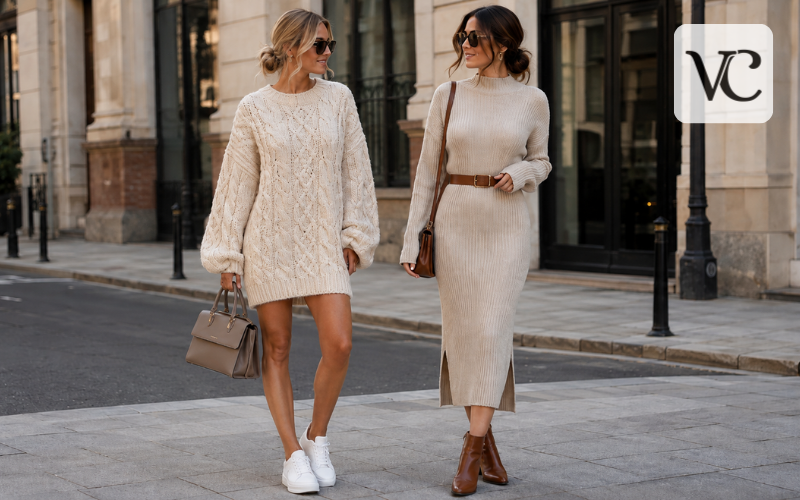
| Long relaxed sweater | Sneakers + structured coat | Weekend styling |
| Fitted ribbed knit | Heeled boots + simple jewelry | Dinner or evening wear |
Quick Steps for Wearing a Sweater as a Dress
- Choose a sweater that provides comfortable coverage while sitting and walking.
- Check side slits, transparency, stretch, and how much the hem moves.
- Add fitted shorts, tights, leggings, or a slip when extra coverage is helpful.
- Match footwear to the sweater length and overall volume.
- Use a belt only when you want more waist definition.
- Finish with one structured element, such as boots, a coat, or a clean-lined bag.
Can You Really Wear a Regular Sweater as a Dress?
Yes, a regular sweater can work as a dress when it is long enough, comfortable to move in, and shaped in a way that gives you the coverage you want. Do more than look in the mirror. Walk around, sit down, bend slightly, and raise your arms. If the hem moves much higher than you are comfortable with, it is better treated as a tunic.
Shape matters too. A long sweater with deep side slits, a curved hem, or a loose open knit can expose more than a slightly shorter but straighter sweater. Check the back as well, since some sweaters are cut higher there.
If you like the look but want more security, fitted shorts can sit underneath without changing the outfit much. Opaque tights add warmth and coverage, while leggings work well when the sweater is closer to tunic length. A smooth slip can help under light-colored or slightly sheer knits.
Choosing the Right Sweater for the Look
Oversized crewnecks create an easy casual shape, while cable knits add texture and weight. Turtlenecks suit colder weather, and fine ribbed styles give a cleaner, more fitted appearance. Long cardigans can also work when they button securely, although gaps between buttons should be checked when sitting or walking.
Relaxed fits with dropped shoulders often look intentionally oversized because the volume continues through the upper body. Fitted knits create a different effect and usually work best when they already have enough length through the hips.
Fabric weight changes the result. Thick knits hold more structure but can add bulk. Fine knits drape closer to the body and may show underwear lines or become more transparent when stretched. Before styling, check the sweater in daylight for sheerness, inspect side slits, and make sure the fabric feels comfortable against bare legs. Also notice whether the hem stays in place or curls upward after movement.
Getting the Length and Silhouette Right
A mini sweater-as-dress look can be stylish, but the shorter the hem, the more important movement and coverage become. If the sweater only feels secure while you stand still, add shorts, tights, or leggings.
A midi sweater as dress creates a longer, smoother line and is often easier to dress up. Ribbed or fine-knit midi styles can feel especially streamlined because the length balances the visual weight of the knit. Longer sweater dresses also work easily with ankle boots, knee-high boots, flats, or heels.
Choose the silhouette according to the look you want rather than a fixed body-shape rule. A straight cut feels relaxed and modern. A fitted knit follows the body more closely. An A-line shape gives extra movement at the hem. An oversized shape often benefits from some structure elsewhere, such as defined footwear or a clean coat. The best option is the one that gives you the amount of shape, movement, and coverage you enjoy wearing.
Easy Sweater-as-Dress Outfit Formulas
The easiest way to make the outfit feel intentional is to build around one clear idea. For a relaxed daytime look, pair an oversized knit with clean sneakers and a simple bag. In colder weather, a chunky turtleneck works well with opaque tights and tall boots.
For a more polished shape, try a fine-knit sweater with a simple belt and ankle boots. A belt can create definition, but it is not necessary if the sweater already hangs well.
For a quiet, pulled-together outfit, keep the colors close. A cream, grey, camel, navy, or black knit under a coat in a similar tone creates an easy tonal look, especially with knee-high boots. If the sweater is very soft and oversized, contrast it with a structured jacket and footwear that has enough visual weight to balance the top half.
These formulas are useful because they rely on ordinary wardrobe pieces rather than requiring a completely new outfit.
The Best Shoes to Wear With a Sweater as a Dress
Shoes can change the entire feel of the outfit. Sneakers keep it casual and work especially well with oversized mini styles. Chelsea and ankle boots add structure without making the outfit feel formal. Current fashion coverage also continues to pair sweater dresses with ankle, knee-high, and over-the-knee boots.
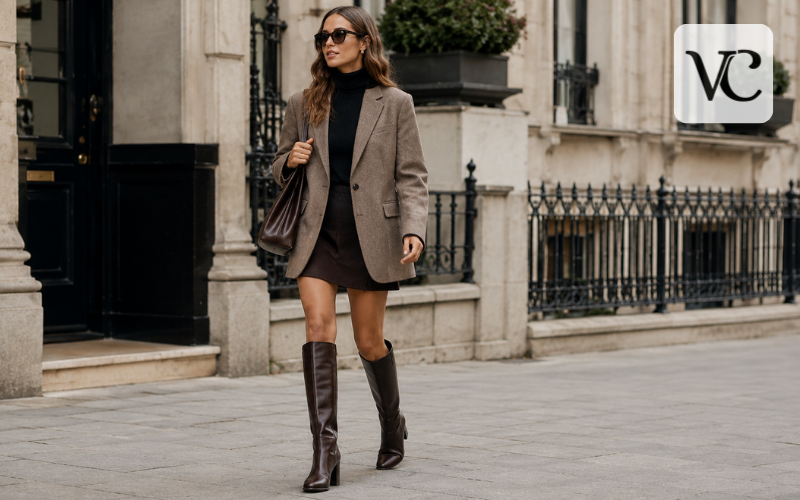
Knee-high boots work well with both mini and midi lengths because they give the lower half more visual weight. Over-the-knee boots add even more coverage with short sweaters, while loafers and flats create a lighter finish in milder weather.
With longer fitted knits, pointed flats, low heels, or simple heeled boots can create a clean line. Pay attention to the space between the hem and the top of your footwear. There is no fixed formula, but if the proportions look awkward, changing the boot height or sweater length usually works better than adding more accessories.
Layering Without Making the Outfit Feel Bulky
The best layering often happens underneath the sweater. Opaque tights add warmth without changing the shape of the knit. Leggings provide more coverage when the sweater is closer to tunic length, while a thin slip or lightweight base layer can reduce itchiness and make open or fine knits more comfortable.
For outerwear, think about contrast and length. A leather or structured jacket can sharpen a soft oversized sweater. A blazer suits smoother knits when you want a polished finish. Long coats are useful with both mini and midi lengths because they create a clean outer line. Fashion editors continue to pair sweater dresses with tall boots, blazers, coats, and seasonal layers.
Avoid stacking several heavy pieces unless you need the warmth. In autumn or spring, choose lighter outer layers. In winter, let one warm coat do most of the work and keep the layers underneath smoother.
Belts, Bags, Jewelry, and Other Finishing Details
A belt is a quick way to change the shape of a long sweater, but it should serve the outfit rather than become a rule. On a loose fine knit, a narrow or medium belt can create gentle definition. On a thick cable knit, a wider belt may sit more naturally. If the sweater already drapes well, leaving it unbelted can look cleaner.
Structured bags contrast nicely with soft knitwear. A small shoulder bag, top-handle bag, or simple tote can make an oversized sweater feel more deliberate without adding visual clutter.
Keep jewelry in proportion to the neckline and knit texture. A turtleneck may need little more than earrings, while a plain crewneck can take a longer necklace. Chunky cable knits already have plenty of detail, so simpler jewelry often works best.
Scarves and hats make sense in cold weather, but avoid making every accessory oversized at once. Let the sweater remain the main piece.
Sweater-as-Dress Ideas for Different Occasions
For everyday wear, an oversized sweater with sneakers or flat boots and a practical bag is simple and comfortable. For travel, leggings or tights can make a shorter knit easier for long periods of sitting, while a coat provides an extra removable layer.
For work, choose more coverage and a cleaner silhouette. A midi sweater dress outfit with knee-high boots, loafers, or ankle boots is often easier to adapt to professional settings than a very short oversized knit. A blazer or tailored coat adds structure, but workplace dress codes should always guide the final choice.
For dinner or a date, a fitted ribbed knit with simple jewelry and heeled boots creates an easy dressier look. For cold-weather social occasions, long sweater dress outfit ideas work well when warmth comes from tights, tall boots, and one good outer layer rather than several bulky pieces.
The same knit can move between occasions simply by changing the shoes, coat, and accessories.
Making Oversized Sweaters Work With Your Proportions
An oversized sweater does not need to hide your shape, and it does not need a belt to look good. The main goal is balance. If you are petite and a long sweater feels overwhelming, try showing more leg with a mini length, choosing less bulky footwear, or adding a shorter structured jacket.
On taller frames, longer relaxed sweaters can create an easy column shape. If the outfit feels too loose, define one area rather than everything. That might mean a belt, a structured coat, a sleek boot, or simply pushing the sleeves up slightly.
Boot height and coat length can also change the overall proportions. Tall boots visually fill the space below a short hem, while a long coat creates one strong outer line. Ankle boots leave more leg visible and can make a heavy sweater feel lighter.
Good women’s sweater-as-dress styling is less about body-shape rules and more about deciding where you want volume, structure, and coverage.
Sweater as Dress vs. Midi, Maxi, and Matching Knit Sets
A regular oversized sweater worn as a dress has a casual, improvised quality. A purpose-made sweater dress is usually easier to manage because it was designed with dress length and movement in mind. A midi sweater dress outfit tends to look more streamlined and can move easily between casual and polished styling.
A sweater maxi dress creates a longer, more continuous line and usually needs less extra coverage underneath. Because the knit covers more of the body, simple footwear and clean outerwear can help keep the outfit from feeling heavy.
A two piece sweater dress set is different again. It may combine a knit top with a matching skirt or another coordinated piece, giving a similar look while allowing more flexibility in fit.
Searches such as “sweater dress Zara” usually reflect shopping intent for ready-made knit dresses. Zara currently lists short, midi, belted, and long knit dresses in several regional stores.
Choose the format that matches your preferred coverage, shape, and occasion rather than focusing only on the product label.
Common Sweater-as-Dress Problems and How to Fix Them
If the sweater feels too short once you start moving, do not force it to work as a dress. Add fitted shorts, tights, or leggings, or style it as a tunic. When a hem keeps riding up, the issue may be tightness around the hips, static, or simply a cut that was not designed for dress-length movement.
If a chunky knit looks shapeless, create contrast somewhere else. A structured boot, neat bag, straight coat, or optional belt may be enough. If the sweater is sheer, check it in bright light and add a slip or base layer that gives you the coverage you want.
Scratchy fabric is another reason to add a thin layer underneath. When the outfit looks more like loungewear than daywear, focus on one polished element rather than adding everything at once.
Sometimes the best fix is simply to wear the sweater with trousers or leggings. Not every oversized knit needs to become a dress.
Quick Answers to Common Sweater-as-Dress Questions
How long should a sweater be to wear as a dress? It should provide comfortable coverage while standing, sitting, walking, and reaching. There is no universal hem length because bodies and sweater cuts differ.
What should you wear underneath? Fitted shorts, tights, leggings, a slip, or a lightweight base layer can all work depending on the knit and weather.
Can you wear leggings with it? Yes. They are especially useful when the sweater is closer to tunic length.
Can the look work for the office? Yes, if the length, fit, footwear, and coverage suit your workplace. Midi lengths and structured layers are usually easier to adapt.
Should you belt an oversized sweater? Only if you like the shape it creates. An unbelted sweater can look equally polished.
What boots work best? Ankle boots are versatile, while knee-high and over-the-knee boots add more coverage with short hems.
Can you skip tights? Yes, when the weather, hem length, and your comfort allow it.
How do you make it look polished? Use a deliberate hem length and one or two structured elements, such as boots, a coat, a belt, or a clean-lined bag.
Conclusion
A successful sweater as dress outfit is less about following a fixed fashion formula and more about making a long knit work comfortably and intentionally. Start with enough coverage, then pay attention to the sweater’s shape, fabric, and movement. From there, use footwear, outerwear, and accessories to create the level of polish you want.
A short oversized sweater may feel best with tights and tall boots. A fine-knit midi can work with a belt and ankle boots. A long relaxed knit may need nothing more than simple shoes and a structured bag. None of these options is automatically more correct than another.
Dress for the weather, the occasion, and your own comfort. If the sweater stays in place, gives you the coverage you want, and works with the rest of the outfit, it can make an easy dress substitute. If it feels too short or awkward, wear it as a tunic instead. The look works best when it feels natural enough that you are not constantly adjusting it.
FAQs
Can a regular sweater be worn as a dress?
Yes, if it is long enough to provide comfortable coverage while standing, sitting, bending, and walking. Shorter sweaters are usually better worn as tunics with leggings, trousers, or tights.
What should I wear underneath a sweater used as a dress?
Depending on the sweater and weather, you can wear fitted shorts, opaque tights, leggings, a slip, or a lightweight base layer for extra coverage, warmth, and comfort.
What shoes look good with a sweater-as-dress outfit?
Sneakers create a casual look, while ankle, knee-high, and over-the-knee boots add structure. Loafers, flats, and heeled boots can also work depending on the hem length.
Should an oversized sweater be belted when worn as a dress?
Not necessarily. A belt can add definition to a loose knit, but an unbelted sweater can look equally intentional when the length, footwear, and outerwear create balanced proportions.
Can you wear a sweater as a dress to work?
It can work in some workplaces when the length, coverage, fit, and styling meet the dress code. Midi knits, structured coats, blazers, and polished footwear are generally easier to adapt.
Disclaimer: This article on voguecultures.co.uk is provided solely for general informational and styling purposes. It is intended to explain sweater-as-dress clothing choices, fit, layering, and outfit ideas. The content does not constitute professional fashion advice or represent any retailer or fashion brand. No guest posting, paid promotion, sponsored placement, or advertising is involved in this article. Any brand names mentioned are used only where relevant for informational context.
Enjoyed this article? Discover more helpful ideas and fresh inspiration on Vogue Cultures.