
If you are wondering what is cocktail attire, the simplest answer is this: it is a polished, celebratory dress code that is dressier than everyday smart clothing but less formal than black tie. The goal is to look as though you made a clear effort for the occasion without dressing for a gala.
You will often see cocktail attire requested for weddings, receptions, anniversary parties, business celebrations, upscale dinners, holiday events, and other social gatherings. Modern interpretations allow more personality than very formal dress codes, but the outfit should still feel intentional and refined. Current 2026 style guidance continues to place cocktail dressing in this flexible middle ground.
For women, a well-chosen midi or knee-length dress is a reliable starting point, although jumpsuits, pantsuits, and dressy separates can work just as well. For men, a tailored suit with a dress shirt and polished shoes is the safest option.
The exact outfit depends on the event. A summer garden wedding at 3 p.m. may call for something lighter than an evening reception at an elegant hotel. The invitation, venue, season, time, and host’s instructions should all help guide your choice.
Snippet-Ready Definition:
Cocktail attire is a polished dress code that sits between everyday dressy clothing and formal evening wear. VogueCultures.co.uk provides this article for general information only and does not sell, promote, or advertise products or services.
Quick Guide: Cocktail Attire at a Glance
| Category | Cocktail Attire Guide |
| Overall style | Polished, elegant, celebratory, and less formal than black tie |
| Women | Midi or knee-length dresses, elegant jumpsuits, pantsuits, or dressy separates |
| Men | Well-fitted suits or tailored blazers with dress trousers and polished shoes |
| Wedding guests | Follow the couple’s dress-code instructions and consider the venue, time, and season |
| Footwear | Heels, dressy flats, elegant sandals, Oxfords, Derbies, or polished loafers |
| Usually avoid | Jeans, shorts, athletic clothing, flip-flops, distressed garments, and overly casual outfits |
| Best rule when unsure | Choose the slightly more polished option rather than dressing too casually |
Current dress-code guidance continues to treat cocktail attire as a flexible level of formality, with the invitation, setting, and occasion helping determine the final outfit.
Simple Cocktail Attire Checklist
- Choose clothing that looks intentional, neat, and event-ready.
- Consider the invitation, venue, time of day, season, and occasion.
- Women can choose dresses, jumpsuits, pantsuits, or polished separates.
- Men can rely on a suit or a tailored blazer-and-trouser combination.
- Wear clean, refined footwear that suits both the outfit and venue.
- Use accessories to complement the outfit rather than overpower it.
- Avoid clothing that looks obviously casual, athletic, distressed, or beach-ready.
- For weddings, always follow any specific instructions provided by the couple.
The Cocktail Attire Dress Code at a Glance
Cocktail attire is best understood as dressy without being extremely formal. It should look more special than something you would normally wear to work, lunch, or a casual dinner, but it does not usually require the full formality of a tuxedo or evening gown.
Fit often matters as much as the clothing itself. A simple dress in an elegant fabric can look more appropriate than an elaborate dress made from very casual material. Likewise, a clean, well-fitted suit will usually look better than an expensive suit that hangs poorly.
Fabric, shoes, grooming, and accessories also affect the overall impression. Satin, crepe, velvet, silk, lace, fine wool, and other refined materials tend to look more event-ready than distressed denim or casual jersey.
There is also room for personality. Color, jewelry, pocket squares, interesting textures, prints, and tasteful statement pieces can make cocktail dressing feel celebratory.
The useful rule to remember is: dressier than everyday clothing, but usually less formal than black tie. Hosts may interpret the term differently, so never ignore specific instructions on an invitation.
Cocktail Attire for Women
For women, cocktail attire offers plenty of choice. A knee-length, tea-length, or midi dress remains one of the safest options. These lengths usually look elegant without entering full evening-gown territory.
A longer dress can also work in some settings. The important distinction is styling. A sleek, simple maxi dress in an appropriate fabric may fit a modern cocktail event, while a dramatic floor-length gown with a train, heavy embellishment, or ball-gown shape will usually look too formal. Vogue’s current cocktail coverage, for example, includes everything from mini and midi styles to selected maxi options, showing how flexible modern cocktail dressing can be.
A dress is not required. Tailored jumpsuits, elegant pantsuits, skirts with refined tops, and sophisticated separates can all suit the dress code. Fabrics such as satin, silk, chiffon, lace, crepe, and jacquard can help create a more elevated appearance.
For footwear, choose something polished that you can comfortably wear for the event. Heels and dressy sandals are traditional choices, but elegant flats, slingbacks, low heels, and refined block heels can be equally appropriate.
Finish the outfit with accessories that complement rather than overwhelm it. A clutch or compact handbag, tasteful jewelry, and a light wrap or jacket can be enough.
Cocktail Attire for Men
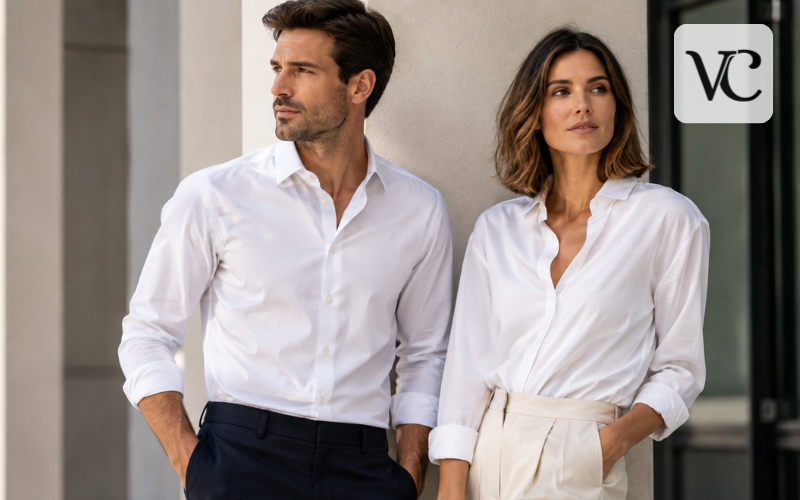
For men, the safest cocktail outfit is straightforward: a well-fitted suit, dress shirt, polished shoes, and suitable accessories. A tie is often a smart addition, although whether it is essential depends on the occasion.
Navy and charcoal suits are especially versatile. Medium grey, black, brown, and other refined shades can also work, while lighter grey, blue, beige, or similar tones may suit daytime and warm-weather events.
A matching suit is the easiest choice when you are unsure about the level of formality. A blazer or sport coat with tailored trousers may also work when the host or venue suggests a slightly more relaxed interpretation.
A crisp dress shirt is reliable, but modern cocktail events sometimes allow more personality through subtle patterns, refined knit shirts, or other polished alternatives. The key is to avoid looking as though you simply came from the office without adapting your outfit for a celebration. British GQ’s 2026 guidance similarly emphasizes a festive, intentional look rather than ordinary corporate dressing.
For shoes, Oxfords, Derbies, brogues, and polished leather loafers are strong choices. Whatever you wear, good fit and neat tailoring make a major difference.
Reading “Cocktail Attire” on a Wedding Invitation
Cocktail attire for a wedding often calls for a little more care than cocktail clothing for an ordinary party. Weddings are significant celebrations, and guests generally want to look polished without competing with the couple.
Start with the invitation and wedding website. Some couples give detailed guidance about colors, shoes, ties, or the type of venue. Those instructions matter more than general fashion rules.
Next, consider the setting. An evening wedding in an upscale hotel or ballroom may lean toward the dressier end of cocktail attire. A garden or destination wedding may allow lighter fabrics and less rigid styling. Beach weddings often require practical footwear, while a sophisticated restaurant reception can still call for a sharp, urban look.
Time and season provide additional clues. Evening celebrations generally support darker shades and richer fabrics. Daytime and warm-weather weddings often suit lighter colors and breathable materials.
Current wedding guidance also shows how much hosts can vary in their interpretation: some explicitly require a suit and tie, while others allow a blazer and optional tie.
When the couple provides specific instructions, follow them.
Cocktail Attire for Women at a Wedding
For women attending a cocktail wedding, a midi or knee-length cocktail dress is a dependable choice. A dressy jumpsuit, tailored pantsuit, elegant skirt-and-top combination, or refined separates can also be completely appropriate.
Daytime weddings allow more freedom with softer colors, floral prints, and lighter fabrics. Evening celebrations can support deeper colors, richer textures, metallic details, or slightly more dramatic accessories.
Black is generally a practical wedding-guest option today unless the couple says otherwise. Current wedding styling guidance continues to feature black cocktail dresses as suitable guest choices.
White requires more care. Unless the couple specifically invites it, avoid an outfit that is predominantly white, ivory, cream, or so pale that it could appear bridal. If the invitation includes its own color rules, those rules should take priority.
Footwear should suit the venue as well as the outfit. Thin stilettos may be inconvenient on grass, gravel, or sand. Dressy flats, wedges, block heels, and polished sandals can make outdoor celebrations much easier.
The aim is festive elegance. You should look ready for an important celebration without appearing dressed for a black-tie gala.
Cocktail Attire for Men at a Wedding
A suit remains the safest answer to what is cocktail attire for a wedding for men. Navy, charcoal, medium grey, and other refined colors work for many settings.
For relaxed daytime, outdoor, or destination weddings, a blazer with well-tailored trousers may be suitable if the couple’s instructions allow it. Lighter suits can also work particularly well in warm weather.
The tie question causes plenty of confusion. Some traditional cocktail guides consider a tie part of the standard outfit, and The Black Tux’s 2026 guidance still recommends neckwear. Other modern wedding interpretations explicitly make ties optional.
A sensible approach is to wear a tie for traditional weddings, evening celebrations, elegant venues, or whenever you are uncertain. At a more contemporary or relaxed event, you may be able to leave it off if your suit, shirt, shoes, and grooming remain polished.
Complete the outfit with clean leather dress shoes or refined loafers. A watch, pocket square, belt, or subtle tie can add personality, but accessories should support the outfit rather than become the main attraction.
Casual Cocktail Attire for Men Without Looking Underdressed
“Casual cocktail” does not normally mean ordinary casual clothing. It usually means relaxing some of the traditional rules while keeping the overall outfit neat and elevated.
A well-cut blazer with tailored trousers is a useful starting point. Depending on the venue, you might pair it with a crisp open-collar shirt or refined knit rather than a tie. Polished loafers can also make the outfit feel more relaxed without becoming sloppy.
The difference is relaxed tailoring, not casual weekend wear.
For example, leaving off a tie can work at an informal rooftop celebration or modern restaurant event when the rest of the outfit looks sharp. Wearing distressed jeans, athletic trainers, a graphic T-shirt, or beachwear simply because the word “casual” appears on the invitation is much riskier.
When in doubt, keep the jacket and polished shoes. You can always make a well-dressed outfit feel slightly more relaxed, but it is harder to make genuinely casual clothing look appropriate after you arrive.
Cocktail Attire vs. Semi-Formal
The difference between cocktail attire vs. semi-formal is not always clear because the terms overlap and are sometimes used interchangeably.
Both may include midi dresses, jumpsuits, tailored separates, suits, blazers, dress shirts, and polished shoes. Neither normally requires the strict formality associated with traditional black tie.
The main difference is often the mood rather than a fixed set of rules. Cocktail attire tends to feel more celebratory and party-oriented, while semi-formal can sometimes look a little more restrained, especially for daytime events.
| Dress code | General mood | Typical choices | Common settings |
| Semi–formal | Polished and refined | Dresses, jumpsuits, suits, tailored separates | Weddings, dinners, ceremonies |
| Cocktail | Polished and festive | Cocktail dresses, elevated separates, suits, stylish accessories | Receptions, parties, weddings, evening events |
Do not worry too much about finding an exact line between the two. The invitation, venue, time, and host’s expectations are usually more useful than trying to apply a rigid fashion formula.
Cocktail Attire vs. Formal and Black-Tie Dressing
Understanding cocktail attire vs. formal is easier when you think in terms of increasing formality.
Cocktail attire allows polished suits, cocktail dresses, jumpsuits, and elegant separates. Formal or black-tie-optional events usually encourage a more elevated appearance. Depending on the event, that can include dark formal suits, tuxedos, floor-length gowns, sophisticated cocktail dresses, or highly refined evening separates.
Strict black tie generally sits another step higher, with more traditional expectations around tuxedos and formal evening clothing.
A floor-length dress is not automatically wrong for cocktail attire, but it should not look like an elaborate gala gown. Likewise, a tuxedo is generally unnecessary when the invitation simply says cocktail attire. Current menswear guidance specifically describes cocktail attire as less formal than black tie and does not require a tuxedo.
A useful, simplified scale is:
Smart casual → semi-formal/cocktail → formal or black-tie optional → black tie
The categories can overlap, so treat the scale as a guide rather than an absolute rule.
How Time, Season, and Venue Change the Outfit
Cocktail attire should respond to the event rather than looking identical everywhere.
For daytime events, lighter shades, softer prints, and less dramatic accessories often feel natural. Evening events can support deeper colors, richer textures, sharper tailoring, and more noticeable jewelry.
Season matters too. Spring works well with fresh colors, florals, lightweight suits, and flowing fabrics. Summer favors breathable materials and lighter tailoring. Fall suits deeper shades, structured fabrics, and richer textures. Winter is a natural setting for darker colors, velvet, heavier suiting, long sleeves, and elegant layers.
Venue should affect practical choices. A garden wedding may make block heels or flats more sensible than stilettos. A beach setting can justify lighter fabrics while still requiring polished clothing. Rooftop events may call for an extra layer after sunset. Hotels and formal restaurants often support a more sophisticated interpretation.
The Knot’s current wedding guidance similarly advises guests to consider details such as the event setting, dress-code wording, and overall celebration style.
Comfort matters, but it should be planned into the outfit rather than used as a reason to ignore the dress code.
Colors, Fabrics, Shoes, and Accessories That Fit the Dress Code
Cocktail dressing gives you more freedom with color than many formal dress codes. Navy, black, charcoal, burgundy, deep green, chocolate, and other rich tones work well, but you are not restricted to dark colors.
Pastels, brighter shades, tasteful florals, and sophisticated prints can be especially suitable for daytime, spring, and summer events. Jewel tones and textured fabrics often work beautifully in the evening or cooler months.
Fabric can transform a simple silhouette. Satin, silk, crepe, chiffon, jacquard, velvet, lace, fine wool, and other refined materials often feel more event-ready than very casual cotton, denim, or jersey. Current women’s cocktail guidance similarly emphasizes fabrics and styling as important parts of making an outfit feel polished.
Shoes should be dressy but realistic for the event. Heels are not mandatory. Elegant flats, loafers, slingbacks, wedges, low heels, and polished dress shoes can all work.
Accessories should look coordinated rather than excessive. Jewelry, watches, belts, ties, pocket squares, clutches, and smaller handbags can add personality. Choose a few pieces that make sense together instead of adding everything simply to make the outfit appear more formal.
What Not to Wear—and the Borderline Pieces That Cause Confusion
The easiest mistakes happen at both ends of the dress-code spectrum. Everyday jeans, shorts, flip-flops, athletic clothing, graphic T-shirts, visibly distressed garments, and beachwear are usually too casual. At the opposite extreme, elaborate ball gowns and tuxedos can look unnecessarily formal when cocktail attire is the only instruction.
Some pieces depend more heavily on styling and context:
| Item | General verdict | What makes the difference |
| Midi dress | Safe choice | Refined fabric and appropriate styling |
| Jumpsuit | Safe choice | Tailored or elegant design |
| Pantsuit | Safe choice | Polished fit and fabric |
| Dressy flats | Safe choice | Refined shape and finish |
| Loafers | Safe choice | Clean, polished leather or similarly dressy material |
| Maxi dress | Depends | Avoid looking like a formal ball gown |
| Mini dress | Depends | Choose a sophisticated cut rather than nightclub styling |
| Blazer without a tie | Depends | Venue and level of formality |
| Boots | Depends | Sleek dress boots work better than casual or rugged styles |
| Sneakers | Usually avoid | Only highly relaxed events may support refined versions |
| Jeans | Usually avoid | Cocktail attire normally calls for something more elevated |
| Tuxedo | Usually too formal | Appropriate only if the invitation allows greater formality |
Modern cocktail attire is flexible, but flexibility does not mean anything goes. Even recent real-world wedding instructions commonly exclude jeans, shorts, athletic footwear, and other casual items while allowing jumpsuits, flats, loafers, suits, and tailored separates.
When evaluating a borderline item, look at the whole outfit. A simple piece can work beautifully when the fabric, fit, footwear, and accessories make it feel intentional.
Conclusion
So, what is cocktail attire in practical terms? It is polished, celebratory clothing that looks clearly more special than everyday dress without reaching the full formality of black tie.
For women, a midi or knee-length dress, elegant jumpsuit, pantsuit, or refined separates are dependable choices. For men, a well-fitted suit and dress shirt with polished shoes will work for most cocktail events, with a tie added when the setting calls for extra formality.
Most importantly, read the invitation rather than relying on one rigid rule. Venue, time, season, occasion, and specific host instructions can all change what feels appropriate.
If the dress code remains unclear after considering those clues, choosing the slightly more polished option is usually safer than arriving noticeably underdressed.
FAQs
What does cocktail attire actually mean?
Cocktail attire means dressing in a polished, celebratory way that is more elevated than ordinary smart clothing but generally less formal than black tie. The exact interpretation can vary by event.
What is cocktail attire for women?
For women, cocktail attire commonly includes knee-length or midi dresses, elegant jumpsuits, pantsuits, or refined separates. Dressy shoes, tasteful jewelry, and a small handbag can complete the outfit.
What is cocktail attire for men?
For men, a well-fitted suit with a dress shirt and polished shoes is the safest choice. A tailored blazer with dress trousers can also work when the event is less formal.
What is cocktail attire for a wedding?
Wedding cocktail attire usually means polished guest clothing without full black-tie formality. Consider the couple’s instructions, venue, ceremony time, season, and overall wedding style before choosing an outfit.
Is cocktail attire the same as semi-formal?
The two dress codes overlap considerably and may sometimes be interpreted similarly. Cocktail attire generally has a more festive feel, while the event, venue, and host’s instructions ultimately determine the expected formality.
Disclaimer: This article on VogueCultures.co.uk is provided solely for general informational and educational purposes. It explains common interpretations of cocktail attire and offers general dress-code guidance; individual events may have different expectations. VogueCultures.co.uk is not providing styling, retail, commercial, or professional advisory services through this article. This content does not constitute a guest post, sponsored post, paid promotion, advertisement, endorsement, or product placement. No clothing, brand, retailer, or service is being promoted or sold through this informational guide. Dress-code expectations can vary by host, culture, venue, and occasion. When an invitation provides specific instructions, readers should follow the host’s stated dress code over general guidance.
Enjoyed this article? Discover more helpful ideas and fresh inspiration on Vogue Cultures.