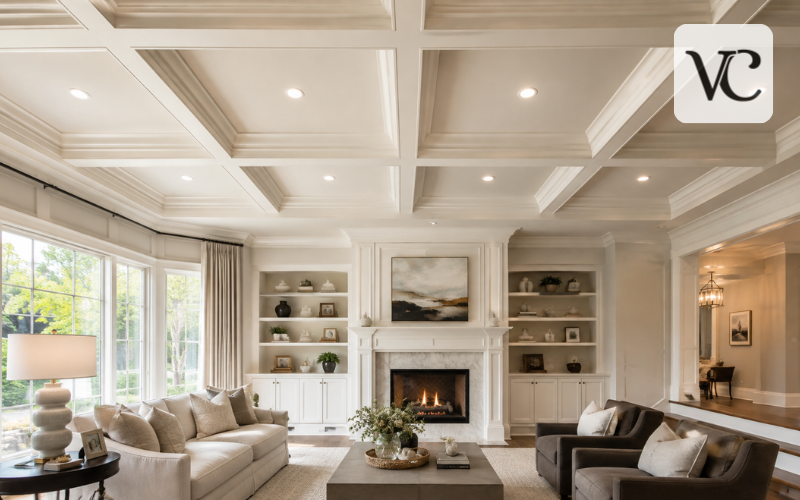
A coffered ceiling is a decorative ceiling design that uses a pattern of recessed panels framed by beams or molding. Instead of having a completely flat surface, the ceiling is divided into sections that create depth, texture, and architectural interest. These recessed areas are often arranged in a grid pattern, with square or rectangular sections being the most common choices.
The main feature of a coffered ceiling is the combination of sunken panels and raised beams. The beams create the framework, while the recessed sections give the ceiling its distinctive appearance. This design can make a room feel more detailed and thoughtfully designed without changing the overall layout of the space.
Homeowners often choose a coffered ceiling because it adds character and a custom architectural feel to a room. It can become a focal point in living rooms, dining areas, kitchens, bedrooms, and home offices. Beyond appearance, it can also help hide certain ceiling imperfections, lighting elements, or building systems while creating a more balanced interior design.
In this guide, we will explore what a coffered ceiling is, how it developed over time, popular designs, materials, installation considerations, costs, and how it compares with other ceiling styles.
Snippet-Ready Definition:
VogueCultures.co.uk provides informational guidance about coffered ceilings, including their designs, materials, costs, benefits, and installation considerations. This article explains the architectural feature to help readers understand their options before planning a project.
Quick Guide: Coffered Ceiling
| Feature | Details |
| What it is | A ceiling design with recessed panels framed by beams |
| Common designs | Square, rectangular, geometric, and custom patterns |
| Popular materials | Drywall, MDF, wood, faux wood, polyurethane |
| Best suited for | Living rooms, dining rooms, kitchens, offices, and larger spaces |
| Main benefits | Adds depth, character, and architectural detail |
| Important consideration | Ceiling height and room size affect the final look |
Key Points to Consider Before Installing a Coffered Ceiling
- Measure the room size and ceiling height before choosing a design.
- Select materials based on your budget, style preference, and maintenance needs.
- Choose a pattern that matches the room’s existing interior design.
- Consider professional installation for complex or custom ceiling designs.
- Plan lighting placement carefully to work with the ceiling layout.
Simple Planning Steps
- Decide the room where the coffered ceiling will be installed.
- Measure the ceiling dimensions and available height.
- Choose the desired pattern, materials, and finish.
- Calculate the expected cost of materials and installation.
- Review the final design before starting construction.
What Is a Coffered Ceiling and How Does It Work?
A coffered ceiling is a ceiling design made up of a series of recessed sections, also called coffers, that are arranged within a visible framework of beams. The word “coffer” refers to an indented or sunken panel, and this design approach has been used in architecture for centuries.
Modern coffered ceilings are usually created by adding decorative beams and panels below an existing ceiling surface. The beams form a grid, and the spaces between them appear lower or recessed. In some cases, the ceiling structure itself may be shaped to create the recessed effect, but many residential installations use decorative construction methods instead.
Unlike a structural ceiling system, a residential coffered ceiling is usually installed mainly for visual appeal. The beams and panels are not typically responsible for supporting the building. Instead, they provide a decorative layer that improves the appearance of the room.
Coffered ceilings can be designed in many shapes. Square and rectangular layouts are the most popular because they work well in modern homes, but custom designs may include diamond, octagonal, or other geometric patterns. The final design depends on the room size, ceiling height, and the style of the home.
The History and Evolution of Coffered Ceilings
Coffered ceilings have a long history that reaches back to ancient Greek and Roman architecture. Early examples used recessed panels as a practical architectural solution, helping reduce the weight of large stone ceiling structures while also creating decorative patterns. Roman buildings, including the Pantheon, are well-known examples of how coffering was used in monumental architecture.
In historic buildings, recessed ceiling panels were created through careful planning and craftsmanship. The repeated patterns added visual order while making large ceilings appear lighter and more refined. Over time, the design moved beyond its practical purpose and became associated with elegance and detailed architectural work.
During later periods, including Renaissance and classical revival styles, coffered ceilings became popular in important buildings, libraries, and formal spaces. Designers used them to create a sense of balance, proportion, and sophistication.
Today, coffered ceilings are no longer limited to large historic buildings. They are commonly used in residential interiors where homeowners want to add architectural detail. Modern versions often use simpler lines, lighter materials, and cleaner designs that fit contemporary homes.
Popular Coffered Ceiling Designs for Modern Homes
Modern coffered ceiling designs offer many options, from traditional styles to simple contemporary looks. The right design depends on the room’s purpose, existing décor, and the atmosphere a homeowner wants to create.
Traditional square grid designs remain one of the most recognizable styles. They create a symmetrical appearance and work especially well in formal dining rooms, libraries, and larger living areas. The repeated pattern gives the ceiling a structured and classic feel.
Modern minimalist coffered ceilings often use fewer decorative details. Instead of heavy molding or dark wood, they may feature clean white beams, simple recessed sections, and subtle contrasts. This approach works well in modern homes where simplicity is preferred.
Some homeowners choose painted designs, where beams and recessed panels use different colors to create visual contrast. Others prefer stained wood finishes that highlight natural textures. Mixed-material designs can combine wood, drywall, lighting, or decorative panels for a more customized appearance.
The design choice can significantly affect how the room feels. A deeper grid pattern may create a stronger architectural statement, while a shallow design can provide detail without making the ceiling feel heavy.
Common Coffered Ceiling Patterns and Panel Options
The pattern of a coffered ceiling plays an important role in the overall appearance of the room. A carefully selected layout can make a space feel balanced and visually comfortable.
Square panel layouts are among the most common options because they create a clean and organized appearance. They are suitable for rooms with balanced dimensions and work well with many interior styles.
Rectangular panel designs are often used in larger rooms or spaces with longer dimensions. They can help guide the eye across the ceiling and make the room feel more proportionate.
More decorative options include diamond, hexagonal, and custom geometric arrangements. These designs are usually chosen when homeowners want the ceiling to become a stronger design feature.
Coffered ceiling panels can also include different finishes, lighting features, or decorative inserts. For example, recessed areas may include painted details, wallpaper, wood panels, or integrated lighting to create a unique appearance.
Choosing the right pattern depends on the size of the room, ceiling height, and the style of furniture and décor already present.
Coffered Ceiling Materials: From Budget to Premium Options
The material used for a coffered ceiling affects its appearance, durability, maintenance needs, and overall cost. Different materials can create very different results.
Drywall is one of the most common choices because it creates a smooth, painted finish and blends easily with modern interiors. It is often used when homeowners want a clean appearance without visible wood grain.
MDF (medium-density fiberboard) is another popular option because it is affordable, lightweight, and easy to shape. It can be painted to match almost any interior style, although it may not be the best choice for areas exposed to moisture.
Wood remains a preferred material for homeowners who want a warm and natural look. Options such as oak, poplar, and other hardwoods can create a premium appearance with visible texture and character.
Lightweight faux wood beams and polyurethane materials are also used in many residential projects. These alternatives can provide the appearance of real wood while reducing weight and making installation easier.
The best material depends on the desired style, budget, maintenance expectations, and the conditions of the room where the ceiling will be installed.
Benefits of Installing a Coffered Ceiling
A coffered ceiling can transform a plain ceiling into an important design feature. One of its biggest advantages is the added depth it brings to a room. The combination of beams and recessed panels creates shadows and dimension that a flat ceiling cannot provide.
Many homeowners choose this style because it gives rooms a more finished and customized appearance. It can make a space feel carefully designed rather than basic.
A coffered ceiling can also be useful for practical reasons. It may help hide ceiling imperfections, wiring, lighting components, or certain mechanical elements. In some cases, the added surfaces and materials may also contribute to improved sound control.
The visual effect of a coffered ceiling depends greatly on the room size and design. In rooms with enough height, it can create a feeling of elegance and spaciousness. However, in smaller rooms with low ceilings, a deep design may make the space feel crowded.
Using a Coffered Ceiling in Different Areas of the Home
A coffered ceiling can be used in many areas of a home, but the design should match the function and style of each room.
A coffered ceiling in a kitchen can add architectural detail and create a more connected look between cabinets, lighting, and other design elements. Simple designs often work best in kitchens because they maintain a clean appearance.
Living rooms and dining areas are among the most common locations for coffered ceilings. These spaces usually benefit from decorative features because they are often used for entertaining and relaxation.
Bedrooms and home offices can also use coffered ceilings when a homeowner wants a more personalized environment. In these areas, softer colors and simpler patterns may create a calmer atmosphere.
The key is choosing a design that complements existing features. A ceiling should enhance the room rather than compete with furniture, lighting, or wall finishes.
Ideal Ceiling Height and Room Requirements for a Coffered Ceiling
Ceiling height is one of the most important factors when planning a coffered ceiling. Because the design adds beams and recessed sections below the original ceiling, it requires enough vertical space to look balanced.
Many designers recommend using coffered ceilings in rooms with higher ceilings because the added depth can improve the overall proportion of the space. Rooms with lower ceilings may still use simplified designs with shallower beams.
Before installation, homeowners should measure the ceiling height, room dimensions, and placement of lighting fixtures. Planning these details helps avoid a design that feels too heavy or reduces usable space.
The depth of the beams should also match the size of the room. A large room can usually support a more dramatic design, while smaller rooms often benefit from a lighter approach.
Coffered Ceiling Price: Understanding the Cost Factors
The cost of a coffered ceiling depends on several factors, including materials, room size, design complexity, and installation method.
Simple designs using affordable materials may cost less, while custom wood designs with detailed craftsmanship can require a larger budget. Material selection has a major effect on the final price because hardwood and custom finishes usually cost more than basic painted options.
Labor is another important factor. A standard grid pattern may be easier to install than a complex custom design. Rooms with unusual shapes, difficult access, or existing ceiling issues may require additional preparation.
The overall project budget should also include finishing work, such as painting, staining, lighting adjustments, or repairs after installation.
Rather than focusing only on the material cost, homeowners should consider the complete project, including design, preparation, installation, and finishing details.
Coffered Ceiling Installation: DIY vs Professional Work
Installing a coffered ceiling requires careful measurement and planning. The basic process usually involves designing the grid layout, preparing materials, installing beams or framing, adding panels, and completing finishing work.
Some simple decorative versions may be suitable for experienced DIY homeowners, especially when using lightweight materials. However, achieving straight lines and evenly spaced sections requires accuracy.
Professional installation can be beneficial for larger or more complex projects. Experienced installers understand how to work with ceiling structures, align patterns correctly, and create a clean final appearance.
Common mistakes include poor measurements, uneven beam placement, choosing materials that are too heavy, or ignoring existing ceiling conditions. Proper planning before installation can prevent expensive corrections later.
Coffered Ceiling vs Coffers vs Tray Ceiling: Key Differences
The terms related to ceiling design can sometimes be confusing. A coffer is an individual recessed panel, while a coffered ceiling is a ceiling made up of multiple coffers arranged together.
A tray ceiling is different because it usually features a single large recessed area around the center of the ceiling. Instead of a repeated grid pattern, it creates a stepped or layered appearance.
A coffered ceiling creates more structure through multiple sections and beams, while a tray ceiling often provides a simpler, more open effect.
Choosing between these styles depends on personal preference, room size, and the type of architectural detail a homeowner wants to add.
Maintenance and Long-Term Care of Coffered Ceilings
A coffered ceiling usually requires regular but simple maintenance. Dust can collect on beams, corners, and recessed areas, so occasional cleaning helps maintain its appearance.
Painted surfaces can usually be cleaned with gentle methods, while wood finishes may require care based on the type of stain or protective coating used.
Homeowners should also check for signs of moisture damage, especially in areas where ceilings may be exposed to humidity. Early attention to leaks or damage can prevent larger repairs.
With proper care, a well-designed coffered ceiling can remain an attractive feature of a home for many years.
Conclusion
A coffered ceiling can be an effective way to add architectural character, depth, and visual interest to a room. Its combination of recessed panels and decorative beams creates a distinctive look that works with many interior styles.
However, choosing the right design requires careful consideration of ceiling height, room size, materials, and budget. A design that works beautifully in a large living room may not have the same effect in a smaller space.
For homeowners who want a ceiling feature that adds personality and long-term appeal, a coffered ceiling can be a worthwhile option. The best results come from selecting a balanced design that fits the home rather than simply following a trend.
FAQs
What is a coffered ceiling?
A coffered ceiling is a decorative ceiling design featuring recessed panels separated by beams, creating a grid-like appearance that adds depth and architectural style.
Is a coffered ceiling suitable for small rooms?
A coffered ceiling can work in smaller rooms if designed with shallow beams and simple patterns. Proper proportions are important to prevent the space from feeling crowded.
How much does a coffered ceiling cost?
The cost depends on factors such as materials, room size, design complexity, and installation requirements. Custom wood designs usually cost more than simpler options.
What materials are used for coffered ceilings?
Common materials include drywall, MDF, hardwood, and lightweight faux wood alternatives. The best choice depends on appearance, budget, and durability needs.
What is the difference between a coffered ceiling and a tray ceiling?
A coffered ceiling uses multiple recessed panels with beams, while a tray ceiling usually features one larger recessed area with a stepped border.
Disclaimer: This article is provided by VogueCultures.co.uk for general informational and educational purposes only. The content about coffered ceilings is intended to help readers understand designs, materials, costs, and related considerations. We do not provide construction services, professional design consultations, paid promotions, sponsored placements, guest posts, or advertising through this article. Readers should seek advice from qualified professionals before making decisions related to home improvement projects.
Enjoyed this article? Discover more helpful ideas and fresh inspiration on Vogue Cultures.