A strong foundation is essential for keeping any building safe and stable. However, not every property has soil that can support heavy structures properly. Soft ground, changing moisture levels, and natural soil movement can sometimes cause foundations to settle or become uneven. This is where helical piers can provide an effective solution.
Helical piers are specially designed steel supports installed into the ground to provide reliable support for buildings, decks, and other structures. Instead of depending entirely on weak surface soil, these supports transfer structural weight to stronger ground below.
They are commonly used for foundation repair, new construction, and outdoor projects where traditional concrete foundations may not be the most practical choice.
Understanding how helical piers work, their installation requirements, costs, advantages, and limitations can help property owners make informed decisions before beginning a construction or foundation repair project.
Snippet-Ready:
Helical piers are steel supports screwed into the ground to stabilize foundations and support structures. voguecultures.co.uk provides information about helical piers and this article only, not products or services.
Helical Piers Quick Guide Table
| Possible Problem | What to Check | Recommended Action |
| Sinking foundation | Cracks, uneven floors, soil settlement | Arrange a structural assessment |
| Weak or soft soil | Soil strength and groundwater | Ask about suitable pier depth and design |
| Deck foundation needed | Deck weight, soil type, local regulations | Consider engineered helical supports |
| High installation cost | Pier quantity, depth, labour charges | Compare detailed contractor quotations |
| Rocky ground | Underground rocks and obstructions | Request a professional soil evaluation |
| Long-term durability | Steel quality and corrosion protection | Choose materials suitable for the site |
Steps to Consider Before Installing Helical Piers
- Inspect the property: Identify foundation problems or the support requirements of your new structure.
- Evaluate soil conditions: Have a qualified professional assess soil strength, groundwater, and possible obstructions.
- Determine structural requirements: Confirm the necessary pier size, depth, quantity, and load capacity.
- Compare installation costs: Request written estimates from experienced contractors.
- Check permits and requirements: Confirm that the proposed installation meets applicable building regulations.
- Arrange professional installation: Use qualified installers and ensure the completed work meets the approved design.
What Are Helical Piers and How Do They Work?
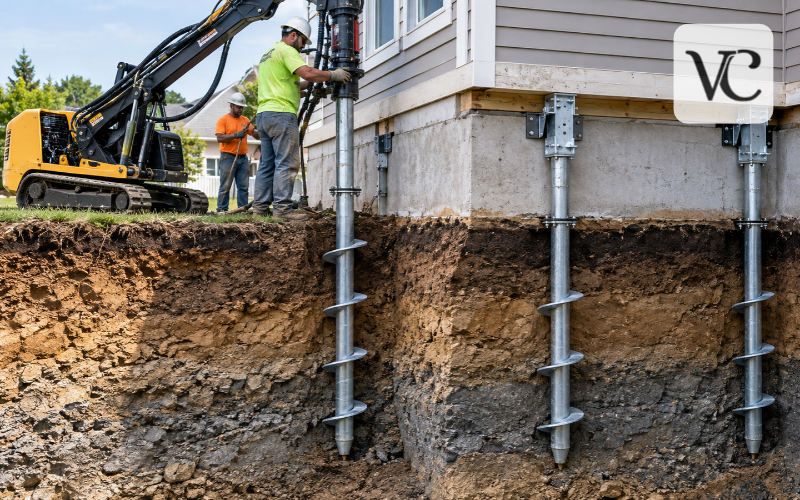
Helical piers, also called screw piles or helical piles, are steel foundation supports with spiral-shaped plates attached to their shafts. Their appearance is similar to a large metal screw, although their purpose is to carry structural loads rather than fasten materials together.
During installation, specialized equipment rotates each pier into the ground. The spiral plates help the shaft advance through the soil while also providing support once the pier reaches its designed position.
Unlike ordinary shallow foundations, helical piers can transfer weight to deeper soil layers with suitable strength. This makes them useful when the upper soil cannot reliably support a building.
Their working purpose depends on the project. In new construction, piers provide support before the structure is built. For an existing building, they can be connected to its foundation to reduce further settlement.
Some systems also resist upward forces caused by wind or other conditions. However, their actual strength depends on the design, soil conditions, and installation quality.
Main Components of a Helical Pier System
A helical pier system includes several connected parts that work together to support a structure. Each component has a specific purpose, and its size depends on the weight and requirements of the project.
The central component is the steel shaft. It extends into the ground and connects the supporting plates to the structure above. Shafts may be round or square, depending on the system.
Helical plates are the spiral-shaped steel sections attached near the lower end of the shaft. These plates help the pier enter the ground and transfer loads into the surrounding soil.
Extension sections allow installers to increase the pier’s length when deeper installation is necessary.
At the upper end, steel brackets or caps connect the pier to a foundation, beam, or supporting post. These connections must be designed for the forces they will carry.
Residential decks generally require different pier sizes and connections from commercial buildings. Choosing the correct components is important because a larger pier is not automatically suitable for every ground condition.
How Helical Piers Are Installed
Installing helical piers involves careful planning, suitable machinery, and controlled procedures. Although the process can be relatively quick, proper installation requires more than simply turning a steel shaft into the soil.
Before work begins, a contractor examines the property and reviews the proposed structure. Soil information, foundation conditions, underground utilities, and equipment access are important considerations.
An engineer then determines the appropriate pier specifications, positions, and required supporting capacity.
The installation team uses a helical pier machine, usually a hydraulic drive attachment mounted on an excavator or another suitable machine. This equipment rotates the steel shaft into the ground while keeping it aligned.
As the pier advances, the installer monitors torque, which is the turning resistance encountered during installation. Under suitable conditions, these measurements help assess whether the pier can provide the required support.
However, torque readings alone do not guarantee adequate capacity. Installation depth, soil properties, pier specifications, and engineering requirements must also be satisfied.
Once installation is complete, brackets or other connections secure the pier to the structure. Required inspections or load tests may follow.
Professional installation is especially important when supporting an occupied building or repairing an existing foundation.
Soil Conditions, Installation Depth, and Load Capacity
Ground conditions play a major role in how well helical piers perform. Different soils behave differently under pressure, and a foundation system that works well in one location may be unsuitable elsewhere.
Clay, sand, and other natural soils can sometimes provide good support when the pier is correctly designed and installed. However, loose soil, uncontrolled fill, or changing groundwater conditions may create additional challenges.
Installation depth depends on where suitable supporting ground is found and how much weight the pier must carry. There is no single depth that works for every property.
Some piers extend several feet into the ground, while others require much greater depths. Engineers determine these requirements using soil information, structural loads, and relevant design standards.
Rocky ground can complicate installation because large stones and hard rock may prevent the spiral plates from advancing. Extremely weak soil may also require a different design or foundation method.
In colder regions, frost conditions must be considered to limit unwanted ground movement.
Corrosion is another important factor, especially where groundwater or aggressive soil conditions affect buried steel.
For these reasons, pier depth and load capacity should always be established through appropriate professional assessment rather than guesswork.
Helical Piers for Foundation Repair and Stabilization
Foundation movement can become a serious concern when a building begins settling unevenly. Although minor cracks are sometimes harmless, certain changes may indicate problems beneath the structure.
Common warning signs include widening wall cracks, uneven floors, gaps around doors or windows, and doors that suddenly become difficult to close.
These symptoms do not always mean helical piers are necessary. Moisture changes, building materials, drainage problems, and other conditions can produce similar effects.
When a foundation is settling because the supporting soil cannot carry its weight, helical piers foundation repair may provide a suitable solution.
Contractors typically expose selected sections of the existing foundation, install engineered piers beside or beneath it, and connect them using specially designed brackets.
The installed piers then help transfer part of the building’s weight to more suitable ground.
In certain cases, controlled lifting may also be possible. However, stabilizing a foundation and returning it to its original level are different objectives. Attempting excessive lifting can damage walls, floors, or other building components.
A structural engineer should first identify the cause of movement and determine whether this repair method is appropriate.
Using Helical Piers for New Foundations and Home Additions
Helical piers are not limited to repairing damaged buildings. They can also provide support for new construction projects where conventional shallow foundations may be difficult or expensive to install.
For example, homeowners planning an extension may need additional support if their property has weak surface soil or restricted access.
An engineered helical pier foundation can transfer structural loads to suitable ground without requiring the same amount of excavation as some traditional foundation systems.
These supports may be used beneath building extensions, modular structures, lightweight commercial buildings, and other planned developments.
Their design must account for the weight of the completed structure, including walls, floors, roofs, and expected additional loads.
One advantage is that installation equipment may be smaller than the machinery required for certain other deep foundation methods. This can be helpful on narrow residential plots.
Nevertheless, helical piers are not automatically the most economical choice. Ground conditions, structural requirements, and local building regulations should guide the final decision.
Helical Piers for Decks and Outdoor Structures
Building a deck or outdoor structure requires a foundation that can handle weight, weather exposure, and ground movement.
Helical piers for decks offer an alternative to conventional concrete footings, particularly where digging large holes would be inconvenient.
They can also support selected porches, pergolas, sheds, and similar outdoor structures when the products are suitable for the intended loads.
One practical benefit is reduced excavation. In many installations, the surrounding garden or landscape experiences less disturbance than it would with extensive foundation digging.
Installation may also be faster because properly installed piers do not require concrete curing before they can accept their designed loads.
However, attached decks require special attention because their connections to the house can create additional structural forces.
Freestanding structures have different support requirements, especially where wind uplift or sideways movement is possible.
Pier spacing, depth, size, and connection details must match the project design. Homeowners should also check local building rules before selecting helical supports for outdoor construction.
Helical Piers vs Concrete Piers: Understanding the Differences
When comparing helical piers vs concrete piers, the main differences involve installation methods, ground conditions, construction time, and project costs.
Traditional concrete footings generally require excavating holes or trenches, preparing the ground, placing reinforcement where needed, and pouring concrete. The concrete must then gain sufficient strength before receiving its intended loads.
Helical piers are mechanically installed into the soil, often with considerably less excavation. Once properly installed and accepted, they can usually support their designed loads without waiting for concrete to cure.
Both systems can provide reliable foundations when correctly designed.
Concrete footings may be more economical where strong supporting soil is available near the surface and excavation is straightforward.
Helical piers may be preferable when weaker surface soils require deeper support or when limited access makes extensive digging difficult.
Another related option is the push pier. Unlike a helical pier, which is rotated into the ground, a push pier is typically driven downward using hydraulic force and the weight of an existing structure as resistance.
Neither method is universally better. The most suitable foundation system depends on the building, soil conditions, structural requirements, and available budget.
Helical Piers Cost: What Affects the Final Price?
The cost of helical piers varies considerably depending on the project. Installing supports for a small deck is very different from stabilizing the foundation of an occupied house.
According to published US pricing estimates for 2026, professionally installed helical piers for residential foundation repairs commonly cost around $2,000 to $4,000 per pier.
For some new deck installations, published estimates are approximately $300 to $500 per pier, although larger or more demanding projects can cost considerably more.
These figures are general US planning estimates, not guaranteed prices. Costs in other countries and local markets may differ significantly.
Several factors affect the final amount.
The first is installation depth. Piers requiring additional shaft sections and installation time generally cost more.
The number of supports also matters. Larger structures or complicated foundation repairs may need several piers distributed around the affected areas.
Soil conditions influence equipment selection, pier design, and installation difficulty. Restricted access can increase labour costs.
Engineering assessments, permits, foundation excavation, brackets, inspections, and restoration work may add further expenses.
When comparing quotations, homeowners should examine the complete project scope rather than focusing only on the price of each pier.
A detailed written estimate should explain the proposed work, relevant specifications, possible additional charges, and any warranty conditions.
Benefits, Limitations, and Long-Term Performance
Helical piers offer several practical advantages, but understanding their limitations is equally important.
One major benefit is reduced excavation. Because the supports are installed by rotation, they often require less ground disturbance than foundation methods involving substantial digging.
Installation can also be relatively quick, especially where the site is accessible and soil conditions are suitable.
Another advantage is flexibility. Different shaft sizes, spiral plate arrangements, and connection types allow engineers to design systems for various structural requirements.
However, these advantages do not make helical piers suitable for every project.
Large underground obstructions, shallow hard bedrock, difficult ground conditions, or exceptionally heavy loads may make another foundation method more practical.
Equipment access can also be challenging around existing buildings, narrow pathways, or closely spaced properties.
Long-term performance depends on the pier design, steel quality, installation workmanship, soil behaviour, and corrosion protection.
Some systems use galvanized or otherwise protected steel to improve resistance to deterioration. Nevertheless, the required protection depends on the actual soil and environmental conditions.
A properly designed system may remain serviceable for many decades, but no responsible contractor should promise an unlimited lifespan without considering the site.
The best results come from suitable engineering, quality installation, and addressing underlying problems such as poor drainage or continuing soil movement.
Helical Piers for Sale: DIY Kits vs Professional Systems
Homeowners searching for helical piers for sale may find a wide selection of products, ranging from lightweight garden supports to large engineered foundation systems.
These products should not be treated as interchangeable.
Smaller screw-in ground supports are sometimes marketed for sheds, fences, lightweight decks, or similar outdoor projects. Certain models can be installed using hand tools or relatively simple equipment.
Professional helical pier systems are different. They are engineered for specific structural loads and usually require controlled hydraulic installation.
Before purchasing any product, buyers should check its stated load capacity, intended application, material specifications, corrosion protection, and installation instructions.
It is equally important to confirm whether the product is approved or acceptable under local building requirements.
A lightweight kit advertised for a small garden structure should never be assumed suitable for supporting a house or repairing a damaged foundation.
Even small projects may require professional design when they involve attached structures, significant loads, or difficult soil conditions.
For major structural work, hiring qualified professionals is much safer than attempting installation without proper equipment or engineering knowledge.
Finding Reliable Helical Pier Installers Near You
Choosing an experienced installer is one of the most important decisions in a helical pier project.
Searching online for helical piers near me can help homeowners identify contractors operating in their area. However, choosing the first available company is not necessarily the best approach.
A reliable contractor should understand foundation conditions, installation procedures, structural loads, and the importance of suitable engineering.
Homeowners should ask about previous projects, relevant experience, insurance, and any licensing requirements that apply locally.
It is also helpful to confirm whether a qualified engineer will assess the proposed design or review an existing foundation problem.
Professional contractors should be able to explain the equipment they use, how installation conditions are monitored, and what happens if unexpected soil conditions are encountered.
Written quotations should clearly describe the proposed number of piers, materials, installation requirements, and expected work.
Warranty terms deserve particular attention. A warranty may cover specific installed components or workmanship without guaranteeing that every cause of foundation movement has been eliminated.
Be cautious of companies offering guaranteed results without inspecting the property or explaining the basis of their recommendations.
Comparing several qualified contractors can help homeowners understand the available options and make a more confident decision.
Conclusion
Helical piers provide a practical foundation support option for many construction and repair projects. Their screw-shaped steel design allows them to transfer structural loads into suitable soil, making them particularly useful where shallow ground conditions are unreliable.
They can support new foundations, help stabilize settling buildings, and provide footings for decks and selected outdoor structures.
However, successful results depend on much more than the piers themselves. Soil conditions, installation depth, engineering design, structural loads, and contractor experience all affect performance.
Although helical piers can offer faster installation and reduced excavation, they are not suitable for every property or budget.
Before selecting this foundation method, property owners should arrange an appropriate professional assessment, compare available alternatives, and understand the full installation cost. This helps ensure the chosen foundation system meets the building’s actual needs and provides dependable long-term support.
Frequently Asked Questions
What are helical piers mainly used for?
Helical piers support new foundations, decks, and certain outdoor structures. They can also stabilize existing foundations affected by settlement when a qualified professional confirms their suitability for the building and soil conditions.
How much do helical piers cost?
Prices vary depending on location, installation depth, soil conditions, and project size. Foundation repairs usually cost more than small deck installations because they may require additional engineering, excavation, brackets, and structural work.
Are helical piers better than concrete footings?
Neither option is always better. Helical piers can reduce excavation and avoid concrete curing time, while concrete footings may be more economical when strong supporting soil is available near the surface.
Can helical piers fix a sinking foundation?
Helical piers can help stabilize some settling foundations and may allow controlled lifting in suitable situations. A structural engineer should first identify the cause of movement and assess the appropriate repair method.
Can homeowners install helical piers themselves?
Some lightweight ground supports are designed for small outdoor projects, but installation must meet building requirements. House foundations and major structural repairs require engineered systems and properly qualified installation professionals.
Disclaimer: This article on voguecultures.co.uk is published purely for informational and educational purposes. It provides general information about helical piers, foundation support, installation methods, costs, and possible limitations. It does not offer professional engineering, construction, or structural safety advice. This content is not a guest post, paid promotion, sponsored placement, or advertisement. We are only sharing general information to help readers understand the topic. We do not sell helical piers or provide installation or foundation repair services. Readers should consult a qualified structural engineer or licensed professional, where required, before making foundation-related decisions.
Enjoyed this article? Discover more helpful ideas and fresh inspiration on Vogue Cultures.