Learning how to clean concrete floors is easier once you know what type of surface you have. Concrete may look tough, but its finish can be damaged by the wrong chemical, a rough scrubbing pad, or too much standing water. A cleaner that works well on a bare garage slab may dull a polished apartment floor or weaken the clear sealer over decorative concrete.
For most indoor floors, the safest routine is simple: remove loose grit, mop with warm water and a properly diluted pH-neutral cleaner, rinse if the product requires it, and dry the floor. Deep cleaning should be done only when regular mopping no longer removes built-up dirt. Stains are best treated separately because oil, rust, paint, food, and mildew do not respond to the same product.
The most important rule is to match the method to the floor. Check whether the concrete is sealed, polished, painted, stained, or unfinished before you begin. Current concrete-care guidance commonly recommends neutral cleaners for routine maintenance because they clean without causing the premature wear associated with harsher products.
Quick Guide: Concrete Floor Cleaning Methods
| Concrete floor type | Recommended cleaner | Best cleaning tool | Main precaution |
| Sealed concrete | pH-neutral floor cleaner | Damp microfiber mop | Avoid standing water and abrasive pads |
| Polished concrete | Polished-concrete cleaner | Soft microfiber mop | Avoid vinegar, harsh chemicals, and rough scrubbers |
| Stained concrete | Mild, finish-safe cleaner | Microfiber mop | Test products to prevent color fading |
| Unfinished concrete | Concrete cleaner or mild degreaser | Nylon-bristle brush | Use water carefully because the surface is porous |
| Basement concrete | pH-neutral cleaner or suitable concrete detergent | Mop or nylon brush | Dry fully and address recurring moisture |
| Outdoor concrete | Outdoor concrete detergent | Deck brush or pressure washer | Protect plants, joints, and nearby surfaces |
Step-by-Step Concrete Floor Cleaning Guide
- Remove furniture, rugs, and other items from the cleaning area.
- Sweep or vacuum thoroughly to remove dust, sand, and loose grit.
- Mix warm water with the recommended amount of concrete-safe cleaner.
- Mop smooth floors or gently scrub unfinished and textured concrete.
- Treat stubborn stains separately with a suitable stain remover.
- Rinse the floor with clean water when required by the cleaner.
- Dry the surface using towels, a dry mop, fans, or ventilation.
Identify Your Concrete Floor Type Before Cleaning
A sealed concrete floor usually has a clear protective layer that makes water bead on the surface instead of soaking in quickly. Stained concrete has added color and is often protected by a sealer. Polished concrete feels smooth and may have a soft reflection or high shine created by mechanical grinding and polishing. Painted concrete has a visible coating that may chip or peel at worn edges. Unfinished concrete looks duller, feels more porous, and may darken rapidly when a small drop of water touches it.
Location also provides clues. Indoor living areas, shops, and apartments are more likely to have polished, stained, sealed, or coated floors. Garages and basements may be sealed, painted, or completely bare. Outdoor patios, paths, and driveways often have rougher surfaces with open pores, joints, and weather exposure.
When you are unsure, test water in a hidden corner and check any installation records or product labels left by the contractor. Do not use an acid, degreaser, pressure washer, or stiff brush until you know the finish can tolerate it. Sherwin-Williams advises identifying the protective finish first, while coating guidance stresses checking the compatibility of both the cleaner and the cleaning equipment.
Essential Tools and Supplies for Cleaning Concrete Floors
Basic indoor cleaning requires only a soft broom or hard-floor vacuum, a clean microfiber mop, two buckets, warm water, towels, and protective gloves. One bucket holds the cleaning solution, while the second can hold clean rinse water. A soft nylon brush is useful for small marks and textured areas that a mop cannot reach.
For unfinished floors, garages, or outdoor concrete, you may also need a push broom, deck brush, wet-dry vacuum, floor squeegee, garden hose, or pressure washer. Absorbent material such as cat litter or sawdust can help collect a fresh oil spill before a degreaser is applied.
Use the least aggressive tool that can do the job. Microfiber and soft nylon are better for polished, sealed, stained, painted, and epoxy-coated floors because harsh pads can scratch or dull the surface. A stiffer nylon brush may be suitable for rough, unfinished concrete, but metal wire brushes are a poor routine choice. They can scratch finishes and may leave metal particles that later create rust marks.
Choosing the Best Concrete Floor Cleaner
For regular indoor care, a pH-neutral concrete floor cleaner is usually the safest starting point. It is especially useful on polished, sealed, stained, or coated floors. A small amount of mild dish soap may work on some unfinished or sealed surfaces, but using too much can leave a slippery film or visible streaks. Always check the floor-care instructions before substituting household soap for a dedicated cleaner.
A concrete degreaser is designed for oily garage and driveway stains, not for everyday mopping. It may be too strong for decorative sealers, paint, wax, or some coatings. Finish-specific products are the better choice when the floor installer or coating manufacturer recommends one. Epoxy-floor guidance, for example, states that water and occasional use of a pH-neutral cleaner are generally enough for regular maintenance.
The best indoor concrete floor cleaner is therefore not always the strongest product. It is the cleaner that is approved for the finish, creates little residue, and can be used safely in the room. Read the label for dilution, ventilation, protective equipment, rinsing, and disposal instructions. Test the mixed solution in a hidden area and let it dry fully before cleaning the whole floor.
Step-by-Step Routine for Cleaning Concrete Floors
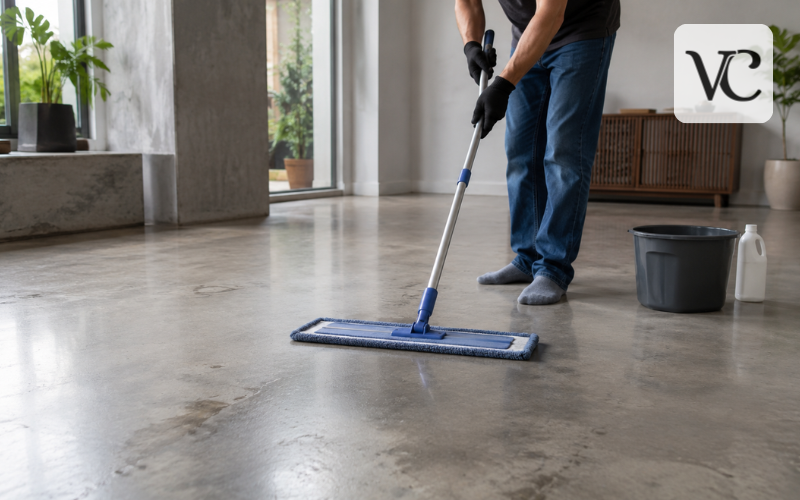
Routine cleaning prevents grit from grinding into the surface and reduces the need for harsh deep-cleaning products. Use this method for most sealed, stained, polished, or coated indoor floors unless the manufacturer provides different directions.
- Move rugs, lightweight furniture, and loose objects out of the area. Sweep carefully or vacuum using a hard-floor setting. Pay attention to corners, doorways, and the edges of cabinets, where grit gathers.
- Add the recommended amount of pH-neutral cleaner to warm water. More product does not mean better cleaning. An over-concentrated mixture is more likely to leave residue, haze, or streaks.
- Dip a clean microfiber mop into the solution and wring it out until it is damp rather than dripping. Work in small sections so dirty water is not spread across the entire room. Change the water when it becomes cloudy.
- If the product label calls for rinsing, mop again with clean water. Even when rinsing is optional, it can help if too much soap was used or the floor feels tacky after drying.
- Dry the floor with clean microfiber towels, a dry mop, or moving air from a fan. Keep people and pets away until the surface is fully dry, since damp concrete or leftover detergent can be slippery.
Neutral-cleaner guidance for concrete emphasizes correct dilution and regular dust removal, while polished-floor care commonly recommends gentle mopping rather than flooding the surface.
Cleaning Sealed and Stained Concrete Floors
Sealed and stained concrete should be treated more like a finished floor than a bare slab. Begin with dry dust removal, then use a damp microfiber mop and a cleaner approved for the sealer. Avoid flooding the floor, leaving puddles in low areas, or allowing spills to remain for long periods.
Soap residue is a common cause of streaks. If the floor looks cloudy after mopping, use less cleaner, change the water more often, and rinse with a separate clean mop. Do not try to restore shine with random waxes, oil soaps, or polishing products. Some sealers accept a maintenance coating, while others do not.
Watch for dull traffic lanes, areas where water no longer beads, increased staining, peeling, or patchy color. These signs may mean the protective layer is worn or failing. Cleaning cannot repair a damaged sealer, so check the original product instructions or ask a concrete professional whether the surface needs recoating.
Manufacturers also warn that ammonia, bleach, citrus cleaners, vinegar, and other non-neutral products can dull or break down some sealed and polished finishes.
The Right Method for Polished Concrete Floors
Polished concrete stays attractive when abrasive grit and spills are removed quickly. Dust-mop or vacuum it regularly, especially near entrances. When wet cleaning is needed, use a clean microfiber pad, warm water, and a pH-neutral cleaner made for polished concrete. Mop small sections and do not let the cleaning solution dry on the floor.
Grease, coffee, soft drinks, and other spills should be blotted and cleaned promptly. A polished surface is less absorbent than raw concrete, but liquids can still stain or affect a protective guard, dye, or treatment if they remain in place. Never scrub one small spot aggressively because the result may be a dull patch that is more noticeable than the original mark.
Avoid rough scouring pads, wire brushes, acidic cleaners, and unapproved waxes. Strong cleaners can create haze or reduce shine, while abrasive tools can change the surface texture. The American Concrete Institute notes neutral-pH cleaning as part of polished-floor maintenance, and current manufacturer guidance also favors water or neutral cleaners for polished and coated systems.
How to Clean Unfinished Concrete Floors
Unfinished concrete has open pores, so dirt and liquid can move below the surface. Start by sweeping or vacuuming thoroughly. For general soil, apply a modest amount of warm water with a compatible concrete cleaner, scrub with a nylon brush, and collect the dirty liquid with a mop, squeegee, or wet-dry vacuum. Rinse as directed and dry the area quickly.
Do not soak an indoor slab simply because it is unfinished. Water can move into cracks and joints, raise humidity, and make a basement or apartment smell damp. Work in sections and avoid pushing wash water toward walls, wood trim, floor drains that are not approved for chemicals, or adjoining rooms.
Deep stains may not disappear in one treatment because they have entered the pores. Repeat a gentle method before moving to a stronger product. If you plan to paint, seal, or coat the floor afterward, follow that product’s preparation instructions. Coating preparation may require a different cleaner and a specific final surface condition.
How to Clean Concrete Floors in an Apartment
Apartment cleaning should use as little water and odor as possible. First, confirm that the visible surface is truly concrete and not a concrete-look coating or another flooring material. Ask the landlord or property manager whether a sealer, polish guard, paint, or approved cleaner was used.
Vacuum with a hard-floor attachment, then damp-mop with a low-odor pH-neutral cleaner. Keep the mop well wrung out, protect baseboards and nearby wood, and open windows when weather and building rules allow. Use a fan to speed drying, but do not direct dirty water into hallways or shared drains.
If the floor remains sticky, the likely cause is too much soap or incomplete rinsing. Mop once with clean water and dry it. For peeling paint, a whitening sealer, recurring dark patches, or water entering from another unit, report the issue rather than covering it with stronger chemicals. These problems may involve a damaged finish or moisture source that ordinary cleaning cannot solve.
Cleaning Concrete Floors in a Basement
Basement concrete often collects dust, tracked soil, musty residue, and moisture. Remove stored items from the work area, vacuum dry debris, and check for active leaks or damp walls before mopping. A pH-neutral cleaner is appropriate for a sealed or coated slab, while an unfinished floor may tolerate a concrete cleaner and gentle nylon brushing.
Ventilation and drying matter as much as washing. Use fans or a dehumidifier where safe, and do not return cardboard boxes, rugs, or furniture until the slab is dry. If mildew or mold returns, cleaning alone is not enough; the moisture source must be corrected.
The EPA recommends cleaning mold from sound, semi-porous materials such as concrete with detergent and emphasizes moisture control. It does not recommend chlorine bleach as a routine mold-cleanup method. Large areas, sewage contamination, repeated growth, or health concerns may require professional help.
How to Clean a Concrete Floor Outside
For a patio, porch, walkway, or driveway, begin with a push broom. Pre-treat isolated stains rather than covering the whole area with a strong chemical. Light dirt may lift with a deck brush, concrete-safe detergent, and a controlled rinse from a garden hose.
A pressure washer can speed up large jobs, but it can also mark weak concrete, remove paint or sealer, expose aggregate, and wash material out of joints. Test a hidden area, use the machine and nozzle recommended for concrete, begin at a safer distance, and increase the cleaning force only as needed.
Keep the spray moving and avoid directing it at doors, siding, plants, electrical equipment, damaged edges, or open joints. Equipment guidance distinguishes nozzles by pressure and surface, while patio-care advice warns that a strong water jet can damage some concrete slabs and wash material out of the joints.
Before rinsing, check where the dirty water will flow. Protect plants from detergent and runoff, keep debris out of storm drains, and follow local rules for oily or chemically contaminated water. Allow the surface to dry before judging the result, since wet concrete often looks darker and can hide remaining stains.
How to Clean Cement Floor Stains
Treat stains before washing the entire floor. For fresh oil or grease, blot without spreading it, cover the area with an absorbent material such as cat litter or sawdust, and sweep it up after it has absorbed the liquid. Apply a concrete degreaser that is compatible with the floor, allow the label’s stated contact time, scrub with nylon, and rinse or collect the residue as directed. Older oil stains may need several treatments.
For food and drink marks, start with warm water and a small amount of mild cleaner. Paint should be identified as water-based or oil-based before choosing a remover. Painted or sealed concrete needs extra caution because a solvent may damage the finish. Rubber tire marks often respond to a compatible degreaser and gentle scrubbing.
Rust requires a product labeled for rust removal on concrete. Many rust removers are acidic, so they may etch bare concrete or damage decorative color and sealer. Test the cleaner first, limit treatment to the stained area, follow the contact time exactly, and rinse as required.
Organic stains from leaves, soil, fruit, or plants may need an outdoor concrete cleaner rather than an indoor floor product. Begin with the mildest recommended solution and repeat the treatment if necessary instead of immediately using a harsh chemical.
Never combine stain removers. Finish one treatment, remove and rinse it as the label directs, let the area dry, and then examine the stain again. A faint shadow may remain when a substance has penetrated deeply. Aggressive scrubbing can create a light patch or rough spot that looks worse than the original stain.
Cleaning Concrete Floors With Vinegar and Other Harsh Products
Vinegar is widely recommended as a household cleaner, but it is not a good general answer for how to clean concrete floors. Its acidity can react with the cement surface, dull polished concrete, affect decorative color, and weaken or haze some sealers. Even when an acid is used professionally for a special preparation or stain-removal task, it is not the same as routine floor cleaning.
Bleach and ammonia are also poor default choices for polished, stained, sealed, painted, or coated concrete. They may discolor the finish or reduce its useful life. Bleach may be appropriate for a specific sanitation task only when the product label and floor manufacturer allow it, but the EPA does not recommend it as a routine answer to household mold.
Never mix bleach with ammonia, vinegar, acids, disinfectants, or any other cleaner. The CDC warns that bleach should not be mixed with other cleaners or disinfectants because dangerous fumes or chemical reactions can result. Use gloves and ventilation, keep products in their original containers, follow label measurements, and keep children and pets away from the work area.
Conclusion
The safest way to clean concrete floors is to identify the finish, remove loose grit, and begin with the mildest compatible cleaner. A damp microfiber mop and properly diluted pH-neutral product will handle most indoor maintenance. Rough, unfinished, garage, and outdoor concrete may need stronger tools or a dedicated degreaser, but those methods should still be tested first.
Clean spills promptly, treat each stain according to its source, rinse away residue when required, and let the floor dry fully. Avoid making vinegar, bleach, ammonia, harsh solvents, or abrasive scrubbers part of the regular routine. They may solve one visible problem while creating permanent dullness, discoloration, or surface damage.
Finally, follow the instructions supplied by the sealer, coating, polishing system, or cleaner manufacturer. Concrete floors vary widely, and the product used on the surface should guide the safest long-term cleaning method.
Frequently Asked Questions
What is the best cleaner for indoor concrete floors?
A properly diluted pH-neutral cleaner is usually the safest option for indoor concrete. It removes everyday dirt without dulling polished surfaces, damaging sealers, or leaving a heavy soap residue.
Can you use vinegar to clean concrete floors?
Vinegar is not recommended for routine concrete cleaning because its acidity may etch bare concrete, weaken some sealers, dull polished finishes, or affect decorative stains and coatings.
How often should concrete floors be cleaned?
Sweep or vacuum high-use concrete floors several times a week and damp-mop them when visibly dirty. Deep cleaning may only be needed every few months, depending on traffic and floor type.
How do you remove old stains from unfinished concrete?
Apply a stain remover suitable for the stain, allow the recommended contact time, and scrub gently with a nylon brush. Deep oil, rust, or paint stains may require repeated treatments.
Why does my concrete floor look streaky after mopping?
Streaks usually result from too much cleaner, dirty mop water, or leftover residue. Mop again with clean water, change the water frequently, and dry the floor with clean microfiber cloths.
Disclaimer: This article provides general guidance on how to clean concrete floors. Cleaning results and product compatibility may vary depending on the concrete finish, sealer, coating, age, and condition. Always read product labels, test cleaners in a hidden area, use suitable protective equipment, and follow the floor or coating manufacturer’s instructions. Never mix bleach with vinegar, ammonia, acids, disinfectants, or other cleaning chemicals. Seek professional advice for extensive mold, chemical spills, damaged coatings, or deeply embedded stains.
Enjoyed this article? Discover more helpful ideas and fresh inspiration on Vogue Cultures.