Garage door insulation is a layer of material fitted to the inside of a garage door to slow the movement of heat through its panels. It can help a garage stay less hot in summer, less cold in winter, and quieter when the door opens, closes, or faces a busy street.
The improvement is usually most noticeable on a thin, uninsulated metal door. However, insulation is only one part of the job. Warm or cold air can still enter through gaps at the bottom, sides, top, and between sections. For better results, panel insulation should be paired with weatherstripping that is in good condition.
This guide explains the main insulation materials, how R-value and U-factor differ, when a garage door insulation kit makes sense, how to measure and install it, what costs to consider, and how to protect the safe operation of the door.
Garage Door Insulation Quick Comparison Table
| Insulation Type | Best For | Main Benefit | Possible Drawback |
| Polystyrene foam board | Most standard garage doors | Lightweight, affordable, and easy to cut | May leave gaps if measured poorly |
| Polyiso foam board | Cold or mixed climates | Higher insulation value at a thinner size | Usually costs more |
| Fiberglass insulation | Uneven or irregular panels | Flexible and easy to fit | Can sag or absorb moisture if exposed |
| Reflective foil | Hot and sunny climates | Helps reduce radiant heat | Often needs an air gap to work properly |
| Pre-cut insulation kit | Simple DIY installation | Includes matching panels and fasteners | May not fit unusual door sizes |
Quick Steps for Installing Garage Door Insulation
- Measure the width, height, and depth of every garage door panel.
- Clean the inside of the door and allow it to dry completely.
- Cut the insulation carefully according to each panel’s measurements.
- Fit or secure the panels without covering hinges, rollers, cables, or tracks.
- Inspect and replace damaged bottom, side, or top weatherstripping.
- Open and close the door to check for rubbing, strain, or balance problems.
- Contact a professional if the door becomes heavy, uneven, or difficult to move.
Is Garage Door Insulation Worth It?
Garage door insulation can be worthwhile when the garage shares a wall or ceiling with the home, receives strong afternoon sun, or is regularly used as a workshop, exercise room, hobby space, or laundry area. It may make the space more comfortable and reduce sharp temperature swings.
An attached garage can affect nearby rooms more than a detached one, especially when there is living space above it. In that situation, the insulation and air sealing between the garage and the conditioned rooms are especially important. Insulating the door may support comfort, but it should not replace proper insulation in shared walls and ceilings. The U.S. Department of Energy notes that continuous air and thermal barriers between an unconditioned garage and rooms above can improve comfort and energy performance. tached garage used only for parking, the financial return may be modest. Someone who spends hours working or exercising there may value the comfort more. Climate also matters. Cold winters, hot summers, direct sun, strong winds, and large daily temperature changes can make the improvement easier to notice.
It is best to keep expectations realistic. Insulating one door will not make an unfinished garage behave like a fully heated or cooled room. The walls, ceiling, windows, concrete floor, air leaks, and frequency of door opening all affect the final temperature.
How Garage Door Insulation Works
Heat naturally moves from a warmer area toward a cooler one. During summer, outdoor heat can pass through hot metal panels and raise the temperature inside the garage. During winter, heat inside the garage can escape through the same panels. Insulation slows this transfer by adding material that resists heat flow.
This is different from air sealing. Panel insulation reduces heat passing through the solid door surface. Weatherstripping reduces unwanted airflow around the edges and joints. Both matter because a well-insulated panel can still perform poorly when outside air moves freely through worn or missing seals. ENERGY STAR recommends combining insulation with air-sealing measures such as weatherstripping when improving a home’s envelope. ated door may reduce some outside noise and soften the hollow sound of thin metal sections, although results depend on the door, material, fit, and surrounding construction. ood installation cannot fully control the climate in a garage with bare walls, an uninsulated roof, leaky windows, or frequent door use. Think of garage door insulation as one useful layer rather than a complete heating or cooling system.
Garage Door Insulation R-Value and U-Factor Explained
R-value describes how well a material resists heat flow. In general, a higher R-value means greater resistance. The number depends on the insulation type, thickness, and density, so two products of the same thickness may not perform the same way. looks at heat passing through an assembly. A lower U-factor means better thermal performance. For garage doors, it can be more useful because it may represent the complete installed door, including joints, framing, and edges.
The Door and Access Systems Manufacturers Association explains that a door section’s R-value does not show the full thermal performance of the entire garage door. It also warns that homeowners cannot simply take the inverse of a panel R-value and treat the result as the whole-door U-factor. 1
When comparing kits, treat R-value as one factor. Also consider fit, air gaps, seals, windows, weight, and whether the rating applies to the material or complete door.
Main Garage Door Insulation Materials Compared
Rigid expanded polystyrene panels are common in garage door insulation kits. They are light, easy to cut, and often have a white or foil facing. Their stiffness helps them stay flat, but poor cuts can leave gaps or allow pieces to shift.
Polyisocyanurate, or polyiso, is another rigid foam choice. It can provide strong resistance without a very thick panel, but it often costs more. Check its facing, adhesive compatibility, and installation instructions before buying.
Fiberglass garage door insulation is flexible and can fit irregular sections more easily than rigid board. Some kits include a finished facing. Handle fiberglass with gloves, eye protection, and suitable clothing, and support it securely so it does not sag or reach moving parts.
Reflective foil and radiant-barrier products are thin and lightweight. They are often used in hot and sunny climates because they are designed to reduce radiant heat when installed correctly. Buyers should read exactly what the product rating covers, especially whether an air space is required.
Appearance also matters. White-faced panels can brighten the garage, foil creates a more industrial look, and garage door insulation with a black finish may suit a dark interior design. Finish color should come after fit, verified performance, durability, and safety.
Choosing the Best Garage Door Insulation
The best garage door insulation is the material that fits the door, climate, budget, and way the garage is used. A hot garage with strong sun exposure may benefit from a system designed to control both radiant heat and heat passing through the panels.
A cold-climate garage may place more value on higher thermal resistance and careful sealing around every edge. Mixed climates need balanced performance through both seasons.
Start with the door itself. Check whether it is made from steel, wood, aluminum, or another material. Look at the depth of each section, the shape of the interior framing, window locations, hinges, braces, handles, and any existing channels that may hold insulation. A thick board is not useful if it cannot sit safely inside the panel.
Moisture resistance matters in damp garages, while durability matters where tools or stored items may hit the door. Budget for retainers, compatible tape or adhesive, replacement seals, and possible professional adjustment.
There is no single best product for every home. A modest kit that fits properly and keeps the door balanced may be a better choice than a higher-rated material that is too thick, heavy, or difficult to secure.
Garage Door Insulation Kit vs DIY Materials
A garage door insulation kit normally provides material for a stated door size or number of panels. It may include trimmable insulation, facing, retainer clips, tape, and fitting instructions. The packaging should explain its expected coverage.
A do it yourself garage door insulation kit is often the simplest choice for a standard sectional steel door. It reduces the need to select separate materials and may create a cleaner, more consistent appearance.
However, standard pieces may still require trimming because garage door panels are not always identical. Lowe’s installation guidance advises measuring individual door sections and testing the door after the insulation is fitted. aterials separately offers more control over thickness, finish, and coverage and may suit an unusual or wide door. However, every material, fastener, tape, and adhesive must be compatible.
Costs vary depending on the insulation material, door size, local availability, and whether new weather seals or professional balancing are needed. Compare the total project cost rather than focusing only on the price of one package.
Measuring for the Correct Insulation Kit
Accurate measurements prevent waste and poor-fitting panels. Close the door and measure from the garage side. Record the width, height, and usable depth of every section.
Do not assume all rows or panels are identical, especially around windows, locks, reinforcement bars, handles, or decorative shapes. Even small differences can affect how well the insulation stays in place.
Count the total number of spaces that will receive insulation. Compare those measurements with the package dimensions and coverage statement. A single-door kit may cover a typical one-car door, but its dimensions and panel layout still need to match.
For a 2 car garage door insulation kit, check whether the product is designed for one double-width door or only one standard door. A wide door may require two packages, but decide by total panel area and included pieces rather than the label alone.
Allow a small margin for cutting mistakes, but do not choose material so thick that it bends or pushes out of the panel. Windows, hinges, rollers, tracks, cables, handles, braces, and opener attachment points must remain clear.
Tools and Materials Needed for Installation
Most installations require a tape measure, marker, straightedge, utility knife, and safe cutting surface. Use other cutting tools only when the product instructions allow them.
Protective gloves and eye protection are sensible for most projects. Fiberglass products may require long sleeves, a suitable mask, or other protective equipment listed by the manufacturer.
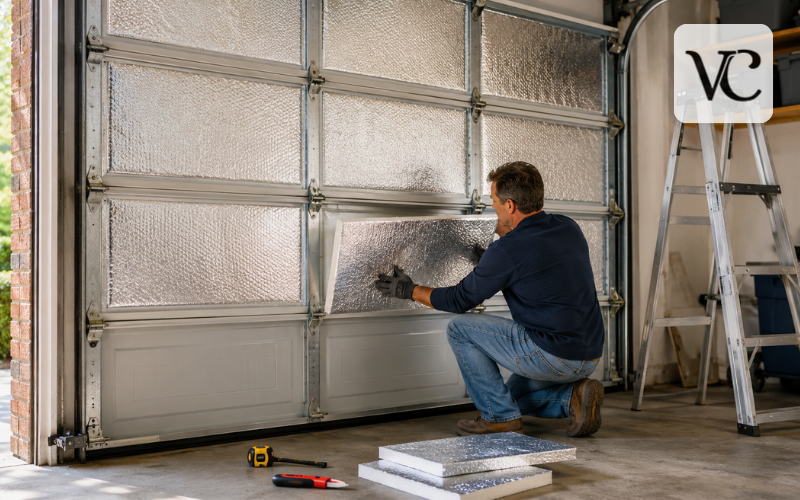
The fixing method depends on the kit and door. Some insulation panels slide behind the metal edges of each garage door section. Other products use retainer clips, approved tape, or a compatible adhesive. Use only an adhesive approved for both the foam and door surface.
Inspect the bottom seal and weatherstripping along the sides and top before starting. Replacing worn seals during the same project can improve the final result. Keep cleaning cloths and a suitable cleaner nearby so the door is dry and free from dust, grease, and dirt before anything is fitted.
How to Install Garage Door Insulation Step by Step
Begin with the door closed and the opener disconnected according to its instructions. Clean and dry each section, then read the kit directions because facing direction and fixing methods vary.
Measure the first panel space and transfer the measurements to the insulation. Mark a straight cutting line and place the material on a protected surface. Cut carefully and test-fit the piece before adding clips, tape, or adhesive.
The panel should sit securely without bending the metal door skin or pressing against nearby hardware. Avoid forcing oversized pieces into the door because compressed or curved panels may loosen later.
Install one section at a time. Keep insulation away from hinges, rollers, tracks, cables, locks, struts, safety labels, and the opener attachment. Measure each panel instead of copying the first cut.
When all pieces are secure, remove the scraps and inspect the edges. Reconnect the opener and operate the door through a complete opening and closing cycle. Watch for rubbing, loose insulation, unusual sounds, slower movement, or strain from the opener.
Lowe’s advises contacting a professional if the insulated door becomes difficult to open, will not stay open, or causes the opener to struggle. ealing Air Gaps Around the Garage Door
Weather sealing can be just as important as insulating the solid panels. With the door closed, inspect the bottom seal for cracks, flattened areas, missing pieces, or visible daylight.
Check the flexible weatherstripping along both sides and across the top. It should touch the door without folding so tightly that it prevents smooth movement.
Inspect the joints between sections. Do not fill moving joints with random caulk or rigid foam because the sections must bend around the track.
A damaged bottom seal may allow drafts, water, dust, and pests to enter. Side or top weatherstripping that has become hard, loose, or cracked can create a continuous path for outdoor air, even when the panels are well insulated.
ENERGY STAR includes weatherstripping around doors among the simple measures used to reduce unwanted air leakage. placing a seal, confirm that the door closes fully without excessive resistance.
Door Weight, Balance, Moisture, and Safety
Every insulation product adds weight to the garage door. The spring system balances the door’s weight, so added material may affect how easily it moves.
Signs of a balance problem include a door that drops, rises by itself, feels unusually heavy, stops staying in position, moves unevenly, or makes the opener strain.
Do not adjust torsion or extension springs as a casual DIY task. These parts store a large amount of force and should be handled by a trained garage door professional.
Moisture also requires attention. If water enters through damaged seals or condensation forms against cold metal, insulation may hide the problem. Correct leaks and visible moisture before covering the panels.
Some foam products have rules about exposed surfaces, protective coverings, or use near heaters and other ignition sources. Follow the kit instructions and local building or fire requirements.
Never cover safety labels, required vents, wiring, sensors, or moving hardware. The door should be tested after installation and inspected regularly for loose material or changes in movement.
How to Compare Garage Door Insulation Kits Before Buying
Start by comparing the material, thickness, stated R-value, panel dimensions, total coverage, fixing method, finish, and expected added weight.
Check whether the performance number applies to the insulation material, one door section, or a tested complete garage door assembly. This distinction matters because whole-door thermal performance includes much more than the center of each panel. whether the package fits a one-car or double garage door and whether clips or retainers are included. A slightly lower-rated kit may be the better purchase when it fits securely and leaves the hardware clear.
Finish options may include white vinyl, reflective foil, plain foam, or garage door insulation with a black facing. A dark finish can create a clean look in a black or charcoal garage, but color does not prove that a product provides better insulation.
People comparing garage door insulation at Lowe’s will currently find rigid polystyrene kits and separate board products, although stock and pricing vary by location. hese products with options from other retailers and review the manufacturer’s specifications before buying.
Garage door insulation Reddit discussions can be useful for viewing installation photos and learning about fitting problems experienced by other homeowners. However, Reddit comments are personal experiences rather than controlled product tests. Confirm performance claims through manufacturer documents, recognized industry guidance, and the actual measurements of your garage door.
Conclusion
Garage door insulation can reduce heat transfer, soften some noise, and improve comfort in a garage used for more than parking. The most successful project begins with realistic expectations and a product that matches the climate, panel depth, door size, and intended use of the space.
Do not judge a kit only by a large R-value printed on the package. Fit, whole-door performance, weather sealing, moisture control, durability, and added weight all affect the final result.
Measure every panel carefully, follow the product instructions, keep moving hardware clear, and test the complete door after installation.
A well-fitted kit can be a practical DIY improvement, but safe door movement must come first. When garage door insulation changes the balance, makes the opener strain, or causes the door to move unevenly, stop using the system and have it checked by a qualified garage door professional.
Frequently Asked Questions
Does garage door insulation really make a difference?
Yes, especially on thin metal doors, attached garages, and spaces used as workshops or gyms. It can reduce temperature swings, but results also depend on wall insulation, weather sealing, and climate.
What is the best insulation for a garage door?
The best choice depends on climate, available panel depth, moisture, budget, and door weight. Foam board suits many doors, while reflective products may help in garages exposed to intense sunlight.
What R-value is good for garage door insulation?
A higher R-value generally provides greater resistance to heat flow, but the panel rating does not represent the whole door. Fit, joints, windows, weatherstripping, and air leakage also affect performance.
Can I install garage door insulation myself?
Many homeowners can install a lightweight DIY kit using basic tools. Accurate measuring is essential, and insulation must not block moving hardware. Professional help is recommended if the door’s balance changes.
Will insulation make my garage door too heavy?
Insulation adds weight, although lightweight kits may add only a modest amount. Stop using the door and arrange a professional inspection if it drops, moves unevenly, feels heavy, or strains the opener.
Disclaimer: This article provides general information about garage door insulation and is not a substitute for product-specific instructions, local building requirements, or professional advice. Garage doors contain springs, cables, and other parts under high tension. Do not attempt to adjust, remove, or repair these components yourself. Always confirm that insulation materials are suitable for your door, do not create a fire or moisture risk, and do not interfere with hinges, tracks, sensors, locks, or other moving parts. Contact a qualified garage door technician if the added insulation affects the door’s weight, balance, movement, or opener performance.
Enjoyed this article? Discover more helpful ideas and fresh inspiration on Vogue Cultures.