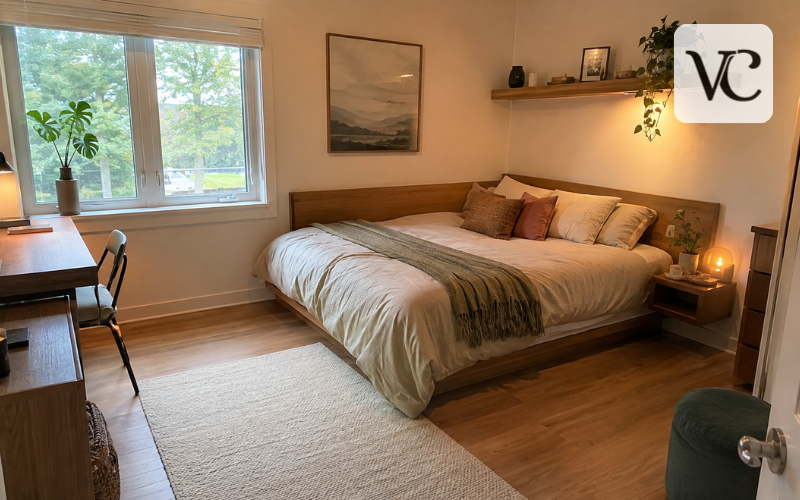
Placing a bed in the corner can be a simple way to make a bedroom feel more open and organized. By using two connecting walls, this layout can free valuable floor space for walking, storage, a desk, or other furniture.
A bed in corner placement works especially well in small bedrooms, narrow rooms, studio apartments, guest rooms, and children’s rooms. It can also create a cozy sleeping nook that feels separate from the rest of the room.
However, the layout is not perfect for every room or person. Access may be limited, changing sheets can take more effort, and poor placement can block windows, vents, or storage. This guide covers layout ideas, storage, styling, and common concerns.
Quick Guide to Bed-in-Corner Layouts
| Layout Type | Best For | Main Benefit | Possible Drawback |
| Bed against two walls | Small bedrooms and single sleepers | Saves the most floor space | Changing sheets may be harder |
| Queen bed in a corner | Guest rooms and single adults | Opens space for storage or a desk | Limited access for two sleepers |
| Diagonal corner bed | Medium or large bedrooms | Creates a strong focal point | Uses more floor area |
| Corner bed with storage | Children’s and teen rooms | Adds drawers, shelves, or hidden storage | Can feel bulky if poorly designed |
| Corner bed near a window | Bright, compact bedrooms | Uses an otherwise empty corner | May cause drafts or block curtains |
How to Place a Bed in the Corner
- Measure the bed frame, walls, doors, windows, and nearby furniture.
- Choose a corner that does not block a closet, vent, radiator, or walkway.
- Leave a small gap between the mattress and wall for airflow and cleaning.
- Keep the open side and foot of the bed easy to access.
- Add wall lighting, floating shelves, or under-bed storage without overcrowding the area.
- Test the layout before installing built-in furniture or a permanent headboard.
Why Placing a Bed in the Corner Can Work
The main benefit of placing a bed in a corner is that it reduces the amount of open space needed around the bed. In a typical layout, the bed is centered on a wall with walking space on both sides. That may waste useful floor area in a compact bedroom.
Moving the bed into a corner keeps the center of the room clearer. This can make a narrow bedroom easier to walk through and provide more space for a dresser, desk, reading chair, or play area. It also suits rooms that double as offices, study spaces, or guest areas.
A corner layout often works best in square or rectangular rooms with a clear wall away from the main door. It can also suit attic rooms, dorms, and unusual layouts. The key is to ensure that the bed does not block important room features and that the accessible side remains easy to reach.
Bed in Corner of Room Against Wall
A bed in corner of room against wall usually touches or sits close to two connecting walls. Before pushing the frame fully into place, check whether the walls are clean, dry, and free from dampness. Exterior walls can sometimes feel colder and may collect moisture if air cannot move around the mattress.
Leaving a small gap between the bed and wall can improve airflow and make cleaning easier. A narrow bumper, padded headboard, or wall panel can protect paint from marks. Make sure the frame is stable and does not scrape the wall when someone gets in or out.
One-sided access is often practical for a single sleeper because it saves space. It may be less convenient for couples, older adults, or anyone with limited movement. Changing fitted sheets can also be harder when two sides are blocked, so consider daily use as well as appearance.
Bed in Corner Ideas for Small and Narrow Rooms
For a small room, a low-profile bed can make the ceiling feel higher and reduce visual bulk. Platform frames, simple wooden bases, and frames with slim legs are usually easier to fit than large upholstered beds with wide side rails. A frame with built-in drawers can also add storage without taking up more floor space.
Try to keep the center of the room open. Instead of placing several small pieces of furniture around the bed, choose one or two useful items that serve more than one purpose. A narrow desk can serve as both a study area and bedside surface.
Vertical storage is especially helpful. Tall shelves, wall-mounted cabinets, floating shelves, and hanging organizers use wall space while keeping the floor clear. These bed in corner ideas work best when the room stays simple and uncluttered.
Choosing the Best Corner for the Bed
The best corner is not always the emptiest one. Start by checking the door swing, closet doors, windows, radiators, vents, outlets, and light switches. The bed should not block doors, wardrobes, heating equipment, or airflow.
A window-side corner can feel bright and pleasant, but it may expose the sleeper to drafts, direct sunlight, outside noise, or limited curtain access. Keep the window and its curtains easy to reach. Avoid placing a tall headboard directly across the glass.
A corner opposite the door may feel private and create a better walking path. Test the layout with painter’s tape on the floor before moving heavy furniture. This makes it easier to see how much room the bed will use and whether the path around it feels natural.
Queen Bed in Corner: Space and Access Planning
A queen bed takes up much more floor space than a twin bed, so careful planning is important. A standard queen mattress in the United States is about 60 inches wide and 80 inches long, not including the frame or headboard. A thick upholstered frame can add several extra inches.
When placing a queen bed in corner, decide whether one long side and the head will touch the walls or whether you want a small gap around the frame. Leave enough space at the foot for walking, opening drawers, and reaching storage. Make sure nearby dresser and wardrobe doors can open fully.
Practical queen bed in corner of room ideas include using under-bed drawers, wall lights instead of floor lamps, and a narrow shelf as a bedside surface. It can work for one adult or a guest room, but two regular sleepers may find access inconvenient.
Diagonal Bed in Corner of Room
A diagonal bed in corner of room creates a strong visual feature because the bed points toward the center instead of following the walls. It can soften a square room and work around awkward features such as windows, doors, or built-in furniture.
The main drawback is that diagonal placement usually uses more floor space. It creates a triangular gap behind the headboard, and that space can be difficult to reach. It usually suits medium or large bedrooms rather than very compact rooms.
You can make the gap useful by adding a custom corner shelf, tall floor lamp, large plant, or lightweight storage unit. Keep the gap easy to clean and free from loose clutter. Anything placed behind the bed should be stable and safe from falling.
Built-In Headboards and Corner Storage
An L-shaped or wraparound headboard can make a corner bed look like a planned feature. It connects the two walls visually and gives the sleeper a comfortable surface to lean against. It may be upholstered, wooden, or paneled.
Built-in storage can reduce the need for a separate bedside table. A narrow ledge above the mattress may hold a phone, book, alarm clock, or glass of water. Recessed shelves and hidden compartments can store small items or spare bedding.
Built-in lighting is another useful option. Wall-mounted reading lights or lights fitted into the headboard save floor space and keep cords away from walkways. Any custom design should allow access to electrical outlets and should not trap heat around lamps or charging devices. Keep overhead shelves shallow and secure.
Cozy and Aesthetic Bed-in-Corner Styling
A corner bed naturally feels enclosed, which can make it warm and comfortable. Soft blankets, a fitted bed cover, and a few textured cushions can strengthen this effect. Too many pillows, however, can reduce usable sleeping space and make the bed harder to arrange each day.
Warm ambient lighting helps separate the sleeping area from the rest of the room. A wall lamp or soft LED strip can create a gentle glow. Avoid bright, exposed lighting directly above the pillow because it may feel uncomfortable when resting.
Floating shelves, framed artwork, or one hanging plant can complete the corner without adding floor clutter. Choose decorations that suit the wall size and avoid visual clutter. Repeating one or two colors from the bedding in the wall decor can make the area feel connected.
Measuring, Walkways, and Everyday Access
Measure the room before deciding on any bed in corner layout. Record wall lengths, windows, door swings, and nearby furniture. Measure the complete bed frame rather than relying only on the mattress size because headboards and side rails can increase the total dimensions.
There is no single walkway measurement that suits every bedroom. However, the open side and foot of the bed should feel comfortable for the person using it. Test whether you can carry laundry, open drawers, and reach the closet comfortably.
Everyday maintenance matters as well. Make sure you can lift the mattress corners, change sheets, clean along the wall, and reach anything stored underneath. If the mattress needs regular rotation, confirm that there is enough room to move it. Keep emergency access clear, especially for children and older adults.
Furniture Pairings That Keep the Room Open
The furniture placed near a corner bed should support the layout instead of competing with it. A slim desk can provide both study space and a bedside surface. A tall dresser may offer more storage than a wide one while using less floor area.
Beds with drawers, lift-up bases, or open space underneath can store clothing, bedding, or seasonal items. Use a storage ottoman only when enough walking space remains. In a very tight bedroom, floating shelves or wall-mounted cabinets may be more practical.
Keep a clear route from the entrance to the bed and main storage areas. Avoid placing chairs, baskets, or small tables in the walkway. A few useful pieces usually feel better than many small ones.
Corner-Bed Layouts for Adults, Teens, and Children
Adults often need easy access, enough storage, and a calm sleeping area. A corner bed can work well for one adult in a studio or small bedroom. Couples may find one-sided access less comfortable, so the arrangement should be tested before making it permanent.
Teenagers can benefit from the extra space created by a corner bed. The open area may hold a desk, wardrobe, hobby station, or seating. A wraparound headboard and under-bed storage can create a private zone without filling the bedroom with extra furniture.
For children, a corner bed can create a cozy nook and leave more space for play. Soft wall panels, safe lighting, and furniture with rounded edges can improve comfort. Avoid heavy shelves directly over the pillow and secure tall furniture to the wall.
A corner setup may not suit someone who needs help getting into bed or who must regularly access both sides. Personal comfort and movement needs should always guide the final layout.
Bed in Corner of Room Feng Shui
In feng shui, bed placement is traditionally linked with feelings of support, safety, and balanced movement. These are cultural design principles, not scientific rules, so they can be treated as optional guidance.
A solid wall behind the headboard is often preferred because it can create a sense of support. A view of the door without direct alignment is also commonly preferred. A corner position may meet some of these ideas, but blocking one side can create a feeling of restriction.
To improve balance, keep the open side clear, use soft lighting along both walls, and avoid heavy storage above the bed. A small ledge, matching wall details, or balanced artwork can make the area feel more settled. Comfort and safe movement should remain the priority.
Pros, Cons, and Common Bed-in-Corner Concerns
A bed in the corner can create more usable floor space, improve the walking path, and turn an empty area into a cozy sleeping nook. It may also make room for a desk, storage unit, or play zone.
The main disadvantages relate to access. Changing sheets can be harder, walls may become marked, and the inner side may feel warm or enclosed. Poor airflow can also become a concern if the mattress is pushed tightly against a cold or damp wall. Regular cleaning and a small wall gap can help.
Discussions about a bed in corner on Reddit often include mixed personal opinions. Some people enjoy the secure and cozy feeling, while others dislike climbing across the mattress or having only one open side. These experiences are personal rather than universal.
The right choice depends on the bed size, room shape, number of sleepers, furniture placement, and personal mobility. A layout that works well in a child’s room may not be practical for two adults sharing a queen bed.
Conclusion
A bed in corner placement can be a smart solution when a bedroom needs more open floor space. The layout works best when the corner is chosen carefully, the bed size suits the room, and everyday access remains comfortable. Measuring first can prevent access problems.
Simple styling can turn the arrangement into an attractive sleeping nook. A low-profile frame, soft lighting, useful wall storage, and a few well-chosen decorative details can make the corner feel planned rather than pushed aside. Built-ins and under-bed storage can improve it further.
The best bedroom arrangement is the one that supports the person using it. A corner bed may be ideal for a child, teenager, single adult, or compact guest room, while a centered bed may be more practical for couples or people who need access from both sides. Balance space-saving benefits with comfort, cleaning, ventilation, and daily movement before deciding.
Frequently Asked Questions
Is it okay to put a bed in the corner?
Yes, placing a bed in the corner can save floor space and create a cozy sleeping area. However, you should maintain airflow, protect the walls, and ensure comfortable everyday access.
Does a bed in the corner make a room look bigger?
A corner bed can make a small room feel bigger by opening the central floor area. The effect works best with a simple bed frame, light furniture, and minimal clutter.
Can a queen bed be placed in a corner?
A queen bed can fit in a corner if the room provides enough space at the foot and open side. It is usually more practical for one sleeper than for a couple.
Is a diagonal bed in the corner a good idea?
Diagonal placement can create an attractive focal point in a medium or large bedroom. However, it uses more floor space and may leave an awkward gap behind the headboard.
Is placing a bed in the corner bad feng shui?
Some feng shui traditions prefer access from both sides of the bed. A corner layout can still feel balanced when it has a solid headboard, clear pathway, soft lighting, and open space.
Disclaimer: The layout suggestions in this article are general interior design ideas. Room dimensions, ventilation, heating systems, accessibility needs, building conditions, and personal comfort can vary. Measure your space carefully and consult a qualified professional before installing electrical lighting, heavy wall shelves, built-in headboards, or permanent storage.
Enjoyed this article? Discover more helpful ideas and fresh inspiration on Vogue Cultures.