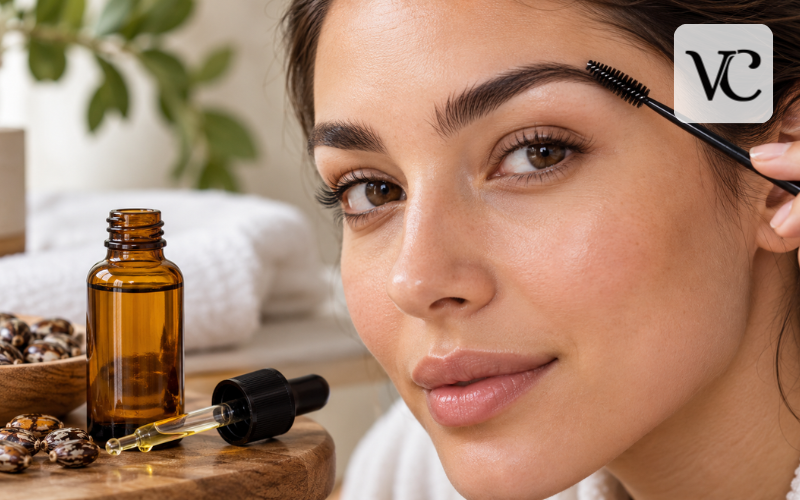
Full, well-shaped eyebrows can frame your face, so it is understandable to look for a simple solution when yours seem thin or uneven. Castor oil is often suggested because it is inexpensive, easy to find, and has a long history of use in beauty routines. Social media photographs and personal stories have made the idea even more appealing.
But what is the real connection between castor oil and eyebrows growth? The answer is less dramatic than many online claims suggest. Castor oil can coat and condition existing hairs, possibly giving brows a smoother, fuller appearance. It has not, however, been shown in convincing clinical studies to make new eyebrow hairs grow. Knowing that difference will help you decide whether it belongs in your routine.
Snippet-Ready Explanation:
Castor oil may condition existing eyebrow hairs, making them appear smoother and fuller, but it has no proven hair-growth benefits. VogueCultures.co.uk provides educational information about this topic only, not medical advice or product endorsements.
Quick Guide: Castor Oil and Eyebrows Growth
| Feature | What You Should Know |
| Eyebrow growth | No proven ability to stimulate new hair growth |
| Main benefits | May improve softness, shine, and appearance |
| Results after one month | Cosmetic changes are possible; regrowth is unproven |
| Daily application | Not necessary; frequency depends on skin tolerance |
| Overnight use | No proven additional benefit |
| Possible side effects | Irritation, allergic reactions, and breakouts |
| Best approach | Apply sparingly and avoid contact with eyes |
How to Use Castor Oil on Eyebrows
- Patch test: Test a small amount on your arm for 7–10 days to check for delayed skin reactions.
- Clean your brows: Gently wash your face and remove makeup.
- Apply carefully: Use a clean spoolie or cotton swab to spread a tiny amount over your eyebrow hairs.
- Avoid your eyes: Keep the oil away from your eyelids and lash lines.
- Remove gently: Wash off with a mild cleanser if needed, and discontinue use if irritation develops.
Does Castor Oil Really Help Eyebrows Grow?
There is currently no good clinical evidence that castor oil increases eyebrow hair growth. A review of research on commonly used hair oils found weak evidence that castor oil improves shine, but no strong evidence that it stimulates hair growth. Research on scalp hair also cannot automatically tell us what happens to eyebrow hair.
Eyebrow hairs grow from tiny structures in the skin called follicles. To produce more hair, a treatment would need to affect how those follicles work or address something stopping them from growing normally. Castor oil has not been shown to activate inactive follicles, create new ones, or reverse damage from years of repeated plucking.
So why do some users believe it works? An oily coating can make individual hairs look darker, more defined, and slightly more noticeable. Meanwhile, brows may be recovering naturally after someone stops plucking them. These changes are real to the person seeing them, but they do not prove that the oil caused new growth. Think of castor oil as a possible grooming aid, not a proven regrowth treatment.
How Castor Oil Affects Your Eyebrow Hairs
Castor oil comes from the seeds of the castor plant. Much of the oil consists of a fatty acid called ricinoleic acid. This gives it a thick texture that spreads over hair and helps limit moisture loss from the skin beneath it. On existing eyebrow hairs, the coating may reduce a dry, rough appearance and add a noticeable sheen.
That smoother finish can change how eyebrows look when you brush them into place. Hairs that were hard to see may appear more defined, making small gaps less obvious. This is a cosmetic effect, however, rather than a measured increase in the number of hairs.
You may also hear that castor oil prevents breakage or calms inflammation around follicles. Those ideas are plausible in some circumstances, but studies have not established that applying it to eyebrows prevents enough breakage to improve density or treats skin inflammation. In fact, some people develop irritation from the oil itself. If your brows already feel healthy, the difference may be limited to temporary shine and softness.
Common Reasons Eyebrows Become Thin or Sparse
Before choosing a product, consider why your eyebrows changed. Some people naturally have fine, widely spaced brow hairs, and that pattern may run in the family. With age, hair growth can also slow or change. Frequent tweezing, threading, and waxing may leave eyebrows looking patchy while hairs grow back. Repeated injury can sometimes damage follicles more permanently.
Not all thinning comes from grooming. Eczema and other inflamed skin conditions can affect the brow area. Thyroid problems, alopecia areata, certain medicines, and nutritional deficiencies may also contribute to hair loss. These causes require different approaches; adding more oil will not correct a thyroid problem or treat an autoimmune condition.
Notice whether the change happened slowly or suddenly, and whether you have itching, scaling, redness, or hair loss elsewhere. Sudden patches, ongoing shedding, or loss of the outer eyebrows deserve medical attention. Understanding the cause is more useful than trying multiple home remedies and hoping one will work.
Choosing the Right Castor Oil for Your Eyebrows
If you still want to try it for conditioning, choose a simple, fragrance-free cosmetic product from a reputable seller. A short ingredient list makes it easier to avoid added perfume, essential oils, or other ingredients that may irritate sensitive skin near the eyes. Check the label for appropriate external use, and avoid products intended for industrial purposes.
Regular castor oil is usually pale yellow. Cold-pressed castor oil refers to how the oil is extracted, while Jamaican black castor oil is typically made using roasted seeds and has a darker appearance. Neither type has convincing clinical evidence of growing eyebrows faster. The same applies to products advertised as organic or premium.
Price, color, and packaging are not reliable measures of eyebrow-growth performance. A plain formula that your skin tolerates matters more than dramatic promises on the bottle. Even a pure natural oil can cause a reaction, so purity should not be confused with guaranteed safety.
How to Apply Castor Oil to Eyebrows Safely
First, test the oil on a small patch of skin away from your eyes, such as the inner arm. Because some reactions take days to appear, dermatologists generally recommend testing a new skin product twice daily for seven to ten days before regular use. Stop if the area becomes red, itchy, swollen, or uncomfortable.
Once you know your skin tolerates it, wash your face gently and let your eyebrows dry. Put a very small amount of oil on a clean spoolie or cotton swab, then lightly brush it across the eyebrow hairs. One tiny drop may be enough for both brows; the hairs should not be dripping. Keep the oil away from your eyelids, lash lines, and the inside of your eyes.
You can remove it with a gentle facial cleanser and lukewarm water. Do not scrub, since rough handling can irritate the skin or pull out hairs. Clean the applicator after use, never share it, and stop immediately if the product stings or causes a rash. Applying more oil will not make follicles grow faster.
Daily Use and Overnight Application: What You Should Know
Can you use castor oil on your eyebrows every day? Some people tolerate frequent application, but there is no research showing that daily use produces better eyebrow-growth results than occasional use. If you choose to experiment, starting once or twice a week is a sensible way to see how your skin responds. Increase use only if it remains comfortable.
Leaving castor oil on eyebrows overnight is another popular habit, but an overnight treatment has no proven advantage for growth. Its heavy texture can spread onto the surrounding skin or into your eyes while you sleep. If you want the conditioning effect, a light application for a shorter period followed by gentle washing may suit you better.
Watch how your skin behaves rather than following a strict social media schedule. If you notice bumps, greasiness, redness, or itching, use it less often or stop. There is no need to keep applying a product that irritates your skin, especially when its growth benefits have not been established.
Castor Oil Eyebrow Results: What to Expect After One Month
Searches for “1 month castor oil eyebrows” often reflect a reasonable question: how quickly should something change? If the oil agrees with your skin, you might notice shinier, smoother-looking brow hairs as soon as you apply it. That visible effect can disappear after washing because it comes from the coating, not necessarily from a lasting change in hair density.
After four weeks, some people feel their brows look tidier or more noticeable. Others see no difference at all. There is no established one-month success rate for castor oil and eyebrows growth, and no reliable timeline for new hairs to appear because of the oil.
Natural regrowth after tweezing may take several weeks to months, depending on the follicles and how long the area was over-plucked. Medical causes of thinning can follow a different course. If bare patches remain, avoid repeatedly testing stronger oils. A dermatologist can help determine whether regrowth is possible and what treatment, if any, would be appropriate.
Castor Oil Eyebrows Before and After: Understanding the Changes
Before-and-after pictures can be encouraging, but they need careful interpretation. Freshly oiled eyebrow hairs catch the light and often look darker than clean, dry hairs. A closer camera angle, a different expression, or even a slight change in brushing direction can make the same brows look noticeably fuller.
If you want to track your own appearance, take photographs before applying any product. Repeat them in the same lighting, at the same distance, with no brow pencil, tint, or gel. Keep your grooming routine consistent and make a note of any changes in plucking or other products. This provides a fairer comparison than two unrelated selfies.
Even carefully matched photos cannot prove that castor oil caused new hair growth. Hairs may have returned naturally during the comparison period, and photographs do not measure follicle activity. Treat online transformations as personal experiences, not evidence that a particular oil will produce the same results for everyone.
Castor Oil on Eyebrows: Possible Side Effects and Precautions
Natural does not automatically mean gentle. Castor oil can cause itching, redness, or allergic contact dermatitis in some people. Its thick texture may also contribute to clogged pores or breakouts in those who are prone to them, although not everyone experiences this. Applying oil over already inflamed or broken skin may make the situation worse.
Eye exposure is a separate concern. Ordinary cosmetic castor oil is not a sterile eye treatment. If it accidentally enters your eye, rinse with clean, lukewarm water and avoid rubbing. Seek prompt medical care if you have persistent pain, significant redness, or blurred vision. Never use it as an eye drop or attempt to treat an eye condition with it.
Stop applying castor oil if a rash, swelling, or repeated breakouts develop. If symptoms continue after stopping, ask a healthcare professional for advice. People with a history of eyelid eczema, eye disease, or unusually sensitive skin should be particularly cautious and may be better off skipping this treatment entirely.
Does Castor Oil Work for Both Eyebrows and Eyelashes?
Eyebrows and eyelashes are both made of hair, which explains why the same beauty tips are often suggested for both. Castor oil may make existing hairs appear glossy, but there is no convincing clinical evidence that it increases the number or length of either eyebrow hairs or eyelashes.
The safety difference matters. Eyelashes sit directly beside the eye, and brushing a thick cosmetic oil along the lash line makes accidental exposure more likely. A product that seems harmless on your eyebrows is not automatically appropriate for your eyelashes. Avoid applying ordinary castor oil inside the eyes or along the inner eyelid margins.
Prescription eyelash treatments are different from cosmetic oils. Bimatoprost has evidence for eyelash growth and is approved in the United States for inadequate eyelashes. That approval does not extend to eyebrow growth. It also has possible side effects, including irritation and pigment changes. Anyone considering medical treatment near their eyes should speak with a qualified clinician rather than copying an online application method.
Castor Oil for Eyebrows on Reddit: Experiences vs. Evidence
Reddit discussions about castor oil and eyebrows growth show why the topic remains popular. Some users say their brows look fuller after weeks of applying oil. Others report little change, dislike the sticky texture, or describe spots and irritation around the brow area. These mixed experiences are useful for understanding what people notice in everyday routines.
However, a personal story rarely controls for everything else. Someone who stopped plucking, changed skincare products, or took photographs in different lighting may attribute natural changes to castor oil. People who are pleased with their results may also be more motivated to share photographs than those who noticed nothing.
Read these discussions as opinions, not clinical tests. Look for details about how the person applied the oil, whether they changed other habits, and how long they observed their brows. Most importantly, do not assume that a routine that worked for a stranger will be effective or safe for your skin.
What Actually Helps When Eyebrows Are Not Growing Back?
If your brows became sparse after repeated tweezing, the first step is to stop removing hairs from the thin areas. Be gentle when washing, brushing, and taking off makeup, and give the follicles time to recover. Some hairs return gradually, while heavily damaged or scarred follicles may not recover. No conditioning oil can replace a follicle that has been permanently destroyed.
When eyebrow loss appears suddenly, forms clearly defined patches, or comes with scaling or irritation, seek a dermatologist’s assessment. Treating an underlying skin condition, thyroid disorder, or nutritional deficiency may help if that is what caused the loss. It is better to identify the problem than to cover it with a series of home treatments.
Doctors sometimes consider topical minoxidil or bimatoprost for sparse eyebrows. Small clinical studies have found improvement with certain formulations, but eyebrow use of these medicines is off-label in the United States and must be discussed with a clinician. They can irritate skin and have other important risks near the eyes. Depending on the diagnosis, a dermatologist may instead recommend treatment for inflammation or autoimmune hair loss. In the meantime, a brow pencil or tinted gel can provide temporary fullness without pretending to regrow hair.
Conclusion
The connection between castor oil and eyebrows growth is mostly about appearance, not proven regrowth. Castor oil may leave existing brow hairs smoother, shinier, and more defined, but good clinical evidence does not show that it creates new hairs or wakes up inactive follicles.
If you enjoy using it, choose a simple product, patch-test it carefully, apply only a little, and keep it out of your eyes. Daily or overnight use is not required for any established growth benefit. If your eyebrows are thinning, focus on the likely cause rather than expecting an oil to solve every problem. Gentle grooming may be enough for some people; others will benefit more from professional advice and treatment based on their individual needs.
Frequently Asked Questions
Does castor oil make eyebrows grow faster?
No convincing clinical evidence shows that castor oil makes eyebrows grow faster or creates new hair follicles. It may condition existing hairs, making your eyebrows appear smoother, shinier, and temporarily fuller.
Can I leave castor oil on my eyebrows overnight?
You can, but overnight application has no proven additional growth benefits. Using a small amount for a shorter period may be sufficient for conditioning and reduces the possibility of oil accidentally entering your eyes.
Can I use castor oil on my eyebrows every day?
Daily use is not necessary for eyebrow growth, as its growth benefits remain unproven. If your skin tolerates it, apply sparingly and stop using it if you experience itching, redness, or breakouts.
What results can I expect after one month?
After one month, your eyebrows may appear softer or shinier, but noticeable new growth is not guaranteed. Natural eyebrow regrowth depends on follicle health, grooming habits, and the underlying cause of thinning.
Is castor oil safe for both eyebrows and eyelashes?
Castor oil can irritate sensitive skin and eyes. Although some people use it for both areas, eyelash growth benefits are unproven. Avoid applying ordinary cosmetic castor oil directly along your lash lines.
Disclaimer: The information published on VogueCultures.co.uk about castor oil and eyebrows growth is provided strictly for general educational and informational purposes. This article does not offer medical advice, diagnosis, or treatment, and it does not guarantee eyebrow regrowth or specific results. Individual experiences may vary, and castor oil can cause skin or eye irritation. Consult a qualified healthcare professional if you experience persistent eyebrow loss or an adverse reaction. This article is not a guest post, sponsored publication, paid promotion, or advertisement. Its sole purpose is to share independent, general information and help readers make informed decisions about eyebrow care.
Enjoyed this article? Discover more helpful ideas and fresh inspiration on Vogue Cultures.