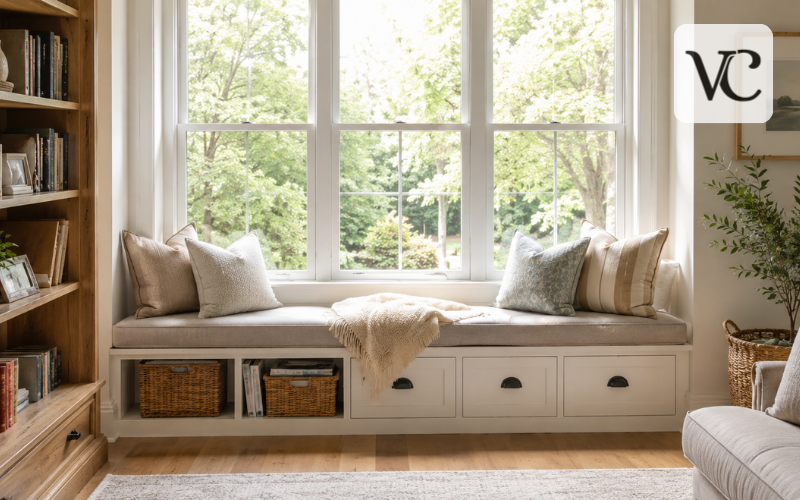
A bench in window space is a seat placed directly below or beside a window. It may be built into the wall, made from storage cabinets, or added as a freestanding piece. The idea is simple: turn an area that often sits empty into a useful part of the room.
A well-planned window bench can add seating, hidden storage, comfort, and visual interest. Because it sits close to natural light, it often becomes an inviting place to read, rest, dine, or enjoy the view. It can also make the window feel like a stronger design feature.
There are many ways to create the look. A built-in can feel architectural, while a freestanding bench is easier to move and usually costs less. An IKEA-based project may create a custom appearance on a smaller budget, and a wooden bench can suit rustic or modern interiors. The right choice depends on the window, room, budget, and storage needs.
Snippet-Ready Definition:
A bench in window space is a built-in or freestanding seat placed below a window to create extra seating, storage, and a comfortable spot for reading, relaxing, or enjoying natural light.
Quick Guide: Bench in Window Options
| Type | Best For | Main Benefit | Key Consideration |
| Built-in window bench | Homeowners and awkward spaces | Custom fit and maximum storage | Higher cost and permanent installation |
| Freestanding bench | Renters and small budgets | Easy to move or replace | May not fit the window perfectly |
| Window bench with drawers | Bedrooms and living rooms | Easy access to stored items | Requires space for drawers to open |
| Lift-top storage bench | Blankets and bulky items | Large hidden storage area | Use safe, controlled hinges |
| IKEA window seat | Budget-friendly DIY projects | Custom look at a lower cost | Units may need reinforcement and anchoring |
| Wooden window bench | Rustic, traditional, or modern rooms | Warm and timeless appearance | Protect the wood from moisture and sunlight |
| Dining banquette | Kitchens and dining areas | Adds seating without extra chairs | Table height and legroom must be planned |
Simple Steps for Planning a Bench in Window Space
- Measure the wall width, window height, sill, handles, and available floor depth.
- Decide whether the bench will be used for reading, dining, storage, or extra seating.
- Choose between a built-in, freestanding, wooden, or IKEA-based design.
- Check for radiators, vents, outlets, curtains, and window-opening clearance.
- Select storage that is easy to access, such as drawers, cubbies, or a lift-up seat.
- Add a comfortable cushion made from durable, washable, and fade-resistant fabric.
- Secure the bench properly and confirm that it can safely support the expected weight.
Understanding the Bench in Window Seat Concept
An ordinary bench can stand almost anywhere, but a window bench is planned around the width, height, and position of a window. Some fill a recessed bay or alcove, while others run along a flat wall below a standard window.
How the seat will be used should guide the design. A deep cushioned bench can become a reading or resting place. A firmer seat beside a table can work as a dining banquette. In a living room, it can provide extra seating; in a bedroom, it may hold spare bedding while creating a quiet corner.
The idea works best where there is enough space to sit without blocking a walkway. It is especially useful under a low window, across a wide window wall, inside a bay, or in an alcove too shallow for larger furniture. A bench in window seat design should improve the room’s flow rather than crowd it.
Built-In vs Freestanding Window Benches
A built-in window bench is fixed to the wall or floor and shaped to fit the space. It can stretch from wall to wall, follow a bay window, or connect with bookshelves and cabinets. With fewer visible gaps, it often looks polished and makes good use of awkward corners.
The trade-off is commitment. Built-ins usually cost more, require careful measuring, and may need a carpenter. They can also cover vents, outlets, or access panels if those details are missed during planning.
A freestanding bench is easier to move, replace, or reuse. Storage ottomans, low cabinets, upholstered benches, and narrow wooden seats can all work below a window. This approach often suits renters or smaller budgets, although the result may not fit the wall as neatly.
Homeowners seeking maximum storage and a tailored finish may prefer a built-in. Renters and people who like changing layouts may be happier with a movable design.
Choosing the Right Bench for Your Window Style
The window shape usually determines the most practical bench. A recessed bay naturally creates a seating area, but each angled side must be measured. A fitted seat can follow the bay, while a straight freestanding bench may leave gaps.
A deep alcove also suits a built-in, with side walls available for shelving or reading lights. Under a flat standard window, a low storage bench can create a useful feature without changing the room’s structure. A wide wall of windows may suit a long, simple seat that keeps attention on the view.
Corner windows and awkward spaces need restraint. An L-shaped bench can use a corner well, but it should not block curtains, handles, or access to the glass. With low windows, the finished seat and cushion must remain below opening hardware and allow safe use.
Measure the wall width, floor depth, sill height, trim, handles, and nearby furniture. The bench should fit the window rather than forcing the window to work around it.
Window Bench With Storage Options
A window bench with storage combines seating and organization in one footprint. Drawers are useful for items needed often, such as blankets, games, linens, craft supplies, or seasonal clothing. They can be opened without moving the seat cushion.
A lift-up top creates a large hidden compartment for bulky items. However, a heavy lid needs safe hinges or lid supports, and the cushion should be easy to remove.
Open cubbies are simple and flexible. Baskets can hide small belongings while keeping them easy to reach. In an entryway, cubbies may hold shoes and bags; in a child’s room, toys and books; and in a living room, baskets or magazines.
Match storage to daily habits. Keep frequently used items in drawers or front-facing baskets and reserve deeper spaces for belongings used less often.
Long Window Bench With Storage
A long window bench with storage works well below a wide window or across a large family room. It can create several seats without adding separate chairs and make a long wall feel more purposeful.
Divide the storage into manageable sections. Several drawers or doors are usually easier to use than one oversized compartment. Divisions also separate toys, blankets, books, and other categories.
The seat needs support across its length. A long unsupported top may bend or feel unstable, so use a strong frame, internal dividers, and a suitable seat panel. Professional advice is wise when the span is large or several adults will use it.
Keep the design visually calm with matching fronts, a continuous cushion, and a limited number of pillows. This prevents a large bench from making the room feel busy.
Window Seat Bench IKEA Ideas
An IKEA-based window seat can be a practical starting point because modular storage frames are easy to combine and customize. Many projects use low shelving or cabinet units as a base, then add a stronger top, trim, side panels, and a fitted cushion.
KALLAX and BESTÅ are often considered, but IKEA sells them as shelving or storage frames rather than ready-made seating. Current IKEA information shows that sizes and installation methods vary by model and market. Some KALLAX units require wall anchoring, while compatible BESTÅ frames may stand on the floor or use the specified suspension rail when wall-mounted. Follow the instructions for the exact unit, and do not assume a storage cabinet alone is strong enough to carry seated weight.
The main benefit is flexibility: doors, drawers, baskets, and open sections can be mixed to suit the room. The limitation is that standard units may not match the window width, sill height, or skirting boards.
Professional help is sensible when walls are uneven, outlets must be moved, or the project will carry heavy daily use.
Bench in Window IKEA Setup Tips
Measure the wall width in several places because walls are not always square. Check the floor-to-sill height and window handle, then allow for the seat top and cushion. Also measure the depth so the finished bench does not narrow the walkway.
Account for skirting boards, radiator pipes, curtains, outlets, and floor vents. A unit pushed against a vent may reduce airflow, while a cushion placed too high can interfere with the window.
Secure every unit according to its instructions. IKEA’s current KALLAX guidance includes wall anchoring for applicable units, while compatible BESTÅ wall installations require the specified suspension system. Fasteners must suit the wall material.
For a built-in look, add a continuous top, side filler strips, and simple front trim. Painting surrounding panels to match the wall can make the bench feel integrated without adding too much detail.
Wooden Bench in Window Designs
A wooden bench in window space can feel warm and timeless. Solid wood has natural grain and can be refinished, but it may move slightly as indoor conditions change. Good-quality plywood is stable for custom built-ins, while engineered boards provide a smooth, affordable base for painted designs but need protection from moisture.
Choose a finish that suits the room. Pale oak or ash can work in a modern interior, darker stains add depth to traditional spaces, and painted wood can match the wall or window trim. A rustic design may show more grain and texture.
Sunlight can fade wood and fabric, while window condensation may damage finishes. Leave room for cleaning and air movement, wipe moisture away, and choose an indoor furniture finish. A removable cushion cover will also protect the seat.
Modern Window Seat Ideas
Modern window seat ideas often use simple shapes, clean edges, and limited decoration. Handle-free drawers or push-to-open doors keep the front smooth. Neutral paint, pale wood, or a finish matching the wall can make the bench feel calm and architectural.
A floating bench creates an airy look because the floor remains visible, but it needs secure structural support. It should never be fixed only for appearance. A wall-to-wall design is often easier to integrate and can hide storage behind flat fronts.
Small features can improve daily use. A reading light, nearby outlet, charging point, or narrow side shelf can make the nook more practical. Electrical work inside a built-in should follow local requirements.
Keep textiles controlled. One fitted cushion and a few supportive pillows are often enough, especially when their colors repeat those already used in the room.
Window Bench Ideas for Different Rooms
In a bedroom, a window bench can provide a reading place and storage for extra bedding. It should not block wardrobes, drawers, or the path around the bed.
In a living room, it can offer casual seating and connect bookshelves on either side of the window. A firmer cushion often works well because it is easier to sit upright and stand.
In a kitchen or dining area, a bench beside a table can form a banquette. The table must leave enough room for people to slide in and move comfortably. Storage underneath can hold table linens or less-used kitchen items.
An entryway bench may store shoes and bags, while a child’s room bench can combine reading space with toy storage. For children’s areas, avoid heavy unprotected lids, sharp corners, and accessible blind cords. The U.S. Consumer Product Safety Commission advises cordless window coverings where young children are present because accessible cords can create a strangulation hazard.
Making a Window Bench Comfortable and Cozy
Comfort depends on the bench’s purpose. A dining bench usually needs a firmer, thinner cushion for upright sitting. A reading or lounging seat can use thicker foam with more give. Always include the cushion when working out the final seat height.
Choose fabric for the room and sunlight level. Removable, washable covers are useful in kitchens, family rooms, and children’s spaces. Performance fabrics can resist stains, while tightly woven materials tend to hold their shape. Fade-resistant fabric helps where the seat receives strong sun.
Use pillows for support rather than decoration alone. A few at the back or sides can soften a deep seat, but too many make the bench difficult to use. A folded throw can add warmth and return to storage when not needed.
Curtains, blinds, or shades should provide privacy without trapping the bench behind fabric. Roman shades, roller shades, or curtains that stack outside the seating area can preserve light and access. Cordless coverings are the safer choice around young children.
Measurements, Safety, and Practical Planning
A comfortable residential window bench often ends up close to normal chair height. As a useful reference, U.S. accessibility standards specify 17 to 19 inches from the floor to the top of certain bench seats. A home bench is not always required to follow that range, but it is a practical starting point when easy sitting and standing matter.
Seat depth depends on use. A dining bench can be shallower, while a reading nook needs room for the body and back cushions. Test the proposed size with boxes or an existing chair before building. This can reveal whether the seat feels too high, too deep, or too close to other furniture.
Check everything around the window. Do not cover radiators, vents, outlets, return-air grilles, or access points without a suitable plan. Make sure the window can still open, lock, and be cleaned. In bedrooms, local rules may treat some windows as emergency escape openings, so fixed furniture must not reduce required access.
Drawers and doors need room to open. Lift-up lids need controlled hinges, and heavy tops should not be easy for children to drop. Rounded edges, stable construction, secure anchoring, and a realistic weight capacity matter more than a perfectly seamless finish.
Conclusion
A successful bench in window area should feel useful, comfortable, and natural within the room. Start with the window shape and available space, then consider how the seat will be used. Storage drawers may suit a family room, a long built-in may improve a wide wall, and a freestanding wooden bench may be enough for a rental or smaller budget.
Built-in, IKEA-based, wooden, and modern window bench ideas can all work when measurements and safety come first. The finished seat should not block the window, restrict airflow, create unsafe cords or lids, or narrow the walkway. Storage should also be easy to reach.
Choose a design for daily life, not only for how it looks in a photograph. A bench in window space becomes most valuable when it fits the room, supports its users, and turns an overlooked area into a place used every day.
Frequently Asked Questions
What is a bench in window space called?
A bench placed beneath a window is commonly called a window bench, window seat, or window-seat bench. Built-in versions may also be described as fitted window seating or a window banquette.
How deep should a window bench be?
A window bench is often about 16 to 24 inches deep. A dining bench can be shallower, while a reading or lounging seat usually needs more depth for cushions and back support.
Can IKEA storage units be used as a window bench?
Some IKEA storage units can form the base of a window seat, but they may require reinforcement, a strong top, wall anchoring, and careful installation before they are safe for regular seating.
What is the best storage for a window bench?
Drawers are convenient for everyday items, open cubbies work well with baskets, and lift-up seats provide room for bulky belongings. The best option depends on available space and how often items are used.
Can a bench be placed under any window?
A bench can fit beneath many windows, but it should not block handles, emergency access, vents, radiators, curtains, or required airflow. Measure carefully and check local building or safety requirements before installation.
Disclaimer: This article provides general design and planning information for a bench in window space. Measurements, weight limits, installation methods, and building requirements vary by home and location. Consult a qualified carpenter, contractor, or electrician when structural support, wiring, heating, ventilation, or window safety may be affected.
Enjoyed this article? Discover more helpful ideas and fresh inspiration on Vogue Cultures.