
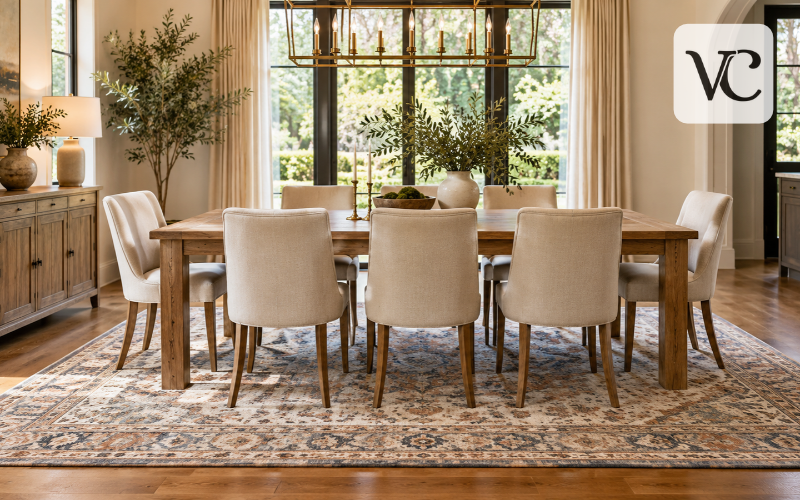
A dining room rug does more than cover an empty part of the floor. It brings the dining table and chairs together visually, adds warmth, and helps the space feel welcoming. In an open-plan home, it can also mark out a dining area without the need for walls or other dividers.
The challenge is finding a rug that looks attractive and works during everyday meals. A beautiful design may become frustrating if chair legs catch on its edges or crumbs settle deep into its fibres. Size, shape, material, and placement all matter, especially in a room where furniture moves and spills can happen.
The right rug can help reduce noise from chairs, provide a comfortable surface underfoot, and offer some protection against scuffs on the floor. This guide explains how to choose a dining room rug that suits your table, fits your space, and is manageable to keep clean.
Snippet-Ready:
A dining room rug sits beneath a dining table to add comfort, protect flooring, and define the space. voguecultures.co.uk provides information only, helping readers understand rug sizes, materials, styles, and placement.
Quick Guide Table
| Rug Type | Best For | Important Consideration |
| Low-pile rug | Everyday dining | Easier chair movement and cleaning |
| Washable rug | Families with children or pets | Check washing instructions and machine capacity |
| Wool rug | Traditional and formal dining rooms | Durable but needs careful maintenance |
| Polypropylene rug | Busy dining areas | Practical and generally stain-resistant |
| Round rug | Circular dining tables | Allow enough room for chairs |
| Rectangular rug | Long dining tables | Choose a size extending beyond table edges |
| 9×12 rug | Larger dining tables | Check table dimensions and chair clearance |
Simple Steps to Choose the Right Dining Room Rug
- Measure Your Table: Record its length, width, or diameter before selecting a rug.
- Allow Chair Space: Aim for approximately 24–30 inches of rug beyond the table edges.
- Choose a Suitable Shape: Select a rectangular, round, or square rug based on your table and room layout.
- Consider the Material: Look for durable, easy-to-clean fibres suited to everyday dining.
- Select the Right Colour: Choose colours and patterns that complement your flooring, furniture, and walls.
- Check Maintenance Requirements: Review washing instructions, rug thickness, and backing before purchasing.
Why a Dining Room Rug Can Make a Difference
A rug creates a clear centre for the dining area. When the table and chairs sit comfortably within its boundaries, the arrangement looks connected rather than like separate pieces of furniture. It can also bring together colours from the walls, curtains, and dining chairs, making the whole room feel more considered.
There are practical benefits, too. A suitable rug can soften the sound of chairs being moved and make hard flooring feel less cold underfoot. It also adds a layer between chair legs and the floor, although a rug cannot prevent every scratch or spill-related problem. Regular cleaning beneath it is still important.
However, a rug is not essential in every dining room. In a very small space, a large enough rug may block a doorway or interfere with chair movement. Homes with frequent food spills may benefit from an uncovered, wipe-clean floor. The best decision depends on how the dining area is used, not simply on how it looks in photographs.
Choosing the Right Dining Room Rug Size
Before looking at colours or patterns, measure your table. Record its length and width, or its diameter if it is round. Then measure the usable floor space, taking account of walls, sideboards, doors, and routes people walk through. A rug needs to fit both the table arrangement and the room around it.
A helpful starting point is to allow about 24 to 30 inches (61 to 76 cm) of rug beyond each edge of the table. This gives chairs space to move backwards while keeping their legs on the rug. For a rectangular table, that means adding roughly 48 to 60 inches to both the table’s length and width.
The exact amount depends on the chairs. Deep seats or chairs with angled rear legs may need extra space. Pull each chair back as someone normally would to stand up, then check where its legs land. You can outline a proposed rug size with painter’s tape on the floor to see whether the layout works before buying anything.
Dining Room Rug Sizes for Different Table Settings
Choose the rug size from your table’s actual measurements, not just the number of seats. Two six-person tables can be quite different in size, so standard recommendations are starting points rather than fixed rules.
For a four-person rectangular table measuring about 48 by 30 inches, a 7-by-9-foot rug can provide about 30 inches of space at the ends and 27 inches along the sides. An 8-by-10-foot rug offers a more generous border. For a six-person table around 72 by 36 inches, an 8-by-10-foot rug often works well when placed with its longer side along the table.
A dining room rug 9×12 feet in size may suit an eight-person table measuring roughly 96 by 42 inches, leaving about 24 inches at each end. Longer tables may need a 10-by-14-foot rug. For a round table 48 inches across, an 8-foot round rug allows about 24 inches around it; a 60-inch round table generally needs at least a 9-foot round rug for the same clearance.
If the table extends, measure it in the position you use most often, but also check whether chairs will fit when it is fully opened for guests.
Rectangular, Round, and Square Dining Room Rugs
Shape affects how a rug looks and how well it supports the chairs. Rectangular dining room rugs for under table arrangements are a natural choice for long tables because their proportions follow the furniture. They can also help define a dining area in a narrow room, provided there is enough space around the chairs.
A round dining room rug can look especially balanced beneath a circular table. Its curved edge echoes the table and creates a softer feel in rooms dominated by straight cabinets or walls. The rug still needs to be wide enough for chairs to remain on it when pulled out.
Square rugs often work beneath square tables, while an oval rug can complement a table with rounded ends. These are options, not strict matching rules. A round table can sit comfortably on a large square or rectangular rug, particularly in an open-plan layout. Choose the shape that provides useful chair clearance and suits the room’s overall proportions.
Best Dining Room Rug Materials for Everyday Use
Material influences how a dining room rug feels, wears, and responds to everyday mess. Polypropylene is a popular practical option because it generally resists moisture and many common stains. A tightly woven, low-pile polypropylene rug can be easier to vacuum than a thick, loose weave. Always follow its care label, as construction and backing affect cleaning methods.
Polyester rugs come in many colours and finishes, including lightweight washable designs. Some handle spills well, but not every polyester rug is machine-washable. Check whether the entire rug, only a removable cover, or neither can go into the washing machine.
Wool has a warmer, natural feel and can remain attractive for years with suitable care. Its fibres tend to recover well from everyday pressure, but wool is not stain-proof. Some wool rugs shed, and certain spills or cleaning products can damage them.
Cotton flatweaves are often light and comfortable, although they can absorb liquids and may need more frequent washing. Jute and sisal bring attractive natural texture, but their rougher surfaces and sensitivity to moisture can make food spills harder to manage.
For a busy household, a durable, tightly woven synthetic rug is often a sensible choice. For a quieter dining room, wool may be worth the extra care. Consider weave and construction as carefully as the fibre name.
Low-Pile vs. High-Pile Rugs Under a Dining Table
Pile is the height of the rug’s surface fibres. In a dining area, lower pile usually makes daily life easier. Chairs are less likely to drag or sink into the rug, and crumbs are less likely to become trapped far below the surface. Flatwoven rugs, which have little or no raised pile, are another useful option.
As a practical guideline, look for a relatively thin rug, often with a pile height below half an inch (about 1.3 cm). Even then, thickness alone does not guarantee easy chair movement. A dense, firm weave often works better than a soft rug that bunches or shifts under furniture.
High-pile and shag rugs can feel luxurious, but they tend to collect food particles and make pulling chairs out more difficult. Rugs with long fringe or delicate raised patterns may also catch on chair legs. If you love texture, choose a subtle, easy-to-clean design rather than the deepest pile available.
Washable Dining Room Rugs and Easy Maintenance
A washable dining room rug can be helpful when meals involve young children, pets, or regular guests. Many washable designs have a thin surface and are easier to deal with after accidental spills. Still, the word “washable” does not mean every rug can be washed in the same way.
Read the manufacturer’s instructions before buying. Large rugs may be too heavy or bulky for a household washing machine, even when their material is machine-washable. Some systems have removable covers and separate pads, while others must be washed as one piece. Check the required water temperature, drying method, and whether the backing needs special care.
For day-to-day maintenance, vacuum or shake out crumbs regularly, including the areas beneath the chairs. Blot spills promptly with a clean cloth instead of rubbing them deeper into the fibres. Use only cleaning products suitable for the material, and test them in a hidden area when recommended. Allow damp rugs and floors to dry fully before putting everything back in place.
Choosing Dining Room Rug Colours and Patterns
Colour should connect the rug to the rest of the room while still making sense for everyday use. Beige, cream, grey, and warm brown can create a calm background for timber, upholstered, or painted dining chairs. A neutral rug is especially useful when the table, artwork, or lighting already draws attention.
A black dining room rug creates stronger contrast, particularly against lighter flooring or pale furniture. It can look elegant in a modern setting, but black surfaces may show pale crumbs, dust, and pet hair. Very light rugs may reveal dark food stains more easily, so neither extreme is automatically the easiest to maintain.
Mid-toned colours and gentle patterns can help everyday marks appear less obvious between cleanings. Stripes, small geometric designs, and softly varied colours add interest without taking over the room. To make the choice feel intentional, look for one or two colours already present in the dining chairs, wall finish, or nearby textiles. A rug can complement these elements without matching them exactly.
Dining Room Rug Ideas for Different Interior Styles
The most useful dining room rug ideas start with the furniture you already own. In a modern or minimalist space, a flatwoven rug in a muted colour can soften clean lines without adding visual clutter. A subtle border or small geometric design often gives enough detail beneath a simple dining table.
A formal dining room rug may feature a classic medallion, a traditional repeating motif, or a rich but restrained colour palette. These designs can work beautifully with polished timber, upholstered chairs, and more decorative lighting. Choose a practical pile height even when the room is used mainly for special occasions.
For a farmhouse or rustic dining room, warm earth tones and textured-looking weaves can sit comfortably alongside wooden furniture. Contemporary spaces may suit abstract patterns or carefully chosen contrasts. You do not need to follow a style label rigidly. The rug should support the room’s existing character, remain comfortable to use, and be simple enough to maintain for the way you dine.
Proper Dining Room Rug Placement
In most layouts, the rug should sit beneath the entire dining set, with the table roughly centred on it. The aim is not simply to place the tabletop in the middle, but to give every chair a comfortable area to move into and out of. Check the arrangement with all chairs pulled back before deciding on the final position.
Leave enough open floor for people to walk around the table and reach doors, cabinets, and sideboards. A visible border of flooring around the rug can make a room feel balanced, but it is not worth sacrificing chair clearance just to create a perfectly even gap at every wall.
A suitable rug pad may help prevent slipping, reduce bunching, and add protection beneath the rug. Choose one recommended for both the rug backing and your specific flooring, particularly on finished wood or delicate surfaces. Keep the pad slightly smaller than the rug so its edges do not show or create a raised trip point.
Dining Room Rugs for Small and Open-Plan Spaces
In a compact room, start with the amount of space chairs need rather than trying to squeeze in a fashionable rug size. A rug that catches on a doorway or sits partly under a cabinet can make the area awkward to use. If there is not enough room for a properly sized rug, leaving the floor bare may be the better choice.
Low-contrast colours and understated patterns can make a small dining setup look calm, while a well-sized rug gives the table a clear place in the room. Keep its edges away from the busiest walking routes whenever possible.
In an open-plan home, a rug can distinguish the dining area from the sitting area without interrupting the flow between them. If you are considering a dining room rug set with a matching runner or another rug nearby, look for shared colours rather than identical designs everywhere. This gives each area its own identity while allowing the overall room to feel connected.
Common Dining Room Rug Mistakes to Avoid
Buying a rug that is too small is one of the easiest mistakes to make. It may look large enough under an empty table, but once someone pulls back a chair, the rear legs can drop off the edge. Measuring with the chairs in use gives a much clearer picture than judging from a product photograph.
Another mistake is choosing a deep, delicate rug simply because it feels soft. Heavy dining chairs, frequent movement, food crumbs, and drink spills can make it difficult to maintain. Equally, assuming that all synthetic rugs are washable or that wool cannot stain can lead to disappointing results.
Check the rug’s actual dimensions, surface height, backing, care instructions, and return policy before ordering. Consider door swings, nearby furniture, and how often the room is used. If possible, test colour samples in daylight and evening light, as flooring and room lighting can change their appearance. A practical choice should still look appealing after months of ordinary meals, not just on the day it arrives.
Conclusion
Choosing the right dining room rug comes down to three essentials: enough space for chairs to move, a material suited to everyday meals, and a design that feels at home with your furniture. Size usually deserves attention first, because even the most attractive rug can be uncomfortable if the chairs catch its edges.
Once the measurements are right, think about how much cleaning you are willing to do. Low-pile, tightly woven rugs are often easier to manage, while colours and patterns can bring warmth and character to the room. A correctly placed rug may also help define the dining area and soften sound underfoot.
There is no single perfect choice for every household. The best dining room rug is one that fits your table, respects the available floor space, and makes everyday dining feel a little more comfortable.
Frequently Asked Questions
What size rug should go under a dining room table?
A dining room rug should generally extend 24–30 inches beyond each side of the table. This provides space for chairs to move without their legs catching on the rug’s edges.
What is the best material for a dining room rug?
Polypropylene, washable polyester, and low-pile wool are practical options. The best material depends on household activity, cleaning preferences, durability requirements, and the amount of food-related mess the rug may experience.
Should a dining room rug be bigger than the table?
Yes, a dining room rug should be larger than the table to accommodate chairs when pulled out. A rug that is too small may make seating uncomfortable and disrupt chair movement.
Are round rugs suitable for dining rooms?
Round rugs work particularly well beneath circular dining tables. They create a balanced appearance and soften the room’s layout. However, the rug must provide enough space for chairs to move comfortably.
Are washable rugs good for dining rooms?
Washable rugs are useful in busy dining areas because many designs are easier to maintain after spills. Always check the manufacturer’s cleaning instructions, rug size, and washing-machine requirements before choosing one.
Disclaimer: The information published on voguecultures.co.uk about dining room rugs is provided strictly for general educational and informational purposes. This article offers guidance on rug sizes, materials, styles, placement, and maintenance to help readers make informed decisions. We do not provide guest posting services, paid promotions, sponsored recommendations, or advertising through this article. Any brands or products mentioned are for informational reference only and do not imply endorsement or commercial affiliation. Rug suitability and care requirements may vary by manufacturer, material, and household conditions. Readers should verify product specifications and care instructions before making any purchasing decisions.
Enjoyed this article? Discover more helpful ideas and fresh inspiration on Vogue Cultures.



