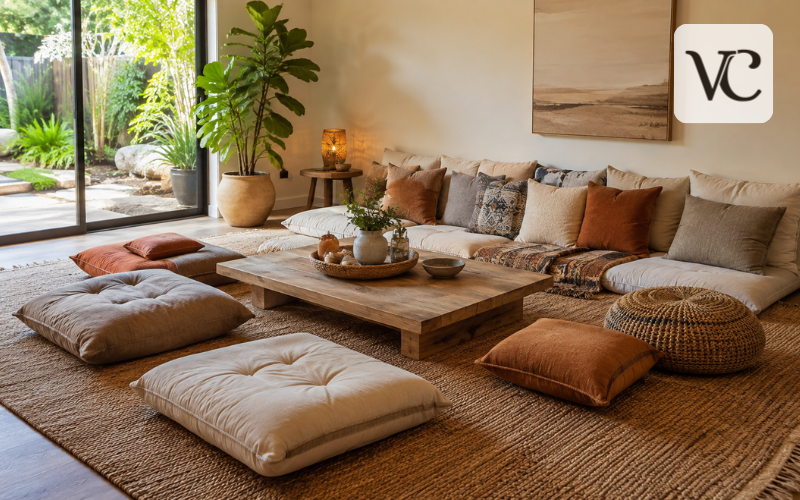
Floor seating means sitting close to the ground instead of using a standard chair or full-height sofa. It may be as simple as a thick cushion on a rug or as complete as a modular lounge built around the walls. Common choices include floor cushions, poufs, beanbags, folding floor chairs, low sofas, and foam sections with separate backrests.
This style feels relaxed and uses space efficiently. A low arrangement can reduce visual clutter, especially in a small apartment or a room with a low ceiling. It also works for reading, gaming, meditation, movie nights, children’s activities, and casual gatherings.
Good floor seating should provide support, leave safe walking space, suit the people using it, and be practical to clean. This guide covers the main types, layouts, styles, comfort needs, materials, and buying points.
Snippet-Ready Definition:
Floor seating is a low-level seating style that uses cushions, poufs, floor chairs, or low sofas to create a relaxed, flexible, and space-saving area for sitting, reading, or socializing.
Floor Seating Quick Guide
| Floor Seating Type | Best For | Support Level | Storage |
| Floor cushions | Casual seating and small rooms | Low to medium | Easy to stack |
| Foldable floor chairs | Reading, gaming, and television | Medium to high | Easy to fold |
| Poufs and ottomans | Extra seating and footrests | Medium | Moderately easy |
| Modular floor sofas | Living rooms and regular use | High | Requires more space |
| Japanese zaisu chairs | Low tables and minimalist rooms | Medium to high | Some models fold |
| Majlis-style seating | Families and large gatherings | High | Usually permanent |
How to Choose the Right Floor Seating
- Measure the available space and keep walking paths clear.
- Choose firm cushions or foam if adults will use the seating regularly.
- Add back support for reading, gaming, or longer sitting periods.
- Select washable covers for homes with children or pets.
- Consider folding or stackable pieces when storage space is limited.
- Include a standard-height chair for guests who find floor-level seating difficult.
Why Floor Seating Works in Modern Homes
Traditional sofas and armchairs take up both floor and visual space. Floor seating stays lower, leaving more wall visible and helping a room feel less crowded. This is useful in studio apartments, attic rooms, and living rooms with low ceilings.
Loose cushions and poufs can be moved when guests arrive, gathered around a coffee table, or stored when the floor is needed for another activity. A foldable floor chair can support reading or gaming, while a firm cushion may work for meditation or conversation. In a multipurpose room, the same piece can serve as a seat, footrest, side surface, or play cushion.
There are drawbacks. Very soft cushions may flatten, and seating without a backrest can become tiring. Getting down to the floor and standing again may also be difficult for older adults or people with knee, hip, balance, or mobility concerns. A welcoming room should include at least one higher seating option.
Main Types of Floor Seating Furniture
Floor seating cushions range from compact square pads to oversized pillows for lounging. Poufs and ottomans sit slightly higher and often hold their shape better, while beanbags create a softer seat that follows the body. Foldable floor chairs usually combine a padded seat with a fixed or adjustable back.
A floor seating sofa is more structured. It may use a low base, thick foam blocks, or modular sections that connect to form a longer lounge. Unlike a standard sofa, it usually has little or no raised frame beneath the seat.
Japanese-style choices include zabuton cushions, legless zaisu chairs, tatami mats, and short tables. Arabic majlis and Moroccan arrangements often use firm foam seating along the perimeter of a room, supported by large back cushions against the wall. Each type offers a different balance of support, formality, and flexibility.
Planning a Comfortable Floor Seating Arrangement
Measure the room before buying anything. Mark doors, windows, radiators, outlets, storage, and main walking routes. A floor seating arrangement should not block access or make people step over cushions whenever they enter.
Decide what the seats will face. In a television room, direct the main seats toward the screen. In a social lounge, turn them inward around a low table or open center. A reading corner may need only one supportive floor chair, a lamp, and a small surface.
Wall-supported seating is useful for longer sitting and keeps the middle open. Freestanding pillows are easier to rearrange but may slide unless placed on a rug or nonslip base. Plan for both daily users and occasional guests so the room is not overcrowded most of the time.
Floor Seating Cushions: Size, Shape, and Filling
Square cushions fit neatly together and are easy to stack. Round cushions soften a room filled with straight lines, while rectangular cushions support cross-legged sitting or work as low benches. Tufting can help keep filling in place, and oversized cushions create a relaxed lounging area.
The filling matters more than appearance. Polyester fiber feels soft and light but may compress during long sitting sessions. Foam generally offers firmer support and returns to shape more reliably. Some cushions use a foam core with a softer fiber wrap for a balance of structure and comfort.
For adults, a thin decorative pillow is rarely enough. Choose a cushion thick and firm enough to prevent the body from sinking onto the floor. Hard tile normally requires more cushioning than a padded rug. Removable, washable covers make care easier, while handles, baskets, or a storage bench help keep spare cushions organized.
Floor Seating Sofas and Modular Lounge Designs
A standard low-profile sofa still has a raised frame and fixed back. A floor seating sofa usually rests directly on the floor or on a very low platform. It may consist of one long upholstered base or several foam sections that can be separated, turned, or extended.
Modular pieces can form a corner sofa for family use, a straight row for movie night, or individual seats for conversation. Check whether the sections connect securely and whether they are likely to move apart during use.
Arabic majlis seating often follows the walls and leaves a wide open area in the center. Moroccan-inspired rooms may use a similar layout with poufs, low tables, textured fabrics, and decorative cushions. In both cases, the main seat needs firm foam, while large back cushions should support the lower and middle back. These designs suit family rooms and guest lounges but may not work for anyone who needs high armrests or help standing.
Japanese Floor Seating and Tatami-Inspired Interiors
Japanese floor seating connects the floor, seat, and low table. A zabuton is a flat sitting cushion, while a zaisu is a chair with a back but no legs. Tatami creates a firm woven surface for low-level living. Traditional Japanese accommodation commonly combines tatami floors, low tables, and zabuton cushions as one practical setting.
To create a similar feeling, use natural wood, woven textures, calm neutral shades, and only the furniture needed for the room’s purpose. Leave open space instead of filling every wall and corner.
People who are not used to sitting on the floor may need a zaisu chair or thicker cushion. Include a standard chair nearby for anyone who is uncomfortable at floor level. A Japanese-inspired room does not need to copy a traditional interior exactly; the aim is a quiet, uncluttered layout built around practical low furniture.
Bohemian, Moroccan, and Arabic Floor Seating Styles
Bohemian floor seating is relaxed and layered. A large rug creates the base, followed by mixed cushions, woven throws, and varied patterns. To keep the room balanced, repeat a few colors across the textiles instead of using every shade at once.
Moroccan-inspired seating often features rich fabrics, leather poufs, low tables, and warm lighting. Decorative details should not reduce walking space or replace proper support. Too many small pillows may look inviting but feel uncomfortable.
Traditional Arabic majlis seating is usually more structured. Firm sections run along one or more walls so many guests can share the same conversation area. Back cushions rest against the wall, while the open center may hold serving tables or remain clear.
In every style, separate decorative cushions from everyday seats. The main seat should be wide, stable, and firm enough for regular use.
Choosing Floor Seating for Adults
Floor seating for adults needs more structure than seating intended mainly for children or occasional use. Check seat depth, firmness, height, back support, and base stability. A cushion that looks thick may compress considerably once someone sits on it.
For regular use, supportive foam or a well-built floor chair is usually more comfortable than a thin pillow. Back support matters during reading, gaming, working, or watching a long film. Wall cushions should remain upright, and adjustable chairs should lock securely.
Check the maker’s weight limit where one is provided, along with seams, zippers, internal frames, and connecting hardware. A nonslip pad may be needed on smooth floors. Adults with limited mobility may prefer a raised platform, a sturdy support nearby, or a mix of floor and standard seating.
Floor Seating for Small Living Rooms, Bedrooms, and Nooks
In a small living room, place seating in a corner or along one wall to preserve the center. Stackable floor cushions provide guest seats without permanently occupying the room. A low table with rounded edges can complete the area while keeping movement easy.
A bedroom may need only one floor chair beside a bookshelf, window, or lamp. A storage bench can hold cushions and blankets. In a studio apartment, a modular floor sofa can separate the lounge from the sleeping area without creating a tall visual barrier.
For a reading nook, combine one supportive cushion or chair with a backrest, good lighting, and a small surface. Balcony seating requires outdoor-rated covers, quick-drying filling, and dry storage. Even water-resistant pieces should not remain in standing moisture.
Materials, Cleaning, and Long-Term Durability
Cotton feels breathable and casual but can absorb spills. Linen has a natural texture but may wrinkle. Velvet looks soft and rich, though it can show dust, pet hair, or pressure marks. Leather and faux leather are easier to wipe but may feel warm and can be scratched. Outdoor fabrics are better suited to balconies and busy family areas.
Firmer foam usually keeps its shape longer than loose fiber alone, although durability also depends on quality, use, and user weight. Rotate modular cushions so the same area does not carry all the pressure.
Vacuum fabric surfaces, follow care labels, and wash removable covers at the recommended temperature. Clean spills quickly without soaking the filling. Tatami should be kept dry and cleaned gently along the weave. Outdoor cushions should be stored indoors or in a dry box during poor weather.
IKEA Floor Seating and Budget-Friendly Alternatives
IKEA floor seating differs by market and season, but current ranges may include floor cushions, poufs, ottomans, deep modular seating, and pieces with storage. IKEA listings show poufs used as extra seats, side surfaces, or hidden storage, while modular sofa sections can be combined into different layouts. Availability, measurements, covers, and colors vary by country, so check the local website before planning around one product.
Ready-made furniture is convenient when you want known dimensions, finished covers, and a return policy. Locally made foam may be better for an unusual wall length or majlis layout. DIY cushions can reduce costs, but foam, fabric, zippers, sewing, and delivery all affect the final price.
Remember that a complete setup may also need a rug, back cushions, washable covers, nonslip pads, storage, and replacement filling.
Floor Seating at Concerts: What the Term Means
Floor seating at a concert means the audience area on the venue floor, usually close to the stage. Some events place numbered chairs there, while others sell the area as general admission, standing room, or unreserved space.
A general-admission ticket does not always guarantee a physical seat. Ticket details may still show section, row, or seat numbers for tracking, so read the event description rather than relying on the number printed on the ticket.
Before buying, study the official seating map and consider sightlines, stage height, crowd density, and whether people are likely to stand. A spot close to the stage may feel exciting but can limit the overall view. Also consider access to exits and restrooms.
Accessibility arrangements vary by venue and event. Buyers should use accessibility filters where available and check the venue’s official accessibility guide for seating and services.
Conclusion
Successful floor seating balances appearance with real comfort. Room size, number of users, cushion firmness, back support, materials, storage, and cleaning needs should guide each choice. A beautiful setup will not work if cushions slide, flatten quickly, block walkways, or make standing difficult.
For a flexible room, begin with a few supportive cushions or foldable chairs and add more only when needed. For regular family use, a modular floor seating sofa or firm wall-supported design may provide better structure. Japanese, bohemian, Moroccan, and Arabic interiors can inspire the look, but the final arrangement should suit the home rather than follow a theme too strictly.
The best floor seating arrangement feels relaxed without becoming impractical. When it is supportive, easy to maintain, and placed with enough open space, it can make a small corner or full living room feel welcoming and adaptable.
Frequently Asked Questions
Is floor seating comfortable for adults?
Floor seating can be comfortable for adults when it has thick, supportive foam, enough seat depth, and a stable backrest. Thin decorative cushions are usually unsuitable for extended sitting.
What is the best filling for floor seating cushions?
Supportive foam is generally better for regular use because it holds its shape more effectively. Polyester fiber feels softer and lighter but may flatten sooner with frequent use.
Does floor seating make a small room look bigger?
Low seating leaves more wall space visible and can make a small or low-ceiling room feel less crowded. Keeping the arrangement simple and maintaining open walkways improves the effect.
Can floor seating replace a normal sofa?
A firm modular floor sofa can replace a standard sofa for some households. However, people with knee, hip, balance, or mobility difficulties may still need higher seating.
What does floor seating mean at a concert?
At a concert, floor seating refers to the audience area on the venue floor near the stage. It may include assigned chairs, general-admission standing space, or a combination of both.
Disclaimer: This article provides general information about floor seating, room arrangements, comfort, materials, and concert terminology. Product dimensions, weight limits, availability, prices, and venue policies may vary. Check manufacturer instructions and official venue information before purchasing furniture or tickets. People with mobility, joint, or balance concerns should choose seating that suits their personal comfort and support needs.
Enjoyed this article? Discover more helpful ideas and fresh inspiration on Vogue Cultures.