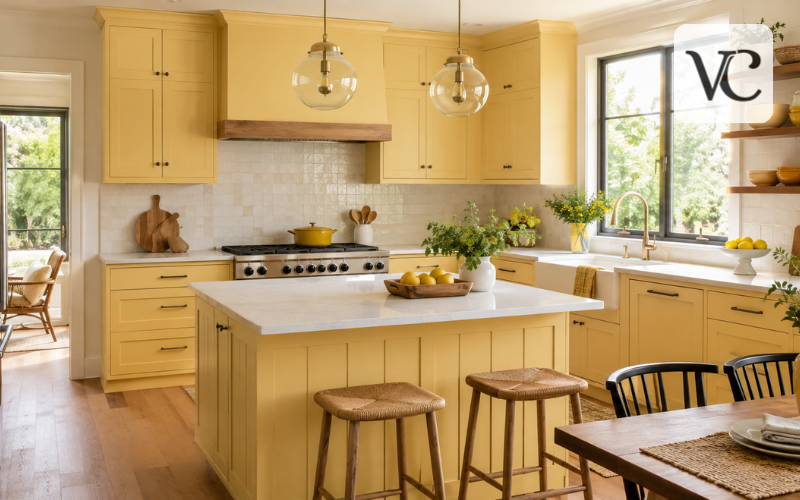
A yellow kitchen can feel warm, bright, relaxed, or dramatic depending on the shade and how it is used. Yellow does not have to mean covering the whole room in a strong sunny color. It can appear on cabinets, walls, an island, a backsplash, or simply through carefully chosen accessories.
The wide range of yellow tones makes the color surprisingly flexible. Pale cream-yellow can behave almost like a warm neutral, while butter yellow creates a soft and comfortable look. Mustard and ochre bring more depth, and brighter lemon or sunflower shades can give a kitchen a lively, modern character.
There are several practical ways to introduce the color. Yellow kitchen walls are useful when you want warmth without changing cabinets. Yellow kitchen cabinets make a stronger design statement, while yellow kitchen decor offers an easier option for anyone who wants to experiment first.
The most successful approach depends on natural light, kitchen size, flooring, countertops, cabinet style, and the colors already used throughout the home. Rather than following a trend automatically, it is better to choose a yellow that works with your actual space and the atmosphere you want to create.
Snippet-Ready Definition:
A yellow kitchen uses yellow through cabinets, walls, islands, or decor to create a warm and welcoming space. Shades can range from soft butter yellow to earthy mustard or bright sunflower tones.
Quick Guide: Yellow Kitchen Styles
| Yellow Kitchen Style | Best For | Works Well With | Overall Feel |
| Butter Yellow | Traditional and relaxed kitchens | Cream, wood, brass | Soft and warm |
| Pale Yellow | Small or low-light kitchens | White, light wood, beige | Light and gentle |
| Mustard Yellow | Rustic and modern spaces | Walnut, charcoal, brick | Rich and grounded |
| Bright Yellow | Modern statement kitchens | White, black, gray | Bold and energetic |
| Golden Yellow | Warm contemporary kitchens | Natural stone, timber | Cozy and inviting |
Simple Steps for Planning a Yellow Kitchen
- Choose the yellow shade according to the kitchen’s natural and artificial light.
- Decide whether yellow will appear on walls, cabinets, an island, or decor.
- Test larger color samples before painting or ordering cabinetry.
- Pair stronger yellows with quieter countertops, floors, and backsplashes.
- Check how the yellow looks beside existing wood, stone, metal, and appliances.
- Repeat the chosen shade carefully instead of using several competing yellows.
Choosing the Right Shade of Yellow for Your Kitchen
Choosing yellow is easier when you think beyond simple labels such as light or dark. Pale yellow, warm cream, muted ochre, golden yellow, mustard, lemon, and sunflower can produce very different results even though they belong to the same color family.
Soft yellows often contain warm cream, beige, or earthy undertones. They usually feel calmer and are easier to use across large surfaces. Clear lemon shades can appear fresher and sharper, while golden and mustard colors usually bring more richness and warmth.
Natural light also changes how yellow appears. North-facing rooms tend to receive cooler light, so warmer yellows can help create a more welcoming feeling. Dulux similarly recommends warmer tones, including yellow and gold, for cooler north-facing spaces. In a strongly sunlit room, an intense yellow may look brighter than expected, so a softer or slightly muted shade can sometimes provide better balance.
Never rely only on a small color card. Paint a larger sample and look at it during the morning, afternoon, and evening. Artificial lighting can also change the color significantly. For large areas such as cabinets or several walls, a quieter yellow is often easier to live with than an extremely saturated shade.
Yellow Kitchen Cabinets as the Main Design Feature
Yellow kitchen cabinets can completely shape the personality of the room. You can use yellow across all cabinetry for a confident look, or introduce it more selectively through lower cabinets, a kitchen island, a pantry unit, or one bank of cabinets.
Cabinet style matters as much as color. Traditional Shaker doors can make pale, butter, or mustard yellow feel relaxed and classic. Flat-panel or handleless doors create a cleaner appearance and can make stronger shades such as sunflower or golden yellow feel modern rather than traditional.
The finish also changes the result. Matte finishes soften the color and can give yellow cabinetry a quieter, more natural appearance. Satin finishes offer a gentle sheen that is practical for many kitchens. High-gloss yellow reflects more light, so it tends to make the color look stronger and more energetic.
When cabinets are the main yellow feature, keep some surrounding surfaces calm. White or cream walls, natural wood, understated flooring, and simple countertops give the eye somewhere to rest. A balanced room usually feels more comfortable than one in which every major surface competes for attention.
Yellow Kitchen Walls Without Overwhelming the Room
Yellow kitchen walls are one of the simplest ways to change the mood of a kitchen without replacing cabinets. They can make an otherwise neutral room feel warmer while allowing existing cabinetry and work surfaces to remain the main functional features.
Painting every wall can work well when the yellow is soft or muted. For a stronger shade, consider using it on one wall, around a breakfast area, inside a dining nook, or on an architectural feature. This introduces color without allowing it to dominate the entire space.
Pale yellow walls pair naturally with white, warm cream, timber, and many gray finishes. Deeper golden or mustard walls can work well beside dark wood or charcoal cabinetry when enough lighter surfaces are included elsewhere.
Finish is also important in a working kitchen. Cooking areas are exposed to moisture, splashes, grease, and regular cleaning, so choose paint designed for kitchens or another washable interior finish recommended for the surface.
A wall color should also be judged alongside the cabinets. A yellow that looks beautiful beside white may behave very differently next to warm oak, cool gray, or dark walnut.
What Color Goes With Yellow Kitchen Walls?
If you are wondering what color goes with yellow kitchen walls, there is no single answer. The best pairing depends on the particular yellow and whether you want the room to feel soft, natural, bold, or contemporary.
White and cream are among the easiest partners. White gives stronger yellow a cleaner edge, while cream creates a gentler transition that works especially well with butter and muted yellow.
Black, charcoal, and deep gray offer more contrast. They can stop a bright yellow kitchen from feeling overly sweet and are especially effective in modern spaces with simple cabinet lines.
Blue and green provide cooler contrast. Dusty blue, muted navy, olive, or soft green can make yellow feel more grounded when used carefully. Natural brown and timber work differently, adding warmth rather than contrast. Oak, walnut, and other wood tones can be particularly effective beside mustard, ochre, and creamy yellow.
Instead of choosing wall, floor, cabinet, and countertop colors separately, view samples together. A successful palette works as one composition. The relationship between the materials is usually more important than whether each color looks attractive on its own.
Butter Yellow Kitchen Ideas for a Softer Look
A butter yellow kitchen offers color without the intensity associated with brighter yellows. Its creamy quality allows it to sit somewhere between a traditional neutral and a more expressive cabinet color.
Butter yellow works especially well with warm white walls, cream surfaces, light or medium wood, and softly patterned natural stone. The result can feel comfortable and established rather than overly colorful.
It is also well suited to Shaker cabinetry, cottage kitchens, farmhouse-inspired rooms, and traditional designs. However, it does not have to look old-fashioned. Flat-panel cabinetry, simple stone countertops, and clean hardware can give the same shade a relaxed contemporary appearance.
Warm metals are another useful partner. Brass, aged bronze, and copper can reinforce the warmth already present in the yellow without creating a sharp contrast.
Butter yellow continues to appear prominently in 2026 interior and kitchen design coverage, particularly as part of a wider preference for warmer, more characterful colors. However, trend forecasts differ, which is a good reminder to choose it because it suits your home rather than simply because it is fashionable.
Mustard Yellow Kitchen Ideas With More Depth
A mustard yellow kitchen creates a deeper and earthier impression. Compared with lemon or sunflower yellow, mustard usually contains stronger brown or ochre undertones, which can make it easier to combine with natural materials.
Dark wood and walnut are particularly effective partners because both have visual depth. Mustard can also sit comfortably beside black hardware, charcoal surfaces, exposed brick, warm stone, and aged metal.
You do not need to use mustard throughout the entire kitchen. An island painted in mustard can become the focal point of a neutral space. Alternatively, use it on lower cabinets while keeping upper cabinets lighter. Mustard walls or a single fitted unit can provide a smaller dose of the color.
Its earthy quality means it can work across several styles. Rustic kitchens can combine it with timber and brick, while industrial spaces may use black metal and darker countertops. In modern kitchens, clean cabinet doors and restrained accessories stop the color from feeling heavy.
If the room has limited daylight, balance deep mustard with a lighter countertop, backsplash, or wall color.
Bright Yellow Kitchen Ideas That Still Feel Balanced
A bright yellow kitchen has energy and personality. Lemon, sunflower, golden yellow, and egg-yolk shades can make even simple cabinetry feel distinctive, but stronger color usually benefits from careful editing.
Contemporary kitchens are particularly well suited to vivid yellow. Flat-panel or handleless cabinets provide a clean surface where the color itself becomes the main visual feature. White quartz or another pale worktop keeps the result fresh, while black or dark gray creates stronger contrast.
You can also use bright yellow in smaller areas. A yellow island surrounded by white cabinets, a bank of tall units, or only the lower cabinets can provide plenty of impact without filling every part of the room with color.
Try to avoid adding several competing features around an already strong yellow. Highly patterned flooring, a busy backsplash, colorful worktops, and vivid cabinets together can make the room feel unsettled.
Instead, allow one or two elements to lead the design. Simple materials around bright yellow help the finished kitchen look intentional rather than overly busy.
Countertops, Backsplashes, and Flooring for a Yellow Kitchen
The surfaces around yellow determine whether the overall room feels light, rich, rustic, or modern.
White quartz and pale marble-look surfaces can soften strong cabinetry and keep the space visually open. Natural or engineered stone with gentle warm veining can work beautifully with butter or ochre tones. Dark stone has the opposite effect, adding definition and giving pale yellow cabinets a stronger outline.
Butcher block and natural timber bring warmth and texture. They are particularly comfortable alongside muted yellow, mustard, and farmhouse-style cabinetry.
Backsplashes provide another opportunity to control the balance. Plain white tile is useful when yellow is already the main feature. Warm neutral tile or stone creates a softer look, while a restrained patterned backsplash can add character without competing heavily with the cabinets.
Flooring should follow the same principle. Look at the undertone of both the yellow and the floor. Warm timber generally feels natural with creamy or earthy yellows, while cleaner neutral floors can support brighter contemporary schemes.
Choose these surfaces together whenever possible rather than treating them as separate decisions.
Yellow Kitchen Decor for an Easy, Low-Commitment Update
A complete renovation is not necessary to enjoy yellow. Yellow kitchen decor can change the mood of a neutral kitchen while requiring far less time, cost, and commitment.
Start with a few items that are visible but easy to replace. Pendant shades, bar stools, ceramics, cookware, tea towels, artwork, rugs, or small appliances can all introduce color.
Open shelves are especially useful because a few yellow bowls, jars, or decorative pieces can create a noticeable accent without taking over the room.
The key is repetition with restraint. One isolated yellow object may look accidental, while many unrelated yellow accessories can create clutter. Repeating a similar shade two or three times around the kitchen often creates a more deliberate connection.
Natural materials can make these accents feel more settled. Timber boards, wicker baskets, stoneware, brushed metal, and plants can soften the effect of bright accessories and give the space more texture.
This approach is also a practical way to test whether you enjoy living with yellow before painting a wall or investing in new cabinetry.
Yellow Kitchen Ideas for Small and Large Spaces
The size and layout of the room should influence your yellow kitchen ideas.
In a compact kitchen, pale or softer yellow can add warmth while keeping the overall scheme relatively light. Using yellow on one wall, lower cabinets, or selected accessories can add personality without visually filling the room.
Small kitchens also benefit from simple color relationships. A soft yellow paired with pale countertops and limited visual clutter can feel more open than a design built around several strong competing colors.
Large kitchens provide more opportunities for deeper or more saturated yellow. A large island can carry a bold shade while perimeter cabinetry stays neutral. Tall pantry cabinets can create another useful block of color. In a spacious room, mustard or stronger golden shades may also have enough surrounding space to breathe.
Open-plan kitchens require extra thought. Look beyond the cooking area and consider the colors visible in the adjoining dining and living spaces. Yellow does not need to be repeated everywhere, but connected materials or small accents can help the rooms feel related.
Matching a Yellow Kitchen to Your Interior Style
Yellow can suit very different interior styles when the shade and materials support the character of the room.
For a modern kitchen, cleaner yellows usually work well with flat cabinetry, simple handles or handleless doors, quartz, black details, white, or charcoal. Keeping decoration restrained gives the color a stronger architectural role.
Farmhouse and cottage spaces are naturally suited to butter yellow and other muted shades. Shaker doors, timber worktops, ceramic sinks, traditional handles, and warm metal finishes can create a comfortable, familiar appearance.
Rustic interiors can take deeper mustard and ochre tones. Textured timber, brick, aged stone, and imperfect handmade finishes support their earthy character.
A retro kitchen can handle cheerful yellow more confidently. Patterned tile, vintage-inspired lighting, and carefully selected period references can create personality, although it is usually better to avoid turning every feature into a retro statement.
For an eclectic contemporary kitchen, yellow can sit beside blue, green, artwork, natural materials, and collected pieces. A limited overall palette helps these varied elements remain connected.
Common Yellow Kitchen Design Mistakes to Avoid
One of the easiest mistakes is selecting yellow from a tiny sample. Yellow is highly affected by surrounding surfaces and light, so a color that appears gentle in a store may look much stronger across an entire wall or cabinet run.
Another issue is mixing several unrelated yellow undertones. A green-leaning lemon yellow, creamy butter yellow, and earthy mustard can each work beautifully, but placing all of them together without a clear plan may make the room feel inconsistent.
Too much saturation can also become tiring. Bright walls, strong yellow cabinets, vivid decor, patterned tiles, and colorful countertops all competing at once leave little visual rest. If one feature is bold, quieter supporting surfaces usually create better balance.
Do not ignore artificial lighting either. Warm bulbs can deepen golden tones, while cooler lighting may make certain yellows look sharper.
Most importantly, avoid choosing permanent features simply because they appear in current trend coverage. Recent design reporting shows that color trends can shift quickly and experts do not always agree on what will last. A kitchen should first work for the people who use it.
Conclusion
A well-designed yellow kitchen is not defined by one particular shade. Butter yellow provides a soft and gentle look, mustard adds earthy depth, pale yellow can bring subtle warmth, and bright lemon or sunflower tones create far more energy.
The right choice comes from understanding your own room. Consider how much daylight enters the kitchen, how large the space feels, what type of cabinets you have, and which flooring, worktops, and materials will remain.
Yellow can also be introduced at different levels of commitment. Cabinets create the strongest statement, walls offer an easier transformation, and decor allows you to experiment without making permanent changes.
Before making a final decision, place real samples beside your cabinets, countertops, backsplash, and flooring. Look at them throughout the day and under your normal evening lighting. Building the whole palette together makes it much easier to see whether the colors truly work.
When yellow is chosen for the space rather than simply for the trend, it can create a kitchen that feels warm, welcoming, personal, and comfortable to live with for years.
FAQs
Is yellow a good color for a kitchen?
Yes. Yellow can make a kitchen feel warmer, brighter, and more welcoming. Soft shades create a relaxed atmosphere, while stronger yellows can add character and become a striking design feature.
What colors go best with a yellow kitchen?
White, cream, gray, charcoal, black, green, blue, and natural wood can all complement yellow. The best combination depends on whether the yellow has warm, cool, bright, or earthy undertones.
Is butter yellow suitable for kitchen cabinets?
Butter yellow works particularly well on kitchen cabinets because it provides noticeable color without feeling too intense. It pairs naturally with warm whites, timber, stone, brass, and traditional Shaker-style doors.
Can yellow work in a small kitchen?
Yes. Pale and muted yellows can help a small kitchen feel warm and visually light. Using yellow selectively on walls, lower cabinets, or accessories can also introduce color without overwhelming limited space.
How can I use bright yellow without making the kitchen too colorful?
Use bright yellow as one main feature, such as an island or selected cabinets. Keep surrounding walls, countertops, flooring, and backsplashes simpler so the yellow remains balanced and intentional.
Disclaimer: The yellow kitchen ideas in this article are provided for general design inspiration and information. Colors can appear different depending on lighting, surrounding materials, screen settings, and paint finishes. Always test physical samples in your kitchen before making permanent design or purchasing decisions.
Enjoyed this article? Discover more helpful ideas and fresh inspiration on Vogue Cultures.