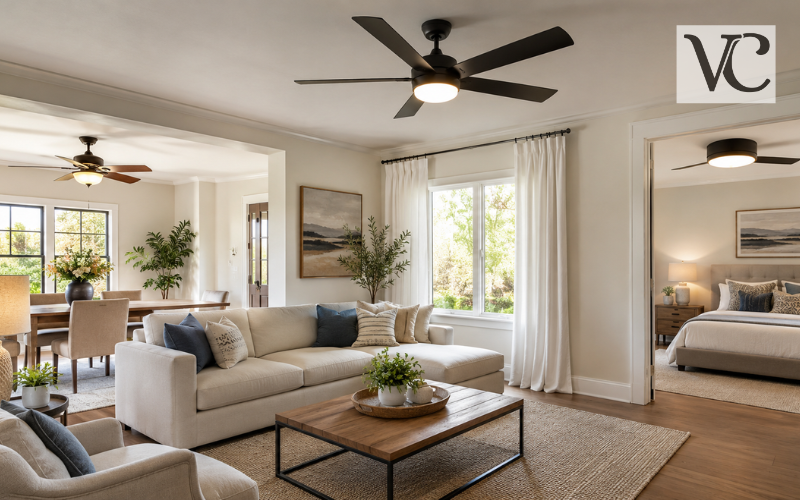
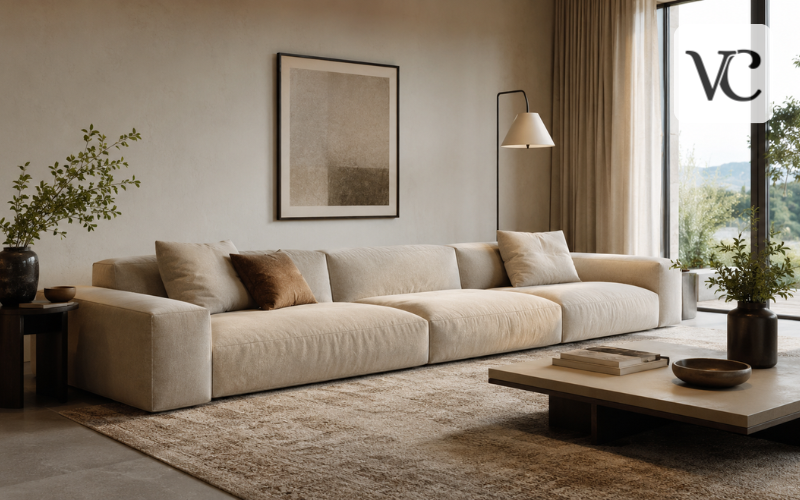
A low profile sofa sits closer to the floor and usually has a lower overall silhouette than a conventional couch. The seat, back, arms, or legs may all be reduced in height, giving the sofa a wide, grounded appearance. This style is common in modern living rooms because it can make furniture feel less visually heavy while creating a relaxed place for lounging.
One of its biggest design advantages is the way it changes the proportions of a room. By keeping more open wall space above the sofa, a low design can help a room feel airier and can make the ceiling appear taller. This is one reason low-profile sofas are often considered for smaller rooms and spaces with low windows.
However, appearance should not be the only consideration. Seat height, depth, cushion support, room dimensions, accessibility, and the way you normally sit all matter. This guide explains those points along with sectional, chaise, sofa-bed, IKEA, and modern low-profile options so you can decide whether this type of seating fits your home.
Snippet-Ready Definition:
A low profile sofa is a sofa designed with a lower seat, back, or base than standard couches. Its grounded shape creates a relaxed look and can help a room feel more open and spacious.
Quick Guide: Low Profile Sofa
| Feature | Quick Guide |
| Typical Seat Height | Often around 16–17 inches (41–43 cm), though designs vary |
| Best For | Modern rooms, apartments, open-plan spaces, and relaxed seating |
| Common Styles | Modular, sectional, curved, minimalist, chaise, and sofa bed |
| Main Benefit | Creates a visually open, less bulky appearance |
| Comfort | Often deep and lounge-friendly |
| Main Drawback | Very low seats may be harder to stand up from |
| Small Spaces | Choose compact width and depth, not just a low height |
| Before Buying | Check dimensions, seat depth, cushion firmness, and delivery access |
Quick Steps for Choosing a Low Profile Sofa
- Measure your available floor space carefully.
- Check the actual seat height and overall sofa height.
- Compare seat depth with your preferred sitting position.
- Make sure you can sit down and stand up comfortably.
- Choose sectional or chaise orientation based on room traffic.
- Check upholstery, cushion support, frame quality, and cleaning needs.
- Measure doors, stairs, and hallways before ordering.
What Makes a Sofa “Low Profile”?
There is no single universal measurement that officially turns a regular sofa into a low-profile sofa. Instead, the term usually describes the overall relationship between the seat, back, arms, legs, and horizontal width.
Seat height is one of the easiest measurements to compare. A current sofa-sizing guide places most standard sofa seats around 17–19 inches (43–48 cm) from the floor, while low-profile designs may be around 16–17 inches (41–43 cm) or even slightly lower. For example, IKEA currently lists the U.S. SÖDERHAMN sectional at a seat height of 15¾ inches, which is about 40 cm.
A low seat is only one feature, though. Some sofas have a low back but a fairly normal seat height. Others use hidden or very short legs to create a floor-hugging appearance. Deep lounge seating is also common, but a deep sofa is not automatically low profile.
When comparing models, check the seat height, overall height, leg clearance, seat depth, and total depth rather than relying only on the product name.
Benefits and Trade-Offs of a Low Profile Sofa
The main appeal of a low profile sofa is visual openness. Because less furniture extends upward into the room, more wall, window, and background space remains visible. This can give a living room an airy and casual character and may help smaller rooms appear taller.
The style also works naturally with contemporary and minimalist interiors, where long horizontal lines and uncluttered shapes are common. A lower back can be particularly useful when a sofa sits in front of a window or in the middle of an open-plan room because it creates less visual obstruction.
Comfort can also be a major advantage. Many low-slung designs combine their lower height with generous cushions and deeper seating, making them well suited to reading, watching television, stretching out, or spending long evenings with family.
There are trade-offs. A very low seat requires more effort when standing up. Deep cushions may leave shorter people without good back support unless they add a pillow. Low backs can feel less supportive for people who prefer an upright position, and extra-deep sofas may occupy more floor space than their visually light appearance suggests.
Main Low Profile Sofa Styles
Low-profile sofas appear in several forms, so the right choice depends on how you want the room to look and how you normally use your sofa.
Modular and sectional loungers use individual seating units that can often be combined into different arrangements. Their wide cushions and relaxed proportions work especially well in family rooms, media rooms, and larger open spaces.
Mid-century and minimalist linear sofas have a more structured appearance. Straight backs, narrow arms, simple cushions, and slim exposed legs can make them look neat rather than oversized. They are useful when you want low furniture without the very soft “sink-in” feel of a lounge sofa.
A modern low profile sofa may also use curved arms, rounded backs, soft upholstery, or almost hidden legs. These slouchy and curved designs have a more sculptural appearance and can become the main visual feature of a room.
The best style is therefore not simply the newest one. Choose according to whether you sit upright, curl up, entertain guests, watch television, or regularly stretch out on the sofa.
Choosing a Low Profile Sofa for Small Spaces
A low profile sofa for small spaces can make a compact room feel less crowded, but low height does not mean a small footprint. A sofa may be only 30 inches high yet extend far into the room because of deep cushions.
Measure the full width and depth first. Then check the space left for walking, side tables, doors, and other furniture. It can help to mark the proposed sofa footprint on the floor with painter’s tape before ordering. Measuring the route into the room is equally important; doors, hallways, stairs, elevators, and tight corners can prevent a large sofa from reaching its intended location.
For a small apartment, a two-seater or compact three-seater with a relatively low back can provide the visual benefits of low furniture without taking over the room. Lower backs can also preserve views through windows or across an open living area.
In short, judge a small-space sofa by its actual dimensions and usable clearance, not by how compact it looks in photographs.
Low Profile Sofa Sectional Designs
A low profile sofa sectional is useful when you need more seating or want to create a defined lounge area within a larger room. Common layouts include L-shaped, U-shaped, corner, and fully modular configurations.
Modular designs offer the greatest flexibility because individual pieces can often be moved as your room or household needs change. IKEA, for example, continues to position SÖDERHAMN as a modular range that can be configured into different combinations.
For fixed sectionals, pay close attention to orientation. A left-facing or right-facing section can completely change how people move through the room. The extended portion should not block the main doorway, balcony access, fireplace, or normal walking route.
Depth is especially important with a low sectional. A design may look streamlined from the front but extend 39 inches or more into the room. Always build the layout around your measurements rather than choosing the largest arrangement that technically fits.
Low Profile Sofa With Chaise
A low profile sofa with chaise offers a middle ground between a standard couch and a large sectional. You retain conventional seating on one side while gaining an extended surface where someone can put their feet up or lie down.
Fixed chaise sofas require you to select the correct left- or right-hand orientation before purchase. Reversible models offer more flexibility because the chaise can move from one side to the other. This can be valuable for renters or anyone who expects to rearrange or move home.
In a narrow living room, a chaise can sometimes be more practical than an L-shaped sectional because only one part of the sofa extends outward. Position it along a wall or toward an unused corner rather than across the room’s main circulation path.
In open-plan homes, a chaise can also create a subtle boundary between the living area and nearby dining or kitchen space without adding another wall or bulky piece of furniture.
Low Profile Sofa Bed for Multipurpose Rooms
A low profile sofa bed can be especially practical when the same room must work as both everyday living space and occasional sleeping space. Studios, home offices, guest rooms, and smaller apartments are common places to use one.
Different sofa beds open in different ways. Traditional pull-out sleepers contain a folded sleeping surface inside the frame, while fold-down models convert the back and seat into a bed. Convertible sectionals and chaise sleepers may use sliding or lifting sections.
Do not measure only the sofa in its closed position. Check the full length and width after it has been converted into a bed and make sure there is still space to walk around it.
Also consider how often it will be slept on. An occasional guest bed has different comfort requirements from something used every night.
Current IKEA ranges show how multiple functions can be combined. For example, IKEA’s HYLTARP range currently includes chaise options with under-seat storage as well as a sofa-bed option. Features and availability can vary between countries, so check the specifications in your local market.
Modern Low Profile Sofa Design, Materials, and Construction
A modern low profile sofa often combines clean horizontal lines with wide cushions, low arms, and short, slim, or hidden legs. Curved and modular versions soften this appearance while keeping the same grounded proportions.
Upholstery has a major effect on everyday ownership. Linen and cotton blends can create a casual look, while chenille tends to feel softer and more textured. Velvet offers a richer appearance, and leather can be easier to wipe clean but develops its own wear characteristics over time. Performance fabrics may be useful in busy family homes where spills and frequent use are expected.
Look beyond the covering as well. Frame construction, cushion filling, suspension, stitching, and the availability of removable covers affect how a sofa holds up. Soft cushions create a relaxed feeling but usually need more reshaping. Firmer cushions provide a more structured seat and can make getting up easier.
The best material is therefore the one that suits your household, cleaning habits, children, pets, climate, and preferred level of maintenance.
Seat Height, Depth, and Everyday Comfort
Comfort is personal, and a fashionable low seat can quickly become frustrating if it does not suit your body.
Current guidance commonly places regular sofa seating around 17–19 inches high, while low-profile seating may fall around 16–17 inches. Seat depth also changes the experience: greater depth allows you to curl up or recline, while a shallower seat generally supports a more upright position.
When trying a sofa, sit all the way back rather than only on the front edge. Ideally, your feet should feel supported and you should be able to rise without excessive effort. A 2026 expert discussion on sofa ergonomics also emphasizes that useful seat height depends on individual leg and body proportions rather than one perfect number for everybody.
Shorter users may find a very deep sofa uncomfortable because reaching the back cushion can leave their feet off the floor. A lumbar or throw cushion can reduce usable seat depth, but it is better to test this before buying.
Seat height, depth, back support, cushion firmness, and leg position should therefore be considered together.
Accessibility: Who May Not Enjoy a Very Low Sofa
Low seating is not universally comfortable. Sitting down into a low cushion and pushing yourself back up requires more movement through the knees and hips than using a higher, firmer seat.
This can be an important issue for some older adults, taller people, and people who already find getting up from low furniture difficult. Current furniture guidance notes that higher seating can make standing easier for users with knee, hip, or mobility concerns.
Soft cushions can add another challenge because they compress under body weight. A sofa that measures 17 inches when empty may feel lower once someone sits down.
For a household with several users, test the sofa with the people who will use it most often. Someone who loves a deep, low lounge position may have very different needs from a family member who prefers to sit upright.
Accessibility should be treated as part of comfort rather than as a separate issue considered only after purchase.
Styling a Low Profile Sofa Without Making the Room Feel Unbalanced
A low sofa changes the visual center of a living room, so the furniture around it should feel related in scale.
A coffee table that towers over the seat can make the sofa appear even lower. A table close to seat height usually creates a more natural relationship and makes drinks, books, and remotes easier to reach. Expert sofa-height guidance likewise recommends considering sofa height together with nearby tables for comfort and practical use.
A large rug can visually anchor the seating area, particularly when the sofa has very short or hidden legs. Side tables and lamps should be high enough to use comfortably without making the seating zone feel top-heavy.
You do not need to make everything low. Curtains hung higher on the wall, tall lamps, plants, and vertical artwork can create useful contrast with the long horizontal shape of the sofa.
Most importantly, leave enough open space for people to move comfortably. Good styling should improve how a room works, not just how it looks in a photograph.
Low Profile Sofa IKEA Options, Indian Low Seating, and the Best Choice for Your Home
If you are searching for a low profile sofa at IKEA, check the specifications rather than assuming that every simple or modern-looking model sits low. Seat height, seat depth, total depth, back height, and clearance under the frame can differ substantially between sofa families.
SÖDERHAMN is a useful current example. IKEA’s U.S. specifications list one sectional configuration at a 15¾-inch (about 40 cm) seat height, with an overall depth of 39 inches. Other IKEA markets list SÖDERHAMN at about 40 cm seat height as well. Because product combinations, covers, and availability vary by location, always check the current local product page before ordering.
Indian low-seating sofa styles also deserve separate consideration. A low seating sofa in Indian homes may refer to anything from modern low-slung upholstered furniture to floor-near seating arrangements. These should not automatically be treated as the same design category. Traditional-inspired floor seating may position the body much closer to the ground than a contemporary low-profile couch.
When deciding on the best low profile sofa for your home, use a practical checklist:
- Measure the room and the full sofa footprint.
- Check seat height and usable seat depth.
- Sit down and stand up several times if testing in person.
- Compare soft and firm cushion support.
- Check the frame, upholstery, seams, and removable-cover options.
- Confirm sectional or chaise orientation.
- Measure the open dimensions of a sleeper sofa.
- Measure doors, stairs, elevators, and delivery routes.
- Review care instructions, warranty terms, and return conditions.
A sofa that passes these practical checks is more likely to work long term than one chosen mainly because its shape looks good online.
Conclusion
A low profile sofa can give a living room a relaxed, open appearance while offering comfortable seating for lounging, conversation, or everyday family life. Its lower silhouette can work especially well in modern interiors, near windows, and in rooms where you want furniture to feel visually lighter.
Still, low profile does not automatically mean compact or comfortable. Some designs are exceptionally deep, some have limited back support, and very low seats can be difficult for certain users to get out of.
Before buying, compare the real measurements with your room and with the people who will use the sofa. Consider seat height, depth, cushion firmness, overall size, accessibility, and circulation space together. Whether you choose a simple two-seater, sectional, chaise, modular design, or sofa bed, the right choice is the one that fits both the space and everyday life—not simply the latest furniture trend.
FAQs
What is considered a low profile sofa?
A low profile sofa generally has a lower-than-average seat, back, base, or overall height. Many models have seats around 16–17 inches high, although there is no universal measurement.
Are low profile sofas good for small spaces?
They can be. Their low silhouette may make a small room feel more open, but some models are very deep. Always check the complete width and depth before buying.
Are low profile sofas comfortable?
They can be very comfortable, especially for lounging. However, comfort depends on seat depth, cushion firmness, back support, and your body proportions rather than the sofa’s low height alone.
Who should avoid a very low sofa?
Very low sofas may be less practical for older adults or people with knee, hip, or mobility concerns because sitting down and standing up can require more effort.
Can a low profile sofa have a chaise or sleeper bed?
Yes. Low-profile designs are available as sectionals, chaise sofas, modular couches, and sofa beds. Check the full dimensions because chaise and sleeper mechanisms require additional floor space.
Disclaimer: This article provides general information about low profile sofas for educational and buying-guidance purposes. Sofa dimensions, materials, comfort, availability, warranties, and product specifications vary by manufacturer and model. Always confirm current measurements and product details with the retailer before purchasing.
Enjoyed this article? Discover more helpful ideas and fresh inspiration on Vogue Cultures.