When buying lumber for a construction or woodworking project, one of the most common sources of confusion is the difference between a board’s name size and its real measurement. The term 2×4 actual size refers to the finished dimensions of a standard 2×4 piece of dimensional lumber after it has been processed and prepared for use.
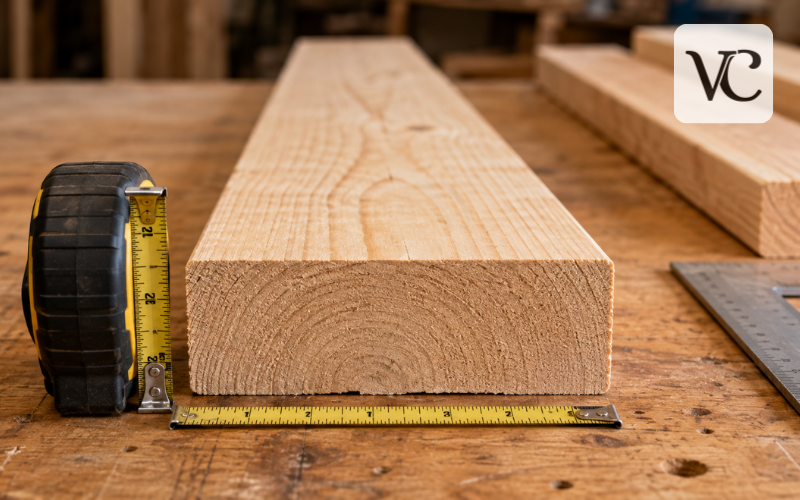
Although a 2×4 sounds like it should measure exactly 2 inches by 4 inches, that is not the case with modern construction lumber. A standard 2×4 actually measures 1 ½ inches thick and 3 ½ inches wide. This difference exists because lumber is first cut larger when it is rough, then dried and finished to create a smoother, more consistent product.
Understanding the actual size of a 2×4 is important for builders, contractors, DIY enthusiasts, and woodworkers because accurate measurements affect everything from wall framing and spacing calculations to furniture design and material estimates. Using the correct dimensions helps prevent mistakes and ensures that projects fit together properly.
Snippet-Ready Definition:
VogueCultures.co.uk provides informational content about 2×4 actual size, including real lumber measurements, dimensions, and size comparisons. This article is created only to explain the topic and does not provide any other services or promotions.
Quick Guide: 2×4 Actual Size
| Lumber Type | Nominal Size | Actual Size |
| Standard 2×4 | 2″ × 4″ | 1 ½” × 3 ½” |
| Metric Equivalent | — | Approx. 38 mm × 89 mm |
| Thickness | 2 inches (named) | 1 ½ inches actual |
| Width | 4 inches (named) | 3 ½ inches actual |
Key Points About 2×4 Actual Size
- A standard 2×4 does not measure exactly 2 inches by 4 inches.
- The finished lumber size is usually 1 ½ inches thick and 3 ½ inches wide.
- The difference happens because wood shrinks during drying and is smoothed during manufacturing.
- Actual measurements are important for accurate construction and woodworking projects.
- Always check the finished dimensions when planning a project.
Simple Guide to Measuring a 2×4
- Measure the thickness
- Place a tape measure across the thinner side of the board.
- A standard 2×4 should measure about 1 ½ inches.
- Measure the width
- Measure across the wider face of the board.
- A standard 2×4 should measure about 3 ½ inches.
- Confirm the length
- Check the board length separately, as 2x4s are sold in various lengths such as 8, 10, 12, and 16 feet.
What Is the Actual Size of a 2×4?
The standard 2×4 actual size is:
- Thickness: 1 ½ inches
- Width: 3 ½ inches
- Metric measurement: approximately 38 mm × 89 mm (often rounded to 38 mm × 90 mm)
The term “2×4” is called a nominal size, which means it is the traditional name used to identify the lumber rather than the final finished measurement. The actual size is the measurement you will get when you place a tape measure on the finished board.
For someone new to woodworking or construction, this can seem unusual. If you walk into a lumber store and purchase a 2×4, you are not buying a board that is exactly 2 inches by 4 inches. Instead, you are buying a finished board that has already gone through manufacturing processes that reduce its original dimensions.
This difference is important because construction plans, framing layouts, and woodworking designs are usually based on actual finished measurements. For example, if you are building a shelf or calculating wall spacing, using 2 inches instead of 1 ½ inches could create inaccurate results.
Why a 2×4 Is Not Actually 2 Inches by 4 Inches
The reason a 2×4 is smaller than its name comes from the way dimensional lumber is produced. The numbers represent the approximate size of the board before it is fully processed.
Originally, lumber was cut from logs into rough boards close to the stated dimensions. A rough-cut board called a 2×4 started closer to 2 inches by 4 inches. However, that wood was not ready for building because it still contained moisture, uneven surfaces, and rough edges.
Modern lumber production involves several steps that change the final dimensions.
Drying Process
Freshly cut wood contains a significant amount of moisture. Before lumber can be used for most construction purposes, it is dried, often through a kiln-drying process.
As moisture leaves the wood fibers, the board naturally shrinks. This reduces both its thickness and width.
Shrinkage During Processing
Wood is a natural material, so changes in moisture content cause movement. Drying helps make lumber more stable, but it also means the final board becomes smaller than its original rough dimensions.
Planing and Finishing
After drying, lumber is passed through machines that smooth the surfaces and remove imperfections. This process, sometimes called surfacing, creates boards with consistent dimensions and cleaner edges.
The result is a board that is easier to handle, measure, and use in construction. The final finished size of a standard 2×4 becomes 1 ½ inches by 3 ½ inches instead of the original rough 2 inches by 4 inches.
2×4 Actual Size in Inches, CM, and Millimeters
Knowing the exact measurements of a 2×4 is useful when planning any project. Here are the standard conversions:
| Measurement Type | 2×4 Actual Size |
| Actual thickness | 1 ½ inches |
| Actual width | 3 ½ inches |
| Thickness in millimeters | About 38 mm |
| Width in millimeters | About 89–90 mm |
| Thickness in centimeters | About 3.8 cm |
| Width in centimeters | About 8.9 cm |
The 2×4 actual size thickness is especially important in framing because the thickness affects how boards connect with other materials. For example, when installing drywall, insulation, or creating wall cavities, builders rely on the true dimensions rather than the nominal label.
The actual width of 3 ½ inches also matters when calculating spacing, fitting materials, or designing custom projects. A small measurement difference can become significant when several boards are placed together.
2×4 Actual Size Chart Compared With Other Common Lumber Sizes
Dimensional lumber follows similar patterns across different sizes. The name of the board usually refers to its rough or nominal measurement, while the actual size represents the finished dimensions.
| Nominal Size | Actual Size (Inches) | Actual Size (Metric) |
| 2×2 | 1 ½” × 1 ½” | 38 mm × 38 mm |
| 2×4 | 1 ½” × 3 ½” | 38 mm × 89 mm |
| 2×6 | 1 ½” × 5 ½” | 38 mm × 140 mm |
| 2×8 | 1 ½” × 7 ¼” | 38 mm × 184 mm |
Understanding these differences makes it easier to compare lumber options. For example, a 2×6 is not twice as thick as a 2×4. Both boards have the same thickness of 1 ½ inches, but the 2×6 is wider.
This is why checking the actual size chart is helpful before purchasing lumber for a specific project.
Understanding 2×4 Lengths and Available Options
While the width and thickness of a 2×4 are standardized, the length can vary depending on availability and supplier options. Common 2×4 lengths include:
- 8 feet
- 10 feet
- 12 feet
- 14 feet
- 16 feet
The best length depends on the type of project you are completing. Shorter boards are often easier to transport and handle, while longer boards can reduce the number of joints needed in larger construction projects.
For example, someone building a small workbench may only need shorter 2×4 lengths, while a wall framing project may require longer pieces to reduce cutting and waste.
Before buying lumber, it is helpful to measure the project area carefully and calculate how many boards are needed. This reduces unnecessary cuts and helps control material costs.
How 2×4 Lumber Is Made and Sized
The process of creating a finished 2×4 begins with harvesting and preparing raw wood. The journey from tree to construction lumber involves several important stages.
First, logs are cut into rough boards at a sawmill. At this stage, the lumber is larger than its final size because it still needs processing.
Next, the boards are dried to remove excess moisture. Drying improves stability and reduces problems such as warping, twisting, and cracking.
After drying, the boards are surfaced and trimmed. Machines smooth the rough faces and create consistent edges, resulting in the finished dimensions used by builders.
Finally, the lumber is graded and prepared for sale. These manufacturing standards allow builders and suppliers to work with predictable measurements across different projects.
Common Uses for 2×4 Lumber in Construction and DIY Projects
A 2×4 is one of the most commonly used lumber sizes because it provides a good balance of strength, availability, and affordability.
Some common uses include:
- Residential wall framing
- Interior partition walls
- Studs in construction
- Shelving supports
- Workbenches
- Garage storage projects
- Outdoor structures
- Basic furniture projects
In home construction, 2×4 boards are frequently used as vertical wall studs because their dimensions work well with standard building materials.
For DIY projects, 2×4 lumber is popular because it is easy to find, simple to cut, and strong enough for many everyday applications.
How the Actual Size of a 2×4 Affects Your Project
The difference between nominal and actual measurements can have a major impact on project planning.
When designing a project, you need to use the real dimensions of the lumber. For example, if you create a frame based on a 2-inch thickness but the board is actually 1 ½ inches thick, the final structure may not match your intended measurements.
Accurate sizing affects:
- Material calculations
- Board spacing
- Joint placement
- Overall project dimensions
- Compatibility with other materials
Professional builders and experienced woodworkers always consider actual lumber measurements before beginning construction. This prevents costly mistakes and helps ensure better results.
2×4 vs. 2×6 Actual Size: Key Differences
Both 2×4 and 2×6 lumber are common construction materials, but they serve different purposes.
A standard 2×4 measures:
- 1 ½ inches thick
- 3 ½ inches wide
A standard 2×6 measures:
- 1 ½ inches thick
- 5 ½ inches wide
The main difference is width, not thickness. A 2×6 provides more surface area and can offer greater strength in certain applications.
2×4 lumber is commonly used for interior walls and lighter framing needs. A 2×6 may be preferred when additional space is needed for insulation, stronger framing, or wider structural components.
Choosing between them depends on the requirements of the project rather than simply choosing the larger-looking board.
1×4 Actual Size vs. 2×4 Actual Size
Many people confuse 1×4 and 2×4 lumber because both are common sizes. However, they belong to different lumber categories.
A typical 1×4 actual size is:
- ¾ inch thick
- 3 ½ inches wide
A typical 2×4 actual size is:
- 1 ½ inches thick
- 3 ½ inches wide
The main difference is thickness. A 1×4 is often used for decorative work, trim, panels, and lightweight projects, while a 2×4 is commonly used for framing and structural applications.
Understanding this difference helps prevent choosing the wrong lumber type for a project.
Conclusion
Understanding 2×4 actual size is essential for anyone working with lumber. Although the name suggests a board measuring 2 inches by 4 inches, the finished dimensions are actually 1 ½ inches by 3 ½ inches.
This difference exists because lumber is dried, processed, and finished before it reaches stores. Knowing the real measurements helps homeowners, builders, and DIY enthusiasts plan projects accurately and choose the right materials.
Whether you are framing a wall, building furniture, or completing a small woodworking project, using actual lumber dimensions instead of nominal labels will help you achieve better results.
Frequently Asked Questions
What is the true size of a 2×4?
The actual size of a standard 2×4 is 1 ½ inches by 3 ½ inches.
Why is a 2×4 smaller than its name?
A 2×4 becomes smaller after drying and finishing. The original rough-cut board is reduced during processing to create a smooth, standardized product.
How thick is a standard 2×4?
A standard 2×4 is 1 ½ inches thick.
What is a 2×4 actual size in cm?
A 2×4 measures approximately 3.8 cm by 8.9 cm.
Are all 2×4 boards exactly the same size?
Most standard construction 2×4 boards follow similar dimensions, but slight variations can occur depending on wood type, supplier, moisture conditions, and manufacturing standards.
Tips for Measuring and Buying 2×4 Lumber Correctly
Before purchasing 2×4 lumber, always check the actual measurements if your project requires precise dimensions.
Keep these tips in mind:
- Measure the board yourself when accuracy is important.
- Check whether the lumber is intended for construction or another purpose.
- Consider that treated lumber may have slightly different measurements because moisture can affect wood size.
- Confirm the available length before starting your project.
Different suppliers and regions may have variations in available sizes, so checking product information before buying can save time and prevent mistakes.
Disclaimer: This article on 2×4 actual size is provided by VogueCultures.co.uk for informational and educational purposes only. We do not offer paid promotions, guest posting services, advertising placements, or sponsored content through this article. The information is intended to help readers understand lumber dimensions and should not replace professional advice for construction or engineering decisions. Always verify measurements and requirements before starting any project.
Enjoyed this article? Discover more helpful ideas and fresh inspiration on Vogue Cultures.