Before hanging a heavy shelf, mounting a television, installing cabinets, or attaching wall fixtures, one of the most important steps is knowing where the support behind the wall is located. This is why many homeowners search for how to find studs before starting a DIY project.
Wall studs are the vertical support pieces hidden behind drywall or other wall coverings. They form the framework of a wall and provide a strong surface for screws and mounting hardware. Drywall alone is not designed to hold the weight of many larger objects, so attaching items directly into a stud can make installations safer and more secure.
Finding studs does not always require expensive equipment. Many people use an electronic stud finder, while others rely on simple techniques such as checking wall features, measuring from known points, or listening for changes when tapping the wall. Each method has advantages and limitations, depending on the type of wall and the project.
This guide explains different ways to locate wall studs, including how to find studs with a stud finder, how to find studs without tools, and how to confirm you have found the correct location before drilling.
Snippet-Ready Definition:
Voguecultures.co.uk provides informational guidance about how to find studs, including simple methods, tools, and tips for locating wall studs safely. This article is for educational purposes only and does not provide any other services.
Quick Guide: How to Find Studs
| Method | How It Works | Accuracy Level | Best For |
| Stud Finder | Detects changes behind the wall surface | High | Mounting TVs, shelves, and heavy items |
| Knocking Method | Finds changes in wall sound | Medium | Quick checks without tools |
| Measuring Method | Uses common stud spacing patterns | Medium | Estimating stud locations |
| Visual Clues | Uses outlets, corners, and trim as guides | Low to Medium | Basic DIY projects |
| Phone Apps | Uses smartphone sensors or apps | Varies | Extra guidance, not final confirmation |
Step-by-Step Guide: How to Find Studs
- Choose your method
- Use a stud finder for better accuracy or try manual methods if you do not have tools.
- Check common stud locations
- Look near electrical outlets, switches, corners, doors, and windows for possible clues.
- Scan or measure the wall
- Move a stud finder slowly across the wall or measure from a known point.
- Mark the possible stud location
- Lightly mark the area where you believe the stud is located.
- Confirm before drilling
- Double-check the position using another method before installing anything heavy.
What Wall Studs Are and How They Are Positioned
Wall studs are vertical framing members installed inside walls to create the basic structure of a building. They are usually made from wood or metal and support the wall surface, including drywall, plaster, or other materials.
When a wall is constructed, studs are placed at regular intervals to provide strength and make it easier to attach building materials. In many homes, studs are commonly spaced 16 inches apart from the center of one stud to the center of the next. Some walls may use wider spacing, such as 24 inches, depending on the construction style.
Understanding this pattern can make finding studs easier. Once you locate one stud, you can often estimate where nearby studs may be located by measuring across the wall. However, spacing should only be used as a guide because wall layouts can vary.
Knowing how studs are positioned also helps prevent mistakes. For example, if you are installing a large television bracket or heavy shelving, placing screws into the center of a stud provides much stronger support than relying only on drywall anchors.
The Most Reliable Ways to Find Studs in a Wall
There are several methods people use when learning how to find studs in a wall. The best approach depends on the tools available, the wall type, and how accurate the location needs to be.
The most reliable method is usually an electronic stud finder. These tools are designed to detect changes behind the wall surface and can help identify where studs are located. For many home improvement projects, a stud finder provides the quickest and most dependable results when used correctly.
Other methods include:
- Looking for clues around outlets, switches, and trim
- Measuring from corners or known stud locations
- Using a magnet to detect nails or screws
- Knocking along the wall to identify changes in sound
Manual methods can be useful for small projects, but they may not always provide the same level of accuracy as a dedicated tool. Combining more than one method is often the best way to confirm a stud location before making a hole.
How to Find a Stud With a Stud Finder
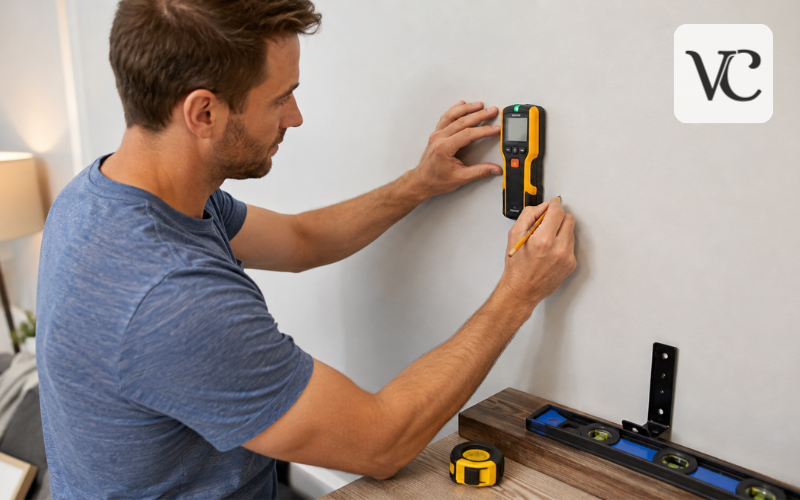
A stud finder is one of the easiest tools for locating hidden wall studs. While different models work in slightly different ways, most electronic stud finders follow a similar process.
Start by checking that the tool has working batteries and reading the manufacturer’s instructions. Place the stud finder flat against the wall and calibrate it according to the instructions. Calibration helps the device understand the wall surface before scanning.
Move the stud finder slowly across the wall horizontally. Avoid moving too quickly because the sensor needs time to detect changes behind the wall. When the device indicates a stud, mark the location lightly with a pencil.
For better accuracy, scan the same area from both directions. Some stud finders detect the edges of a stud, while others identify the center. If your tool detects edges, marking both sides and finding the midpoint can help you identify the center point where a screw should go.
Common mistakes that can affect results include:
- Moving the device too quickly
- Starting calibration directly over a stud
- Holding the tool unevenly against the wall
- Ignoring unusual readings
If the result seems uncertain, scan the area again and compare the findings before drilling.
How to Find Studs in a Wall Without a Stud Finder
Not everyone has a stud finder available, but there are still several ways to search for studs manually. These methods may take more time and patience, but they can work well for lighter projects.
One common approach is looking for visible clues. Electrical outlets and switches are often attached near studs because the electrical boxes need support. Baseboards and trim may also provide hints because they are frequently secured into wall framing.
Another option is using a small magnet. Many drywall panels are attached with screws or nails that go into studs. Moving a magnet slowly across the wall may help locate these fasteners, which can indicate where a stud is positioned.
However, no-tool methods are not perfect. A wall may contain other materials, unusual framing patterns, or hidden objects that create confusing signals. For important installations, it is better to confirm the location using more than one method.
How to Find Studs in a Wall by Knocking
Knocking is one of the oldest and simplest methods for finding studs. It works by listening for differences in the sound produced when tapping different areas of a wall.
Start by gently knocking across the wall surface. Areas between studs often sound more hollow because there is an open space behind the drywall. When you knock over a stud, the sound may become firmer or less hollow.
This method works best when you move slowly and compare nearby areas rather than relying on one single knock. The change in sound can help narrow down a possible stud location.
However, knocking is not always accurate. Insulation, thicker wall materials, plaster, or unusual construction can make sound differences harder to notice. It is useful as a starting point, but important projects should include another confirmation method.
How to Find a Stud in the Wall Without Tools
If you need to locate a stud and do not have any equipment available, you can use simple observations around the room.
Start by checking areas where studs are likely to exist. Corners, door frames, window openings, and electrical outlets often provide useful clues because these areas usually require additional framing support.
You can also look closely at the wall surface. Small marks, filled holes, or slight imperfections may indicate where nails or screws were placed during construction. A flashlight held at an angle can sometimes make these small details easier to notice.
Once you find a possible stud location, measure outward to estimate where additional studs may be located. Remember that these measurements are only a guide and should be confirmed before drilling.
This approach is most suitable for lightweight items such as small pictures or decorations. For heavier objects, using a proper stud-finding tool is usually a safer choice.
How to Find Studs in a Wall With a Tape Measure
A tape measure can be helpful when you already know where one stud is located or have a reliable starting point.
Many homes follow regular stud spacing patterns, so measuring from a confirmed stud can help estimate where nearby studs may be. For example, after identifying one stud, measuring approximately 16 inches across may lead you toward another possible location.
You can also check areas near corners, outlets, and switches. These locations may help you find a starting point for measurements.
However, measurements alone should not be considered proof that a stud is present. Walls can include different layouts around doors, windows, and special construction areas. Always confirm the location before installing heavy items.
How to Find Wall Studs With Your Phone
Many people search for how to find wall studs with phone because smartphones are convenient and always nearby. Some phone applications claim to help detect studs by using built-in sensors.
However, the accuracy of phone-based stud-finding apps can vary. A smartphone generally does not have the same dedicated sensors found in professional stud finders, and results may depend on the device model and wall conditions.
Phone apps can sometimes be useful as an additional clue, but they should not be the only method used for important installations. If you are mounting something heavy, verify the location with a stud finder or another reliable method before drilling.
Common Signs That Help You Locate Hidden Wall Studs
Before using a tool, you can often find helpful clues around the wall. These signs do not guarantee a stud location, but they can make the search easier.
Electrical outlets and switches are often installed near studs because the boxes require support. Baseboards and crown molding may also be attached to framing members, leaving small nail marks that reveal possible stud locations.
Other useful clues include:
- Corners where walls meet
- Door and window frames
- Repeated spacing patterns along the wall
- Visible construction marks
The most accurate approach is combining these clues with another method. A single sign may be misleading, but several matching clues can increase confidence.
How to Confirm You Have Found the Correct Stud
Finding a possible stud location is only the first step. Before drilling, it is important to confirm that the spot is actually supported by framing.
One way to confirm is by scanning the area again with a stud finder from different directions. You can also check whether nearby studs appear at expected spacing intervals.
For heavier installations, take extra care. Confirm the stud location at the exact height where the fastener will go because framing can vary around openings and corners.
It is also important to remember that studs may contain electrical wiring or plumbing nearby. Always use caution before drilling into a wall, especially around kitchens, bathrooms, and areas with plumbing or electrical fixtures.
Common Mistakes People Make When Looking for Studs
Many DIY mistakes happen because people rush the process or rely on a single clue.
A common mistake is assuming that every wall follows the same spacing pattern. While many homes use standard spacing, some walls may be different. Another mistake is trusting one stud finder reading without checking it again.
Other problems include:
- Drilling immediately after finding a possible location
- Confusing pipes or other objects with studs
- Ignoring wall type differences
- Using weak mounting methods for heavy items
Taking a few extra minutes to confirm the location can prevent damaged walls, misplaced holes, and unsafe installations.
Choosing the Right Stud-Finding Method for Your Project
The best method for finding studs depends on what you are installing and how much support is needed.
For small decorations, simple methods such as knocking or checking wall clues may be enough. For heavier items like televisions, cabinets, or large shelves, a stud finder is usually the better option because accuracy matters more.
Beginners can start with a combination of simple observations and an affordable stud finder. Learning how your walls are built will make future DIY projects easier and reduce mistakes.
The goal is not only to locate a stud but to feel confident that the mounting point is strong enough for the item you want to install.
Conclusion
Learning how to find studs is an important skill for anyone doing home improvement work. Whether you are hanging shelves, mounting a television, installing cabinets, or adding wall fixtures, locating the support behind the wall helps create a safer and more secure installation.
A stud finder is often the simplest option, but manual techniques such as knocking, measuring, and checking wall features can also provide useful guidance. The most reliable results usually come from combining different methods and confirming the location before drilling.
With a little patience and the right approach, finding wall studs becomes a simple part of preparing for your next DIY project.
Frequently Asked Questions
Can you find studs without a stud finder?
Yes, it is possible to find studs without a stud finder by using methods such as knocking, checking outlets, looking for nail marks, measuring, or using a magnet. However, these methods may require more checking and are usually less precise.
How far apart are wall studs usually placed?
Many residential walls use studs spaced 16 inches apart from center to center, although some walls use 24-inch spacing. The exact spacing depends on the building design and construction method.
Are stud finder apps accurate?
Phone apps may provide helpful information, but their accuracy depends on the phone and wall conditions. They should not be treated as a replacement for a dedicated stud finder when accuracy is important.
What is the easiest way to locate a stud?
For most homeowners, using an electronic stud finder is the easiest and fastest option. Manual methods can also help, especially when combined with measurements and visible wall clues.
Disclaimer: This article on “How to Find Studs” published on Voguecultures.co.uk is provided for general informational and educational purposes only. We do not offer professional construction services, paid promotions, guest posting opportunities, or advertising through this content. The information shared is intended to help readers understand stud-finding methods and DIY considerations. Always use proper safety precautions and seek professional advice when required for specific building or installation work.
Enjoyed this article? Discover more helpful ideas and fresh inspiration on Vogue Cultures.