
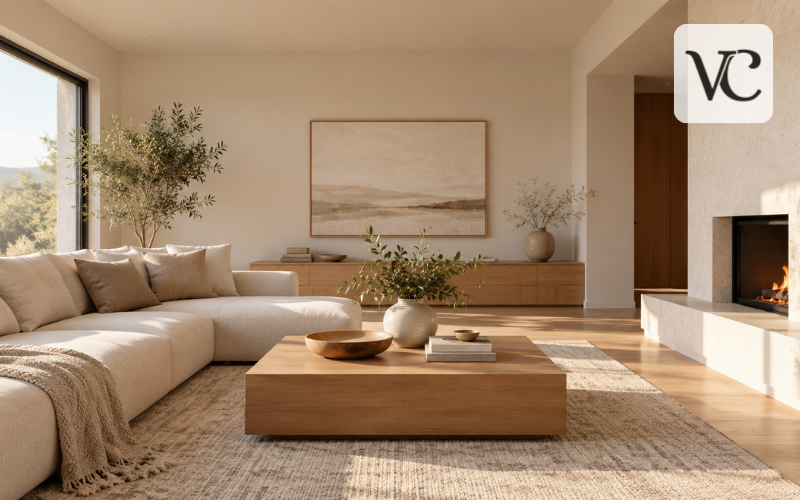
A minimalist living room is not a room with almost nothing in it. It is a space where furniture, colors, storage, lighting, and decoration are chosen with care. The aim is to create calm and make daily life easier without removing comfort or personality.
Good minimalism starts with intention. Instead of filling every wall, corner, or table, you decide what the room truly needs. A comfortable sofa may matter more than several small chairs, while one useful storage unit may work better than many baskets and side tables. A meaningful artwork can have more impact than a wall crowded with decoration.
Modern minimalism also feels warmer than the cold, all-white rooms often linked with the style. Current design coverage favors softer neutral colors, natural wood, tactile fabrics, and comfortable furniture while keeping the space visually simple.
This guide covers layout, furniture, color, storage, lighting, wall decor, natural materials, and budget. The goal is not a showroom. It is a room that feels peaceful, works for everyday life, and stays easier to maintain.
Snippet-Ready Definition:
A minimalist living room uses simple furniture, calm colors, smart storage, and purposeful decor to create a comfortable, uncluttered space. voguecultures.co.uk provides information about minimalist living room design only.
Quick Guide Table
| Element | Best Approach |
| Color Palette | Warm whites, beige, taupe, soft brown |
| Furniture | Fewer, useful, comfortable pieces |
| Layout | Open pathways and balanced spacing |
| Storage | Closed or multifunctional storage |
| Lighting | Natural light with soft lamps |
| Materials | Wood, linen, wool, stone, ceramics |
| Wall Decor | One or a few meaningful pieces |
| Overall Feel | Calm, warm, practical, and uncluttered |
Simple Steps for Creating a Minimalist Living Room
- Remove items that are rarely used or have no clear purpose.
- Arrange furniture around how you actually use the room.
- Choose a soft, coordinated neutral color palette.
- Use comfortable furniture that suits the room size.
- Add hidden or multifunctional storage for everyday clutter.
- Bring in warmth through wood, textiles, and natural materials.
- Keep wall decor limited and meaningful.
- Use soft lighting to make the room feel comfortable and inviting.
The Principles That Make a Minimalist Living Room Work
The main idea behind minimalism is simple: keep what serves a purpose, supports comfort, or has genuine meaning. That does not mean every object must be strictly practical. A favorite photograph, handmade vase, or artwork can deserve its place because it makes the room personal.
Visual breathing room is equally important. When every surface is covered and every corner is filled, the eye has nowhere to rest. Leaving some areas open helps important pieces stand out.
Comfort should never be sacrificed just to achieve a cleaner look. If a chair looks beautiful but is uncomfortable, or a table is too small to be useful, the room is not working well. Form and function should support each other.
Everyday objects also need a proper home. Remote controls, chargers, books, toys, and blankets do not need to disappear, but they should be easy to store and retrieve.
A bare room and a minimalist room are different. A well-designed minimalist space still has balance, warmth, texture, useful furniture, and signs of the people who live there.
Start With a Functional Layout and Clear Walking Space
Before buying anything new, decide how the living room will be used. Some rooms are mainly for conversation and relaxing. Others need to handle television viewing, reading, children’s activities, entertaining, or occasional work.
Once the purpose is clear, choose a natural focal point. It might be a fireplace, window, artwork, television, or simply the seating area. The focal point should help organize the room rather than force an awkward layout.
Leave clear paths between entrances, seating, and other frequently used areas. You should be able to move through the room without weaving around furniture. At the same time, do not automatically push every item against a wall. In a larger room, bringing seating inward can create a more comfortable conversation area.
Furniture scale matters too. A tiny rug and small sofa can look lost in a large room, while an oversized sectional can overwhelm a compact one. Measure the room and important pieces before purchasing.
Open space should feel intentional, not wasted. When movement and daily activities are supported, empty areas become part of the design.
Build a Warm Neutral Color Palette
Neutral colors are common in a minimalist living room because they create a quiet background, but neutral does not have to mean plain white. Soft cream, warm beige, taupe, muted brown, stone, and gentle gray can all provide a calm base.
The key is variation. If the walls, sofa, rug, curtains, and cushions are exactly the same shade, the room can look flat. A cream wall can work with a deeper beige sofa, light wood table, and a few brown or charcoal details.
Pay attention to undertones. Two beige colors may look similar in a store but very different in your home. Check paint and fabric samples together and view them at different times of day.
Wood can add natural contrast without making the room busy. Darker accents can provide definition, but they usually work best in smaller amounts. A coordinated palette should feel connected without making every surface identical.
Choose Minimalist Living Room Furniture With Purpose
Start with the furniture the room truly needs. For most homes, that means comfortable seating, a useful table surface, appropriate lighting, and enough storage for everyday items. Decorative furniture can come later.
Minimalist living room furniture often has simple shapes, but simple does not mean everything needs sharp corners. A curved chair, rounded coffee table, or softly shaped sofa can make a clean room feel more relaxed.
Low-profile furniture can work well where you want open sight lines, but proportions should suit the actual room. Comfort is more important than following a style rule.
Multifunctional pieces can also help. An ottoman with hidden storage can hold blankets, while a media unit can hide devices, cables, and games. These choices reduce visible clutter without reducing usefulness.
In a compact room, fewer correctly sized pieces often work better than many small ones. In a larger room, minimalism may still require generous furniture so the space feels grounded. Whatever the size, choose durability and comfort as carefully as appearance.
Modern Minimalist Living Room Ideas That Still Feel Comfortable
Many modern minimalist living room ideas combine clean forms with softer materials. Instead of building the whole room around hard surfaces and straight lines, balance a simple sofa with a textured rug, linen curtains, or a rounded wood table.
Organic shapes can soften the look. A curved lamp, irregular ceramic bowl, rounded chair, or sculptural side table adds interest without requiring many decorative objects.
Warm minimalism and Japandi-inspired interiors are useful references because both favor restraint, natural materials, muted colors, and thoughtful craftsmanship. Japandi combines Japanese and Scandinavian influences and is commonly associated with simple lines, natural wood, organic materials, and calm colors.
The room still needs personality. One large artwork, an interesting lamp, or a handmade object can create more impact than many small accessories.
Technology should fit into daily life too. Speakers, chargers, televisions, and other devices can stay organized through concealed cables, closed storage, and simple placement. A modern minimalist room should feel current without depending on a short-lived trend.
Designing a Minimalist Living Room in a Small Space
A minimalist living room in a small space benefits from careful planning because every piece affects movement. Start by measuring the room, including doors, windows, and areas that need to remain accessible.
Do not assume the smallest furniture is always best. Too many tiny pieces can make a compact room feel busy. One properly scaled sofa and one useful table may look calmer than several separate chairs and tables.
Furniture with visible legs can expose more floor and create a lighter look. However, closed-base pieces may be smarter if they provide valuable hidden storage. Choose according to your needs rather than a fixed rule.
When floor area is limited, use vertical space. Tall cabinets, built-in shelving, or carefully planned wall storage can help. Keep open shelves edited because crowded shelving quickly creates visual noise.
Mirrors can reflect light and add a sense of depth when placed carefully, especially near a window or pleasant view.
Most importantly, keep enough comfort. Small-space minimalism should help the room work better, not turn it into an empty passageway.
Include a TV Without Letting It Take Over the Room
A minimalist living room with TV can still feel balanced. The television simply needs to be treated as part of the layout rather than the only object that matters.
Choose a screen size that suits the viewing distance and wall. Bigger is not automatically better. If the television dominates the room, nearby furniture can look out of scale.
A simple low media unit can ground the screen and provide storage. Wall mounting may free the surface below, but it looks cleaner only when cables are managed safely and neatly. Built-in cabinetry can also work where extra storage is needed.
Avoid surrounding the television with many small decorations just to fill the wall. A restrained media area often feels calmer. If you enjoy art, use it elsewhere in the room rather than trying to hide the screen completely.
Creating a Minimalist Living Room Without a Sofa
Not every home needs a traditional sofa. A minimalist living room without a sofa can work well in a studio, compact room, multipurpose area, or home where flexible seating is more useful.
A pair of lounge chairs can form a comfortable conversation area. A daybed may provide seating while serving another purpose. Benches, modular seats, or supported floor seating can also work depending on who uses the room.
Comfort must remain the priority. Removing a sofa should solve a problem, not create one. Very low seating may not suit people who find it difficult to sit down or stand up, and good back support matters when people stay seated for long periods.
Connect separate seating pieces through color, material, shape, or proportion. They do not need to match, but they should feel related. A sofa-free layout is successful when it gives you useful flexibility without making the room less comfortable.
Keep Wall Decor Simple but Meaningful
Minimalist living room wall decor works best when it adds character without turning every wall into a display. One substantial artwork can often create more impact than many unrelated small prints.
There is also nothing wrong with leaving a wall empty. Open wall space can help the room feel quieter and make decorated areas more noticeable.
Choose artwork, photographs, or objects because you value them, not simply because a wall appears to need something. Personal pieces often age better than accessories bought only to match a trend.
Floating shelves can be useful, but they can easily become cluttered. If you use them, leave some open space and display a limited number of items.
Interest can also come from the room itself. Wood paneling, textured plaster, stone, a fireplace, or built-in joinery can provide character without adding many separate decorations.
Add Warmth Through Texture, Wood, and Natural Materials
Texture is one of the easiest ways to stop a neutral minimalist living room from feeling cold. Even with a restrained color palette, different surfaces can make the room feel layered and comfortable.
Try combining a smooth wood table with a wool rug, linen curtains, soft upholstery, or a ceramic lamp. Natural materials such as wood, stone, rattan, wool, linen, and clay are often used in warm minimalist and Japandi-inspired spaces because they add variety without needing strong patterns or many colors.
You do not need every material at once. A few repeated textures usually feel more controlled. The same warm wood tone, for example, might appear in a table, picture frame, and chair.
Plants can add life, but choose them according to the room’s actual light and the care you can provide.
Lighting matters too. Make the most of natural daylight, then use lamps in the evening to create a softer atmosphere. Several useful light sources can feel more comfortable than relying only on one bright ceiling fixture.
Create a Minimalist Living Room on a Realistic Budget
A minimalist living room on a budget should begin with what you already own. Before shopping, remove obvious clutter and test a different furniture arrangement. Better spacing can sometimes change the room more than new decor.
Next, identify real gaps. The room may need better lighting, closed storage, a larger rug, or curtains that soften the space. Spending on a clear problem is usually more useful than buying several decorative objects with no purpose.
Paint can make a strong difference when the current colors feel busy or disconnected. Textiles can also refresh the room without replacing large furniture.
When furniture is genuinely needed, consider secondhand, vintage, refurbished, or repaired pieces if their condition is suitable. Minimalism does not require everything to be new.
Be careful with products sold simply because they are called “minimalist.” Buying many new accessories to create a minimalist look can work against the basic idea of choosing fewer, more useful things.
A gradual approach usually works best. Improve the room as needs become clear instead of trying to finish everything in one shopping trip.
Common Minimalist Living Room Mistakes and How to Avoid Them
One common mistake is removing so much furniture that the room no longer supports normal life. A living room still needs comfortable seating, useful surfaces, lighting, and storage where appropriate.
Another problem is choosing furniture that is too small. Minimalism is not about making every item tiny. Correct scale helps a room feel settled and purposeful.
An all-white scheme can also become flat without texture, contrast, or warmth. Neutral rooms usually feel richer when several related tones and materials are used.
Storage deserves equal attention. Moving clutter behind a door may make the room look clean, but an overloaded cabinet is difficult to use. Give common items specific places so tidying stays simple.
Do not rush to fill every empty corner. Open areas provide visual rest. At the same time, do not follow minimalism so strictly that the room loses personality.
Finally, think beyond appearance. Harsh lighting, echoing hard surfaces, uncomfortable seating, or nowhere to place a drink can make a beautiful room frustrating. The design should adapt to the people living there.
Conclusion
A successful minimalist living room comes from purposeful choices, not simply from owning fewer things. The strongest spaces combine function, comfortable furniture, thoughtful storage, warm materials, and enough open space for the room to breathe.
Start with your own home rather than copying someone else’s. Consider the room size, natural light, layout, budget, and the way your household actually uses the space. Keep what works, remove what adds little value, and solve practical problems before adding decoration.
Warm neutrals, natural wood, layered textures, useful storage, and carefully chosen decor can make minimalism welcoming rather than empty. Small rooms can still be comfortable, televisions can be included neatly, and a sofa is optional when other seating works better.
Most importantly, allow the room to feel personal. A good minimalist living room should be easy to live in, comfortable to use, simple to maintain, and meaningful to the people who spend time there.
FAQs
What makes a living room minimalist?
A minimalist living room focuses on useful furniture, open space, simple colors, practical storage, and carefully chosen decor. The goal is to reduce visual clutter while keeping the room comfortable and functional.
Can a minimalist living room still feel cozy?
Yes. Warm neutral colors, natural wood, soft rugs, textured fabrics, comfortable seating, and gentle lighting can make a minimalist living room feel warm and welcoming rather than cold or empty.
What colors work best in a minimalist living room?
Soft whites, cream, beige, taupe, muted brown, and gentle gray are common choices. Mixing several related tones and natural materials helps prevent a neutral minimalist room from looking flat.
How can I create a minimalist living room on a budget?
Start by decluttering and rearranging the furniture you already own. Add inexpensive improvements such as paint, better lighting, simple textiles, or secondhand furniture before spending money on unnecessary decorative items.
Does a minimalist living room need very little furniture?
Not necessarily. Minimalism is about choosing the right furniture rather than owning as little as possible. A room should still have enough comfortable seating, storage, lighting, and useful surfaces for everyday life.
Disclaimer: This article on minimalist living room design is provided by voguecultures.co.uk for general informational and educational purposes only. The content shares home-design ideas and practical guidance and does not represent professional interior-design advice. There is no guest posting, paid promotion, sponsored placement, or advertising involved in this article. Any products, materials, styles, or design approaches mentioned are discussed only to help readers understand the topic. Readers should make design, furniture, and renovation decisions according to their own space, budget, needs, and professional advice where appropriate.
Enjoyed this article? Discover more helpful ideas and fresh inspiration on Vogue Cultures.



