
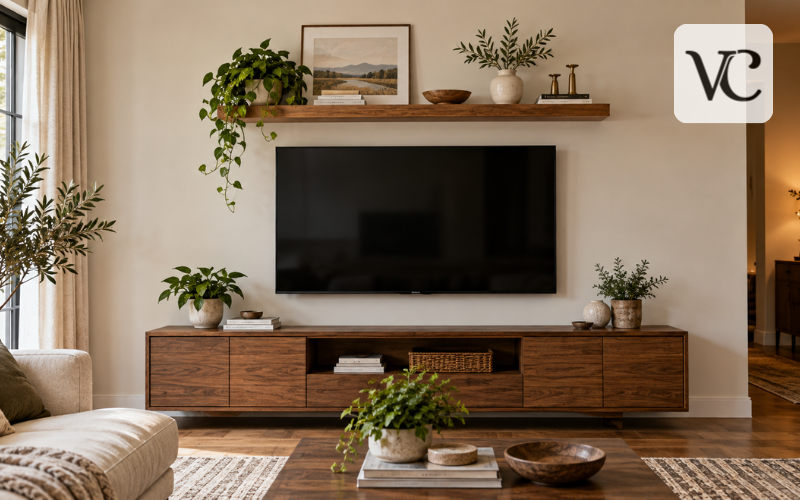
A television often becomes the center of a living room. If the wall above it looks bare, a thoughtfully chosen shelf can make the entire area feel more finished. It gives you somewhere to display a favorite print, a small vase, or a touch of greenery without filling the room with extra furniture.
A shelf above TV setups can be simple or decorative. Some people prefer one floating shelf that almost disappears into the wall. Others choose a picture ledge or a longer wooden shelf that connects visually with the media console below. Neither approach is automatically better. What matters is how the shelf relates to the TV, the surrounding wall, and the objects you place on it.
Before choosing a design, consider three things: the shelf’s width, its height above the screen, and how safely it can be mounted. Getting those basics right makes styling much easier.
Snippet-Ready Definition:
A shelf above a TV is a wall-mounted ledge used to display decorative items and improve visual balance. Voguecultures.co.uk provides informational guidance only, covering shelf sizing, placement, styling, and safety.
Quick Guide: Shelf Above TV Comparison Table
| Shelf Type | Best For | Key Consideration |
| Floating shelf | Modern, minimalist rooms | Secure hidden brackets |
| Long wooden shelf | Wide TV walls | Balanced shelf width |
| Picture ledge | Photos and artwork | Raised edge for stability |
| Double floating shelves | Spacious living rooms | Adequate vertical clearance |
| Bracket-supported shelf | Rustic or industrial interiors | Suitable wall fixings |
Quick Steps for Choosing a Shelf Above Your TV
- Measure your TV: Check its actual width and available wall space.
- Choose the shelf size: Select a width that complements the television and media console.
- Plan the height: Allow enough clearance for ventilation and decoration.
- Select suitable materials: Consider wood, metal, or engineered wood and check weight limits.
- Install and decorate safely: Use suitable wall fixings and keep decorations stable and uncluttered.
Is a Shelf Above Your TV the Right Choice?
A shelf works especially well when there is enough open space above the television to create a clear gap between the screen and the display. It can also help tie together a TV and a wide media console that otherwise feel like separate pieces.
However, not every television wall needs something above it. If the TV is already close to the ceiling, a shelf may make the area look squeezed. A tall cabinet, surrounding artwork, patterned wallpaper, or a large fireplace can also provide enough visual interest on its own. Adding more decoration in those settings may compete with the screen rather than complement it.
Look at the wall from your usual seat. Notice the distance between the TV, the ceiling, and nearby furniture. If the space feels calm and complete, leaving it empty is a valid design choice. If it feels unfinished, one carefully placed shelf may be all it needs.
How High to Hang a Shelf Above a TV
If you’re wondering how high to hang a shelf above TV screens, a gap of about 8 to 12 inches above the top edge is a common decorative starting point. It can help the shelf feel related to the television without crowding it. But it is not a universal installation rule, and a different gap may work better in your room.
First, check the TV manufacturer’s ventilation instructions. Some manufacturers recommend at least 4 inches, or roughly 10 centimeters, of space around the set. The exact requirement depends on the model, so its manual takes priority over decorating advice. You also need room for the shelf itself and any objects that will sit on top.
A thick shelf carrying tall frames may need more open wall space than a shallow ledge holding low-profile pieces. Before drilling, mark the intended shelf edges with painter’s tape. Step back to your normal viewing position and check whether the arrangement looks balanced. Hold a cardboard template at the planned height if possible.
Choosing the Right Shelf Width for Your TV
TV sizes describe the screen’s diagonal, not its horizontal width. For a typical 16:9 display, a 55-inch screen is about 48 inches wide, a 65-inch screen about 57 inches wide, and a 75-inch screen about 65 inches wide. The TV’s outer frame may add a little more. Measure the full television before buying a shelf.
One popular arrangement uses a shelf around 4 to 6 inches wider than the TV overall, creating a small extension on both sides. For example, a shelf around 52 to 54 inches long might look balanced above a television roughly 48 inches wide. A shorter picture ledge can look equally attractive, especially when you want only a small collection of artwork.
For a larger 65-inch or 75-inch TV, consider a longer shelf if the wall and mounting system allow it. Compare the shelf with the media console, too. A shelf that is slightly shorter than a wide console often creates a pleasing stepped shape. The best proportion is the one that suits the entire wall rather than one fixed formula.
Selecting the Best Shelf Type, Depth, and Material
A floating shelf hides its supports, creating a clean line above the television. It works well for modest displays, provided the wall and mounting hardware can support the combined weight. A picture ledge is usually shallower and has a raised front edge, making it useful for leaning light framed prints. Traditional shelves with visible brackets offer a different look and may be easier to match with rustic or industrial rooms.
Depth matters as much as length. A shallow ledge can hold slim frames without projecting far into the room. Small pots, bowls, and decorative objects usually need a wider surface so they sit fully and securely on the shelf. Avoid choosing a deep shelf simply because it offers more space; above a screen, extra depth can feel heavy and make objects more vulnerable to knocks.
Solid wood adds warmth, painted engineered wood can offer a smooth finish, and metal can suit a modern setting. Material alone does not determine strength. Always check the shelf’s stated load rating, required supports, and suitable wall type.
Floating Shelf Above TV Ideas for Different Layouts
The simplest floating shelf above TV arrangement is a single centered shelf. It creates one horizontal line and gives a few favorite objects a clear place to sit. This is an easy choice for a narrow wall or a room where you want the television to remain the main feature.
A long shelf above TV installations can make a bigger statement. When it extends beyond the television, it visually connects the screen with the width of a media console below. Keep the styling light along that length rather than filling every available inch.
Two shelves can work when there is enough height above the TV. Leave adequate space between them so the objects on the lower shelf do not feel trapped. Staggered shelves, with one slightly off-center, can make an interesting arrangement on an uneven wall, but they require more planning to avoid looking random.
For any layout, use painter’s tape to test the shape on the wall.
Styling a Shelf Above the TV Without Making It Look Cluttered
The most effective displays use a few objects with different shapes instead of a long row of similarly sized decorations. Try combining one medium vase, a small framed print, and a low bowl. Let their heights vary, but keep tall pieces away from positions where they could distract from viewing or become unstable.
Framed artwork can add personality without demanding much shelf depth, especially on a purpose-made picture ledge with a retaining lip. Choose secure, lightweight frames and follow the ledge maker’s instructions. Rather than lining every frame up neatly, a little overlap may add depth, as long as nothing can slide or tip forward.
Greenery helps soften the sharp rectangular outline of a television. A small artificial plant can provide that effect without watering risks. If you choose a living plant, use a suitable tray and water it away from the electronics. Keep trailing leaves clear of the screen and vents.
Mixing natural wood, matte ceramics, and a little glass can make a display feel considered. Most importantly, leave some open space so each piece has room to be noticed.
Shelves Above TVs in Living Rooms: Matching Your Interior Style
Shelves above TVs in living room settings look most natural when they relate to furniture already in the space. A light oak shelf can echo wooden chair legs or a pale media console. A dark shelf may connect with black window frames, cabinet handles, or the television itself.
For a modern minimalist room, consider one slim shelf with only a few simple objects. Japandi-inspired spaces often suit warm wood, soft neutral colors, and handmade-looking ceramics. Rustic or farmhouse rooms can carry a more textured wooden shelf, while contemporary interiors may look better with a smooth painted finish and restrained artwork.
Scale makes a difference. In a small living room, a shallow shelf prevents the TV area from feeling bulky. In a wide room, a longer shelf or a carefully arranged pair of shelves can help the wall feel less empty. Let the amount of furniture and wall space guide the display, not the number of decorations available.
Finding Inspiration From Pinterest and Real Home Setups
Searching Pinterest for shelf above TV ideas can help you identify layouts that appeal to you. Save examples with similar wall colors, television sizes, and media consoles rather than collecting only beautiful rooms that bear little resemblance to your own. Pay attention to where the shelf starts and ends, how much blank wall surrounds it, and how many objects it holds.
Reddit discussions can be useful for a different reason. People sometimes share photos of their actual installations, explain mounting problems, or ask whether a shelf looks too high. Treat those comments as personal experiences, not proof that one spacing rule or type of anchor works for every home.
When comparing inspiration photos, remember that camera angles can change the apparent distance between objects. A shelf that looks close to a TV in a photograph may be farther away in real life. Bring the idea back to your own measurements, ceiling height, wall construction, and viewing position before making a decision.
How to Install a Floating Shelf Above Your TV Safely
Start by checking what your wall is made of. Drywall over wooden studs, solid brick, and concrete require different fixings. Use a stud finder where appropriate and check for hidden wires or pipes before drilling. The shelf manufacturer should specify which supports and fasteners are suitable; never assume that a generic wall plug will hold a heavily loaded shelf.
Next, measure from a consistent reference point, such as the TV’s top edge or the media console. Mark the shelf’s center and bracket positions, then check them with a level. Make sure the planned holes will not interfere with the TV mount or nearby cables. If a television blocks access to the wall, follow its mounting instructions rather than trying to work awkwardly behind it.
Fix the brackets or rail as directed, attach the shelf, and check that it does not move or tilt. The safe weight depends on the entire system, including the wall, anchors, brackets, shelf, and load placement. If you cannot identify the wall construction or a secure fixing method, a qualified installer is the sensible choice.
TV Ventilation, Cable Management, and Safety Considerations
A shelf should never block the television’s air openings or interfere with the clearance stated in its manual. Screens release heat during use, and crowded surroundings can make ventilation less effective. Be especially careful with large frames, hanging plants, or fabric decorations that extend toward the vents.
If you want a cleaner-looking media wall, plan the cables separately from the shelf. Surface-mounted cable covers can tidy visible wires when used as intended. For cables that must pass inside a wall, use a properly rated system that meets local electrical requirements. Do not run an ordinary extension cord or detachable TV power lead through a wall as a shortcut. An electrician can advise on a suitable outlet location.
Choose stable ornaments rather than heavy, breakable pieces directly over the television. Secure frames that are meant to lean, and avoid candles or water-filled vases above electronics. In homes with children or pets, think about what could happen if the shelf is bumped or an object is pulled.
Common Shelf Above TV Mistakes and How to Avoid Them
A frequent mistake is choosing a shelf from a product photo without checking its size against the actual TV. A short shelf can appear lost on a wide wall, while an oversized, thick shelf may draw too much attention above the screen. Outline the intended dimensions with tape before ordering.
Another issue is placing the shelf too high simply to fill blank wall space. Placing it too low creates the opposite problem: a cramped look and possible interference with the TV’s ventilation.
Overcrowding is just as common. Several tiny decorations can create visual noise, while tall plants and large pictures may distract from watching television. Start with fewer items and adjust them slowly. Finally, never let appearance guide your choice of mounting hardware. A neat-looking shelf still needs secure support and a load it can safely carry.
Conclusion
A shelf above TV areas can turn an empty stretch of wall into a welcoming part of the room. The best result starts with measuring the television, choosing a shelf that fits the surrounding furniture, and checking the right height before installation.
Whether you prefer one floating shelf, a long wooden design, or a slim picture ledge, keep the decoration simple and the fixing secure. Allow the television to ventilate properly, avoid unstable objects, and leave enough breathing room around the display. A shelf chosen with those details in mind will look intentional without making the TV wall feel busy.
Frequently Asked Questions
What is the ideal height for a shelf above a TV?
A gap of around 8–12 inches above the television is a common starting point. However, the ideal height depends on your TV model, available wall space, shelf thickness, and manufacturer ventilation requirements.
Should a shelf above the TV be wider than the screen?
A shelf slightly wider than the television can create a balanced appearance. However, narrower shelves also work well, especially for framed artwork. Choose proportions that complement the media console, and surrounding wall.
What size shelf works best above a 55-inch TV?
A typical 55-inch TV has a screen approximately 48 inches wide. A shelf around 52–54 inches long may look balanced, although the best choice depends on the television’s actual dimensions and available space.
Is installing a floating shelf above a wall-mounted TV safe?
Yes, when installed correctly using suitable supports and wall fixings. Check the shelf’s weight capacity, maintain the television’s required ventilation clearance, and avoid placing heavy or unstable objects directly above the screen.
What decorations look best on a shelf above a TV?
Small ceramic vases, lightweight framed pictures, decorative bowls, and artificial greenery can create an attractive display. Choose a few coordinated objects, vary their heights, and leave empty space to avoid visual clutter.
Disclaimer: The information published on voguecultures.co.uk regarding shelves above TVs is provided strictly for general informational and educational purposes. This article shares decorating ideas, shelf measurements, placement suggestions, and general safety considerations. We do not provide professional installation services or guarantee the suitability of any shelf, product, or mounting method. Always follow manufacturer instructions and consult a qualified professional when necessary. This article is not associated with guest posting, sponsored content, paid promotions, product endorsements, or advertising. Its sole purpose is to provide useful, independent information to help readers make informed decisions.
Enjoyed this article? Discover more helpful ideas and fresh inspiration on Vogue Cultures.



