A stainless steel fridge or oven can make a kitchen look bright and tidy, until sunlight reveals a patchwork of fingerprints and cloudy marks. Everyday cooking leaves tiny splashes of oil on the surface. Wet hands leave water drops, while ordinary wiping can spread grease around instead of removing it. Even a newly cleaned appliance may look streaky once it dries.
The good news is that learning how to clean stainless steel appliances does not require expensive tools or complicated products. For most everyday messes, mild dish soap, warm water, and two clean microfiber cloths are enough. The real difference comes from using a cleaner that suits the finish, wiping gently, and drying the surface properly.
Before trying vinegar, baking soda, or a polishing spray, check what kind of stainless steel you have. A cleaning trick that works on a traditional metal door might damage a special coating. With that simple precaution, you can remove everyday dirt and keep your appliances looking their best.
Snippet-Ready:
To clean stainless steel appliances, use mild soapy water, wipe gently with the grain, and dry with a microfiber cloth. Voguecultures.co.uk provides informational cleaning guidance only, not cleaning services or products.
Quick Guide: Stainless Steel Appliance Cleaning
| Cleaning problem | Recommended method | Important tip |
| Fingerprints | Damp microfiber cloth | Buff dry immediately |
| Grease and oil | Mild dish soap and warm water | Remove soap residue |
| Water spots | Water and gentle wiping | Use an approved cleaner if needed |
| Stubborn stains | Manufacturer-approved cleaner | Avoid rough scrubbing |
| Cloudy streaks | Clean water and dry microfiber cloth | Remove leftover cleaner |
| Coated stainless steel | Mild soap and water, if approved | Avoid unsuitable chemicals |
Quick Step-by-Step Cleaning Guide
- Check the finish: Read your appliance’s cleaning instructions before choosing a product.
- Prepare the solution: Add a few drops of mild dish soap to warm water.
- Wipe gently: Use a damp microfiber cloth, following the visible stainless steel grain.
- Remove residue: Wipe away remaining soap with a clean, damp cloth.
- Dry and buff: Finish with a dry microfiber cloth to help prevent water spots and streaks.
Check Your Stainless Steel Finish Before Cleaning
Not every appliance described as stainless steel has the same outer surface. Traditional stainless steel usually has fine lines running across or down the metal. These lines are called the grain, and they help guide the direction of your cleaning strokes.
Fingerprint-resistant appliances often have a clear protective coating that makes marks less noticeable. Black stainless steel may also have a coloured outer finish. Although these appliances look similar to bare metal, their coatings can react badly to acidic cleaners, abrasive products, or stainless steel polish.
Check the owner’s manual or the manufacturer’s care instructions for your exact model. If you no longer have the manual, look for the model number on the appliance and find its cleaning guidance. Do not assume that a cleaner labelled “for stainless steel” is suitable for a coated finish.
When you are unsure, a soft cloth lightly dampened with mild soapy water is a sensible starting point, provided the manufacturer’s instructions allow it. Try it on a less noticeable area first, and avoid soaking seams or controls.
What You Need to Clean Stainless Steel Appliances
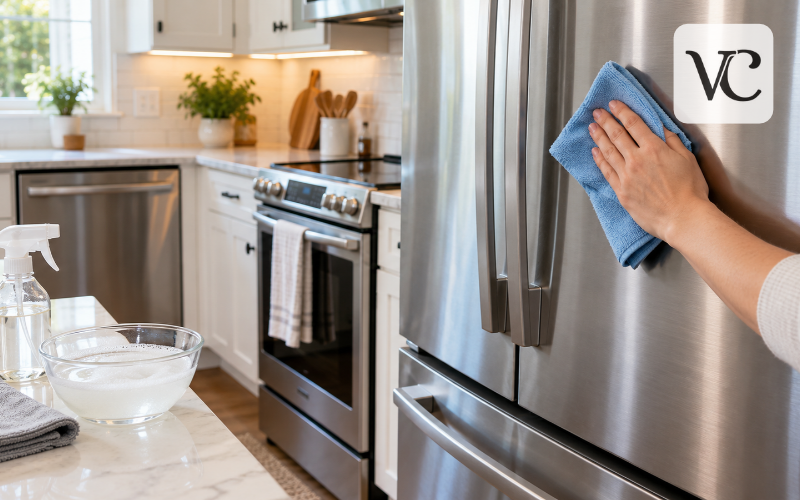
You can handle most routine cleaning with supplies already in your kitchen. Keep two clean microfiber cloths nearby: one for washing and another for drying. Choose a mild dishwashing liquid without added abrasives, plus a bowl of warm water. A third cloth can be useful for wiping away any remaining soap.
Use only a few drops of dish soap. Too much produces suds that take longer to remove and may leave a dull film. A soft towel can work for drying, but microfiber tends to pick up fine moisture without leaving much lint.
For stubborn marks, a stainless steel cleaner approved for your appliance may help. Choose a product based on the manufacturer’s guidance, not just the promise of extra shine on the label. Avoid reaching for scouring pads or strong multipurpose sprays before you know whether they are safe for the finish.
How to Clean Stainless Steel Appliances Step by Step
Start with the appliance switched off where appropriate, and make sure any cooking surface is cool. Look over the door or panel for crumbs, dried splashes, and gritty dirt. Lift loose particles away with a clean, soft cloth rather than rubbing them across the metal.
Add a few drops of mild dish soap to warm water and dip your microfiber cloth into it. Wring the cloth out well; it should feel damp, not dripping wet. Wipe the surface using light pressure. On brushed stainless steel, follow the fine lines of the grain. Work across one manageable area at a time, especially if the door is large.
Give greasy handles or areas near the stove an extra gentle pass. If food has dried onto the surface, hold the damp cloth against the spot briefly to soften it. Do not attack it with a blade, metal scraper, or rough sponge.
Next, rinse your cloth or take a fresh one, dampen it with plain water, and remove the soap residue. Pay attention to edges where cleaner can collect, but keep water away from vents, electrical controls, and openings.
Finally, use your completely dry microfiber cloth to buff the area. Follow the grain again and continue until no damp patches remain. Step back and check the surface from another angle. Any missed smudge is easier to fix with a little more gentle cleaning than with harder scrubbing.
How to Clean Stainless Steel Appliances Without Streaks
Streaks usually mean something has been left on the surface. It might be a thin layer of dish soap, dissolved minerals from tap water, greasy fingerprints, or too much polish. Using more cleaner often makes the problem worse.
First, find the grain by looking closely at the metal under good light. On some appliances it runs horizontally; on others it is vertical. Wipe along those lines rather than moving the cloth in random circles. Following the grain helps produce a more even finish, although a soft cloth moving the other way does not automatically cause scratches.
The simplest way to clean stainless steel appliances without streaks is to use very little soap, wipe away the residue, and dry immediately. Switch to a fresh cloth if yours becomes oily or wet. If your tap water leaves white marks, try a final wipe with a small amount of distilled water, then buff dry.
Do not leave spray cleaner to evaporate on the door. It can leave behind exactly the cloudy patches you were trying to remove.
The Best Home Remedies for Cleaning Stainless Steel
If you are wondering what the best home remedy to clean stainless steel is, start with warm water and a little mild dish soap. It is inexpensive, easy to rinse off, and suitable for many appliance finishes when their care instructions permit it. For light fingerprints, even a damp microfiber cloth followed by a dry one may be enough.
Other household ingredients need more care. White vinegar can help with certain mineral marks on compatible, uncoated metal, but its acidity makes it unsuitable for some coated appliances. Baking soda can loosen stubborn stains on traditional stainless steel when approved by the manufacturer, yet rubbing its fine particles too firmly can mark delicate surfaces.
Olive oil is sometimes suggested for polishing. It can leave a greasy film that collects dust and fingerprints, so it is not needed for routine cleaning. If your traditional stainless steel needs extra shine, use a suitable product recommended for the appliance instead.
Natural does not always mean gentle. The safest home method is usually the least complicated one, not a mixture of several ingredients.
Cleaning Stainless Steel Appliances With Vinegar
People often search for how to clean stainless steel appliances with vinegar because it can break down certain hard water deposits. However, vinegar is not a universal stainless steel cleaner. Many fingerprint-resistant and black stainless steel finishes should not be cleaned with it at all.
Only consider this method if your appliance manufacturer allows vinegar on its particular finish. For compatible traditional stainless steel, you can try a solution of equal parts white vinegar and water. Dampen a soft cloth with the mixture rather than spraying it into seams, handles, or control panels.
Gently wipe the affected area with the grain. Do not leave the solution sitting on the metal. Follow with a separate cloth dampened with plain water, then dry thoroughly. Test a hidden area first if the instructions permit it.
If the marks remain, stop instead of making the solution stronger. Never mix vinegar with bleach or other cleaning chemicals. A manufacturer-approved product is a better next step than repeated acidic treatments.
Using Baking Soda to Remove Stubborn Stains
Baking soda is useful for some dried food marks, but it should be treated as an occasional spot cleaner rather than an everyday polish. Before using it, confirm that your appliance has traditional, uncoated stainless steel and that its care instructions permit this method.
Mix a little baking soda with water to make a soft paste. Put a small amount on a damp microfiber cloth and gently work it over the mark in the direction of the grain. Avoid heavy pressure, prolonged rubbing, or allowing the paste to dry hard.
Remove the paste completely with another damp cloth. Any powder left behind may create white streaks, so wipe again if needed, then dry the area carefully. If the stain does not lift with gentle cleaning, do not keep scrubbing.
Skip baking soda on black stainless steel, fingerprint-resistant coatings, and other delicate finishes unless the maker specifically approves it. A stubborn stain is frustrating, but a scratched coating is much harder to deal with.
How to Clean a Stainless Steel Fridge Without Smudges
The refrigerator door is usually the most touched stainless steel surface in the kitchen. Handles gather skin oils, while children’s hands, food spills, and water drips leave visible marks throughout the day.
For the best home remedy to clean a stainless steel fridge, begin with a soft cloth and mildly soapy water. Wipe the handles first, paying attention to the underside and corners where grease builds up. Then clean the door in the direction of the grain if the finish has a visible one.
Follow with a clean, damp cloth to remove soap. Dry the whole area, including around the handles, before the water evaporates. On fingerprint-resistant fridges, stay with the cleaner recommended for the coated surface rather than adding vinegar or polishing oil.
You do not need to wash the entire fridge every time you notice one handprint. A quick wipe with a clean, slightly damp cloth, followed by drying, can keep small marks from becoming a bigger job.
How to Clean a Stainless Steel Stove Top Without Scratching
A stove top faces a different kind of dirt from a refrigerator. Cooking oil, sauce splashes, and food crumbs can become harder to remove after repeated heating. The safest approach is to deal with spills once the surface has cooled.
Check that the burners and surrounding metal are no longer hot. Remove loose food gently, then wipe the stainless steel area with a soft cloth dipped in mild soapy water. Let a damp cloth rest briefly over dried splashes to soften them, instead of scraping.
Wipe along any visible grain and keep moisture away from burner openings, ignition parts, and electrical controls. Clean removable knobs or burner pieces only as directed in the appliance manual; different parts may require different methods. Do not assume the same product is suitable for glass, enamel, painted trim, and stainless steel.
For stubborn cooked-on grease, use a product approved for that particular stove. Avoid steel wool and harsh scouring pads, even if a stain is slow to shift. Finish by removing all cleaning residue and drying the metal completely.
Removing Fingerprints, Grease, and Hard Water Spots
Different marks respond to different levels of cleaning. Fresh fingerprints usually lift with a barely damp microfiber cloth. For greasy patches near a cooker or on a refrigerator handle, add a small amount of mild dish soap, wipe gently, rinse the area with another damp cloth, and dry.
Hard water spots are more stubborn because they contain minerals left behind after water evaporates. First try a damp cloth and careful drying. If the spots persist, check whether your appliance allows a specific mineral-removing treatment or a suitable stainless steel cleaner. Avoid treating a coated door as though it were an ordinary metal sink.
Some commercial stainless steel cleaners are designed to remove grease and restore shine to traditional finishes. Others may be unsuitable for fingerprint-resistant or coloured coatings, so always check both the appliance instructions and the product label.
Whatever you use, keep the amount small. A clean surface should not feel slippery or look oily when you finish.
What to Do When Streaks and Discoloration Won’t Come Off
Marks that seem permanent are not always damage. A milky haze may come from old cleaner or polishing residue. Try washing a small area with mild soapy water, then wiping it with clean water and drying it fully. If the patch clears, repeat gently over the rest of the panel.
White or chalky spots may be mineral deposits. Brown specks could be surface rust or contamination from another metal object. Use only a stain-removal method approved for that finish, and avoid metal brushes or repeated harsh rubbing.
A scratch, worn coating, or chemical discoloration is different from a removable stain. If you can feel a groove with a fingernail, or a black or fingerprint-resistant layer looks chipped, ordinary cleaning cannot restore the original finish. Some apparent “permanent streaks” are actually uneven coating damage.
Do not try sanding or polishing a coated appliance to make the mark disappear. Check the manufacturer’s repair advice or contact an appliance professional, particularly when rust is spreading or the surface has started to peel.
Common Cleaning Mistakes and Easy Maintenance Tips
The biggest mistake is assuming stronger cleaning means better cleaning. Chlorine bleach can damage stainless steel, while steel wool and wire brushes can leave scratches and particles that may contribute to rust marks. Rough pads, scouring powders, and unsuitable oven or window cleaners can also harm surfaces, especially special coatings.
Another common problem is spraying too much liquid directly onto an appliance. Moisture may run into handles, vents, or controls. Apply cleaner to a cloth unless the instructions say otherwise, and never mix household cleaning chemicals.
For ongoing care, wipe fresh spills before they dry, clean greasy handles regularly, and finish wet cleaning with a dry cloth. Keep your cloths clean; one carrying crumbs or grit can scratch a surface even when the fabric itself is soft.
There is no need to polish your appliances every day. Gentle, regular attention is usually more effective than an occasional cleaning session with strong chemicals. If you notice a new finish problem, check the manual before trying another internet remedy.
Conclusion
Knowing how to clean stainless steel appliances is mostly about choosing a gentle method and using it carefully. Mild soap and water can handle many everyday fingerprints and greasy marks. Wiping with the grain, removing leftover cleaner, and drying right away can also make a noticeable difference to streaks.
The important exception is the finish. Traditional stainless steel, fingerprint-resistant surfaces, and black stainless steel do not always tolerate the same products. Check the manufacturer’s instructions before using vinegar, baking soda, or a specialist polish.
With the right cloth, a small amount of cleaner, and a few minutes of regular care, your stainless steel appliances can stay fresh-looking without unnecessary scrubbing or damage.
Frequently Asked Questions
What is the best home remedy to clean stainless steel appliances?
Mild dish soap mixed with warm water is one of the safest household cleaning options for many stainless steel appliances. Use a soft microfiber cloth, remove any soap residue, and dry thoroughly.
Can I clean stainless steel appliances with vinegar?
Diluted white vinegar may help remove mineral deposits from some uncoated stainless steel surfaces. However, it can damage certain protective finishes, so always check the manufacturer’s cleaning instructions before using it.
How do I remove stubborn streaks from stainless steel appliances?
Clean the affected area with mild soapy water, wipe away residue, and buff dry with microfiber. If streaks remain because of scratches or damaged coatings, ordinary cleaning may not remove them.
Is baking soda safe for cleaning stainless steel appliances?
Baking soda may help remove stubborn stains from traditional, uncoated stainless steel when the manufacturer permits it. Avoid harsh rubbing because its abrasive texture may scratch delicate or coated finishes.
How can I clean a stainless steel stove top without scratching it?
Allow the stove top to cool completely. Remove loose food, wipe gently with mild soapy water and a soft cloth, and dry thoroughly. Avoid steel wool, sharp scrapers, and abrasive cleaners.
Disclaimer: This article on Voguecultures.co.uk is published strictly for general informational and educational purposes. It is not a guest post, sponsored article, paid promotion, or advertisement. We do not provide professional appliance-cleaning services or endorse specific cleaning products. Cleaning requirements may vary depending on the appliance manufacturer and surface finish. Always follow the manufacturer’s care instructions before applying any cleaning method. The information is intended to help readers understand safe cleaning practices and should not replace official product guidance.
Enjoyed this article? Discover more helpful ideas and fresh inspiration on Vogue Cultures.