
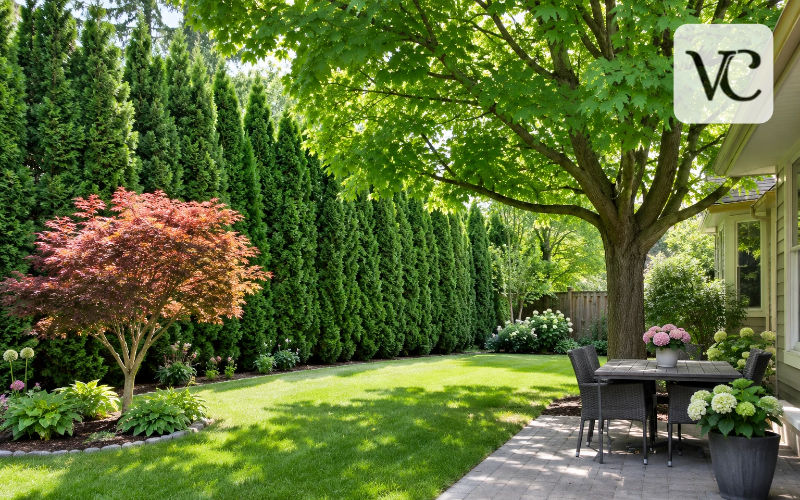
A young garden can feel exposed, especially when neighbouring windows overlook the patio or there is little shelter from the summer sun. Fast growing trees can change that. With the right choice, they create leafy screens, comfortable shade, and a more welcoming setting without waiting decades for visible results.
However, the fastest tree is not automatically the best tree. Some varieties become enormous, need frequent trimming, or develop branches that struggle in strong winds. Others are attractive but need particular soil conditions to grow well. Before planting, it helps to consider how much space you have, what your weather is like, and how big the tree will eventually become.
This guide looks at useful choices for privacy, year-round greenery, shade, and smaller gardens. It also explains how to plant and care for them, and what to watch out for as they mature.
Snippet-Ready:
Fast growing trees are species that gain height relatively quickly, providing shade, privacy, and natural beauty. Voguecultures.co.uk provides educational information about these trees, their varieties, planting requirements, benefits, and care.
Fast Growing Trees Comparison Table – Quick Guide
| Tree Variety | Best For | Growth Speed | Important Consideration |
| Thuja ‘Green Giant’ | Evergreen privacy screens | Very fast | Needs considerable space |
| Leyland Cypress | Dense boundary screening | Very fast | Requires regular trimming |
| Hornbeam | Privacy hedges | Moderate to fast | May lose leaves in winter |
| Silver Birch | Light shade and garden beauty | Fast | Needs room to mature |
| River Birch | Moist soil and shade | Fast | Can grow quite large |
| American Sycamore | Large shade canopies | Fast | Unsuitable for small gardens |
| Ornamental Cherry | Flowers and smaller gardens | Moderate | Choose a compact variety |
| Rowan | Wildlife and seasonal colour | Moderate | Growth varies by variety |
Step-by-Step Guide to Choosing and Planting Fast Growing Trees
- Identify your purpose: Decide whether you need privacy, shade, seasonal colour, or attractive garden landscaping.
- Measure your available space: Consider the tree’s mature height, width, and distance from buildings and pathways.
- Check your soil and climate: Choose varieties suited to local temperatures, sunlight, drainage, and soil conditions.
- Select a healthy tree: Buy from a reliable nursery and inspect its roots, trunk, and branches.
- Plant at the correct depth: Prepare a wide planting hole, position the root flare at soil level, and water thoroughly.
- Provide regular early care: Water during dry periods, apply mulch away from the trunk, and monitor growth and tree health.
How Fast Do Fast Growing Trees Actually Grow?
Tree growth is usually measured by how much height a tree gains in a year. Some vigorous species can add around 60–90 cm or more annually in favourable conditions. Others may grow closer to 30–60 cm. These are broad guides, not promises: a tree’s actual progress can change considerably from one garden to another.
Plenty of light, suitable soil, available water, and a healthy root system all matter. A newly planted tree often spends its first growing seasons establishing roots before producing its strongest upward growth. Cold, drought, competition from grass, or poor drainage can slow it down.
It is also worth separating height from usefulness. A tall, thin young tree might offer little privacy or shade until its branches fill out. For most gardens, a balanced crown, healthy roots, and a suitable mature size are more valuable than exceptional growth in a single season.
Best Fast-Growing Trees for Privacy and Natural Screening
For privacy, choose a tree that forms dense growth where you need the screen, not simply one that grows tall. Thuja ‘Green Giant’ is a popular example. This vigorous evergreen can form an impressive green barrier, but individual trees can eventually reach roughly 12–18 metres high and spread several metres wide. It suits generous planting areas better than narrow boundaries.
American Pillar arborvitae is a more upright, slimmer choice. Its column-shaped growth makes it attractive for tighter spaces, although it can still become several metres tall. It is particularly familiar in American landscaping, so UK gardeners should check local availability and suitability before ordering.
Leyland cypress, often called leylandii, offers quick, dense screening and is widely grown in Britain. Its main drawback is the regular clipping needed to prevent excessive height and width. Hornbeam provides another option: it can be trained into an attractive hedge and may hold some brown leaves through winter, although it does not offer the same reliable winter cover as an evergreen.
Fast-Growing Evergreen Trees for Year-Round Greenery
Evergreen trees keep living foliage throughout the year, making them useful when privacy matters in winter as well as summer. Western red cedar, especially hedge-friendly forms of Thuja plicata, offers rich green growth and can create a handsome screen where there is enough room.
Leyland cypress grows vigorously too, but it is best treated as a long-term maintenance commitment rather than a plant-and-forget solution. Certain arborvitae cultivars provide a narrower shape, although their final width and tolerance of local weather vary. Not every variety sold for American gardens will perform equally well in a British garden.
Most evergreen conifers prefer adequate light and soil that does not remain waterlogged. Check exposure to cold winds and allow enough distance between plants for their mature shape. Trim hedging regularly while the foliage is green. Many conifers will not produce fresh shoots if cut deeply into old, bare wood, making neglected screens difficult to restore.
Fast-Growing Shade Trees for a Cooler Garden
A shade tree needs room to spread its branches. Red maple cultivars, including ‘Red Sunset’, can develop attractive crowns and vivid autumn colours, particularly where the soil is suitably acidic. They are more commonly used in North America and may struggle in strongly alkaline ground.
River birch is another appealing choice, with peeling bark and an open, spreading habit. It favours moist soil and can cope with wetter ground than many trees, although established plants still benefit from water during prolonged dry periods. American sycamore creates a large, impressive canopy but is generally unsuitable for modest gardens because of its ultimate size and falling leaves, twigs, and seed balls.
Silver birch is familiar in UK landscapes. Its light crown provides gentler, dappled shade rather than a solid roof of leaves, while its pale bark adds interest in winter. For any shade tree, picture the full-grown branches, not just the young trunk. Position it where future shade is welcome rather than directly over an area that needs sunshine.
Fast-Growing Trees for Small Gardens and Limited Spaces
A small garden does not need the fastest possible tree; it needs one that establishes well without overwhelming the space. Some ornamental cherries offer spring blossom and naturally compact forms. Their growth is usually moderate rather than exceptionally fast, but a suitably sized tree can make a noticeable difference sooner than an oversized species that needs constant cutting back.
Rowan adds delicate leaves, spring flowers, and berries enjoyed by birds. Depending on the type and growing conditions, it can suit smaller or medium-sized gardens. Compact birch cultivars are another possibility, providing attractive bark and an airy appearance without the full size of a typical silver birch.
Look for a named cultivar with a stated mature height and spread. A narrow upright crown may fit beside a lawn where a broad tree would not. Leave space beside fences and paths for the trunk and branches to develop. If room is very restricted, choose a naturally smaller tree rather than trying to keep a large one permanently miniature.
Fast-Growing Trees That Add Colour and Seasonal Interest
Speed is only one reason to plant a tree. A variety that changes with the seasons can bring more enjoyment to the garden, even when its growth is moderate. Flowering cherries make a striking display in spring, while their leaves can add warm autumn tones before falling.
Red maple cultivars are valued for colourful autumn foliage, though leaf colour depends partly on weather and growing conditions. They need a suitable site to remain healthy. Silver birch creates a different effect: its graceful branches and pale bark are attractive long after the leaves have dropped. River birch offers peeling bark in warm brown and cinnamon shades, giving texture to a winter garden.
Think about what you will see from the house in different months. A tree close to a seating area may be chosen for light summer shade, while one farther away can provide a colourful focal point. The best choice combines seasonal beauty with a size and shape your garden can comfortably accommodate.
Choosing Fast-Growing Trees for Your Climate and Soil
A tree that grows rapidly in one region may struggle in another. In the UK, coastal winds, colder inland winters, summer dry spells, and local rainfall can all affect growth. Check a variety’s hardiness and site requirements rather than relying on a general claim that it is fast growing.
Soil deserves particular attention. Hornbeam copes with a range of conditions, including many heavier soils, provided the site is suitable. River birch prefers moisture and can be a candidate for damp ground. Some red maples favour acidic soil and may develop yellowing leaves in alkaline conditions. Ornamental cherries generally prefer soil that drains well and can suffer where their roots sit in water.
Observe the garden after heavy rain and during a dry spell. Notice how long water remains on the surface, how much sun reaches the area, and whether strong winds sweep across it. Choosing a tree adapted to those conditions is usually more effective than trying to force an unsuitable species to grow quickly.
Tree Spacing, Root Growth and Mature Size
A sapling can look harmless beside a fence, yet become much wider and taller than expected. Always check its likely mature height and spread before choosing a planting position. Space privacy trees according to the particular variety and the screen you want; there is no single spacing rule that suits every species.
Roots need room too. They usually spread through soil where moisture and oxygen are available, and some trees can affect nearby paving or compete strongly with other plants. Not every root near a building causes damage, but soil type, drainage, existing foundations, and the species involved can change the risk. Seek local professional advice if planting close to a house, drains, or retaining wall.
Keep large trees clear of overhead cables and consider access for future maintenance. In England and Wales, certain tall evergreen hedges may become subject to neighbour complaints, although being over two metres tall is not automatically unlawful. Thoughtful positioning now can prevent expensive work and disagreements later.
How to Plant Fast-Growing Trees for Healthy Establishment
Autumn through early spring is usually a good planting period for many hardy trees in the UK, when the soil is workable and conditions are relatively cool. Container-grown trees can be planted at other times, but hot, dry weather makes watering harder. Choose a healthy tree with sound roots and no obvious damage to the trunk.
Prepare a planting hole around two to three times wider than the root ball, but no deeper than necessary. The point where the main roots begin to flare from the trunk should sit level with the surrounding soil. If roots are circling tightly inside a container, gently loosen or correct them before planting.
Return the excavated soil around the roots, firm it gently, and water thoroughly. Add mulch across the root area to reduce drying and weed growth, keeping it clear of the trunk. Avoid burying the stem or piling mulch against the bark. Correct depth and careful watering do more for establishment than adding large amounts of fertiliser to the planting hole.
Caring for Fast-Growing Trees During Their Early Years
New trees need attention even when the chosen species is described as easy to grow. During dry periods, water slowly and deeply so moisture reaches the developing roots. Check the soil rather than following a fixed daily schedule: constantly saturated ground can be as harmful as drought. Larger newly planted specimens may need extra watering for several summers.
Maintain a clear mulched area around the base, keeping grass and weeds from competing for water. Where staking is necessary, use a suitable support and check ties so they do not rub against the growing trunk. Remove supports once the tree is well anchored. Prune damaged or badly placed young branches carefully, following the correct season for the species; flowering cherries and birches have particular pruning considerations.
Look out for unusual leaf yellowing, browning foliage, wilting, or damaged branches. These symptoms can come from water stress as well as pests and disease. Fast growth comes from a healthy site and consistent care, not from excessive feeding or products promising dramatic results.
Common Problems and Drawbacks of Fast-Growing Trees
Some fast-growing species become too large for the space available. Their dense crowns may block light from lawns and flower beds, while repeated heavy pruning can spoil their natural shape. Other trees develop weakly attached branches or shed more debris than homeowners expect. These risks differ by species and should not be assumed for every vigorous tree.
Leylandii can quickly outgrow a narrow boundary if trimming is neglected. Large shade trees may create significant leaf clearing in autumn, while thirsty varieties can struggle through dry summers. Newly planted evergreens sometimes turn brown because of drought, waterlogging, frost, or wind exposure, not necessarily because they need more fertiliser.
Watch for branches rubbing together, cracks in major limbs, persistent dieback, or a tree that begins leaning unexpectedly. A qualified tree professional should assess serious structural concerns. Where a garden is tiny or maintenance time is limited, a slower-growing, naturally compact tree may be a wiser investment than a rapid grower with constant demands.
Buying Fast-Growing Trees: Nurseries, Reviews and Clearance Offers
Buying from a dependable fast growing trees nursery makes it easier to find a correctly labelled, healthy plant. Local nurseries are useful because staff may know which trees thrive in nearby soil and weather. Online nurseries can offer a wider selection, but check whether they deliver to your area and whether their trees are suitable for your climate.
Read the full plant description, including botanical name, cultivar, expected mature size, and supplied height. Inspect roots and branches in person when possible. For deliveries, check packaging, shipping costs, replacement terms, and how promptly you must report damage. A larger tree is not always better value: smaller healthy plants can establish strongly with careful aftercare.
Customer reviews can reveal patterns in packaging and service, while fast growing trees Reddit discussions may offer useful personal experiences. Neither replaces expert growing advice. With fast growing trees clearance offers, check plant condition and whether the season allows successful planting before deciding that a discount is worthwhile.
One naming detail matters when searching online: FastGrowingTrees.com, a US nursery company, changed its consumer-facing name to Trees.com in 2026. Reviews of that business refer to a retailer, not to fast-growing trees as a general gardening category.
Conclusion
Fast growing trees can provide privacy, shade, colour, and a sense of maturity in a garden, but the right choice depends on more than speed. An evergreen screen may suit an exposed boundary, while an airy birch or a carefully selected maple may be better for a lawn or seating area. Smaller gardens often benefit from compact trees that stay manageable naturally.
Check mature dimensions, match the species to your climate and soil, and give newly planted trees time to establish. With sensible positioning and regular early care, a suitable tree can become a lasting feature rather than a future problem.
Frequently Asked Questions
What are the fastest growing trees for privacy?
Leyland cypress, Thuja ‘Green Giant’, and American Pillar arborvitae are popular fast-growing privacy trees. The best choice depends on your available space, local climate, and willingness to maintain the screen.
Which fast growing trees are best for small gardens?
Compact ornamental cherries, selected rowan varieties, and smaller birch cultivars can suit limited spaces. Some grow at moderate speeds, but their manageable mature sizes often make them better choices than extremely vigorous trees.
How long does it take for fast growing trees to grow?
Some fast-growing trees can gain 60–90 cm or more in height annually under favourable conditions. However, developing useful shade or privacy may take several years, depending on the species and planting size.
Do fast growing trees have aggressive roots?
Not all fast-growing trees have aggressive roots. Root behaviour depends on the species, soil conditions, moisture, and available space. Research mature root characteristics and planting distances before positioning trees near buildings or pathways.
What is the best time to plant fast growing trees in the UK?
Autumn to early spring is generally suitable for planting many hardy trees in the UK, provided the ground is not frozen or waterlogged. Container-grown trees can also be planted at other suitable times.
Disclaimer: This article on “Fast Growing Trees” is published by voguecultures.co.uk for general informational and educational purposes only. It provides independent guidance about tree varieties, growth rates, planting methods, and garden maintenance. No guest posting, paid promotion, sponsorship, or advertising is involved in this article. Tree growth, suitability, and maintenance requirements vary depending on climate, soil, location, and individual conditions. Readers should consult qualified gardening or tree-care professionals when necessary. Voguecultures.co.uk does not sell or endorse any particular tree, nursery, or gardening product through this article.
Enjoyed this article? Discover more helpful ideas and fresh inspiration on Vogue Cultures.