Fresh cilantro adds a bright, distinctive flavour to salsa, curries, soups, and everyday meals. If you have wondered how to grow cilantro, the good news is that you do not need a large garden or expensive equipment.
Cilantro and coriander come from the same plant, Coriandrum sativum. In the United States, the fresh leaves are usually called cilantro and the dried seeds coriander. In the UK, both are often called coriander. The plant is an annual, meaning it completes its life cycle in one growing season.
The secret to healthy leaves is cool weather, enough light, loose soil, and steady moisture. Cilantro grows fairly quickly, but it naturally flowers and sets seed. Understanding that short growing cycle makes it easier to plan successful harvests, even as a beginner.
Snippet-Ready:
Growing coriander is simple when you plant seeds in well-draining soil, provide enough sunlight, and keep the soil evenly moist. Sow seeds during cooler weather, protect plants from excessive heat, and harvest fresh leaves when the plants are established. For a continuous supply, sow new seeds every two to three weeks.
Quick Guide Table: How to Grow Cilantro
| Growing Requirement | Recommended Guidance |
| Best planting season | Early spring, autumn, or mild winter |
| Ideal temperature | Around 50–75°F (10–24°C) |
| Sunlight | Full sun in cool weather; afternoon shade in heat |
| Soil type | Loose, fertile, well-draining soil |
| Planting depth | ¼–½ inch deep |
| Plant spacing | About 3–6 inches apart after thinning |
| Germination time | Usually 7–21 days |
| Watering | Keep evenly moist, but avoid waterlogging |
| Container depth | Approximately 8–12 inches |
| Harvesting | Begin when plants reach about 6 inches tall |
| Continuous harvest | Sow new seeds every 2–3 weeks |
Step-by-Step Guide to Growing Cilantro
- Choose the right season: Plant cilantro during cooler weather to encourage healthy leaf growth and reduce early flowering.
- Prepare the soil: Use loose, well-draining soil enriched with compost where needed.
- Plant cilantro seeds: Sow seeds ¼–½ inch deep and approximately 1–2 inches apart.
- Water gently: Keep the soil consistently moist during germination without making it soggy.
- Thin the seedlings: Once established, leave approximately 3–6 inches between plants for healthy growth.
- Provide proper care: Give plants enough sunlight, protect them from excessive heat, and check soil moisture regularly.
- Harvest fresh leaves: Cut outer stems when plants are established, leaving enough foliage for continued growth.
The Best Time and Place to Grow Cilantro
Cilantro is happiest during the cooler parts of the year. Early spring and autumn are usually good planting times, while gardeners in areas with mild winters may grow it through winter as well. It can tolerate some cool conditions, but hard freezes can damage unprotected plants.
Temperatures around 50–75°F (10–24°C) generally favour leafy growth. These figures are a useful guide, not a strict limit. Hot days and long daylight hours often encourage cilantro to flower sooner, leaving less time to collect tender leaves. In very warm regions, late autumn or winter sowing may be more productive than summer planting.
Choose a spot that gets plenty of sunshine in cool weather. About four to six hours of direct light is a useful target, although plants may benefit from light afternoon shade as temperatures rise.
Check your local forecast rather than following a planting month blindly. The right location is one where roots stay reasonably cool and water can drain freely.
Choosing Cilantro Seeds and Preparing the Right Soil
Start with seeds intended for growing, preferably from a reputable garden supplier. If your main goal is a long supply of leaves, look for varieties described as slow to bolt. Santo and Leisure are familiar choices, while Calypso is known for taking longer to flower than many standard types. None will remain leafy indefinitely in hot conditions, however.
Cilantro prefers loose soil that drains well and contains some organic matter. A slightly acidic to neutral soil is suitable for most gardens. If the ground is heavy and sticky, work in well-rotted compost to improve its structure. Avoid leaving the planting area soggy, because roots need air as well as water.
The round items sold as cilantro seeds are actually small, dry fruits that contain seeds. Some gardeners gently split them or soak them briefly before sowing. Either method may help under certain conditions, but neither is necessary for a successful crop. Intact seeds work well.
How to Grow Cilantro from Seed: Step-by-Step Planting
Growing cilantro from seed is usually easier than moving established plants. Its central root grows downward and can be disturbed during transplanting, so start the seeds where you want the plants to stay.
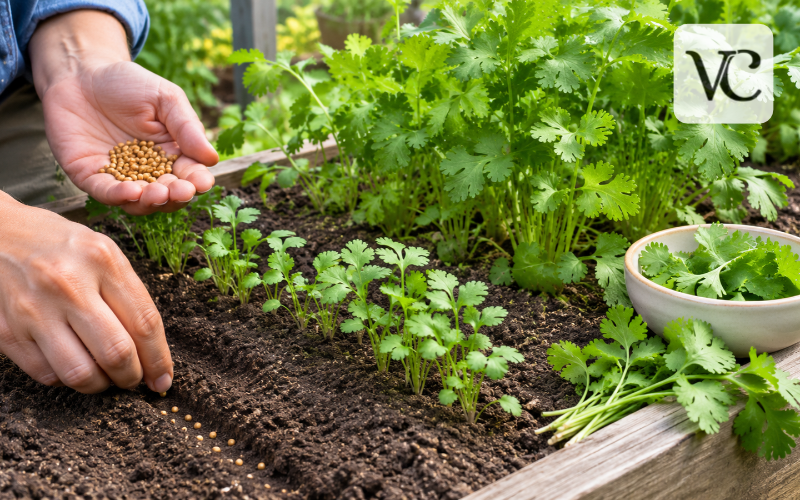
First, loosen the top layer of soil and remove weeds and large stones. Make a shallow row, then place cilantro seeds about ¼–½ inch (6–12 mm) deep and roughly 1–2 inches apart. Cover them lightly, press the soil gently, and water with a fine spray so the seeds do not wash away. Leave about 12 inches between rows if you are planting several.
Keep the surface consistently moist while waiting for sprouts. Germination commonly takes one to three weeks, depending on temperature, moisture, and seed quality. If nothing appears after that, check for dried-out soil, excessive wetness, or old seed before sowing again.
Once the seedlings have grown a few true leaves, thin them gradually. For fuller plants, aim for roughly 3–6 inches between seedlings; plants being grown mainly for seeds need more room. Snip unwanted seedlings at soil level rather than pulling them out and disturbing nearby roots. The small, healthy leaves can be used in food after washing.
How to Grow Cilantro in Pots and Containers
You can learn how to grow cilantro in pots even if you only have a balcony, patio, or sunny doorstep. A container around 8–12 inches deep gives the roots useful growing space. Choose one that is wide enough for several plants and has drainage holes underneath. A pot without holes can quickly collect excess water.
Fill the container with a good-quality, free-draining potting mix rather than compact garden soil. Sow the seeds at the same depth used outdoors, then thin the young plants according to whether you want small leaves or larger plants.
Place the container in bright light, with protection from harsh afternoon sun during hot weather. Pots dry out faster than garden beds, so feel the potting mix regularly instead of watering on a fixed schedule. Water until a little drains from the bottom, then let the surface begin to dry before watering again. Do not leave the pot standing in water.
Growing Cilantro Indoors for Fresh Kitchen Herbs
Knowing how to grow cilantro indoors is useful when outdoor space is limited, but light makes a big difference. Choose a bright windowsill that receives several hours of direct sunlight. If your home is dim, a suitable grow light can help plants develop stronger stems and fuller leaves. Follow the light manufacturer’s instructions for placement and daily use.
Sow directly into a pot with drainage holes and keep it in a reasonably cool room. Avoid placing it beside a radiator, heater, or very hot window. Allow some air to circulate around the leaves, and water when the upper layer of potting mix starts to dry. Indoor plants need moisture, but constant wetness can damage roots.
Thin crowded seedlings so each has room to develop. If the plants look pale or stretch toward the window, insufficient light is a likely cause. Weak growth can also result from excessive heat or water. Indoor cilantro often has a shorter useful harvest period than gardeners expect, so starting another small pot regularly is more reliable than trying to keep one plant producing forever.
Growing Cilantro Without Seeds: Cuttings, Roots, and Transplants
People looking for how to grow cilantro without seeds often hope to restart a plant from leftover kitchen stems. Unfortunately, cilantro is not as dependable from cuttings as herbs such as mint. A cut stem kept in water may stay fresh for a while, but it does not reliably develop the roots and growing points needed to become a productive new plant.
What about how to grow cilantro from roots? A living plant may continue growing if its roots, growing crown, and some healthy leaves remain intact. Roots alone, separated from the crown, cannot normally produce a new cilantro plant. Replanting is therefore different from propagating a plant from a bare root or a leaf cutting.
Supermarket pots often contain many seedlings packed closely together. You can carefully divide or repot them while the plants are young and healthy, but some may struggle after their roots are disturbed. Keep newly moved plants watered and out of intense heat. For a dependable and affordable harvest, sowing fresh seeds is still the best method.
Watering, Feeding, and Everyday Cilantro Care
Good cilantro care is mostly about keeping conditions steady. During germination, do not allow the top of the soil to dry completely. After plants establish, check the soil with your finger and water when the upper inch begins to feel dry. Give enough water to reach the roots rather than sprinkling only the leaves.
Yellowing or drooping does not always mean a plant needs more water. If the soil is already wet, extra watering may make the problem worse. Improve drainage and allow the surface to dry slightly before checking again. In warm conditions, a thin layer of clean mulch can help slow moisture loss, but keep it away from the stems.
Leave enough space around plants for air to move through the foliage. If you prepared the soil with compost, cilantro may need little additional feeding. Plants in containers can benefit from occasional diluted fertilizer if growth looks weak and nutrients are running low. Avoid overfeeding, which is unlikely to solve problems caused by poor light or heat.
How to Keep Cilantro from Bolting Too Early
Bolting is when cilantro shifts from producing broad leafy growth to making a tall flower stalk and seeds. Warm weather and long days speed up the change, while dry soil and other stress can make growing conditions less favourable.
To keep the leafy stage going as long as possible, plant during cool periods, water consistently, and offer afternoon shade where summers are hot. A light mulch can also help moderate soil temperatures. Slow-bolting varieties buy you some extra harvesting time, but they cannot stop flowering permanently.
Watch for a central stem rising above the leafy plant, often followed by finer, feathery leaves. Removing an early flower stem might briefly extend harvesting, but it will not reverse the plant’s natural life cycle. Once flowering is underway, the leaves often become less appealing and production slows. Instead of repeatedly cutting back a bolting plant, start fresh seeds or allow it to produce coriander.
When and How to Harvest Cilantro for Healthy Regrowth
You can begin picking cilantro once the plants have a good number of leaves and stand around 6 inches tall. Depending on growing conditions, this may take roughly four to eight weeks or longer from sowing. Harvesting small amounts early gives you tender leaves while the plants continue developing.
Use clean scissors to cut older outer stems close to their bases, leaving the central growing point untouched. Take only a modest portion at a time—roughly a third or less—so enough foliage remains to support new growth.
Does cilantro grow back after cutting? Yes, it can produce fresh leaves after light harvesting, especially while weather stays cool. However, it is not a permanent cut-and-come-again herb. Once the plant starts flowering, its leafy harvest usually declines.
For the best flavour, use picked leaves soon after harvesting. To store them, trim damaged ends and stand the stems in a little water in the refrigerator, loosely covering the leaves. Alternatively, wrap clean, dry leaves gently and refrigerate them. Wash just before use when practical, and discard any leaves that become slimy or spoiled.
Keeping a Steady Supply of Cilantro Throughout the Season
The simplest way to have cilantro available regularly is not to rely on one planting. Instead, sow a small new batch of seeds every two to three weeks while the weather is suitable. This approach, called succession planting, means young plants are coming along as older ones approach flowering.
In a garden bed, reserve a short row for each new sowing rather than filling every available space at once. Container gardeners can rotate two or three pots, planting one while harvesting another. Mark the sowing dates so you can see which batch is ready and when it is time to start again.
Remember that repeated sowing will not overcome extreme heat. During very hot weather, seedlings may struggle and mature plants may flower quickly. It often makes more sense to pause and restart as temperatures fall. In colder regions, protected autumn sowings may extend the season, but plants still need light and protection from severe freezing. Adapt the schedule to your actual conditions, not the calendar alone.
Common Cilantro Growing Problems and How to Fix Them
If cilantro seeds are not sprouting, the first things to check are moisture, soil temperature, and seed age. Soil that dries out during germination can stop seedlings developing, while saturated soil may cause seeds to rot. Plant at the recommended depth and allow up to three weeks before deciding that the batch has failed.
Pale, stretched seedlings usually need stronger light. Yellow leaves can appear when roots stay wet, when plants are crowded, or when nutrients are insufficient. Drooping leaves may reflect either dry soil or root trouble, so test the soil before watering. If growth stops and the centre sends up a tall stalk, the plant is probably bolting rather than suffering from a mysterious disease.
Check leaves occasionally for aphids and other small insects. Small numbers can often be removed by hand or washed off with a gentle stream of water. Keep plants spaced apart and avoid leaving foliage wet for long periods. Leaf spots may be linked to disease, so remove badly affected leaves, avoid splashing water between plants, and do not compost clearly diseased material unless your composting process can handle it safely.
Most importantly, match the solution to the actual problem. More fertilizer will not repair waterlogged roots, and more water will not fix a dark windowsill. Adjust one growing condition at a time and watch how the plant responds.
Growing Cilantro for Coriander Seeds
If a cilantro plant begins flowering, you can still get a useful harvest. Its small white or pale pink flowers attract visiting insects, including pollinators and other beneficial insects. After flowering, round green fruits develop and gradually mature into the dry coriander commonly used in cooking.
Leave the seed heads on the plant until most have turned brown and dry. Cut the stems on a dry day and place the heads in a paper bag somewhere sheltered and airy to finish drying. Once they are fully dry, gently rub or shake the heads to release the seeds. Store them in a clearly labelled, airtight container in a cool, dry, dark place.
You can keep some coriander seeds for cooking and save others for future sowings. Seeds intended for planting should come from healthy plants, and their ability to sprout usually declines with age or poor storage. Leaving a few seed heads outdoors can also allow new cilantro seedlings to appear naturally when conditions become suitable again.
Conclusion
Learning how to grow cilantro is largely a matter of working with the plant’s natural rhythm. Sow seeds in cool weather, give them loose soil and enough light, and keep moisture steady without soaking the roots. Whether you grow cilantro in a garden bed, an outdoor pot, or a bright indoor space, these basics make a real difference.
Harvest gently while leaves are plentiful, then sow fresh batches to replace plants as they flower. If some plants bolt, let them produce coriander seeds instead of treating the crop as a failure. With a little planning and regular attention, even a beginner can enjoy fresh homegrown cilantro across much of the suitable growing season.
Frequently Asked Questions
How long does cilantro take to grow from seed?
Cilantro seeds usually germinate within 7–21 days under suitable conditions. Plants may be ready for their first leaf harvest in approximately four to eight weeks, depending on temperature, sunlight, and growing conditions.
Can cilantro grow indoors without direct sunlight?
Cilantro needs plenty of light for healthy growth. A bright windowsill may work, but rooms with insufficient natural sunlight usually require a suitable grow light to prevent weak stems and slow development.
Does cilantro grow back after cutting?
Yes, cilantro can produce new leaves after careful harvesting. Cut older outer stems while protecting the central growing point. However, regrowth slows as the plant begins flowering and producing coriander seeds.
Can you grow cilantro from supermarket cuttings?
Growing cilantro from supermarket cuttings is generally unreliable because cut stems rarely develop a productive root system. Healthy plants with intact roots and growing crowns may survive replanting, but growing from seeds is more dependable.
Why does my cilantro keep flowering instead of growing leaves?
Cilantro naturally flowers as it matures, but hot temperatures and long daylight hours can speed up the process. Planting during cooler weather, maintaining soil moisture, and choosing slow-bolting varieties can help extend harvesting.
Disclaimer: This article is for general gardening and educational purposes. Growing results may vary depending on local climate, soil conditions, sunlight, and plant care.
Enjoyed this article? Discover more helpful ideas and fresh inspiration on Vogue Cultures.