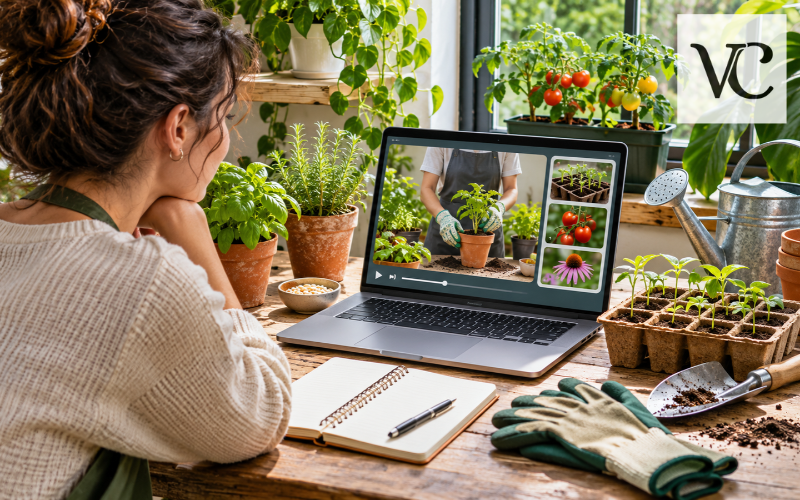
Learning how to grow healthy plants doesn’t always require attending classes in person. Today, you can develop gardening skills from home through online courses, educational videos, and trusted gardening websites. Whether you want to grow vegetables, care for houseplants, or create a colourful flower garden, there are learning options for almost every interest and experience level.
If you’re wondering where to learn gardening online, you can start with free beginner courses from Garden Tutor, educational resources from the Royal Horticultural Society, or university programmes offered by institutions such as Oregon State University. YouTube tutorials also provide practical demonstrations that make unfamiliar gardening tasks easier to understand.
Some courses focus on basic plant care, while others explore soil health, growing techniques, and garden design. You can study at your own pace, choose lessons that match your available space, and practise what you learn.
This guide explains the different online gardening options, what they teach, and how to choose a suitable course without spending more than necessary.
Snippet-Ready:
You can learn gardening online through free courses, university extension programmes, YouTube tutorials, and specialist gardening schools. Popular options include Garden Tutor, Oregon State University, and the Royal Horticultural Society, offering lessons for different experience levels.
Quick Guide / Comparison Table
| Learning Platform | Cost | Best For | What You Can Learn |
| Garden Tutor | Free | Complete beginners | Garden design, planting, and maintenance |
| Oregon State University | Free for a limited time | Vegetable gardeners | Soil preparation, vegetable growing, and pest identification |
| Royal Horticultural Society | Free guides; paid learning options | UK beginners | Seasonal gardening, plant care, and garden planning |
| NC State Extension | Free online handbook | Self-directed learners | Soil health, composting, and plant problems |
| YouTube | Free videos | Visual learners | Seed starting, watering, and practical gardening |
| Royal Botanic Garden Edinburgh | Free resources and paid courses | Beginners and serious learners | Plant care, botany, and horticultural skills |
| joegardener Online Gardening Academy | Paid courses | Home vegetable gardeners | Seed starting, raised beds, and soil improvement |
Step-by-Step Guide: How to Start Learning Gardening Online
- Identify your gardening interests. Decide whether you want to grow vegetables, maintain houseplants, create flower beds, or learn general gardening skills.
- Choose a suitable learning format. Consider whether you prefer watching demonstrations, reading gardening guides, completing independent lessons, or attending instructor-led classes.
- Check the course syllabus. Look for lessons covering basic plant needs, suitable growing conditions, watering, soil preparation, and common gardening problems.
- Confirm the learning requirements. Review registration details, lesson duration, equipment needs, course access periods, and any additional charges before enrolling.
- Choose a project suited to your space. A sunny windowsill, balcony, or small outdoor area may provide enough room to practise basic growing techniques.
- Follow a simple study routine. Complete lessons regularly and apply one new technique at a time. Take notes about what works and what needs improvement.
- Use local gardening information. Compare online recommendations with your area’s climate, seasonal temperatures, and growing conditions before planting.
Where to Learn Gardening Online: The Best Starting Points
The best place to begin learning gardening depends on your goals, budget, and experience. Several established organisations provide online gardening education, including universities, horticultural societies, and specialist training platforms.
For complete beginners, Garden Tutor and the Royal Horticultural Society offer accessible information about plant care, garden planning, and everyday maintenance. Oregon State University provides a more structured approach, particularly for people interested in growing vegetables.
If you prefer detailed lessons, the American Horticultural Society and the Royal Botanic Garden Edinburgh offer courses covering different areas of horticulture. Specialist platforms such as joegardener Online Gardening Academy focus on practical skills that gardeners can use at home.
The main differences involve cost, teaching format, and learning depth. Free resources are useful for building confidence and understanding basic tasks. Paid courses may provide organised modules, activities, instructor guidance, or additional learning materials.
University programmes often explore the science behind gardening, including plant growth, soil nutrients, and disease prevention.
Beginners generally benefit from simple, practical lessons before moving into advanced subjects. Experienced gardeners may prefer specialised workshops that address particular problems or help improve existing skills.
Free Online Gardening Courses for Beginners
Free online gardening courses for beginners are a practical choice when you want to explore gardening without making a financial commitment. Several reputable providers offer lessons that explain essential growing techniques.
Oregon State University offers a Vegetable Gardening short course within its Master Gardener education series. The course covers choosing a suitable growing location, preparing soil, planting vegetables, watering, and identifying common pests and diseases. It normally costs $45 but is currently advertised as free for a limited time. Learners receive access to the course materials for one year.
Another useful option is Garden Tutor, which provides a free, self-paced introductory course. It covers garden design, installation, and maintenance, helping beginners understand how to plan and care for outdoor spaces. Registration is free, and participants can receive a course completion certificate.
The University of Wisconsin–Madison Extension also provides free online gardening programmes, including expert-led sessions about plants and common gardening problems. Some sessions require advance registration.
These options are especially useful if you’re starting your first garden. You can learn the basics, practise with a few plants, and decide whether more advanced training is worthwhile.
University Extensions and Free Gardening Learning Resources
University extension programmes are valuable resources for gardeners who want reliable, research-based information. They explain not only how to care for plants but also why particular gardening methods work.
NC State Extension provides a free online Extension Gardener Handbook covering soil preparation, composting, vegetable production, plant diseases, and garden maintenance. Although some advice is designed for the southeastern United States, much of the basic information is useful elsewhere.
The University of Idaho Extension offers an online Master Gardener Handbook with 25 chapters. Readers can explore plant growth, fertilisers, propagation, pest management, and organic gardening. The handbook is available online without purchasing its printed version.
Other university extensions, including those operated by Wisconsin and Cornell, provide educational materials and learning opportunities for home gardeners.
These resources are particularly helpful when you encounter a gardening problem. Instead of relying on guesswork, you can look for guidance about soil conditions, watering practices, or plant health.
However, remember that free access to a university handbook does not mean you are enrolled in its Master Gardener certification programme. Formal training may have separate requirements, fees, and practical assessments.
Learning Gardening Through YouTube and Video Tutorials
YouTube is one of the most convenient places to learn gardening without paying for lessons. Video tutorials allow you to watch gardening tasks being performed, which can make unfamiliar techniques easier to follow.
Channels such as Garden Fundamentals, Epic Gardening, and GrowVeg offer educational videos covering vegetable growing, garden planning, seed starting, and plant care.
Garden Fundamentals also provides a free 12-part vegetable gardening master class. This is useful for beginners who prefer following a series rather than watching unrelated videos.
You can find demonstrations showing how to prepare potting mixes, sow seeds, transplant seedlings, water plants correctly, and recognise common growing problems.
When choosing videos, look for instructors who explain their methods clearly and show the results of their gardening practices. It is also worth checking whether their advice applies to your climate and growing season.
A sensible approach is to watch one lesson and try the technique yourself before moving forward. Videos are excellent for practical learning, although university guides can provide additional scientific explanations when you need them.
Online Gardening Courses and Resources for UK Learners
If you live in the United Kingdom, choosing gardening lessons that reflect local growing conditions can make learning more useful.
The Royal Horticultural Society (RHS) is an excellent starting point. Its website provides free beginner guides covering planting, watering, composting, growing vegetables, and maintaining gardens throughout the year.
The RHS also offers horticultural qualifications for people interested in developing more advanced knowledge.
Another option is the Royal Botanic Garden Edinburgh, which provides online learning through its PropaGate platform. Its courses range from free educational resources to paid short courses and formal qualifications.
Its self-paced Getting Started with Gardening course introduces plant care, propagation, pests, diseases, and seasonal maintenance. It is designed for people with little gardening experience.
UK learners should also pay attention to local weather patterns. Planting dates in Scotland may differ from those in southern England, while coastal and sheltered gardens can have different growing conditions.
Choosing locally relevant lessons helps you understand when to sow seeds, protect tender plants from frost, and select varieties suited to your garden.
Paid Online Gardening Courses and Specialist Learning Platforms
Paid gardening courses can be useful when you want organised lessons, detailed demonstrations, or guidance on a particular subject.
The American Horticultural Society provides self-paced online courses in ecological gardening, horticultural design, and gardening in America. Its listed course fees are $95 for members and $120 for non-members. Courses include learning activities and a digital badge upon completion.
For practical home gardening, joegardener Online Gardening Academy, led by gardening educator Joe Lamp’l, offers training on seed starting, soil improvement, vegetable production, and managing garden pests. Its courses are particularly relevant to gardeners who want to improve their growing methods.
The Gardener’s Workshop is another option, especially for people interested in growing flowers. Its on-demand workshops cover subjects such as starting seeds indoors and producing cut flowers. The Seed Starting Made Easy workshop is listed at $29.95, with ongoing access to purchased course materials.
The Online Gardening School offers individual classes and a Gardening Academy membership. Its advertised monthly membership is $25 and includes educational materials and gardening guidance.
University programmes provide alternatives for learners seeking more formal study. For example, UConn Extension offers self-paced Fundamentals of Home Gardening courses covering plant science and practical gardening subjects. Its listed price is $150 per course, although enrolment periods vary.
Before purchasing any course, check its current price, access period, teaching format, and refund conditions. A focused workshop may offer better value than an extensive programme when you only want to learn one skill.
Online Courses for Vegetable, Flower, and Indoor Gardening
Not every gardener wants to grow the same plants. Choosing a course that matches your interests can make learning more enjoyable and immediately useful.
Vegetable gardening courses teach skills such as preparing planting beds, choosing crops, sowing seeds, and managing water and nutrients. Lessons on raised beds are helpful for gardeners working with limited space or difficult ground conditions.
For people living in flats or smaller homes, indoor gardening courses explain light requirements, watering, drainage, and suitable potting mixes. Container gardening lessons can also help you grow herbs, salad leaves, and compact vegetables on balconies or patios.
Flower gardening courses focus on selecting plants, planning seasonal displays, and caring for flowering varieties. Some specialist courses also explain how to grow flowers for cutting.
Other valuable subjects include composting, improving soil structure, and managing pests through environmentally responsible methods.
Start with the type of gardening you plan to practise. Learning about vegetable production is usually more useful than studying landscape design if your immediate goal is growing food at home.
Free Online Horticulture Courses With Certificates
Some learners want more than practical gardening knowledge. They may also be interested in receiving a certificate that shows they have completed a course.
Garden Tutor is a straightforward option because its free beginner course includes a completion certificate. This can be useful for recording personal learning progress.
Michigan State University Extension also provides a free, self-paced course on starting school or community gardens, with a certificate available after completing a final quiz. However, new account registration may be temporarily unavailable, so access should be checked before planning to enrol.
It is important to understand that not all certificates have the same purpose.
A completion certificate generally confirms that you finished a particular course. A digital badge records a learning achievement, while an accredited qualification follows defined academic or professional requirements.
For example, Cornell’s online horticulture short courses may provide certificates of participation, but these are not university degrees or professional certification.
Before registering, confirm whether the certificate is free, whether an assessment is required, and whether employers or educational institutions recognise it.
Two-Year Online Horticulture Degrees: Costs and Learning Options
If you are considering horticulture as a career, a formal degree may provide deeper knowledge than a short gardening course.
A two-year horticulture programme typically leads to an associate degree in the United States. These programmes may include plant biology, soil management, greenhouse production, pest control, and practical growing methods.
The University of Massachusetts Amherst, through its Stockbridge School of Agriculture, offers a fully online Associate of Science in Horticulture. The programme requires 60 credits and covers subjects such as plant propagation, soil science, and greenhouse management.
However, completing an online horticulture degree is not normally free. UMass Amherst charges tuition by credit, along with applicable fees. The total cost depends on current tuition rates, transferred credits, and individual circumstances.
People searching for a two-year horticulture degree online free should be cautious about programmes advertised without clear information about accreditation, tuition, or qualification requirements.
Eligible students may be able to reduce expenses through financial aid, scholarships, employer support, or other funding opportunities.
If a degree is beyond your budget, consider starting with free university resources or a shorter horticulture certificate. These can help you develop useful knowledge before committing to a longer academic programme.
Finding Online Gardening Classes Near You
Although online gardening lessons can be accessed from almost anywhere, locally relevant classes have an important advantage. They can teach you about the plants, climate, and soil conditions in your area.
If you are searching for where to learn gardening online near me, start by checking local horticultural societies, botanical gardens, community colleges, and university extension services.
In the UK, the Royal Horticultural Society provides information about gardening groups and affiliated societies. Some regional organisations also arrange online talks, workshops, and seasonal educational events.
In the United States, county extension offices frequently share local gardening information and may advertise online courses or webinars.
You can also search for classes using your town, county, or region alongside phrases such as online gardening workshops or beginner gardening lessons.
Before enrolling, check whether the class is fully online, requires attendance at a particular time, or includes practical sessions at a physical location.
Local knowledge is particularly valuable when selecting suitable plants and planning around frost dates and seasonal weather.
How to Choose the Right Online Gardening Course
Finding a suitable course involves more than selecting the cheapest option. The lessons should match what you want to learn and how much time you can realistically spend studying.
Begin by reviewing the course description. A beginner programme should explain basic gardening tasks without assuming previous knowledge. More advanced courses may require an understanding of plant care or soil management.
Look at the instructor’s experience and the quality of the teaching materials. Clear videos, practical activities, and understandable explanations are more important than impressive advertising.
Course flexibility also matters. Self-paced lessons are convenient for people with busy schedules, while live classes can provide opportunities to ask questions.
Check whether you will receive permanent access to the materials or whether access expires after a particular period.
If your main goal is growing a few vegetables or maintaining houseplants, free lessons may provide everything you need. Paid workshops become more useful when you want specialised training.
Formal qualifications are worth considering when your goal involves professional horticulture rather than gardening as a hobby.
Getting Started With Your First Online Gardening Course
Starting your first gardening course is easier when you choose a small, realistic goal.
For example, you might decide to grow basil in a pot, start lettuce from seed, or learn how to care for an indoor plant. Choose a beginner course that explains the skills needed for that project.
You usually need only a few basic supplies, such as a suitable container, drainage material, potting mix, seeds or a young plant, and a watering can. The exact supplies depend on what you plan to grow.
Pay attention to the plant’s light requirements and the season before beginning.
As you complete your lessons, practise the techniques at home. Keep a simple record of planting dates, watering, growth, and any problems you notice.
If something goes wrong, return to your course materials or consult a trusted gardening guide. Understanding why a plant struggles is part of developing gardening skills.
Consistent practice will help you apply what you learn and gradually feel more confident caring for different plants.
Conclusion
Knowing where to learn gardening online makes it easier to find useful lessons that match your interests and experience.
Free resources from Garden Tutor, Oregon State University, university extensions, and the Royal Horticultural Society provide valuable starting points. YouTube tutorials offer practical demonstrations, while paid academies and university programmes support more focused or advanced study.
The right choice depends on your budget, available time, and gardening goals. Beginners can start with free lessons and a small growing project, while experienced gardeners may benefit from specialist courses or formal qualifications.
Whichever learning path you choose, combining reliable online education with regular hands-on practice is a practical way to build lasting gardening skills.
Frequently Asked Questions
Can I learn gardening online for free?
Yes. Garden Tutor, university extension websites, and YouTube provide free gardening education. You can learn about planting, watering, soil preparation, and plant maintenance without paying for a beginner course.
Which online gardening course is best for beginners?
Garden Tutor is a useful starting point for complete beginners because it offers free, self-paced lessons on garden planning and maintenance. RHS beginner guides are another good option, especially for UK gardeners.
Can I get a free gardening certificate online?
Yes. Garden Tutor offers a free completion certificate for its beginner course. However, this certificate records course completion and should not be confused with an accredited horticultural qualification or professional certification.
Are online gardening courses suitable for people without a garden?
Yes. Many courses cover indoor plants, container gardening, and growing herbs in small spaces. You can practise basic skills using suitable pots and a windowsill or balcony with adequate light.
Can I study horticulture online and earn a recognised qualification?
Yes. Some colleges and universities offer online horticulture qualifications, including certificates and degrees. Recognition, tuition fees, practical requirements, and course availability vary, so check the institution’s accreditation and programme details before enrolling.
Disclaimer: This article is provided for general informational and educational purposes only. Gardening courses, prices, certificates, and enrolment requirements may change. Readers should verify current details directly with educational providers and consider their local growing conditions before applying gardening techniques.
Enjoyed this article? Discover more helpful ideas and fresh inspiration on Vogue Cultures.