Quartzite countertops bring the natural colour and movement of stone into a kitchen. They are tough enough for busy homes, but even a durable surface can develop stains, water marks or a dull-looking film when it is cleaned the wrong way. Knowing how to clean quartzite countertops helps you keep them looking attractive without spending much time or money.
Quartzite is a natural stone formed from sandstone under heat and pressure. Engineered quartz, despite its similar name, is manufactured using crushed minerals and binding materials. Quartzite can absorb liquids to varying degrees and may need a penetrating sealer, while engineered quartz is generally nonporous and does not require the same sealing routine.
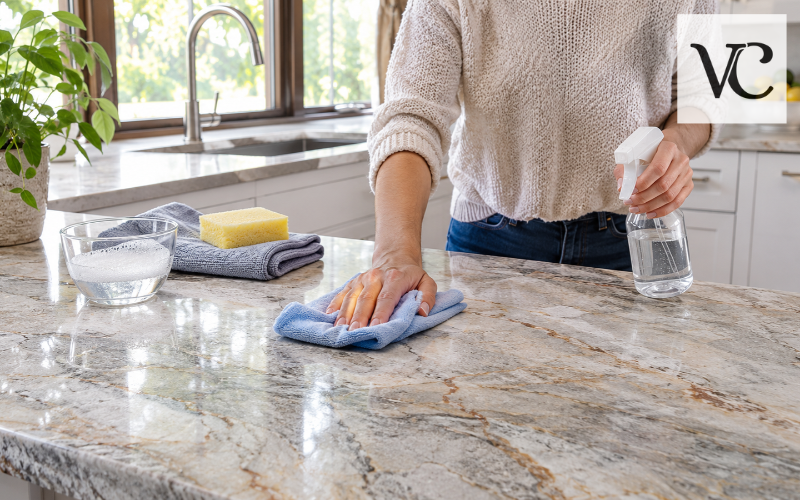
For everyday care, the safest starting point is simple: warm water, a few drops of mild dish soap and a soft microfiber cloth. Rinse away any soap, then dry the surface. The following methods explain how to handle everything from daily crumbs to stubborn marks without taking unnecessary risks.
Snippet-Ready:
To clean quartzite countertops, remove loose debris, wipe with warm water and mild dish soap or a pH-neutral stone cleaner, rinse with a damp microfiber cloth, and dry thoroughly to prevent water spots and streaks.
Quick Guide / Comparison Table
| Cleaning Need | Recommended Method | Important Tip |
| Daily cleaning | Warm water and mild dish soap | Use a soft microfiber cloth. |
| Light grease | Mild soapy water | Rinse away all soap residue. |
| Coffee or wine spills | Blot, then clean gently | Act quickly to reduce staining. |
| Water spots | Damp microfiber cloth | Dry thoroughly after cleaning. |
| Sticky food residue | Warm, damp cloth | Allow residue to soften before wiping. |
| Deep stains | Suitable natural stone poultice | Identify the stain before treatment. |
| Before sealing | Stone-safe cleaner and thorough drying | Follow the sealer manufacturer’s instructions. |
| Regular maintenance | pH-neutral stone cleaner | Avoid harsh chemicals and rough pads. |
Step-by-Step Guide
- Identify the mark first. Check whether it comes from food, grease, water, cleaning residue, or another substance. Different stains require different treatments.
- Check whether the surface is wet. If the mark appeared after water exposure, dry the area and allow any absorbed moisture time to evaporate before treating it as a stain.
- Test a gentle cleaning method. Use mild soapy water and a microfiber cloth. Avoid scrubbing aggressively or applying several products together.
- Inspect the surface after drying. If the mark disappears, normal cleaning is sufficient. If it remains, determine whether the stone is stained or its finish has changed.
- Choose a suitable stain treatment. For absorbed stains, use a stone-compatible remover or poultice recommended for that specific stain and countertop finish.
- Seek professional advice when necessary. Persistent dark patches, rust stains, rough areas, and damaged finishes may require specialist treatment rather than repeated household cleaning.
What You’ll Need to Clean Quartzite Countertops
You probably have most of the supplies you need already. Keep two clean microfiber cloths nearby, one for washing and another for drying. A soft, non-scratch sponge can help lift food residue around the sink or cooking area. Avoid using a sponge with a rough scrubbing side.
For the cleaning solution, use warm water and a small amount of mild liquid dish soap without harsh additives. A pH-neutral cleaner specifically labelled for natural stone is another good choice. You will also need a separate cloth dampened with clean water for rinsing.
To prepare soapy water, add just a few drops of dish soap to a small bowl of warm water. You are aiming for a lightly soapy solution, not thick suds. Too much detergent can leave a cloudy layer behind. If you use a bottled stone cleaner, follow its label rather than making your own mixture.
How to Clean Quartzite Countertops Step by Step
Regular cleaning is straightforward, and most countertops take only a few minutes. Work across the surface in small sections so you do not miss sticky areas or leave moisture sitting on the stone.
- Clear away loose debris. Move small appliances and other items aside. Gently pick up crumbs with a dry microfiber cloth before wiping with water. This keeps gritty particles from being dragged across the finish.
- Apply a mild cleaner. Dampen a soft cloth with your prepared soapy water. Alternatively, use a natural stone cleaner according to its instructions. There is no need to soak the countertop.
- Wipe gently. Move the cloth across the stone using light pressure. Pay attention to spots near the hob, taps and food preparation areas, where grease and dried spills often collect.
- Rinse away residue. Use a second cloth dampened with plain water to remove remaining soap. Rinse the cloth as needed rather than spreading dirty water around.
- Dry the surface. Finish with a clean, dry microfiber cloth. Gently buff the countertop until no visible drops or streaks remain.
If the surface still looks cloudy, try another wipe with clean water followed by thorough drying. Often the problem is leftover soap rather than damage to the stone. For a fresh spill, blot first to keep the liquid from spreading, then clean the area normally.
How to Clean Quartzite Countertops Naturally
If you prefer a simple cleaning routine, you do not need complicated homemade recipes. Warm water and a little mild dish soap are often enough to remove everyday fingerprints, crumbs and light grease. For dust or a small splash of water, a damp cloth followed by a dry one may be all that is necessary.
Avoid adding vinegar, lemon juice or citrus-based cleaning sprays. Genuine quartzite is generally resistant to common kitchen acids, but some slabs contain acid-sensitive minerals, and the finish or sealer may react differently. A cleaner that seems harmless on one countertop may not suit another.
The most useful natural habit is preventing mess from sitting on the stone. Wipe up spills promptly, use a soft cloth and dry the surface after cleaning. These small steps are gentler and more reliable than experimenting with strong homemade mixtures.
Choosing the Best Cleaner for Quartzite Countertops
The best cleaner for quartzite countertops is one that removes dirt without leaving residue or affecting the existing sealer. Look for a pH-neutral product that clearly states it is suitable for natural stone and for your particular finish. If your installer supplied care instructions, follow those first.
Mild dish soap is affordable and convenient for routine washing. A dedicated quartzite cleaner can be useful when you want a ready-to-use spray, especially if it is designed to clean without heavy rinsing. Neither option needs to produce lots of foam to work effectively.
Be careful with products sold for engineered quartz. For example, Weiman Quartz Clean & Shine is marketed primarily for quartz and other sealed stone surfaces, while Weiman Granite & Stone 3-in-1 specifically lists sealed quartzite among its uses. Read the current product label and test a hidden area before treating the whole counter. Shine-enhancing products may change the appearance of honed or matte stone, so a plain pH-neutral cleaner is usually the better choice for those finishes.
Cleaning Grease, Food Spills, and Sticky Residue
Greasy marks often appear beside the hob or wherever cooking oil is used. Start by lifting excess oil with a paper towel instead of spreading it over a larger area. Wash the spot with a little mild dish soap and warm water, rinse with a damp cloth and dry. Repeat gently if a thin greasy film remains.
For dried food or sticky sauce, lay a warm, damp cloth over the mark briefly to soften it. Then wipe with a soft sponge. Do not use a metal scraper or dig at the residue with a sharp object, even if the countertop feels hard enough to withstand it.
Coffee, wine, oils and colourful sauces deserve quick attention because some quartzite slabs absorb liquids more readily than others. Blot the spill, wash the area and dry it thoroughly. A mark that stays dark after the surface dries may need a different treatment from ordinary surface dirt.
How to Remove Tough Stains From Quartzite Countertops
Before trying a stain remover, work out what caused the mark. Oil and grease often leave a darker patch. Coffee, wine and some foods may create brownish or coloured stains. Rust from a metal can or utensil may leave an orange mark. The right treatment depends on the stain, not simply how noticeable it is.
First, clean the area with mild soap and water, rinse and allow it to dry fully. A damp patch can look like a stain but fade as moisture evaporates. If a mark remains, consider a poultice approved for the type of natural stone and stain involved. A poultice is an absorbent paste that may draw staining material from below the surface as it dries.
Do not assume that a baking soda paste, acetone or strong hydrogen peroxide is safe for every countertop. Some poultices need specific ingredients, protective equipment and careful application. They may also affect sealers or finishes. Follow the stone-care product instructions and test a discreet area first.
If a stain is deep, repeatedly returns or is accompanied by a dull or rough patch, ask your stone installer or a restoration specialist for advice. Repeated scrubbing rarely fixes a stain that has entered the stone and can make the finish look worse.
Removing Water Spots, Streaks, and Cloudy Marks
Water spots are especially common around taps. When hard water dries, it can leave minerals behind, creating pale rings or specks. Too much dish soap or a poorly rinsed cleaner can also form a dull film that hides the stone’s natural shine.
Begin with a clean, damp microfiber cloth. Gently wipe the area, rinse and dry it straight away. For repeated streaks, reduce the amount of soap you use and change your rinse water more often. A stone-safe cleaner labelled for mineral deposits may help with buildup, but check that it is suitable for quartzite and the existing sealer.
A dark patch that appears after contact with water and slowly disappears may be temporary moisture absorption rather than surface residue. If the spot stays dull, rough or discoloured even when dry, stop experimenting with cleaners. It could involve the finish, a coating or a deeper issue that needs professional assessment.
Cleaning Products and Methods to Avoid on Quartzite
One of the easiest ways to protect quartzite is to keep unsuitable cleaners away from it. Avoid vinegar, lemon-based sprays, acidic descalers and general bathroom cleaners unless the product is specifically approved for your stone. Even though genuine quartzite is usually more acid-resistant than marble, not every countertop sold under that name behaves the same way.
Bleach, ammonia and strong degreasers are also poor choices for routine cleaning. Some chemicals have specialised stain-removal uses under professional guidance, but regular exposure may affect a protective sealer or nearby materials. Never mix household cleaning chemicals, particularly bleach and ammonia.
Skip steel wool, abrasive powders, stiff brushes and rough scouring pads. They can leave scratches or dull a polished finish, especially when grit is trapped underneath. Avoid steam cleaners and prolonged soaking unless your stone supplier approves them. Gentle cleaning is not only safer; it is normally all that everyday dirt requires.
How to Clean Taj Mahal Quartzite Countertops
Taj Mahal quartzite is popular for its soft cream tones and subtle veining. Those lighter areas can make crumbs, dried droplets and some stains easier to notice. Fortunately, the basic care routine is the same as for other quartzite countertops: use a soft cloth, mild soapy water or an approved neutral stone cleaner, then rinse and dry.
Blot coffee, tea, oil and strongly coloured food spills as soon as possible. Pay particular attention to the area around sinks and taps, where mineral spots may build up. Avoid heavily scented or coloured homemade mixtures that introduce extra residue without improving cleaning.
The finish matters too. Polished Taj Mahal quartzite can show streaks clearly, while honed or leathered surfaces may hold residue within their texture. Use gentle wiping rather than polishing compounds, and confirm any specialist product is suitable for your specific slab and finish.
How to Clean Quartzite Countertops Before Sealing
Cleaning before sealing is important because a sealer should not trap grease, food stains or cleaner residue against the stone. Begin by removing everything from the counter and brushing away dust and crumbs. Wash the entire surface with a stone-safe cleaner recommended by your installer or sealer manufacturer.
Pay attention to the sink edge, cooking area and any places where oil or soap has built up. Rinse thoroughly if the cleaner requires it, then use a clean towel to remove visible water. If there is an existing stain, treat it appropriately before sealing rather than hoping the sealer will hide it.
Allow the countertop to dry completely, including areas around joints and the sink. Drying time varies with the stone, room conditions and the sealer you plan to use; follow the manufacturer’s stated waiting period. Applying sealer while moisture remains can lead to uneven results or trap water beneath the treatment.
How to Seal Quartzite Countertops and Know When It’s Needed
Not all quartzite countertops absorb water at the same rate. Some dense slabs need little additional treatment, while more porous varieties benefit from a penetrating sealer that helps reduce liquid absorption. Sealing improves stain resistance, but it does not make the countertop completely waterproof or prevent every kind of damage.
A simple check can help you decide whether to ask about resealing. On a clean, dry area, place a few small drops of water and observe them for roughly 5 to 15 minutes. If the stone darkens as it absorbs moisture, its protection may be inadequate. Wipe up the drops afterward. This is a useful clue, not a perfect test, so confirm the result with your stone supplier.
If sealing is recommended, choose a penetrating product labelled for your quartzite and finish. Follow the manufacturer’s directions for application, removal of excess sealer and curing. Leaving extra product on the surface can create sticky or hazy patches. Keep the area ventilated and do not return it to normal use until the product instructions allow.
There is no reliable resealing schedule for every home. Stone porosity, cooking habits, cleaning products and the sealer itself all affect how long protection lasts. Review the surface periodically, especially near the sink, and reseal when needed rather than automatically applying another coat every year.
Everyday Maintenance Tips to Keep Quartzite Looking Its Best
A practical routine is easier to maintain than an occasional deep clean. At the end of the day, clear away crumbs, wipe busy areas with a mild cleaner and dry the countertop. Once a week, move small appliances and clean the less visible spaces behind them, where crumbs and grease can collect.
Use coasters under drinks, cutting boards when preparing food and trivets beneath hot pans. Quartzite itself is heat-resistant, but sudden temperature changes and direct heat may affect a sealer or parts of the installation. Cutting directly on stone can also damage knife edges and leave marks from utensils.
Check for small changes as you clean. Recurring dark patches, lingering water rings or a change in surface feel may be early signs that maintenance is needed. Addressing those issues promptly is usually simpler than dealing with an old stain.
Conclusion
Learning how to clean quartzite countertops comes down to a few dependable habits: use a soft cloth, choose mild soap or a suitable pH-neutral stone cleaner, rinse properly and dry the surface. Blot spills quickly, avoid harsh or abrasive products and treat stubborn stains according to their cause rather than scrubbing harder.
If your stone absorbs moisture, ask whether sealing is appropriate and follow the product instructions carefully. With regular, gentle care, quartzite countertops can keep their natural beauty and remain a practical part of your kitchen for years.
Frequently Asked Questions
Can I use vinegar to clean quartzite countertops?
Vinegar is not recommended for routine quartzite cleaning. Although genuine quartzite usually resists common kitchen acids, some slabs contain acid-sensitive minerals. Mild dish soap or a suitable pH-neutral cleaner is safer.
How often should quartzite countertops be sealed?
Sealing frequency depends on the stone’s porosity, existing sealer, and daily use. Some quartzite countertops need little additional sealing. Check for moisture absorption and follow your stone supplier’s recommendations.
Why does my quartzite countertop look cloudy after cleaning?
Cloudiness can result from leftover soap, hard-water deposits, or cleaning product residue. Rinse the surface with a clean, damp microfiber cloth and dry it thoroughly. Persistent cloudiness may need professional assessment.
Can I clean quartzite countertops the same way as quartz?
Both surfaces generally tolerate mild soap and water, but their maintenance requirements differ. Quartzite is natural stone that may need sealing, while engineered quartz typically does not require sealing.
How do I remove an old stain from quartzite?
Start by identifying the stain and gently cleaning the area. If discolouration remains after drying, a suitable natural stone poultice may help. Avoid untested chemicals and seek professional advice for stubborn stains.
Disclaimer: The information in this article is provided for general informational and educational purposes only. Quartzite surfaces vary in composition, finish, and sealing requirements. Always follow your countertop manufacturer’s care instructions and test cleaning products in an inconspicuous area. Specific cleaning results cannot be guaranteed.
Enjoyed this article? Discover more helpful ideas and fresh inspiration on Vogue Cultures.