Basement windows leaking during rain can turn a small damp spot into stained walls, damaged flooring, mold, and an unpleasant smell. These windows are more exposed than windows on upper floors because they sit close to the soil. Some are partly or fully below ground, so rainwater can collect around the opening instead of draining away naturally.
The leak may come from several places. A window well can fill with water and spill through the window. Old caulk may separate from the frame. A crack may run through the concrete near the opening. The soil may slope toward the house, or a downspout may release roof water beside the window. In older homes, wood can rot, steel can rust, and the window frame may become too damaged to seal properly.
The most important step is to find the true entry point before applying caulk or replacing parts. Water-control guidance from the U.S. Environmental Protection Agency and the Building America Solution Center places exterior drainage first: roof runoff and surface water should be directed away from the foundation before interior moisture repairs are treated as complete.
Quick Guide: Causes and Solutions
| Problem | Common Sign | Recommended Solution |
| Blocked window-well drain | Water collects outside the glass | Remove debris and clean the drain |
| Dirty or compacted gravel | Water drains very slowly | Replace it with clean, washed drainage stone |
| Failed window seal | Water appears around the frame | Remove old caulk and apply exterior-grade sealant |
| Gap beside the window well | Water enters from one side | Secure the well and seal it to the foundation |
| Foundation crack | Damp line appears beside or below the window | Repair a stable crack or request a professional inspection |
| Poor yard grading | Puddles form near the foundation | Slope the soil away from the house |
| Nearby downspout | Water collects after roof runoff | Extend the downspout 5–6 feet away |
| Damaged window frame | Rust, rot, warping, or loose glass | Consider basement window replacement |
Steps to Fix a Leaking Basement Window
- Dry the window and identify where the water first appears.
- Remove leaves, mud, and debris from the window well.
- Check whether the drain allows water to flow away.
- Replace dirty or compacted gravel when necessary.
- Clean and reseal gaps around the window frame.
- Inspect nearby concrete for cracks or movement.
- Redirect gutters and downspouts away from the foundation.
- Correct low soil that slopes toward the window.
- Install a properly fitted window-well cover.
- Replace the window if the frame is badly rusted, rotted, or warped.
Find the Exact Source of the Leak First
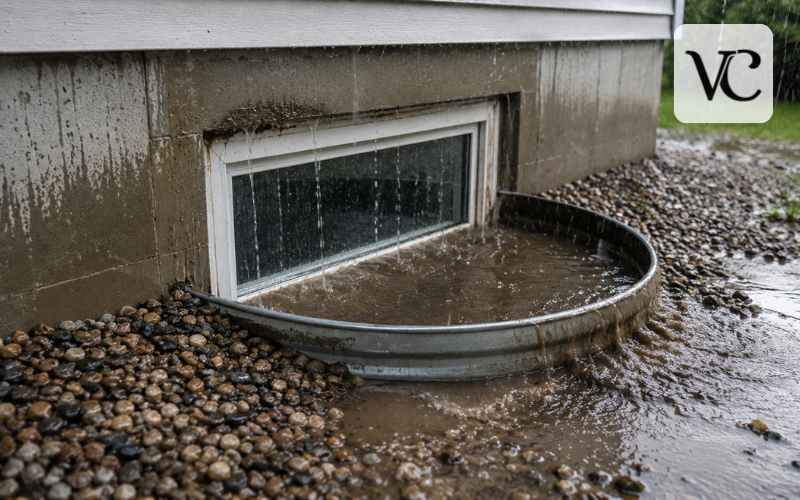
Begin your inspection during rain, when it is safe to do so, or immediately after the storm. Look outside at the window well. If it contains standing water, wet mud, or a visible high-water line, the well is probably not draining correctly. Water marks on the glass or frame can show how high the water rose.
Inside the basement, dry the window, sill, and surrounding wall with towels. Then watch where moisture returns first. Water appearing at the bottom of the glass may point to a flooded well or a problem in the window track. A thin line of water around the frame often suggests failed caulk or a gap between the frame and concrete. Dampness that begins on the wall beside or below the window may be coming through a foundation crack instead.
Also note the timing. A leak that appears only during hard rain usually points to roof runoff, grading, or an overwhelmed window-well drain. Water that continues long after the rain has stopped may be moving through saturated soil or a deeper drainage problem. Condensation can also wet basement glass, but it usually forms as droplets across a cold surface rather than flowing from one joint or crack.
Why a Basement Window Leaks When It Rains
When heavy rain soaks the ground, the soil around the foundation holds more water. That water follows the easiest available path. If the ground slopes toward the house, the window well is low, or the drain is slow, water can collect beside the basement window. Pressure from water in the soil can then push moisture through cracks, joints, and other weak points.
Roof runoff can make the problem much worse. A single downspout handles water from a large section of roof. When it empties near a basement window, a large amount of water may reach the foundation in a short period. Overflowing gutters can have the same effect by dropping water beside the wall.
Clues include soil erosion near the well, mud splashed high on the window, damp lines around the well, overflowing gutters, and puddles beside the foundation after rain. The EPA recommends redirecting downspouts and correcting soil that allows water to pool against a foundation.
Window Well Leaking Into the Basement
A window well is meant to hold soil away from a below-grade window while allowing light, ventilation, and possible emergency access. It should not act like a bucket. When leaves, mulch, mud, or trash cover the bottom, water cannot move freely. Fine soil can also mix with the gravel and reduce drainage.
In a properly planned system, the well may drain through free-draining stone and a vertical drain that connects to a footing drain, stormwater system, dry well, or another approved outlet. Some older wells have no drain, while others have pipes that are clogged, crushed, disconnected, or unable to handle the volume of water reaching them. Current residential code guidance generally calls for drainage in below-grade area wells, with limited exceptions for certain well-drained soils. Local rules may differ.
A “fish-tank” window well is easy to recognize. Water rises against the glass instead of disappearing into the bottom. You may see floating debris, a water line on the window, or water pressing through the sash and frame. This is an urgent drainage problem. Sealing the inside edge of the window may briefly slow the leak, but it leaves water pressing against the opening.
Water Leaking From the Side of the Window Well
Sometimes the well itself is not overflowing, yet water enters from one side. This often happens where the metal, plastic, or masonry well meets the foundation wall. Fasteners may loosen, sealant may fail, or the edge of the well may pull away from the wall. Water can then travel behind the well and reach the window opening.
Soil settlement is another common cause. As backfill around a house settles, a low channel can form beside the well. Rain runs into that channel and down the foundation. Erosion from a downspout can create a similar path. Wet soil packed against the side of the well is a useful warning sign.
A visible gap can be sealed, but sealing alone is not enough when water is being directed toward the area. The durable repair is to reconnect or secure the well, seal the joint with a compatible exterior product, and correct the nearby grading or runoff. Water management works best when it keeps rain away from the foundation and also provides a safe drainage path for any water that reaches it.
Cleaning and Restoring a Flooded Window Well
Start by removing leaves, weeds, mud, mulch, and loose trash. Wear gloves, and avoid placing heavy pressure against a weakened or rusted well. Once the debris is gone, locate the drain if one is present. It may be hidden beneath dirty stone or a removable drain cover.
Clean the opening carefully. Do not force a rigid rod deep into an unknown pipe because it can damage a connection. A gentle water test can show whether the drain accepts water, but stop if the level rises quickly. A drain that backs up may need professional cleaning, camera inspection, or replacement.
Remove gravel that has become mixed with mud and replace it with clean, washed drainage stone of a size suitable for the system. The stone creates open spaces through which water can move, but it cannot solve a blocked pipe or slow-draining soil by itself. Keep the stone level below the window sill so debris and water are not held against the frame.
A waterproofing or drainage contractor may be needed when no outlet exists, the well repeatedly fills, or several wells fail at once. The contractor can determine whether the well should connect to a footing drain, sump system, dry well, or another locally approved discharge point. Reliable foundation water management requires both a drainage path and a safe place for the collected water to discharge.
How to Seal a Leaking Window Well
Sealing works best after the area has been cleaned and the main drainage problem has been corrected. Remove loose sealant, dirt, rust flakes, and crumbling material from the joint between the well and the foundation. Follow the chosen product’s instructions about surface dryness, primer, temperature, and curing.
For many concrete-to-metal or concrete-to-plastic joints, an exterior polyurethane or suitable neutral-cure silicone sealant can handle weather and small amounts of movement. Product compatibility matters because not every sealant bonds well to every coating, plastic, or metal. In wider joints, backer rod helps control sealant depth and supports a better-shaped joint. Manufacturer guidance for exterior joint sealants commonly calls for backer rod where needed and stresses checking adhesion to coated metal.
Apply a continuous bead along the joint, then tool it so water sheds away rather than sitting in a hollow edge. Seal obvious fastener penetrations if the product instructions allow it. Do not block a designed drain opening or weep path.
Most importantly, do not treat surface sealant as a replacement for drainage. If the well fills during every storm, water will continue testing the seal until it fails or finds another path.
Repairing Leaks Around the Basement Window Frame
Old caulk around a basement window can crack, shrink, or separate from concrete. Remove all loose material rather than placing new caulk over a failing layer. Clean the joint and allow it to dry as required by the sealant maker.
Inspect the full outside perimeter, especially the lower corners and sill. These areas often hold water and may hide small gaps. Check the top edge as well because water running down the wall can enter there and appear at the bottom. If the window has designed weep holes or drainage channels, keep them open. Blocked weep holes can trap water in the frame. The Building America Solution Center recommends cleaning window weep holes so the window can drain as intended.
For a wide frame-to-wall gap, insert the correct size of closed-cell backer rod without puncturing or stretching it. Apply a compatible exterior sealant over it, maintaining the joint shape and depth recommended by the manufacturer. Avoid filling moving joints with hard mortar unless the window system specifically requires it.
After the repair cures, test gently with controlled water from outside. Do not spray high-pressure water directly into the window, since that can force water past parts that would normally resist rain.
Fixing Foundation Cracks Near the Window
Foundation openings create corners where stress can collect, so cracks sometimes form beside or below basement windows. A narrow, stable crack may be a simple shrinkage crack, while a wider crack, a crack that changes size, or one accompanied by wall movement may indicate a structural issue.
Mark the ends of the crack with a pencil and record its width. Recheck it over time. Call a foundation professional or structural engineer when the crack is growing, wider at one end, horizontal, stepped through masonry, associated with bowing, or repeatedly leaking despite drainage repairs.
For a stable leaking crack in concrete, polyurethane injection is often used because the material can enter the crack and stop water while allowing limited movement. Product systems are available specifically for water-bearing cracks in concrete and masonry. Hydraulic water-stop cement may be suitable for certain active leaks or larger prepared openings, but it is rigid and must be used according to its instructions.
Crack repair should not be separated from exterior water control. Even a good injection repair may be placed under unnecessary pressure if gutters, grading, or foundation drainage continue to concentrate water at the window.
Redirecting Gutters and Surface Water
Many cases of basement windows leaking can be reduced by correcting water flow outside. Clean leaves and sediment from gutters, secure loose sections, and confirm that water reaches the downspouts instead of spilling over the edge.
Extend downspouts so they discharge onto ground that slopes away from the house. Building America guidance states that above-ground discharge should generally reach a sloping area at least 5 feet from the foundation, while underground catchment locations may need greater separation. The outlet must not allow water to turn back toward the building.
Next, inspect the soil around the window well. Fill settled areas with suitable compacted soil, not loose mulch or only decorative stone. The 2024 International Residential Code states that lots should drain away from foundation walls and generally calls for a fall of at least 6 inches within the first 10 feet, with alternative drainage needed where space makes that slope impractical. Always follow the code adopted in your area.
Do not build the soil level so high that it covers siding, blocks drainage openings, or spills into the well. Where a full slope is impossible, a swale, surface drain, or properly designed underground system may be needed.
Window Well Covers and Basement Window Covers
Window well covers reduce the amount of direct rain, snow, leaves, and litter entering the well. They are useful for maintenance and safety, but they do not repair a blocked drain or poor grading.
Flat covers suit wells that project only a short distance above grade. Sloped covers shed rain away from the wall. Domed covers provide more room above taller windows and may handle snow better. Custom-fit covers are often the best choice for unusual shapes or large egress wells because gaps around a poorly fitted cover can still admit water and debris.
Choose a strong, clear, UV-resistant cover that slopes away from the foundation and fits securely without being permanently locked over an emergency opening. It should not prevent normal window operation or trap moisture against the wall.
Where the basement window is required for emergency escape and rescue, the cover, screen, or grate must preserve the required opening and be removable or releasable from inside without a key or tool. The well also needs enough room for the window to open fully. Requirements depend on the code adopted locally, so confirm them before buying or fastening a cover.
Basement Window Replacement When Repairs Fail
Caulk cannot restore a frame that has lost its shape or strength. Replacement may be the better choice when wood is soft or deeply rotted, steel is heavily rusted, the sash no longer closes evenly, glass is loose, or water enters through several deteriorated joints.
Modern vinyl basement windows resist rot and require less maintenance than old wood frames. Hopper windows can provide ventilation in utility or unfinished spaces. A larger egress window can improve light and provide an emergency opening where one is required, but installing it may involve cutting the foundation, adding a properly sized well, supporting the opening, and creating reliable drainage.
Replacement should solve the complete water-control detail, not only change the window unit. The installer should address the rough opening, sill, flashing or perimeter seal, exterior well attachment, and drainage. A well-installed window can still leak if the surrounding soil sends water toward it.
Before replacing a basement window, check local permit and egress rules, especially when the basement contains a bedroom or will be converted into living space. The EPA also recommends correcting existing basement moisture problems before remodeling the area.
Preventing Basement Windows From Leaking Again
Inspect window wells several times a year and after major storms. Remove leaves before they break down into soil, keep the drain visible, and check that gravel has not become muddy or compacted. Look for rust, loose fasteners, damaged covers, and separation where the well meets the foundation.
Keep gutters and downspouts clear, especially before the wet season. Watch the outlet during rain to confirm water moves away from the house. Repair erosion and refill settled areas before they become channels toward the basement.
Check exterior caulk for cracks or loss of adhesion, but do not add layer after layer. Remove failing material and reseal the joint properly. Inside, watch for staining, peeling paint, musty smells, and dampness around the sill. These early signs are easier to address than a full flood.
A simple drainage test before a forecast period of heavy rain can also help. Pour a modest amount of water into the well away from the window and observe whether it drains. Stop immediately if the water level rises. A slow or blocked system should be corrected before the next storm. Regular control of roof runoff, surface drainage, and foundation moisture helps reduce the risk of recurring basement leaks.
Conclusion
Basement windows leaking are usually a symptom of one of two problems: too much water is reaching the opening, or a joint, frame, or crack can no longer keep that water out. The lasting repair begins with diagnosis. Check the well, drain, frame, nearby concrete, gutters, downspouts, and ground slope before deciding what to seal or replace.
Small, stable gaps and failed caulk may be suitable DIY repairs when the area is dry and drainage is working. Cleaning a lightly blocked well and fitting a proper cover can also be manageable. Professional help is the safer choice when a well repeatedly fills, no drainage outlet exists, cracks are moving, the wall is bowing, or the window and foundation need major alteration.
The key is not to confuse sealing with drainage. Sealants close joints, but grading, gutters, window-well drains, and safe discharge routes control the water itself. Address both sides of the problem, and a leaking basement window is far less likely to return during the next heavy rain.
Frequently Asked Questions
Why does my basement window leak only during heavy rain?
Heavy rain can overwhelm a blocked window-well drain, saturate nearby soil, or expose failed seals. Overflowing gutters, nearby downspouts, and poor grading may also direct large amounts of water toward the window.
Can I seal a leaking basement window from the inside?
Interior caulk may temporarily slow a small leak, but it usually does not solve the source. Exterior gaps, drainage problems, window-well flooding, and foundation cracks should be repaired from the appropriate side.
Do window-well covers stop basement leaks?
Window-well covers reduce direct rain, snow, leaves, and debris. However, they cannot fix a blocked drain, poor grading, foundation crack, or water flowing behind the window well.
What type of sealant should I use around a basement window?
Use a high-quality exterior polyurethane or compatible silicone sealant designed for concrete and the window-frame material. Wider gaps may require backer rod before the sealant is applied.
When should a leaking basement window be replaced?
Replacement may be necessary when the frame is badly rusted, rotted, warped, loose, or unable to close properly. Repeated leaks after correct sealing and drainage repairs may also indicate replacement is needed.
Disclaimer: This article provides general information about identifying and repairing basement window leaks. Every home, foundation, drainage system, and local building code is different. Small maintenance tasks may be suitable for homeowners, but recurring flooding, widening foundation cracks, structural movement, mold growth, or major window alterations should be inspected by a qualified waterproofing contractor, window installer, or structural professional. Always follow product instructions, safety precautions, permit requirements, and local egress regulations before beginning repairs.
Enjoyed this article? Discover more helpful ideas and fresh inspiration on Vogue Cultures.