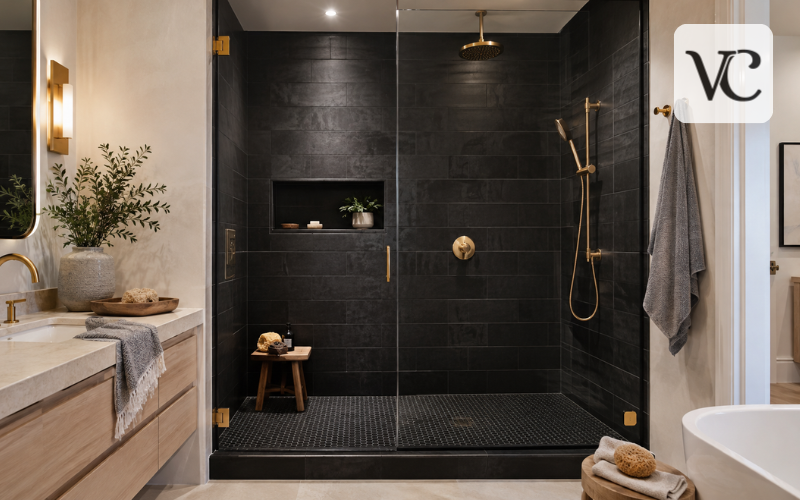
A black tile shower can turn a basic bathroom into a bold, polished, and memorable space. Black creates depth and contrast, so even a simple shower can feel carefully designed. It may look dramatic and luxurious, or calm and spa-like when paired with warm wood, natural stone, soft towels, and gentle lighting.
Black shower tiles come in many forms. Matte surfaces create a quiet modern mood, glossy tiles reflect light, and textured finishes add movement. Ceramic, porcelain, marble, slate, and other natural stones also provide different levels of durability and maintenance. Certified porcelain tile has a water absorption rate of 0.5 percent or less, making it a practical option for wet spaces.
A successful design depends on more than color. Tile finish, bathroom size, grout, lighting, flooring, and hardware all shape the result. With thoughtful planning, a black tile shower can suit modern, minimalist, industrial, luxury, and spa-inspired bathrooms without making the room feel closed or gloomy.
Snippet-Ready Definition:
A black tile shower is a shower finished with black ceramic, porcelain, stone, or marble-look tiles, creating a bold, modern appearance while offering many options for texture, grout, lighting, and hardware.
Quick Guide to Black Tile Shower Options
| Tile Option | Best For | Main Benefit | Maintenance Level |
| Matte black porcelain | Modern bathrooms | Hides minor water marks and offers strong durability | Low |
| Glossy black ceramic | Small or dark showers | Reflects light and creates a polished look | Medium |
| Textured black tile | Spa-style showers | Adds depth and may improve surface grip | Medium |
| Black mosaic tile | Shower floors | Follows floor slopes and adds more grout lines | Medium |
| Black marble-look porcelain | Luxury bathrooms | Provides a high-end look with simpler care | Low to medium |
| Natural black stone | Custom, premium designs | Offers unique texture and natural variation | High |
Simple Steps for Planning a Black Tile Shower
- Measure the shower and consider how much natural and artificial light it receives.
- Choose porcelain, ceramic, or stone based on the installation area and maintenance needs.
- Select a matte, glossy, or textured finish that suits the bathroom size.
- Confirm that floor tiles are approved for wet shower areas.
- Choose grout that either blends with the tile or highlights its pattern.
- Coordinate the shower fixtures, drain, enclosure frame, and bathroom hardware.
- Plan proper waterproofing, drainage, ventilation, and lighting before installation.
Black Tile Shower Ideas for Different Design Styles
Black tile works with many bathroom styles. For a modern shower, use large matte tiles, straight lines, a frameless glass enclosure, and minimal decoration. The clean surfaces allow the dark color to become the main feature without making the space look busy.
A spa-style shower feels warmer and softer. Textured black tiles can be paired with a wood vanity, stone bench, cream towels, and warm lighting. These natural details reduce the sharpness of black and create a relaxing atmosphere.
For an industrial look, choose brick-shaped tile, dark grout, metal framing, and simple black fixtures. A luxury bathroom may use black marble or marble-look porcelain with white or gold veining and brushed metal fittings.
High-contrast bathrooms combine black shower walls with white walls, pale flooring, or a light vanity. Repeating black in a mirror frame, cabinet handle, or light fitting helps connect the design. The best black tile shower ideas create a clear style while leaving enough light and visual space around the dark surfaces.
Choosing the Right Material for Black Shower Tiles
The tile material affects appearance, durability, and maintenance. Porcelain is one of the most practical choices for shower walls and floors because it is dense, highly water-resistant, and available in matte, polished, concrete-look, stone-look, and marble-look finishes.
Ceramic tile is often more affordable and works well on shower walls. It comes in many shapes and glazed finishes, but not every ceramic tile is suitable for a shower floor. Always check the product’s approved use before buying.
Natural black stone creates a distinctive, high-end surface. Marble, slate, and granite can add rich color and texture, but they may need special cleaners or sealing. Sealing requirements vary by stone, and some stones may not require it, so advice should be based on the exact product.
Marble-look porcelain is a useful alternative for homeowners who want dramatic veining with simpler care. Before choosing, compare water resistance, cleaning needs, slip suitability, installation area, and total cost. A beautiful tile is only a good option when it performs properly in its intended location.
Matte, Glossy, and Textured Black Tile Finishes
The finish changes how black tile looks and behaves. Matte black tiles absorb more light and create a soft, understated appearance. They suit modern bathrooms and often make light water marks less noticeable than highly reflective surfaces. Their quiet finish also works well with wood, concrete, and brushed metal.
Glossy black tiles reflect windows, mirrors, and artificial light. This can make a small shower feel brighter and more active. The polished surface looks elegant, although soap film, fingerprints, and mineral spots may be easier to see.
Textured tiles add depth to a dark wall. Stone-like, fluted, ribbed, or slightly uneven surfaces prevent black from looking flat. Texture may improve grip, but a textured wall tile should not be used on a floor unless it is approved for that purpose.
Glazed Zellige-style tile offers a handmade appearance through uneven edges, color variation, and reflective glaze. In a small bathroom, glossy or lightly textured tile can reduce heaviness. In a large, bright room, matte large-format tile can create a calm and confident statement.
Tile Sizes and Shapes That Transform the Shower
Tile size strongly affects the final look. Large-format tiles create broad surfaces with fewer grout lines, giving a black tile shower a smooth, modern appearance. They may also reduce the amount of grout that needs routine cleaning, although they require flat walls and careful installation.
Subway and brick-shaped tiles are flexible. A traditional offset pattern feels familiar, while straight-stack or vertical placement looks more current. Long tiles can make the shower seem taller or wider depending on their direction.
Hexagon tiles add a strong geometric feature. Larger hexagons work well on walls, while smaller versions can follow the slope of a shower floor more easily. Mosaics are also useful on shower pans because the many grout joints add surface breaks and allow the floor to curve toward the drain.
Black ceramic tile 12×12 provides balanced proportions and a traditional tiled appearance. Mixing sizes is often effective. Large wall tiles paired with small floor mosaics create contrast while allowing each surface to serve a practical purpose.
Creative Layouts for a Modern Black Tile Bathroom
A thoughtful layout can make a simple tile feel distinctive. A straight-stack pattern creates a clean grid, making it a good fit for a minimalist modern black tile bathroom. Vertical placement can make shower walls appear taller, while horizontal placement may help a narrow enclosure feel wider.
Herringbone adds movement and detail. It works especially well on a feature wall, inside a niche, or as a limited accent. Using a strong pattern across every wall can make a small shower feel crowded.
An offset brick layout gives black subway tile a timeless look. A one-third offset may feel more modern than the usual half-offset pattern, particularly with longer rectangular tiles.
A feature wall is another way to use black without covering every surface. Patterned black tile behind the shower controls can become the focal point, while quieter tiles cover the remaining walls. This approach adds personality without making the bathroom too dark. Precise spacing and careful planning are especially important because contrasting grout will make the layout highly visible.
Black Tile Shower With Gold Hardware
A black tile shower with gold hardware creates a warm, high-contrast design. Brushed gold and brass stand out against black, turning showerheads, handles, drains, and towel bars into decorative details. Simple fixture shapes keep the result elegant rather than overly formal.
The type of finish also matters. Brushed metal usually shows fewer fingerprints than a highly polished surface. Unlacquered brass may develop a natural aged look, while coated brushed gold is designed to keep a more consistent color. The best choice depends on the amount of change and maintenance you prefer.
Matte black fixtures create a quieter, nearly monochrome appearance. Chrome or brushed nickel gives the shower a crisp contrast and can make the bathroom feel lighter and more timeless.
For a balanced result, coordinate the showerhead, control plate, drain, enclosure frame, hooks, and nearby cabinet hardware. They do not have to match perfectly, but they should share a clear relationship. One main metal finish with one small accent finish is usually easier to manage than several unrelated metals.
Selecting the Best Grout Color
Grout can blend into black tile or clearly outline its shape. Black grout creates a nearly continuous surface and works well when the goal is a seamless, quiet shower. It may hide some discoloration, but it still requires routine cleaning.
Dark grey grout creates gentle separation without producing a sharp pattern. It is a useful choice for charcoal or softly varied black tiles. Light grey makes the layout more noticeable but usually feels less severe than white.
White grout provides the strongest contrast. It can highlight subway, hexagon, and herringbone patterns, but it also draws attention to uneven spacing and may show staining sooner. This look works best when precise installation and regular maintenance are realistic.
Test grout beside the actual tile under the bathroom’s lighting. Wet tile may appear darker, while cured grout may look lighter than the sample. Ask whether the chosen grout requires sealing and whether it is recommended for showers. The final choice should consider cleaning habits, tile spacing, surface finish, and the amount of contrast the room needs.
Lighting a Dark-Tiled Shower Properly
Black surfaces absorb more light than pale ones, so a dark-tiled shower needs deliberate lighting. A wet-location ceiling light can improve visibility and keep the enclosure from feeling like a shadowed corner. The fitting must be approved for its exact location and installed according to local electrical requirements.
A lit shower niche adds function and atmosphere. It makes bottles easier to see and sends a soft glow across glossy or textured tile. Lighting should be planned before waterproofing and tiling so the wiring and sealing can be handled correctly.
Clear glass enclosures allow light to move through the bathroom. Pale walls, a light ceiling, and a large mirror can also reflect brightness toward the shower.
Warm light softens black tile and pairs well with brass, wood, and cream tones. Cooler light sharpens white grout and chrome, but very blue light may feel harsh. Good ventilation is equally important. Bathroom exhaust fans help control moisture, and venting outdoors removes damp air close to its source.
Black Tile Shower Floors and Slip Resistance
A black shower floor must be chosen for safety as well as appearance. Small mosaics are common because their many grout lines add surface breaks and allow the floor to follow the slope toward the drain. Matte and lightly textured finishes can also provide better footing than highly polished surfaces.
No tile should be treated as slip-proof. Slip risk depends on water, soap, surface texture, drainage, maintenance, and whether the floor is used with bare feet. Industry guidance recommends checking the manufacturer’s use classification rather than judging a tile by its color or appearance.
Ask whether the product is specifically approved for shower-floor use. A tile suitable for a general bathroom floor may not be appropriate inside a sloped and frequently wet shower pan. Highly polished black marble or porcelain is usually better kept on walls unless its manufacturer approves the intended floor use.
Correct drainage also matters. Water should move toward the drain instead of forming puddles. The installation needs a complete waterproofing system beneath the visible tile because tile and grout alone do not make a shower waterproof.
Coordinating a Black Tile Bathroom Floor
Extending black tile beyond the shower can make the bathroom feel connected and visually larger. Using the same surface on the shower and main floor creates continuity, but each tile must still be suitable for its location. Wall tile should never be placed on the floor unless the manufacturer approves it.
A black ceramic tile floor can be practical in a suitable bathroom when it has the correct floor rating. Porcelain is often chosen for busy spaces because of its density and broad selection of floor-ready finishes.
Dark flooring needs contrast. Light walls, white fixtures, pale countertops, wood cabinets, and a large mirror can prevent the room from feeling heavy. Strong lighting also helps reveal the floor’s finish and keeps corners from disappearing.
Black tile bathroom floor layouts can support modern and traditional styles. Large tiles with narrow grout lines feel contemporary, while smaller squares, patterned borders, or checkerboard arrangements have a more classic character. The goal is not to make every surface black. Controlled repetition through the shower, floor, mirror, or hardware creates a connected design while preserving depth and clarity.
Black Tile Floor Bathroom Ideas for a Balanced Design
The best black tile floor bathroom ideas use contrast, warmth, and texture. A wood vanity is one of the easiest ways to soften a dark floor. Oak, walnut, teak tones, or quality wood-look finishes add a natural element that makes black feel more comfortable.
White toilets, basins, tubs, and countertops create clean visual breaks. Neutral towels, a soft bath mat, stone accessories, and simple greenery can add warmth without competing with the floor.
When the main floor is black, lighter shower walls may be the better choice. White, cream, pale grey, or lightly veined tile keeps the shower open while the floor provides drama. Another option is to use black on one shower wall and repeat it in a niche or narrow border.
Visual continuity does not require identical tile on every surface. A black floor can relate to charcoal grout, a black-framed mirror, or dark cabinet handles. Mixing finishes adds depth as well. For example, a matte black floor, glossy black niche, and pale shower walls can look coordinated while giving each area its own purpose.
Cleaning and Maintaining a Black Tile Shower
Black tile is not always harder to clean than light tile, but it reveals different residue. Glossy surfaces may show dried water drops, soap film, and mineral deposits clearly. A quick rinse and wipe after showering can reduce buildup before it becomes difficult to remove.
Use a mild, tile-safe cleaner and follow the product manufacturer’s directions. Avoid harsh acids, rough pads, or strong chemicals unless they are confirmed safe for the exact tile and grout. Natural stone needs special care because acidic cleaners can damage some stone surfaces.
A shower squeegee is helpful on glossy walls and glass. Grout lines should be cleaned gently with a suitable brush rather than aggressive tools that may wear the surface.
Sealing depends on the material. Some grout and natural stone products benefit from a penetrating sealer, while others may not need one. Follow the tile, grout, and sealer manufacturers’ guidance.
Good airflow is part of maintenance. Use the exhaust fan during and after showers, leave the enclosure open when practical, and deal with leaks or slow drainage early. Regular light cleaning is easier than removing heavy soap scum, mildew, or mineral buildup later.
Conclusion
A black tile shower can be bold without feeling gloomy and luxurious without being difficult to live with. The result depends on how well the tile material, finish, size, layout, grout, lighting, flooring, and hardware work together.
Porcelain offers practical water resistance, ceramic provides flexible wall options, and natural stone adds individual character. Matte surfaces create softness, glossy tiles reflect light, and textured or mosaic finishes add depth. Pale walls, glass enclosures, warm wood, and carefully chosen metal fixtures can balance the strength of black.
Practical choices matter as much as appearance. Select tiles approved for their intended location, plan a safer shower floor, install proper waterproofing and drainage, and choose finishes that suit your cleaning habits. When these details are considered from the beginning, black tile can remain attractive, functional, and comfortable for years.
Frequently Asked Questions
Is a black tile shower a good idea for a small bathroom?
Yes. Black tile can work in a small bathroom when paired with clear glass, effective lighting, pale surrounding walls, and reflective surfaces that prevent the shower from feeling enclosed.
Does black shower tile show water spots?
Glossy black tile can make dried water spots, soap residue, and mineral deposits more noticeable. Matte or lightly textured finishes usually hide minor marks better and require less frequent wiping.
What grout color works best with black shower tile?
Black grout creates a smooth, continuous appearance, while grey offers softer definition. White grout highlights tile patterns strongly but may require more frequent cleaning to maintain its bright appearance.
Is matte or glossy black tile better for a shower?
Matte tile offers a softer look and hides minor marks more effectively. Glossy tile reflects more light and can brighten the space, although water spots may be easier to see.
Can black tile be used on a shower floor?
Yes, but the tile must be approved for shower-floor use. Matte, textured, or small mosaic tiles are usually more practical than highly polished surfaces in regularly wet areas.
Disclaimer: This article provides general design and maintenance information about black tile showers. Tile suitability, slip resistance, sealing requirements, waterproofing methods, drainage, and electrical installation can vary by product and location. Always follow the tile manufacturer’s instructions and consult qualified installation professionals where necessary.
Enjoyed this article? Discover more helpful ideas and fresh inspiration on Vogue Cultures.