Feng shui interior design is a practical way of arranging a home so it feels calm, comfortable, and easy to use. The tradition began in China and studies the relationship between people and their surroundings. National Geographic describes feng shui as arranging buildings, objects, and spaces to create harmony and balance.
A central idea is Chi, also written as Qi. It is traditionally understood as life energy moving through people and places. In everyday design, comfortable energy flow can be seen in clear pathways, suitable lighting, useful furniture placement, and rooms that do not feel crowded or neglected.
Colors, materials, light, and movement all shape the mood of a space. A sofa blocking a doorway can make a room feel tight, while a bed placed where the entrance cannot be seen may feel less settled. Feng shui does not guarantee health, wealth, romance, or success. Research into its direct effects remains limited, so such claims should be treated carefully. It is better used as a thoughtful guide for creating a home that supports rest, focus, connection, and daily comfort.
Feng Shui Interior Design Quick Guide
| Area | Main Feng Shui Focus | Practical Improvement |
| Entryway | Welcoming energy flow | Keep the door clear, organized, and well-lit |
| Living room | Comfort and connection | Place the sofa near a solid wall and keep pathways open |
| Bedroom | Rest and relaxation | Position the bed where the door is visible without facing it directly |
| Kitchen | Balance and function | Keep appliances working, counters clear, and lighting bright |
| Home office | Focus and productivity | Place the desk where you can see the entrance |
| Hallways | Smooth movement | Remove obstacles and brighten dark areas |
Simple Steps to Improve Feng Shui at Home
- Remove broken, unused, or unnecessary objects.
- Keep doors, hallways, and walking paths clear.
- Place the bed, desk, and sofa where the entrance is visible.
- Improve dark areas with natural or layered lighting.
- Balance wood, fire, earth, metal, and water elements.
- Choose colors that support the purpose of each room.
- Add meaningful decor without overcrowding the space.
- Make gradual changes based on comfort and daily function.
The Core Principles Behind Feng Shui Interior Design
Chi is only one part of feng shui. Yin and Yang describe opposite but connected qualities. Yin is soft, quiet, cool, and restful. Yang is bright, active, warm, and lively. A bedroom usually needs more Yin, while a kitchen, office, or entrance may need more Yang. A comfortable home contains both.
The commanding position means placing an important item, such as a bed, desk, or sofa, where the entrance is visible without being directly in line with it. A firm wall behind the furniture can add a sense of support.
The five elements—Wood, Fire, Earth, Metal, and Water—represent different materials, colors, forms, and moods. They are used to create balance rather than to fill a room with equal numbers of objects.
The Bagua is a nine-part map linked with life themes such as family, work, knowledge, and relationships. Different feng shui schools position it differently. Some use compass directions, while others align it with the entrance. Beginners should follow one method instead of mixing several systems.
Assessing Your Home Before Changing the Layout
Before moving furniture or buying decor, walk through your home slowly. Notice where you must step around objects or move something to open a door. These problems often show where the layout interrupts natural movement.
View each room during the day and at night. Identify dark corners, crowded surfaces, damaged items, and furniture that seems too large. Check whether windows, wardrobes, drawers, and doors open fully. Routes between doorways and seats should not require squeezing behind furniture.
Finally, decide what each space is meant to support. A dining table used for office work, storage, laundry, and meals may create a constant feeling of unfinished tasks. Giving every room or zone a clear purpose helps you decide what should stay, move, or be removed.
The Commanding Position for Beds, Desks, and Sofas
The commanding position matters most for furniture used for long periods. Ideally, the bed, main sofa, and desk should offer a clear view of the entrance while remaining outside the door’s direct path. The International Feng Shui Guild also identifies support behind the body and visibility of the entrance as key parts of this position.
For a bed, place the headboard against a solid wall where possible. For a desk, sitting with a wall behind you can prevent the unsettled feeling of people approaching from behind. In a living room, a sofa placed against or near a wall often feels more anchored than one floating in the center without support.
Real homes do not always allow the ideal arrangement. A small bedroom may have only one suitable wall, and sockets may force a desk to face away from the door. Choose the best workable position rather than making the room inconvenient. A high-backed chair, firm headboard, screen, or tall plant can add visual support. A mirror may help you see the entrance from a desk, but it should not create glare or distracting reflections.
Balancing the Five Feng Shui Elements
The five elements offer a simple way to understand a room’s mood. Wood suggests growth and freshness. It can appear through plants, wooden furniture, wicker, natural fibers, green shades, and vertical forms.
Fire represents warmth, activity, and visibility. Lighting, candles, sunlight, warm colors, and pointed shapes can express Fire. A small amount may energize a room, but too much bright color or harsh light can feel tiring.
Earth creates stability through stone, clay, pottery, ceramic pieces, thick rugs, square forms, and warm neutral shades. Metal adds a sense of clarity through hardware, metal frames, white or gray colors, smooth finishes, and circular shapes. Water appears through glass, mirrors, curved forms, black or deep blue accents, and images of water.
Do not treat the elements as a shopping list. First notice what is already present. A kitchen may contain plenty of Fire and Metal through the stove and appliances. A wooden board, plant, clay bowl, or neutral textile may be enough to soften it. The goal is a balanced overall feeling, not an equal count of decorative objects.
Feng Shui Colors, Materials, Lighting, and Decor
Choose colors according to the room’s purpose. Soft earth tones, muted greens, gentle blues, and warm whites suit many restful areas. Stronger colors often work better as accents.
Feng shui interior design does not require a fully natural or traditional home. Wood, cotton, stone, ceramic, glass, and metal can work together when they feel practical and connected.
Use layered lighting. A ceiling fixture provides general brightness, while lamps create softer light for reading or relaxing. Open curtains where privacy allows and brighten dark corners.
Mirrors should reflect something pleasant rather than doubling clutter, harsh light, or an untidy doorway. Choose artwork that supports the mood you want instead of filling every empty wall. Healthy plants can soften hard lines and add Wood energy, but select varieties suited to the available light and your ability to care for them.
Feng Shui Interior Design for the Entryway
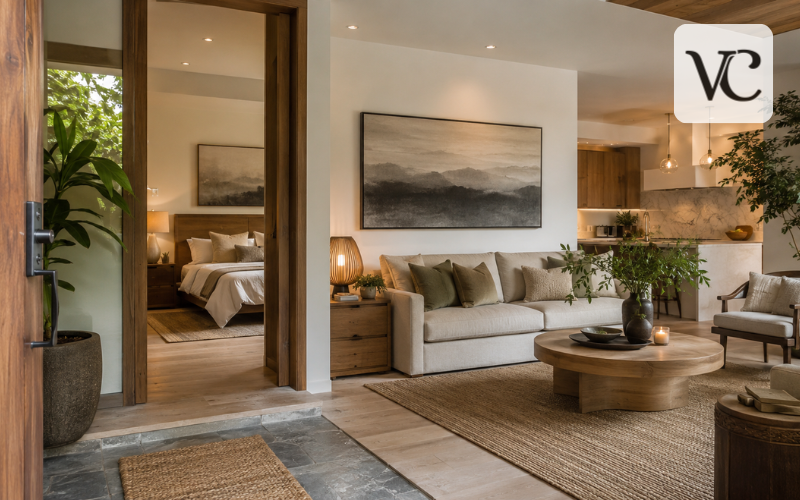
The entryway is the transition between the outside world and your private space. It should feel clear, safe, and welcoming. Make sure the front door opens fully without hitting shoes, baskets, or furniture. Repair loose handles, difficult locks, peeling paint, and broken lights.
Use hooks, a slim cabinet, a tray, or closed shoe storage to control coats, bags, keys, and parcels. Keep only regularly used belongings near the entrance.
A dark entry may benefit from pale paint, a wall light, a lamp, or a carefully placed mirror. Avoid a large mirror that feels startling when the door opens. Instead, position it to reflect light or an attractive view.
A rug, artwork, healthy plant, or narrow console can give the space character, but decor should never block movement. The entrance sets the first impression of the house, so cleanliness, light, and good repair are more useful than adding many symbolic objects.
Feng Shui Interior Design for the Living Room
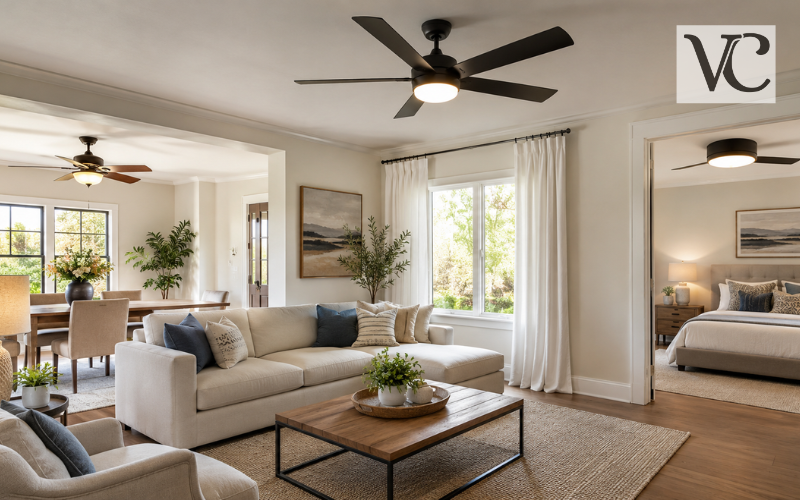
The living room should support conversation, relaxation, and shared time. Place the main sofa against a solid wall or near enough to one that it feels anchored. From the main seat, try to keep the entrance visible without putting the sofa directly in the doorway’s path.
Arrange chairs so people can speak without twisting their bodies. A circular or oval coffee table can improve movement in a tight room because it has no sharp corners. A rectangular table is also suitable when there is enough space around it, so choose the shape according to the room rather than following a strict rule.
Balance large furniture with open floor area and softer features such as curtains, cushions, rugs, and rounded lamps. Organize television wires, chargers, remote controls, and game equipment so the room does not feel busy when it is time to relax.
In a small feng shui interior design living room, use fewer pieces with clear purposes. Raised furniture, nesting tables, and closed storage can make the space feel more open. In an open-plan house, define the living zone with a rug, lighting, or the back of a sofa while keeping the main walking route clear.
Feng Shui Interior Design for the Bedroom
A bedroom should feel quieter than the rest of the home. Place the bed where you can see the door without lying directly in line with it. A secure headboard against a stable wall provides a clear visual anchor.
When possible, leave access on both sides of the bed. Matching nightstands are not required, but similar height and visual weight can create balance. In a small room, one narrow table and a wall shelf may be a more practical solution.
Keep laptops, paperwork, exercise equipment, and televisions away from the bed where possible. When the bedroom must also serve as an office, use a screen, curtain, closed cabinet, or end-of-day routine to separate work from rest.
Keep the area under the bed open or use it only for clean, soft items such as spare bedding. Avoid filling it with broken objects, paperwork, or emotionally difficult belongings. Choose calm colors, comfortable fabrics, and adjustable lighting. If a mirror reflecting the bed feels distracting, move, angle, or cover it. A beam or sloped ceiling above the bed can feel heavy, so move the bed when practical or soften the area with gentle color and balanced lighting.
Feng Shui Interior Design for the Kitchen
The kitchen combines heat, water, storage, movement, and strong daily activity. Begin with basic care. Keep the stove, sink, refrigerator, worktops, and ventilation system clean and functional. Repair leaking taps, broken burners, loose handles, and poor lighting before adding decor.
In five-element theory, the stove represents Fire, while the sink and refrigerator are linked with Water. When these features directly loose handles, and poor lighting before adding decor.
In five-element theory, the stove represents Fire, while the sink and refrigerator are linked with Water. When these features directly face or closely touch each other, some practitioners add Wood or Earth qualities between them. This can be as simple as a wooden board, green towel, plant, ceramic container, or neutral runner.
Clear counters make food preparation easier, but the room does not need to look empty. Keep daily tools accessible and store appliances that are rarely used. Good lighting over work surfaces, fresh air, safe flooring, and enough room to open cabinets matter more than a perfect decorative arrangement.
In a compact feng shui interior design kitchen, use vertical storage, drawer organizers, and fewer displayed items. If the cook cannot see the entrance, a small reflective backsplash may improve visibility without requiring a major layout change.
Creating Balanced Energy Throughout the House
A balanced home should feel connected. Use a consistent base palette, then vary accents according to each room’s purpose without making every space look identical.
Keep hallways, stairs, and doorways clear and well lit. Remove furniture that narrows a passage, and never use stairs as long-term storage. In the dining room, choose a table that allows chairs to move comfortably. In a home office, use the commanding position where possible and keep work materials organized.
Bathrooms need working plumbing, ventilation, cleanliness, and useful storage. Repair leaks promptly and keep towels, laundry, and products under control.
Balance active spaces for cooking, work, and socializing with quieter areas for sleep, reading, and privacy. Unused corners may need a lamp, chair, or artwork, but not every empty place requires decoration. Whole-house feng shui works best when each room supports its real function and connects naturally with the wider layout.
Decluttering Without Making the Home Feel Empty
Decluttering is not about removing everything you own. It means creating enough room for the items you use, need, and genuinely value. Start with broken objects, expired products, duplicates, and belongings that no longer fit your life.
Work gradually, clearing one drawer, shelf, or surface at a time. Group similar items and store them near where they are used. Good organization does not mean hiding everything.
Leave some open space on shelves, tables, and floors to give the eyes a place to rest and make cleaning easier. At the same time, keep personal photographs, books, art, and useful objects that make the house feel like home.
Prevent clutter from returning by putting items back, sorting mail near the entrance, clearing kitchen surfaces, and reviewing crowded storage. Small routines support comfortable movement better than occasional major cleanouts.
Common Feng Shui Interior Design Mistakes
A common mistake is treating every guideline as a strict rule. Homes have fixed walls, windows, plumbing, and limited floor space. A practical arrangement that supports comfort and safety is better than an “ideal” layout that makes daily life awkward.
Do not buy symbolic objects you neither understand nor like. Crystals, fountains, lucky ornaments, and mirrors are optional, and too many create clutter.
Avoid using every element, strong color, plant, and decorative cure in one room. Make one or two changes, then see how the room feels before adding more. Never block doors, windows, heating vents, or walking routes simply to achieve a certain look.
Feng shui should not replace repairs, cleaning, ventilation, safe wiring, accurate furniture measurements, or professional building advice. Generic online tips may also conflict because feng shui traditions use different methods. Choose a clear approach, consider the architecture of your home, and make decisions that support real daily needs.
Feng Shui Books, Courses, PDFs, and Apps
A useful feng shui interior design book should explain its tradition, main terms, and method clearly. Choose authors who separate established teachings from personal opinion and offer realistic examples instead of guaranteed promises about money, health, or relationships.
An introductory feng shui interior design course should cover Chi, Yin and Yang, the five elements, the commanding position, floor-plan reading, and the Bagua. Advanced training may add compass work, landscape forms, and building dates. Review the teacher’s background, course outline, independent feedback, and refund terms.
A feng shui interior design PDF can help with measurements, room checklists, furniture planning, or a simple Bagua reference. Check which school or method it follows. A feng shui interior design app may record compass directions, test layouts, save photographs, and organize tasks, but it cannot fully judge comfort, building condition, personal taste, or the needs of everyone in the home.
The best results usually come from gradual, sensible changes. Begin with repairs, clear pathways, useful lighting, and furniture that suits the room. Then add colors, materials, plants, and elemental deails with care. Feng shui interior design is most helpful when it is used not to chase a perfect layout, but to create a home that feels comfortable, functional, personal, and balanced.
Conclusion
Feng shui interior design is about creating a home that feels comfortable, organized, and balanced. Simple changes such as clearing pathways, improving lighting, placing furniture thoughtfully, and choosing suitable colors and materials can make each room feel more supportive.
Rather than following every rule strictly, focus on practical choices that suit your space, daily routine, and personal style. A balanced home develops gradually, so begin with small improvements and adjust each room until it feels calm, functional, and welcoming.
Frequently Asked Questions
What is the main purpose of feng shui interior design?
The main purpose is to create a balanced, comfortable, and functional environment. It uses thoughtful furniture placement, lighting, colors, materials, and organization to support smoother movement and a more pleasant atmosphere.
Where should I begin when applying feng shui at home?
Start by removing clutter, repairing broken items, and clearing important pathways. After that, review the placement of your bed, sofa, and desk before purchasing new furniture or decorative objects.
What is the commanding position in feng shui?
The commanding position places an important piece of furniture where you can see the room’s entrance without sitting, working, or sleeping directly in line with the doorway.
Do all five feng shui elements need to appear in every room?
Not necessarily. The goal is visual and practical balance rather than using equal amounts of every element. Consider what is already present and add only what improves the room.
Can feng shui interior design work in a small home?
Yes. Small homes can benefit from clear pathways, suitable furniture sizes, useful storage, balanced lighting, and careful placement. Practical comfort should always take priority over following rigid feng shui rules.
Disclaimer: This article provides general information about traditional feng shui interior design principles. Feng shui is a cultural and design practice, and its results may differ between individuals and homes. It should not be treated as medical, financial, structural, or professional advice. Always prioritize safety, comfort, building requirements, and the practical needs of your household when changing a room.
Enjoyed this article? Discover more helpful ideas and fresh inspiration on Vogue Cultures.