A front door does more than open and close. It is one of the first parts of a home that visitors notice, but its job is also practical. A good exterior front door helps protect the home, supports privacy, reduces drafts, and shapes the overall look of the entry.
The right choice should be based on more than color. Material, glass, insulation, weather exposure, security, size, maintenance, installation quality, and budget all matter. A door that works well under a sheltered porch may not be ideal for an entrance exposed to strong sun, rain, snow, or coastal weather. Some homes also need only a new door slab, while others need a complete prehung system with a new frame.
Snippet-Ready Explanation:
A front door is the main exterior entrance to a home, providing security, privacy, weather protection, and curb appeal. voguecultures.co.uk provides information about front doors only and offers no related services.
Quick Guide: Front Door Materials
| Material | Main Benefit | Maintenance | Typical Cost Level | Good For |
| Wood | Natural, premium appearance | Higher | Medium–High | Traditional and custom homes |
| Fiberglass | Durable and low maintenance | Low | Medium | Most climates and everyday use |
| Steel | Strong and practical | Low–Medium | Low–Medium | Security and budget-focused homes |
| Iron | Heavy, distinctive appearance | Medium | High | Custom or decorative entrances |
Quick Front Door Buying Checklist
- Measure the existing door and frame carefully.
- Choose a material suited to your climate.
- Decide how much glass and privacy you want.
- Check insulation, weatherstripping, and energy ratings.
- Compare slab and prehung door options.
- Consider locks, peepholes, and other security features.
- Compare the full replacement and installation cost.
- Check warranties before making a final choice.
What to Consider Before Choosing a Front Door
Start with the home’s architecture and exterior. A simple modern house may suit a flat-panel door with clean hardware, while a Craftsman, farmhouse, or traditional home may look more balanced with panels, natural wood tones, or divided glass.
Weather exposure is equally important. Direct sun can be hard on some finishes, while repeated moisture can damage poorly protected wood. In areas with large temperature changes, a stable and well-sealed door can help reduce drafts and maintenance.
Think about privacy and natural light together. Large glass panels can brighten a dark hallway, but clear glass may not suit an entrance facing a busy street. Frosted, textured, or smaller glass sections can offer a useful balance.
Finally, inspect the existing frame. Rot, loose jambs, water damage, gaps, or an opening that is out of square may turn a simple replacement into a larger project.
Front Door Materials: Wood, Fiberglass, Steel, and Iron
Wood, fiberglass, and steel remain the main materials used for entry doors, and current manufacturer and retail guidance continues to treat them as the primary choices.
Wood is valued for its natural appearance and design flexibility. It can be painted or stained and is available in many panel and glass styles. However, exposed wood usually needs more care than fiberglass or steel, especially where it receives strong sun or moisture.
Fiberglass is durable, relatively low maintenance, and available in smooth or wood-look finishes. Many fiberglass doors use insulated cores, and the material does not rust. It can suit homeowners who like the appearance of wood but prefer less upkeep.
Steel doors are strong, often affordable compared with premium wood, and commonly have insulated cores. Their smooth look works well on many homes, although steel can dent and damaged finishes should be repaired to reduce corrosion risk.
Iron is a more specialized, often heavier and more expensive option. Whatever the material, the frame, finish, weather seals, hardware, and installation have a major effect on long-term performance.
Front Door Styles and Colors for Different Homes
A front door usually looks most natural when it relates to the architecture around it. Traditional homes often work well with raised panels or decorative glass. Modern homes tend to suit simpler shapes, clean hardware, and narrow glass sections. Farmhouse and modern-rustic entries often use warm wood tones, black hardware, or simple divided glass. Craftsman-style doors commonly use strong lines with glass near the upper section.
Color can change the character of an entrance without changing the door itself. A black front door creates strong contrast on light siding, brick, or stone and can suit both modern and traditional exteriors. Deep charcoal, navy, earthy green, warm neutrals, and natural wood stains are other versatile choices.
Trends can provide inspiration, but the finish should also work with the roof, trim, siding, masonry, porch, and sunlight exposure. For a heavily sun-exposed entrance, check the manufacturer’s finish recommendations before choosing a very dark color.
Entry Doors With Glass: Light, Privacy, and Design
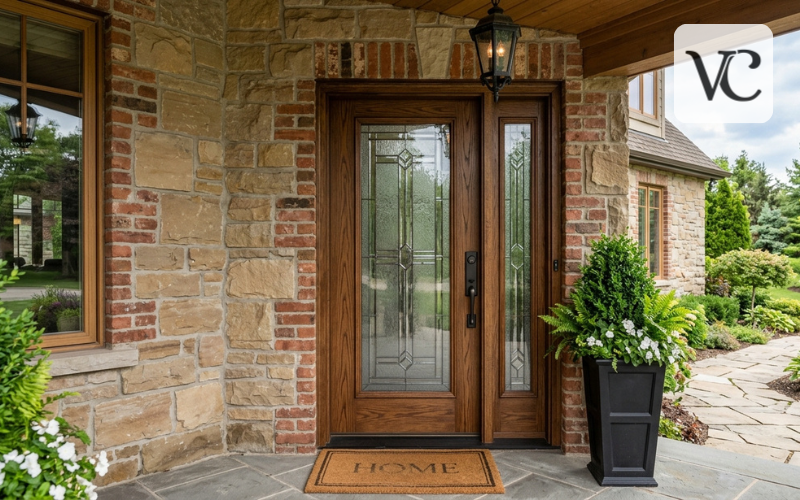
Entry doors with glass can make an entryway brighter and more open. Glass may cover much of the door, fill the upper half, appear as a narrow vertical panel, or be used in small decorative sections. Sidelights beside the door and transoms above it can add even more daylight.
Clear glass gives the strongest view, while frosted, obscure, or textured glass offers more privacy. Decorative glass can add character, but homeowners should consider visibility from both inside and outside.
Energy performance matters too. Many modern doors use insulated glass, and Low-E coatings can help manage heat transfer and solar gain. ENERGY STAR explains that door performance requirements vary partly according to glazing level, meaning how much glass the door contains, with ratings verified through the National Fenestration Rating Council.
A solid-panel door may be preferable when maximum privacy is the priority. Where daylight matters more, carefully chosen glass can provide a practical balance of light, privacy, efficiency, and design.
Front Door Security Features Worth Considering
Security depends on the complete entry system, not just the door slab. A strong door can still be vulnerable if the frame is weak, the strike plate is loose, or the hardware is poorly installed.
A quality deadbolt, secure lockset, strong hinges, and a properly fastened strike plate are sensible basics. Some doors also use multi-point locks that secure the door at several points. Smart locks and keyless systems can add convenience, but they should be chosen for dependable construction and proper compatibility with the door.
A front door with peephole remains a simple way to check who is outside before opening. Video doorbells and cameras are another option, although they bring power, connectivity, and privacy considerations.
Glass does not automatically make a front door unsafe. Its position, construction, surrounding frame, lock placement, and overall installation all matter. A properly aligned door that closes and latches securely is an important part of the security system.
Energy Efficiency and Weather Protection
An energy-efficient front door should limit unwanted heat transfer and air leakage while helping keep out wind and water. Insulated cores, quality frames, weatherstripping, and a properly adjusted threshold all contribute to performance.
In the United States, ENERGY STAR-certified doors use independently tested NFRC ratings. U-factor measures heat transfer; generally, a lower number indicates better insulating performance. For doors with glass, solar heat gain can also matter, and ENERGY STAR uses glazing level when setting door requirements.
Installation is just as important as the label. Even a well-insulated door can feel drafty if there are gaps around the jamb, damaged weatherstripping, or a poorly sealed threshold. Flashing and exterior sealing should also prevent water from entering around the opening.
Outside the United States, different energy labels or building standards may apply. In any location, compare tested performance information and choose a door suited to the local climate.
Front Door Sizes, Measuring, and Door Swing
A common single exterior door size is 36 inches wide by 80 inches high, although other widths and taller doors are widely available. Lowe’s 2026 buying guide identifies 36 by 80 inches as the most common standard exterior size.
Measuring involves more than the visible slab. A replacement project may require the door width and height, frame dimensions, jamb depth, and rough opening. The rough opening is the framed space that receives a prehung unit.
Door swing matters as well. An inswing door opens into the home, while an outswing door opens outward. Local rules, weather, porch space, security needs, and the indoor layout can affect which arrangement is suitable. Handing identifies the hinge side and operating direction.
Double doors, sidelights, transoms, and oversized entries demand even more accurate measurements. When the opening is unusual or measurements are uncertain, professional measuring can help prevent a costly ordering mistake.
Prehung vs. Slab Front Doors
A slab door is the door itself without a new frame. It can work well when the existing jamb is solid, straight, correctly sized, and in good condition. Hinges, lock locations, and dimensions must still match or be carefully prepared.
A prehung door comes mounted in its own frame. The unit commonly includes the jamb, hinges, threshold, and weatherstripping, although exact components vary. Lowe’s and The Home Depot both distinguish prehung units from slab doors in their current exterior-door guidance.
A prehung replacement is often practical when the old frame is rotten, damaged, out of square, or difficult to seal. A slab may involve less demolition, but precise hinge placement and trimming can make it challenging. The condition of the existing jamb should guide the decision rather than assuming that one type is always better.
Front Door Replacement Cost and What Affects the Price
Front door replacement cost varies widely. Material, size, glass, hardware, frame condition, labor rates, old-door removal, trim, and changes to the opening can all affect the total. A standard single door installed in a sound opening usually costs less than a custom double-door system with sidelights or structural changes.
As of September 16, 2026, Angi reports that exterior door installation in the United States ranges from about $200 to $7,000, with a national average of $1,457 based on 6,453 verified projects. The range is broad because exterior-door projects vary greatly in material, size, style, labor, frame work, and complexity.
These figures are planning references, not quotes. Prices differ by area and project. Custom sizing, premium wood or iron, larger glass areas, sidelights, transoms, smart hardware, and frame repairs can raise the price.
When comparing estimates, look at the full installed cost. Check whether delivery, removal, finishing, hardware, frame repair, trim, and any required permits are included.
Where to Buy a Front Door and How to Compare Sellers
A front door can be purchased through a local front door company, manufacturer-authorized dealer, independent building supplier, home-improvement retailer, or online seller. The best route depends on how much measuring help, customization, installation service, and after-sales support the project requires.
People comparing Home Depot front doors with Lowe’s front doors should look beyond the product photo and headline price. Compare material, exact dimensions, handing, jamb depth, glass type, finish, energy ratings, warranty, hardware preparation, and whether the product is a slab or prehung unit. Both retailers’ buying guides emphasize these practical distinctions.
A specialist may be useful for unusual openings, historic properties, custom designs, or detailed measuring. Large retailers can be convenient for common sizes, while online ordering can widen the choice but makes accurate measurement especially important.
No seller is automatically right for every home. Compare the complete product and service: what is included, who measures, who installs, what the warranty covers, and how problems are handled afterward.
Professional Installation vs. DIY Front Door Replacement
Replacing a front door can become more complicated once the old unit is removed. The opening may be uneven, the sill may have moisture damage, or the new frame may need careful shimming to sit square and level.
An experienced DIYer may be comfortable replacing a straightforward slab when the frame is sound and the new door closely matches the old one. Installing a prehung exterior front door involves more steps. The frame must be positioned correctly, fastened without distortion, insulated around the opening, flashed where necessary, and sealed against air and water.
Poor installation can cause sticking, uneven gaps, leaks, drafts, or locks that do not line up. Professional help is especially sensible when the opening must be enlarged, the frame has rot, structural work may be needed, the entry is oversized, or local rules require permits.
Whether installed by a homeowner or a professional, the finished door should open smoothly, close evenly, latch securely, and show no obvious gaps or water-entry points.
Front Door Maintenance and Signs It May Need Replacement
Regular care helps a front door keep its appearance and performance. Wood needs periodic checks for peeling finish, fading, cracks, and exposed areas. Fiberglass and steel are generally lower maintenance, but their finishes, seals, and hardware still need attention.
Clean the surface with products suitable for the material and finish. Check weatherstripping for cracks or flattening, make sure the threshold seals evenly, tighten loose hardware, and watch for water around the sill. Hinges and locks should work without forcing the door.
Not every problem requires replacement. Worn weatherstripping, loose hinges, minor finish damage, or an aging lock can often be repaired. More serious warning signs include extensive rot, major warping, deep rust damage, a badly deteriorated frame, persistent drafts after sealing work, or failed glass units.
A sticking door is not automatically worn out because seasonal movement or loose hinges can also cause the problem. Finding the cause first can prevent an unnecessary replacement, while timely maintenance can extend the useful life of the entry system.
Conclusion
The right front door should suit the house while meeting practical needs for security, privacy, weather protection, energy performance, maintenance, and budget. Wood offers natural character, fiberglass combines durability with relatively low upkeep, and steel provides strength with a clean appearance.
Glass, color, and style can shape curb appeal, but fit and installation are just as important. Measure carefully, consider the condition of the frame, and compare complete door systems rather than appearance alone. A properly chosen and well-installed front door is more likely to provide dependable comfort, security, and curb appeal for years to come.
FAQs
What is the best material for a front door?
There is no single best material for every home. Fiberglass offers low maintenance, wood provides natural character, and steel offers strength. Climate, budget, appearance, and maintenance needs should guide the choice.
What is a common front door size?
A common single front door size in the United States is approximately 36 inches wide by 80 inches high. However, older homes, double entrances, and custom designs may require different measurements.
Are front doors with glass energy efficient?
They can be. Energy performance depends on the type and amount of glass, insulation, Low-E coatings, frame quality, weather seals, and installation. Check tested energy ratings when efficiency is important.
How do I know when my front door needs replacing?
Replacement may be worth considering when there is serious rot, warping, rust, frame damage, persistent drafts, failed glass, or security problems that cannot be reasonably corrected through normal repairs.
Is a prehung front door better than a slab door?
Neither is always better. A slab can work with a sound existing frame, while a prehung unit is often more practical when the jamb, threshold, weather seals, or existing frame also need replacement.
Disclaimer: This article on voguecultures.co.uk is provided solely for general informational and educational purposes about front doors, including materials, styles, sizing, security, energy efficiency, maintenance, costs, and replacement considerations. We do not provide door installation, construction, security, or professional home-improvement services. Any prices, product details, retailer references, or examples may change over time and should be independently verified before making a purchase or renovation decision. This article is not a guest post, paid promotion, sponsored placement, or advertisement, and no retailer or product mentioned should be considered automatically endorsed by voguecultures.co.uk.
Enjoyed this article? Discover more helpful ideas and fresh inspiration on Vogue Cultures.