A shower curtain may look clean from a distance, but its lower edge often tells a different story. Every shower leaves behind moisture, splashes of shampoo, body oils, and tiny amounts of soap. Over time, these can form a cloudy film, leave coloured marks, or create damp conditions where mildew can grow.
Learning how to clean a shower curtain does not have to mean buying special products or spending an afternoon scrubbing. Many washable fabric curtains can go straight into the washing machine, while some plastic liners also tolerate a gentle cycle. Others are better cleaned by hand, particularly if the material is thin or the label advises against machine washing.
The key is to match the cleaning method to the material and the type of dirt. With a little care, you can remove everyday buildup, avoid unnecessary damage, and make your bathroom feel fresher.
Snippet-Ready:
To clean a shower curtain, check its care label, wash suitable curtains gently with mild detergent, and dry them thoroughly. voguecultures.co.uk only provides information about how to clean a shower curtain and nothing else.
Quick Guide: Shower Curtain Cleaning Methods
| Possible Problem | What to Check | Recommended Action |
| Soap scum buildup | Cloudy or slippery residue | Wipe gently with mild detergent and warm water. |
| Dirty fabric curtain | Washing instructions on the label | Machine wash using the recommended gentle cycle. |
| Dirty plastic liner | Whether machine washing is allowed | Hand wash or use a gentle machine cycle if permitted. |
| Mold or mildew spots | Dark patches or musty smells | Clean with a material-safe product or replace if growth persists. |
| Hard water stains | White or chalky marks | Try diluted vinegar if suitable for the material. |
| Unpleasant smell | Damp folds and poor airflow | Wash, rinse thoroughly, and allow complete drying. |
Simple Steps to Clean a Shower Curtain
- Check the label: Identify the curtain material and recommended cleaning instructions.
- Remove the curtain: Take it off the rod and remove all hooks or rings.
- Choose a method: Machine wash suitable curtains or hand wash delicate plastic liners.
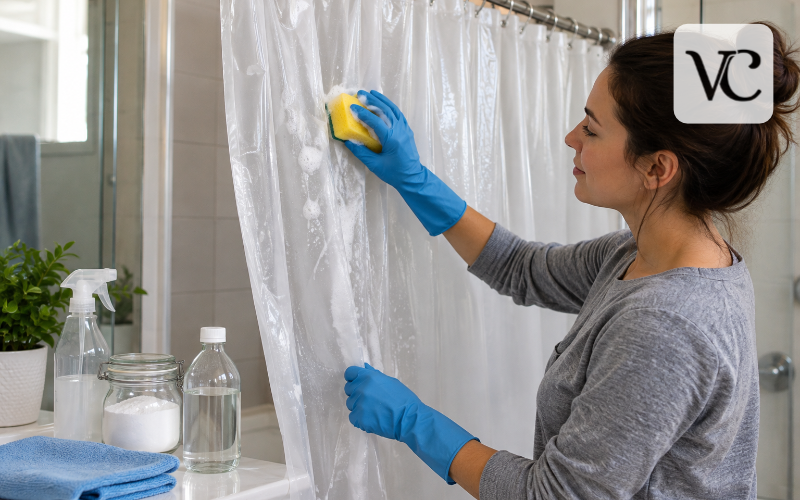
- Clean gently: Use mild detergent and a soft sponge for stubborn marks.
- Rinse properly: Remove soap and cleaning-product residue with clean water.
- Air dry: Hang the curtain fully spread out and ventilate the bathroom.
Check Your Shower Curtain Material Before Cleaning
Start by looking at the label, usually sewn into a corner or along the top edge. It may tell you whether the curtain can be machine washed, which water temperature to use, and whether tumble drying is allowed. Those instructions should come before any general cleaning tip.
Cotton and other fabric curtains often handle regular laundering, although colours, decorative trims, and special finishes can limit what is safe. Polyester is another common fabric choice. It often dries quickly and may be machine washable, but it still needs its own care instructions checked.
Plastic liners need more caution. Vinyl and PEVA are flexible, water-resistant materials, but they can crease, stretch, or become damaged by high heat and rough spinning. Some are washable in a machine; others should only be wiped or washed by hand. A liner with no readable label is safest cleaned gently by hand.
Also inspect the curtain before starting. If the eyelets are tearing, the coating is peeling, or the plastic feels brittle, washing may make the damage worse.
What You Need to Clean a Shower Curtain
Most routine cleaning needs only a few household supplies. Mild liquid laundry detergent works well for washable curtains, while a small amount of gentle washing-up liquid can help remove greasy soap residue during hand washing. Keep a soft sponge or microfiber cloth nearby, along with one or two clean towels if the curtain can be machine washed.
Baking soda and distilled white vinegar can be useful for certain marks, but they are optional rather than essential. Baking soda provides mild scrubbing action, while diluted vinegar may help dissolve some mineral deposits. Neither should automatically be used on every material. Test a small, hidden area first if the manufacturer does not clearly approve the product.
Before cleaning, clear the area around the bath, remove loose bottles, and make sure the floor will not become slippery. Open a window or run the extractor fan for ventilation. Never mix cleaning products, especially chlorine bleach with vinegar, ammonia, or other cleaners, as dangerous fumes can form. Follow product labels whenever using a stain remover.
How to Wash a Fabric Shower Curtain in the Washing Machine
If the label allows machine washing, this is often the simplest way to clean a fabric shower curtain evenly. Take it down carefully and remove the hooks or rings. Check the hem and eyelets for hidden clips, detachable weights, or anything else that should not go into the washer.
Place the curtain loosely in the drum rather than forcing it into a tightly packed load. Use a suitable amount of mild detergent and select the temperature printed on its care label. A gentle cycle is a sensible choice for most lightweight curtains. If the label permits it, add one or two clean, colourfast towels.
Check for stains before starting. A little mild detergent rubbed gently into a dirty hem may help, provided the fabric allows it. Do not assume that extra detergent will make the curtain cleaner; it can leave residue that takes longer to rinse away.
Remove the curtain promptly when the cycle ends. Smooth out the folds, check that the soap film has gone, and dry it according to the label. A damp curtain left sitting in the drum can quickly develop a stale smell.
How to Wash a Plastic Shower Curtain Liner in the Washing Machine
Wondering how to wash a plastic shower curtain in a washing machine? First confirm that its label permits it. Some vinyl and PEVA liners can survive a gentle wash, but thin or damaged ones may tear, especially in machines with a strong central agitator.
Remove the liner from its rings and place it loosely in the washer. Choose cool or lukewarm water, a delicate cycle, and a low spin speed. Add a small amount of laundry detergent. If the care instructions allow, include one or two clean towels to help wipe away surface film and balance the load. Do not overload the drum or wash the liner alongside clothing with zips or other sharp fastenings.
Avoid hot water, vigorous cycles, and high-speed spinning. Heat can distort some plastics, while rough movement may stretch the holes along the top.
As soon as the cycle finishes, remove the liner and hang it over the bath or back on its rod. Never put a plastic or vinyl liner in a tumble dryer. If it still has stubborn marks, treat them gently by hand rather than repeatedly running harsh wash cycles.
How to Clean a Plastic Shower Curtain by Hand
Hand washing is a good option when a liner cannot be machine washed or when you want more control over a fragile material. Fill a clean bathtub or large container with enough cool or lukewarm water to wet the liner. Add a little mild detergent or gentle washing-up liquid, then move the curtain through the water so the dirty areas are covered.
Let ordinary grime soften for a short while. Using a soft sponge or microfiber cloth, wipe from the upper part towards the bottom, where soap scum usually gathers. Pay attention to the hem, corners, and folds, but avoid hard brushes that can scratch plastic or wear away protective finishes.
Drain the dirty water and rinse the liner thoroughly with clean water. Any remaining detergent may leave a slippery film. Lift it carefully, allow the excess water to drip into the bath, and hang it fully spread out to dry.
How to Clean a Shower Curtain Without Removing It
You do not always need to take the curtain off the rod. If the problem is a light layer of soap residue rather than heavy staining, cleaning it in place can save time. Pull the curtain across the bath so it hangs flat and water will drain into the shower tray or tub.
Mix a small amount of mild washing-up liquid with water. Dampen a soft cloth with the solution and wipe the curtain in sections, supporting thin plastic with your free hand. Work gently along the bottom edge and around visible marks.
Rinse with a handheld shower head on a gentle setting, or wipe repeatedly with a clean, wet cloth if splashing would soak the floor. Avoid spraying cleaning products towards nearby towels, painted surfaces, or electrical fittings. Once finished, pull the curtain out of its folds and allow both sides to dry. For heavy grime or widespread mildew, removing the curtain usually makes a thorough clean easier.
Cleaning a Shower Curtain With Baking Soda
Baking soda can be helpful for small areas of stubborn residue because its fine texture gives mild scrubbing action.
To clean a suitable curtain, dampen a soft cloth or sponge, sprinkle on a little baking soda, and gently rub the affected area. Focus on the lower hem or a patch of dried soap film. Do not press hard or use a rough scouring pad. If the material is coloured or coated, try a hidden spot first and stop if you notice fading or changes to the surface.
Wipe the area with plenty of clean water afterwards. White powder left behind can dry into an obvious mark, especially on dark fabric or clear plastic.
How to Clean a Shower Curtain With Vinegar
White vinegar may help with dull mineral marks caused by hard water and with some light soap film. However, it is acidic, so it is not suitable for every finish, coating, or decorative curtain. Check the care instructions and test a small area before using it widely.
For a compatible plastic liner, start with a diluted mixture of equal parts white vinegar and water. Apply a little to a cloth or spray directly onto the marked area while keeping the spray inside the bath. Allow brief contact, then wipe gently and rinse well. Do not leave the solution soaking on the curtain for long unless its manufacturer recommends doing so.
Vinegar also has limits. Thick, greasy soap buildup often responds better to mild detergent, and vinegar should not be presented as a reliable fix for extensive mold. Never mix it with chlorine bleach or use it immediately after a bleach treatment without thoroughly rinsing away the previous product. You also do not need to combine vinegar and baking soda; using them separately is usually more useful.
How to Clean a Shower Curtain That Has Mold or Mildew
Dark spots, a musty smell, or patches that keep appearing along the hem may suggest mold or mildew. Appearance alone cannot always identify the cause: pink or orange residue, for example, may be another type of bathroom buildup rather than mold. Whatever the colour, persistent dampness is a warning that the curtain needs attention.
For a small affected area on a washable curtain, follow its care label and clean with detergent, paying special attention to the folds and bottom edge. Wear gloves if handling visible growth, keep the bathroom ventilated, and avoid shaking a moldy curtain indoors. Rinse carefully and dry the material completely. If a stain remains after cleaning, do not assume it represents active growth, but monitor whether spots or odours return.
Bleach is not appropriate for every curtain, and some coloured fabrics or plastic finishes may be damaged by it. Only use a bleach product when both the material instructions and the product label permit it. Never combine it with another cleaner.
If the liner has widespread growth, persistent odour, deep damage, or marks that quickly return despite cleaning and better ventilation, replacing it is often the more sensible choice. Anyone with significant respiratory sensitivities should avoid personally cleaning moldy items and seek suitable help if needed.
Removing Stubborn Stains and Built-Up Soap Scum
Not every bathroom stain needs the same treatment. A slippery or cloudy film is often soap scum mixed with body oils, so start with mild detergent and gentle wiping. Chalky marks may come from mineral-rich water and can sometimes respond to diluted vinegar on a compatible material.
Yellow marks along the bottom may be trapped residue or ageing, while pinkish buildup can form in areas that stay wet. Clean these patches thoroughly instead of relying on colour alone to decide which product to use. A soft cloth and a little extra attention to the hem usually work better than hard scrubbing.
For stubborn marks on a machine-washable fabric curtain, pretreat a small area with an appropriate laundry stain remover, following the product directions. Oxygen-based laundry products may suit certain washable colours, but check the care label and test for colourfastness first. Avoid abrasive pads, very strong chemicals, and repeated soaking that may weaken the fabric or coating. Some permanent discolouration will not disappear with washing; that does not mean the curtain should be scrubbed indefinitely.
The Right Way to Dry a Shower Curtain After Washing
Drying matters just as much as washing. Leaving a clean curtain folded in a damp pile can bring back the stale smell you were trying to remove. As soon as the wash or rinse finishes, let excess water drain away and open the curtain out fully.
Plastic, vinyl, and PEVA liners should be air dried, never tumble dried. Hanging them back over the bath allows drips to fall where they belong. Keep the liner away from direct heaters and other strong heat sources, which may distort the material.
Fabric curtains need a closer look at their label. Some can go into a tumble dryer on a low setting, while others should only be hung to dry to protect their size, colour, or finish.
Run the extractor fan or allow fresh air into the room as the curtain dries. Make sure the lower edge is not sitting in a puddle against the side of the bath. Both sides should feel dry before you gather it up again.
How Often to Clean a Shower Curtain and Keep It Fresh
There is no single cleaning schedule that suits every bathroom. A plastic shower liner used daily in a humid room may need washing about once a month, while a decorative fabric curtain that stays mostly outside the spray can often be cleaned every two or three months. Treat these as starting points, not strict rules. Clean sooner if you notice visible buildup, unpleasant smells, or spots that keep returning.
Daily habits often make the biggest difference. After a shower, spread the curtain across the rod rather than leaving it bunched together. This gives the folds a chance to dry.
Use the bathroom extractor fan during bathing and for a while after, or open a window when practical. Wipe away residue before it becomes thick. Remember the rings and hooks too: remove them occasionally and wash with mild soapy water, then dry them before rehanging the curtain.
Replacing a badly worn liner is sometimes more effective than trying another wash. A simple routine of cleaning, airflow, and quick drying helps a curtain stay presentable longer.
Conclusion
Knowing how to clean a shower curtain starts with understanding what it is made from. Wash suitable fabric curtains on their recommended cycle, treat machine-washable plastic liners gently, and hand wash anything too delicate for the washer. For everyday marks, mild detergent and a soft cloth are often enough; stronger products should only be used when the material allows them.
Rinse away cleaning residue, dry the curtain fully, and improve bathroom ventilation to slow down future buildup. Regular, gentle care is easier on both your time and your shower curtain than waiting until stains become difficult to remove.
Frequently Asked Questions
Can you put a plastic shower curtain in the washing machine?
Yes, some plastic shower curtains are machine washable. Always check the care label first. If allowed, use a gentle cycle with cool water and mild detergent, then hang the curtain to air dry.
How often should you clean a shower curtain?
A shower curtain liner used daily may need cleaning about once a month. Fabric curtains can often be washed every two or three months, depending on bathroom humidity, visible dirt, and manufacturer instructions.
Can you clean a shower curtain without taking it down?
Yes, you can clean light dirt and soap scum while the curtain hangs. Gently wipe it with a soft cloth and mild soapy water, rinse carefully, and leave it fully spread out to dry.
Does white vinegar remove mold from shower curtains?
White vinegar may help remove certain deposits, but it is not a reliable treatment for extensive mold. Clean washable curtains according to their care instructions and replace liners with persistent growth or damage.
Can baking soda damage a shower curtain?
Baking soda is generally mild, but rough scrubbing can damage delicate plastic, coloured fabric, or protective coatings. Test a small hidden area first, use a soft cloth, and rinse thoroughly after cleaning.
Disclaimer: The information provided in this article on voguecultures.co.uk is strictly for general informational and educational purposes only. This article is not associated with guest posting, paid promotion, sponsored content, or advertising. We only aim to share useful information about cleaning and maintaining shower curtains. Cleaning methods may vary depending on the curtain’s material and condition. Always follow manufacturer care instructions and cleaning-product safety guidelines. voguecultures.co.uk does not guarantee specific cleaning results or accept responsibility for damage caused by improper cleaning methods.
Enjoyed this article? Discover more helpful ideas and fresh inspiration on Vogue Cultures.