
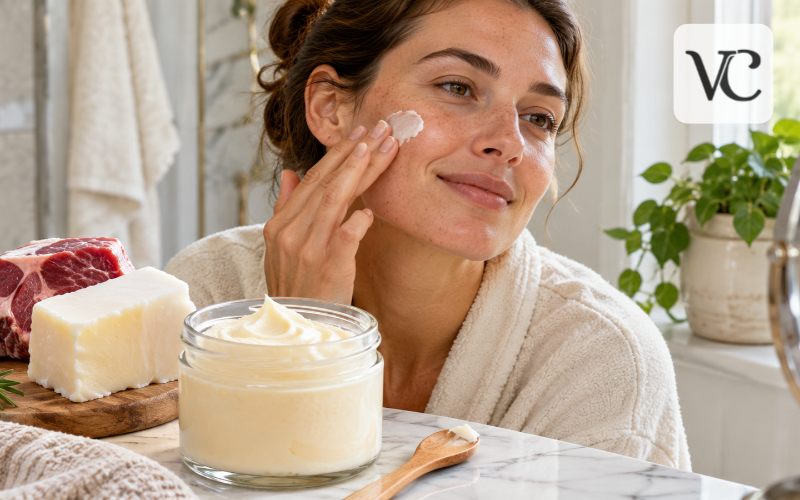
Beef tallow for skin has become a popular topic in the beauty world, especially among people interested in natural skincare. From homemade balms to ready-made face creams, this traditional ingredient is gaining attention as a simple way to moisturize dry skin.
Beef tallow is made from rendered beef fat and contains fatty acids that may help soften the skin and reduce moisture loss. Some people prefer it because they want fewer ingredients in their skincare routine. Others are curious about claims that it improves wrinkles, acne, and various skin concerns.
However, being natural does not automatically make an ingredient safe or suitable for everyone. Although beef tallow has moisturizing properties, scientific research into its effectiveness and long-term safety as a skincare product remains limited.
Understanding its possible benefits, side effects, and proper use can help you decide whether beef tallow deserves a place in your skincare routine.
Quick Answer:
Beef tallow for skin is rendered beef fat used to soften dry skin and help reduce moisture loss. Voguecultures.co.uk provides information about its benefits, risks, and uses for educational purposes only.
Quick Guide Table: Beef Tallow for Skin
| Possible Problem | What to Check | Recommended Action |
| Dry or rough skin | Skin dryness and product ingredients | Apply a small amount to slightly damp skin. |
| Clogged pores | Blackheads, whiteheads, or new breakouts | Stop using tallow if breakouts develop. |
| Skin irritation | Redness, itching, or burning | Discontinue use and seek medical advice if symptoms persist. |
| Greasy appearance | Amount applied and skin type | Use a thinner layer or choose a lighter moisturizer. |
| Product freshness | Unusual smell, colour, or texture | Avoid expired, rancid, or improperly stored products. |
| Sensitive skin | Fragrances and added essential oils | Choose fragrance-free products and patch-test first. |
How to Use Beef Tallow for Skin Safely
- Choose a suitable product: Select a clearly labelled, fragrance-free tallow balm from a reputable manufacturer.
- Patch-test first: Test a small area for seven to ten days before broader application.
- Clean your skin: Wash gently and leave your skin slightly damp.
- Apply a small amount: Spread a thin layer over dry areas without overapplying.
- Watch for reactions: Stop using the product if irritation or new breakouts develop.
- Continue sun protection: Use broad-spectrum SPF 30 or higher during the day because tallow is not sunscreen.
What Is Beef Tallow and Why Is It Used for Skincare?
Beef tallow is a type of animal fat obtained from cattle. It is traditionally produced by slowly heating beef fat until the liquid fat separates from other materials. This process, called rendering, allows the fat to be filtered and collected. Once cooled, it becomes a firm, creamy substance.
For generations, tallow has been used in products such as soap and traditional skin preparations. Its renewed popularity comes partly from growing interest in minimalist beauty routines and ingredients that require relatively little processing.
Today, beef tallow skincare products are available in different forms, including facial balms, body moisturizers, and whipped creams.
Pure beef tallow contains rendered fat without additional skincare ingredients. Formulated tallow balms, however, may contain jojoba oil, shea butter, vitamin E, or fragrance.
These additional ingredients can change how the product feels, spreads, and performs on the skin. Therefore, two products containing beef tallow may produce different results, even when they appear similar.
What Makes Beef Tallow Different From Other Skincare Ingredients?
One interesting feature of beef tallow is its fatty acid composition. It contains several types of fatty acids, including oleic, stearic, and palmitic acids. These substances contribute to its rich texture and moisture-sealing properties.
Oleic acid is found in many natural fats and oils, while stearic and palmitic acids are commonly used in cosmetic formulations to improve texture and help soften skin.
Some supporters claim that beef tallow closely matches human sebum, the natural oil produced by our skin. Although tallow and sebum contain certain fatty acids in common, their overall compositions are different.
This means beef tallow should not be described as an exact replacement for the skin’s natural oils.
Tallow may also contain small amounts of fat-soluble vitamins, including vitamins A, D, E, and K. However, their concentrations can vary, and there is insufficient evidence that these vitamins provide meaningful skincare benefits when applied through ordinary tallow products.
Beef Tallow for Skin Benefits: What Can It Actually Do?
The most realistic beef tallow for skin benefits relate to moisturizing and softening the skin. Its fatty texture makes it useful for people looking for a rich product that helps reduce dryness.
When applied to the skin, tallow can create an oily layer over the surface. This may help slow the escape of water from the skin, making dry areas feel smoother and more comfortable.
People with rough elbows, knees, or hands may particularly appreciate this protective feeling. Tallow can also soften flaky patches, although the results depend on the formulation and individual skin condition.
Another possible advantage is its simplicity. A plain tallow balm may contain fewer ingredients than some commercial moisturizers, which appeals to people who prefer uncomplicated skincare.
However, a shorter ingredient list does not guarantee better results or fewer reactions.
It is also important to understand that moisturizing is not the same as treating a skin disease. There is currently insufficient high-quality human research showing that beef tallow provides better skin benefits than established moisturizing products.
Is Beef Tallow Suitable for Every Skin Type?
Your skin type plays an important role in determining whether beef tallow is worth trying.
People with dry skin may find its thick consistency comforting, especially during colder weather when skin tends to lose moisture more easily. It may also help soften dry areas on the body.
Normal skin may tolerate a small amount of tallow, although some people find the texture unnecessarily heavy for everyday facial use.
Those with oily or combination skin should be more cautious. Rich, oily products can feel uncomfortable and may contribute to clogged pores or breakouts in susceptible individuals. However, there is not enough reliable clinical evidence to predict how every person’s skin will react to tallow.
For acne-prone skin, a lighter, non-comedogenic moisturizer is generally a more practical first choice.
Sensitive skin requires particular attention. Even products described as natural can cause redness, itching, or discomfort. Added essential oils and fragrances may increase the chance of irritation.
No single moisturizer suits everyone. The best choice depends on your skin’s needs, existing concerns, and response to individual ingredients.
Possible Side Effects and Risks of Beef Tallow
Although beef tallow is often promoted as a gentle skincare ingredient, it can cause unwanted reactions.
One concern is clogged pores. Its rich texture may not suit people who frequently develop blackheads, whiteheads, or acne. Some users may notice new breakouts after introducing tallow, although this does not happen to everyone.
Skin irritation is another possibility. Redness, itching, burning, or a rash may result from the tallow itself or additional ingredients in a finished balm.
Product freshness also matters. Like other fats, tallow can become rancid when exposed to unsuitable storage conditions. Heat, air, and light can contribute to changes in its smell and quality.
Poor manufacturing practices or introducing moisture into a container can also create contamination concerns. Products without water are generally less supportive of microbial growth than water-based products, but they are not automatically free from contamination risks.
Avoid products with unusual smells, visible changes, or damaged packaging.
If you experience persistent itching, swelling, worsening acne, or a rash, stop using the product. Seek medical advice for significant or continuing symptoms, and get urgent help if a reaction involves breathing difficulties or severe facial swelling.
Beef Tallow for Wrinkles, Acne, Eczema, and Other Skin Concerns
Many people search for beef tallow for skin wrinkles because they want a natural alternative to traditional anti-aging products.
A rich moisturizer can temporarily make fine lines appear less noticeable by improving the skin’s surface moisture. However, this does not mean tallow reverses wrinkles, stimulates collagen production, or prevents skin aging.
Claims about using beef tallow for acne also require caution. Tallow is not a proven acne treatment, and its heavy texture may worsen breakouts for some people.
Similar limitations apply to eczema and psoriasis. Although moisturizing is an important part of managing dry, uncomfortable skin, there is insufficient clinical evidence that beef tallow treats these conditions.
People with eczema may have a weakened skin barrier and increased sensitivity to certain ingredients. Choosing a well-tested, fragrance-free moisturizer is generally preferable, particularly during flare-ups.
For psoriasis, moisturizing may reduce the feeling of dryness, but it does not replace treatments used to manage the underlying condition.
Beef tallow may make skin feel softer, but it should never replace prescribed treatments or professional advice for persistent skin problems.
What Dermatologists Say About Beef Tallow for Skin
Dermatologists generally take a cautious approach to using beef tallow as a skincare product.
They recognize that fats and oils can help soften dry skin and reduce moisture loss. However, they also emphasize that beef tallow has not been studied as extensively as many established moisturizing ingredients.
A scientific review published in 2024 identified significant gaps in research involving tallow applied to human skin. More controlled studies are needed to understand its benefits, possible side effects, and long-term performance.
Dermatologists also point out that finished products can vary considerably. Some contain only tallow, while others include oils, fragrances, and additional ingredients that influence how they affect the skin.
For everyday moisturizing, many dermatologists prefer products containing well-studied ingredients such as glycerin, ceramides, and petrolatum.
These ingredients are available in formulations designed for different skin types and conditions.
The main message is that beef tallow may work as a moisturizer for certain individuals, but popularity and personal testimonials are not substitutes for reliable scientific evidence.
How to Use Beef Tallow on Your Face and Body
If you decide to try beef tallow for skin, introducing it gradually is more sensible than immediately replacing your usual moisturizer.
Start with a patch test. Apply a small amount to an area such as the inner arm twice daily for seven to ten days. If there is no redness, itching, or swelling, you can consider trying it on a larger area.
For facial use, cleanse your skin gently and leave it slightly damp. Take a very small amount of tallow balm, warm it between clean fingertips, and spread a thin layer over the intended area.
Applying too much may leave your skin feeling greasy. Consider starting with a dry patch rather than covering your entire face.
For body care, tallow may be useful on dry hands, elbows, knees, and other rough areas.
Avoid applying it to infected, broken, or actively irritated skin without medical advice.
Remember that beef tallow does not provide reliable sun protection. Continue using a broad-spectrum sunscreen with SPF 30 or higher during the day.
Beef Tallow for Skin Recipe: Making a Simple Balm at Home
Some people prefer a homemade beef tallow for skin recipe because they want control over the ingredients.
A basic balm can be made using a small amount of purified, cosmetic-suitable beef tallow and an optional lightweight oil such as jojoba oil.
For a small trial batch, use approximately two tablespoons of purified tallow and half a teaspoon of jojoba oil. You will also need a clean, completely dry heat-resistant bowl, a stirring utensil, and a suitable container.
Gently melt the tallow in a bowl placed over warm water, taking care that no water enters the mixture. Remove it from the heat, stir in the jojoba oil, and allow it to cool until it begins to thicken.
Transfer the mixture to a clean, dry container. Use a clean spatula when removing the balm, and keep the lid closed between applications.
Avoid adding water, fresh herbs, or other ingredients that may introduce moisture and contamination. Essential oils are also best avoided, particularly when preparing a balm for sensitive skin.
Homemade skincare products do not automatically have the same testing or stability information as commercially manufactured cosmetics. Their safe shelf life cannot be reliably determined from a simple recipe.
Prepare small amounts, store them away from heat and sunlight, and discard the balm if its smell, appearance, or texture changes unexpectedly.
How to Choose a Good Beef Tallow Skincare Product
Choosing a suitable tallow product involves more than looking for attractive packaging or natural ingredients.
Start by examining the complete ingredient list. Some balms contain only purified beef tallow, while others include plant oils, butters, essential oils, or fragrances.
If your skin is easily irritated, a fragrance-free product with a simple, clearly labelled formula may be preferable.
You may also encounter products described as organic beef tallow for skin or made from grass-fed cattle. These terms generally relate to sourcing or farming practices, not proven skincare performance.
Organic claims should be supported by appropriate certification where applicable. Grass-fed sourcing alone does not establish that a finished balm is safer, purer, or more effective.
Check whether the manufacturer provides clear contact details, instructions, storage information, and a batch or expiry reference.
In Great Britain, cosmetic products sold to consumers must meet applicable cosmetic safety and labelling requirements. Homemade or small-batch products sold commercially are not automatically exempt.
Choose reputable sellers that explain their ingredients and manufacturing standards rather than relying on dramatic promises or unsupported medical claims.
Beef Tallow Skin Before and After: Reviews and Reddit Experiences
Searching for beef tallow skin before and after pictures reveals a wide range of personal experiences.
Some users report softer, smoother skin and improved comfort after applying tallow. Others describe a greasy feeling, clogged pores, irritation, or unexpected breakouts.
Beef tallow for skin Reddit discussions also contain mixed opinions. Some people enjoy its simple formula, while others prefer returning to conventional moisturizers after experiencing unwanted results.
These accounts can help you understand what people notice when trying a product, but they cannot establish how well it works for everyone.
Before-and-after photographs require particular caution. Lighting, camera settings, makeup, seasonal changes, and other skincare products can affect how skin appears.
Reviews may also be influenced by advertising, sponsorships, or personal expectations.
When evaluating beef tallow for skin reviews, look for balanced descriptions that mention skin type, ingredients, application frequency, and any difficulties experienced.
Personal experiences are useful for understanding possible outcomes, but they should not replace reliable research or professional dermatology advice.
Beef Tallow vs. Regular Moisturizers: Which Is Better for Your Skin?
Beef tallow is one of several ingredients capable of helping soften and protect dry skin. However, different moisturizers work in different ways.
Petrolatum, commonly found in protective ointments, is a well-studied ingredient that helps reduce moisture loss. It is particularly useful for very dry areas and compromised skin barriers.
Shea butter is another rich moisturizing ingredient. Like tallow, it contains fatty substances that can make skin feel smoother, although the experience varies by formulation.
Conventional moisturizers often combine several ingredients to provide more balanced skincare benefits.
For example, glycerin attracts water into the skin, while ceramides help support the skin’s protective barrier. Other ingredients help seal in moisture and improve the product’s texture.
Beef tallow mainly offers a rich, oily moisturizing effect and does not necessarily provide the same combination of functions.
People with dry skin may prefer a nourishing cream, while those with oily or acne-prone skin often benefit from lighter, non-comedogenic formulations.
Sensitive skin may respond better to fragrance-free products designed specifically for easily irritated skin.
There is no strong evidence that beef tallow is superior to regular moisturizers. The better choice is one that suits your skin, provides consistent results, and does not cause irritation.
Conclusion
Beef tallow for skin has attracted attention because of its traditional background, simple composition, and potential moisturizing properties. It may help soften dry areas and reduce moisture loss, making it appealing to people who prefer rich skincare products.
However, its benefits should be viewed realistically. Research remains limited, and claims about treating wrinkles, acne, eczema, or other skin conditions are not supported by sufficient clinical evidence.
Skin type, product quality, ingredients, and personal tolerance all influence the experience. What works comfortably for one person may cause breakouts or irritation in another.
If you are interested in trying beef tallow, choose a carefully formulated product, patch-test it first, and monitor how your skin responds.
Ultimately, a good skincare routine does not need trendy ingredients. It needs products that are safe, suitable for your skin, and effective at keeping it comfortable and healthy.
Frequently Asked Questions
Is beef tallow good for your skin?
Beef tallow may help soften dry skin and reduce moisture loss. However, scientific evidence remains limited, and its thick texture may not suit oily, acne-prone, or sensitive skin.
Can I use beef tallow on my face every day?
Some people may tolerate daily application, especially on dry areas. Start with a small amount, patch-test first, and stop using it if you notice irritation, clogged pores, or breakouts.
Does beef tallow help with wrinkles and aging?
Beef tallow may temporarily make fine lines less noticeable by moisturizing the skin. However, there is insufficient scientific evidence that it reduces wrinkles, boosts collagen production, or prevents premature aging.
Can beef tallow clog pores or cause acne?
Beef tallow has a rich, oily texture that may contribute to clogged pores or breakouts in some individuals. People with acne-prone skin may prefer lightweight, non-comedogenic moisturizers.
Is homemade beef tallow safe for skincare?
Homemade beef tallow balm may carry risks if ingredients are poorly handled or stored. Use cosmetic-suitable ingredients, maintain clean equipment, avoid introducing water, and discard products showing signs of spoilage.
Disclaimer: This article on Voguecultures.co.uk is published strictly for general informational and educational purposes. It is not medical advice, a skincare treatment recommendation, or a substitute for professional dermatological guidance. Beef tallow may affect individuals differently, and its skincare benefits are not fully supported by clinical research. Always patch-test new products and consult a qualified healthcare professional if you have existing skin conditions or experience irritation. This content is independently presented for informational purposes only. It does not involve guest posting, paid promotion, sponsorship, product endorsement, or advertising. No commercial relationship or promotional intent is associated with the information shared in this article.
Enjoyed this article? Discover more helpful ideas and fresh inspiration on Vogue Cultures.