A reusable water bottle is easy to carry everywhere, but it is also easy to forget about when it comes to cleaning. Even if you only fill it with plain water, your mouth, hands, and the surrounding environment can leave germs and residue on the bottle. Moisture trapped inside a closed lid can also encourage unpleasant smells and buildup over time.
Learning how to clean a water bottle does not require expensive products or a complicated routine. Warm water, a little mild dish soap, and a suitable brush are enough for most everyday washing. The important part is reaching the surfaces that touch your drink, including the inside walls, the rim, and the bottom.
Straws, drinking nozzles, and silicone seals can hold moisture in places that are difficult to see. This guide explains how to wash those parts, tackle odors and visible mold, and care for different bottle materials without causing damage.
Snippet-Ready:
Learn how to clean a water bottle using simple, safe methods to remove dirt, odors, and buildup. Voguecultures.co.uk provides information and practical cleaning guidance about this topic only, without offering cleaning services.
Quick Guide: Water Bottle Cleaning Methods
| Cleaning Method | Best For | Recommended Approach |
| Warm water and dish soap | Everyday cleaning | Scrub with a soft bottle brush and rinse thoroughly. |
| White vinegar | Mild odors and mineral deposits | Use diluted vinegar if the manufacturer permits, then rinse well. |
| Baking soda | Light stains and smells | Mix with water, scrub gently, and rinse completely. |
| Small straw brush | Straws and nozzles | Clean narrow openings with warm, soapy water. |
| Thorough washing and inspection | Visible mold or heavy buildup | Clean accessible parts and replace components that cannot be cleaned safely. |
| Dishwasher | Dishwasher-safe bottles | Follow the manufacturer’s washing and drying instructions. |
Step-by-Step Guide to Cleaning a Water Bottle
- Empty the bottle: Pour out leftover water or other drinks.
- Remove detachable parts: Separate the lid, straw, and removable seals according to the manufacturer’s instructions.
- Add warm, soapy water: Use a few drops of mild dish soap.
- Scrub carefully: Clean the inside, bottom, rim, and threads with a suitable brush.
- Wash small components: Clean the nozzle, straw, and silicone seals separately.
- Rinse thoroughly: Remove all soap and loosened residue using clean water.
- Air dry completely: Leave the bottle and its parts on a clean drying rack before reassembling.
What You Need to Clean a Water Bottle
Start with a few basic cleaning supplies you probably already have at home. Mild dish soap helps loosen everyday residue, while comfortably warm water makes washing easier. A soft bottle brush is useful for reaching the base of tall bottles, especially those with narrow openings. Choose a brush that fits without scraping or forcing it against the sides.
For bottles with built-in straws or drinking spouts, a smaller straw brush is helpful. A soft sponge or clean, non-scratch cloth can be used on the outside and around wider openings. You will also need a clean rack or another well-ventilated place where the separate pieces can air dry.
White vinegar and baking soda are optional extras for certain odors or deposits. Bottle-cleaning tablets are another option, but only if their instructions say they are suitable for your drinkware. These products do different jobs; none replaces the need to remove dirt through regular washing.
Before using any cleaning method, check the label or care information supplied with your bottle. The body, lid, and straw may have different limits for heat, dishwasher use, or cleaning products.
How to Clean a Water Bottle for Everyday Use
For a regular wash, begin by pouring out any leftover water. Unscrew the lid and remove the straw, gasket, or other detachable pieces if the manufacturer says they can be taken apart. Do not pull at a valve or seal that is designed to stay fixed, as it may be difficult to put back correctly.
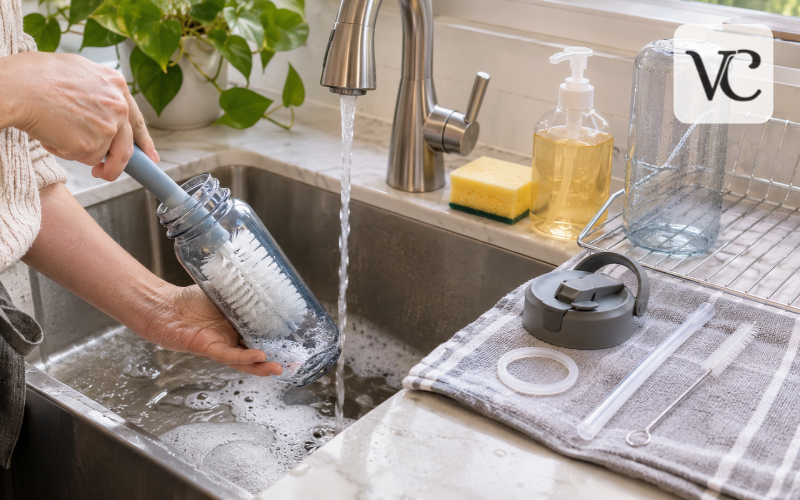
Add a few drops of dish soap to the bottle and fill it partway with warm water. Work a soft bottle brush around the inner walls and across the bottom. Pay extra attention to the point where the base meets the sides, because a quick rinse may miss residue there. Wash around the rim and the grooves where the lid screws on, too.
Next, clean the outside of the bottle with soapy water. Wash the removed pieces separately rather than assuming that water swishing inside the bottle will reach them.
Rinse everything under clean running water until you cannot see or feel any soap residue. Place the bottle on a clean drying rack with its opening positioned so water can drain and air can circulate. Lay small parts separately to dry; avoid sealing them in a damp bottle. When every part is completely dry, put the bottle back together, checking that seals are fitted properly.
Cleaning Water Bottle Lids, Nozzles, Straws, and Seals
A bottle can look spotless inside and still have a dirty lid. The drinking nozzle, mouthpiece, and threads are often touched by fingers or lips, so they deserve careful washing. If your lid has a flip-up spout, open it and use warm, soapy water to clean the surfaces you can reach. A small, soft brush can help around the opening without scratching the plastic or damaging a valve.
To clean a reusable straw, remove it when possible and pass a narrow straw brush through its length with soapy water. Rinse until the water runs clear, then stand or lay the straw where it can drain and dry. Simply soaking a straw may leave a film on its inner surface.
Silicone gaskets are the flexible rings that help prevent leaks. Some are removable, while others are not. If removal is permitted, gently lift the ring using the maker’s instructions and wash both the ring and the groove beneath it. Avoid sharp tools that could tear the seal.
Look carefully at hidden corners, sliding mouthpieces, and spaces under lid parts. If you cannot reach an area, consult the product’s cleaning instructions rather than forcing it open. Once clean and dry, return each part to its correct position so the lid closes securely.
How to Wash a Water Bottle Without a Brush
If you do not have a bottle brush, you can still give a lightly used bottle a basic wash. Add mild dish soap and warm water, close the lid securely, and gently shake the bottle over a sink. Use only comfortably warm water, not boiling water, and do not shake a bottle containing an active cleaning tablet or any solution that may create pressure.
Open the bottle, pour out the soapy water, and wash any accessible surfaces with a clean soft sponge or non-scratch cloth. A narrow neck makes it harder to reach the bottom, so spend more time rinsing and checking for remaining residue.
The same basic approach can help when you need to clean a stainless steel water bottle without a brush. Avoid steel wool, sharp utensils, or gritty scrubbing materials that could damage its finish. If there is visible film or stubborn residue beyond your reach, shaking is not enough. Get a suitable brush or follow the manufacturer’s approved cleaning method before using the bottle again.
How to Clean a Water Bottle With Vinegar
White vinegar may be useful when a bottle has a stale smell or light mineral marks left by water. First clean the bottle with dish soap to remove ordinary dirt.
If your bottle’s care instructions allow vinegar, try a diluted mixture of equal parts white vinegar and water. Let it sit briefly, following any soaking limits from the manufacturer, and gently scrub reachable areas. Empty the bottle, rinse it thoroughly, and wash again with dish soap if a vinegar scent remains. Allow it to dry with the lid off.
Avoid prolonged soaking unless the manufacturer specifically recommends it, particularly around metal parts, coatings, and seals. Vinegar does not reliably disinfect a contaminated bottle, and it must never be mixed with bleach or other household cleaning chemicals.
Using Baking Soda to Remove Bottle Odors and Stains
Baking soda can help with mild odors or marks left by drinks. After washing the bottle normally, add one or two teaspoons of baking soda and a little warm water. Swirl the mixture carefully and use a soft brush to work over the stained area. Leave it for a short period if the bottle maker allows, then rinse thoroughly.
For an accessible stubborn spot, a small amount of baking soda mixed with water can make a gentle paste. Rub lightly with a soft cloth, taking care with painted finishes, special coatings, and plastic that scratches easily.
Baking soda can reduce smells, but deodorizing is not the same as cleaning or disinfecting. If residue or visible growth remains, the bottle needs further attention rather than simply another baking soda treatment.
How to Clean a Water Bottle With Mold
If you find dark spots, fuzzy growth, or a musty smell inside a bottle, stop drinking from it until you have inspected and cleaned it. Not every dark mark is mold, but visible growth should be taken seriously. Check the underside of the lid, the straw, the mouthpiece, and the grooves around the seals, not just the bottle’s main compartment.
Begin by emptying the bottle and removing only the components intended to come apart. Wash each accessible part thoroughly with warm water, mild dish soap, and the right-sized brush. Pay special attention to areas where growth was visible. Follow any additional cleaning or sanitizing directions supplied by the manufacturer for that particular product, and let everything dry fully.
Do not assume that vinegar or baking soda alone makes a moldy bottle safe. If growth remains after washing, returns quickly, or sits inside an area that cannot be opened and properly cleaned, replacing the affected lid, seal, straw, or entire bottle may be the safer option. Deep scratches and damaged seals can also make effective cleaning difficult.
It is better to replace a hard-to-clean component than continue drinking from something you cannot inspect with confidence.
How to Clean a Water Bottle That Has Been Sitting Unused
Finding a forgotten bottle in a bag or car is common. Before taking a drink, open it and check whether any old liquid remains. Look for cloudiness, floating particles, stains, unusual smells, or residue around the lid. If liquid has been sitting inside for days or weeks, discard it rather than tasting it to see whether it is still fine.
Take the bottle apart as far as the manufacturer permits and give every accessible piece a careful wash with warm, soapy water. Use a brush inside the bottle and the straw, and inspect the gasket for buildup.
Lingering odors or mineral deposits may respond to a manufacturer-approved vinegar or baking soda treatment after normal cleaning. However, stains that cannot be identified, persistent growth, or inaccessible dirty areas are reasons to replace the relevant component. Once the bottle is clean, rinse and dry it completely before filling it with fresh drinking water.
Cleaning Different Types of Water Bottles
The safest cleaning method depends partly on the material.
Stainless steel bottles are generally durable and respond well to warm water, mild soap, and a soft brush. Avoid abrasive scrubbers, harsh chemicals, and long chemical soaks unless the manufacturer allows them. Insulated bottles sometimes have special care requirements, so do not assume that all metal bottles are dishwasher-safe.
Plastic bottles need gentle cleaning to avoid scratches and warping. Use warm rather than boiling water unless the product instructions permit higher temperatures. A scratched or cloudy plastic surface can be harder to inspect and may need replacement if it cannot be cleaned well. Do not assume that a bottle is dishwasher-safe simply because it is made from plastic.
Glass bottles often have smooth interiors that are straightforward to wash with soap and a soft brush. Handle them carefully around sinks and hard surfaces. Remove a protective sleeve if its instructions allow, clean underneath it, and check the glass for cracks or chipped edges. A damaged glass bottle should not be used.
Whatever the material, remember that lids and seals may be made from something different. Follow the cleaning instructions for each part, not just the main bottle.
Can You Clean a Water Bottle in the Dishwasher?
A dishwasher can make bottle cleaning convenient, but only when the manufacturer says the particular bottle is dishwasher-safe. Look for the care label on the base, packaging, or product information. Some insulated stainless steel bottles can go into a dishwasher, while others require handwashing. Heat may also damage certain plastic lids, seals, decorations, or coatings.
If dishwasher use is permitted, separate the bottle and detachable parts as directed. Place small pieces where they cannot fall through the racks or collect dirty water. Lids and straws often belong on the top rack, but the correct position depends on the maker’s instructions.
After the cycle, inspect the drinking opening and narrow spaces for any trapped residue. Empty collected water from lids and allow everything to finish drying before reassembly. Dishwasher cleaning is convenient, but it does not remove the need to check hard-to-reach parts.
Common Water Bottle Cleaning Mistakes to Avoid
One common mistake is rinsing the bottle with water and assuming that is enough. A quick rinse may remove loose particles, but it does not replace washing with soap and rubbing the surfaces.
Another mistake is scrubbing the main bottle while ignoring the lid, straw, and silicone rings. These small parts can stay damp even when the bottle looks dry. Neglecting them may be the reason an unpleasant smell returns soon after washing.
Harsh cleaning chemicals, boiling water, and abrasive pads can also create problems when they are unsuitable for the material. Never mix household cleaning chemicals, especially bleach with vinegar or ammonia. If you use a specialty cleaner, follow its directions rather than guessing the strength or soaking time.
Finally, avoid closing a freshly washed bottle while water remains trapped inside. Set the bottle and its removable components apart on a clean rack until they are completely dry.
How Often Should You Clean and Replace Your Water Bottle?
As a practical habit, wash a reusable water bottle after each day of use, even if it only held water. If you fill it with juice, flavored drinks, or other beverages, clean it promptly after use because they can leave more residue. Wash the drinking area sooner if it becomes visibly dirty or has been handled with unclean hands.
Inspect straws, lid grooves, and seals regularly and give them a more detailed clean whenever buildup appears. A weekly check can help you notice areas missed during your daily routine. Allow all pieces to dry fully and store the empty bottle with the lid off or loose when practical.
There is no single replacement date for every reusable bottle. Replace one if it develops cracks, damaged surfaces, persistent odors, or contamination that cannot be removed. Worn gaskets and broken mouthpieces may be replaceable without throwing away the entire bottle, depending on the model.
Conclusion
Knowing how to clean a water bottle makes daily care much easier. For most bottles, warm water, mild dish soap, and a suitable brush are the simplest starting point. Washing the inside is important, but so is cleaning the lid, nozzle, straw, and seals that come into contact with your drink.
For odors, stains, or a bottle left unused, choose an additional cleaning method only if it is safe for the material. If mold or damage cannot be properly addressed, replacement may be the better choice.
A little attention after each day of use, followed by thorough rinsing and complete drying, helps keep a reusable water bottle clean, pleasant to use, and ready for its next refill.
Frequently Asked Questions
How often should you clean a reusable water bottle?
Wash your reusable water bottle after each day of use, even when it contains only water. Clean lids, straws, and seals regularly to prevent residue, unpleasant smells, and moisture buildup.
Can you clean a water bottle without a brush?
Yes, you can shake warm, soapy water inside the bottle and clean reachable surfaces with a soft sponge. However, stubborn residue and narrow openings may still require a suitable bottle brush.
Is vinegar or baking soda better for cleaning water bottles?
Vinegar may help remove certain mineral deposits and odors, while baking soda can reduce mild smells and stains. Neither replaces regular washing with dish soap, and both should be suitable for the bottle’s material.
How do you clean a water bottle that has mold inside?
Stop using the bottle and thoroughly wash accessible surfaces and removable parts. Follow manufacturer-approved cleaning instructions. If mold remains in hidden areas or damaged components, replace the affected parts or bottle.
Can stainless steel and plastic water bottles go in the dishwasher?
Some stainless steel and plastic bottles are dishwasher-safe, but others require handwashing. Always check the manufacturer’s instructions for the bottle, lid, and straw to avoid heat damage, warping, or damaged finishes.
Disclaimer: The information provided in this article on voguecultures.co.uk is intended strictly for general educational and informational purposes. Our goal is to help readers understand safe and practical ways to clean reusable water bottles. Cleaning requirements may vary depending on the bottle’s material, design, and manufacturer, so always follow the product’s official care instructions. This article is not a guest post, paid promotion, sponsored publication, or advertisement. It does not promote or endorse any specific cleaning product, brand, or service. Readers should use suitable cleaning methods and exercise care when handling cleaning solutions.
Enjoyed this article? Discover more helpful ideas and fresh inspiration on Vogue Cultures.