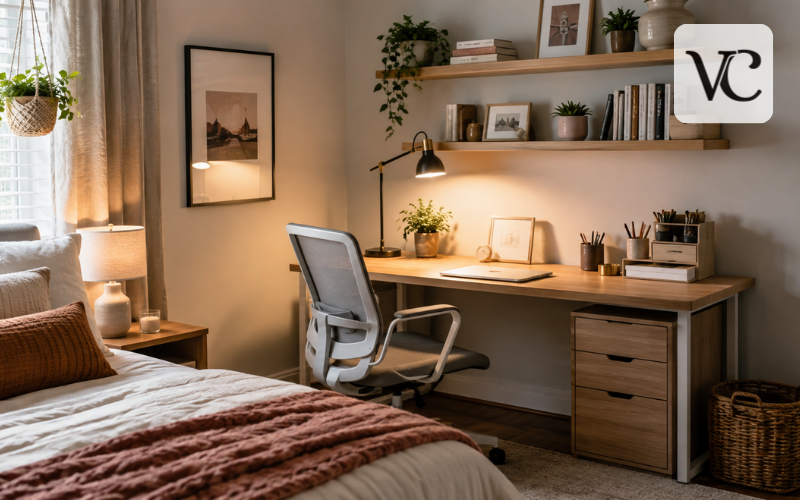
Learning how to decorate bedroom desk area is really about solving two needs at the same time. You want a place where you can work, study, use a computer, or handle everyday tasks, but you also want your bedroom to remain calm and comfortable.
The most successful desk areas do not look as if office furniture was simply pushed into an empty corner. The desk feels connected to the bedroom because its size, colors, lighting, storage, and decorations work with the rest of the room.
Start with practical decisions before buying decorative items. Think about where the desk should go, what you need to keep within reach, how much equipment you use, and whether the workspace will be visible from your bed. Then bring in color, lighting, artwork, plants, shelves, and personal objects.
The same basic approach works whether you have a compact bedroom, a larger primary bedroom, a computer setup, a desk beside a TV, or a desk that also serves as a vanity. The goal is not to create a perfect-looking workspace. It is to create one that is pleasant to use and still feels like a natural part of your bedroom.
Snippet-Ready Definition:
Decorating a bedroom desk area means combining practical workspace planning, storage, lighting, and personal décor without disrupting the room’s relaxing feel. voguecultures.co.uk provides informational guidance on this topic only.
Quick Guide: Bedroom Desk Decorating Ideas
| Area | What to Do | Main Benefit |
| Desk placement | Choose a practical wall, corner, or alcove | Keeps the room organized |
| Storage | Use drawers, shelves, baskets, or organizers | Reduces visible clutter |
| Lighting | Combine task lighting with softer bedroom lighting | Supports work and relaxation |
| Wall space | Add shelves, artwork, pegboards, or a mirror | Saves valuable desk space |
| Colors | Coordinate with existing bedroom colors and finishes | Creates a cohesive look |
| Décor | Add a few plants, photos, books, or meaningful objects | Adds personality without clutter |
| Cables | Use clips, sleeves, or under-desk cable storage | Keeps technology looking tidy |
| Small rooms | Choose compact or multipurpose furniture | Makes better use of limited space |
Simple Step-by-Step Guide
- Measure the available space before choosing or repositioning the desk.
- Choose the desk location based on walking space, outlets, windows, and how you use the room.
- Organize work essentials and move rarely used items into closed storage.
- Control cables so chargers and computer wires do not dominate the setup.
- Add suitable lighting for working while keeping softer bedroom lighting available.
- Use the wall above the desk for useful storage or a small amount of decoration.
- Match the room’s colors and materials so the desk feels connected to the bedroom.
- Finish with a few personal items rather than filling every available surface.
Plan the Bedroom With Desk Layout Before You Start Decorating
Before decorating, decide exactly where the desk belongs. Measure the available wall and floor space and pay attention to doors, windows, wardrobes, electrical outlets, heaters, and the route you normally take through the room.
Then think about how you will use the desk. Someone who occasionally answers emails on a laptop needs far less space than someone who works from home every day with a monitor, keyboard, notebooks, and other equipment. A study desk, gaming setup, or desk-and-vanity combination may also need a different layout.
A common mistake is choosing the largest desk that will physically fit. A better approach is to leave enough open floor space for the chair to move comfortably and for you to walk through the room without squeezing around furniture.
Natural light can make a desk area more pleasant, but window placement matters when you use a screen. Direct reflections can make a monitor harder to see. OSHA recommends arranging computer workstations to reduce glare from windows and lights, including positioning the screen at a suitable angle to strong light sources.
Use bedroom with desk layout ideas for inspiration, but treat them as starting points. Your room’s actual measurements should make the final decision.
Create a Clear Visual Boundary Between Work and Sleep
A bedroom desk does not always need a physical divider, but giving it its own visual zone can help the room feel more organized.
If possible, place the desk on a wall away from the head of the bed or in an unused corner, alcove, or window area. Even a small amount of separation can make the workstation feel intentional.
You can define the space with a small rug under the chair, a different paint color behind the desk, a group of framed prints, a pinboard, or a narrow shelving unit beside it. The idea is to create a subtle boundary without making a small bedroom look divided into tiny sections.
If seeing work equipment from bed bothers you, consider furniture that can partly disappear when the workday ends. A secretary desk can close, a fold-down desk can be put away, and a shallow closet can sometimes become a compact workstation. Closed cabinets are also useful for hiding notebooks, chargers, documents, and other visual clutter.
This work-and-rest separation remains a common feature of current bedroom-office design advice, especially where bedrooms need to serve more than one purpose.
Build the Desk Area Around the Bedroom’s Existing Color Palette
The easiest way to make a desk look like it belongs in the bedroom is to borrow colors and finishes that are already present.
Look at your bedding, curtains, wall color, rug, wardrobe, bedside tables, and other large pieces. You do not need everything to match exactly. Instead, repeat one or two tones so the workspace feels connected to its surroundings.
For example, a bedroom with warm oak furniture can usually handle a wood desk or wooden accessories better than a collection of unrelated finishes. In a soft neutral bedroom, black computer equipment can feel less harsh when it is balanced with warm wood, beige storage boxes, fabric textures, or muted artwork.
A modern monochrome room may suit clean black, white, or gray accessories. A cozy boho bedroom can use natural wood, woven baskets, ceramics, and warmer shades. Soft pastel rooms work best when only a few gentle colors are repeated rather than mixing every pastel shade available.
The aim is cohesion, not perfect matching. When the desk shares some visual language with the rest of the bedroom, it feels like furniture chosen for the room rather than office equipment added later.
Keep the Desktop Clear With Functional Storage and Cable Control
A beautifully decorated desk can quickly become stressful if there is nowhere to put everyday items. Before adding décor, decide what genuinely deserves a permanent place on the desktop.
Keep the things you use most often within easy reach. Pens can go in one cup, small items in a tray, and frequently used documents in a compact holder. Supplies you use occasionally are usually better inside drawers, storage boxes, baskets, or cabinets.
Closed storage is especially useful in bedrooms because it reduces visual noise. A collection of colorful packaging, charging cables, loose papers, and office supplies can make even a stylish desk look busy.
Cable control also makes a noticeable difference. Simple cable clips can keep charging cords from falling behind the desk. An under-desk cable tray can hold power strips and extra cable length, while a cable sleeve can group several cords together.
If you use a laptop or monitor, a suitable stand can sometimes free space underneath for a keyboard or notebook. Just make sure screen height and distance remain comfortable rather than raising equipment purely for appearance.
At the end of the day, spend a minute returning loose items to their places. That small habit helps the bedroom feel less like an active office at night.
Make Better Use of the Wall Above the Desk
When floor and desktop space are limited, the wall above the desk becomes useful space.
Floating shelves can hold books, small storage boxes, plants, or a few decorative objects without taking over the work surface. A pegboard offers more flexible storage because hooks, small shelves, and containers can be moved as your needs change.
A corkboard or fabric pinboard works well if you regularly use a calendar, reminders, photographs, or notes. If you prefer a cleaner look, one or two framed prints may be enough.
A mirror can also work well above a desk that doubles as a dressing table. It gives the furniture another purpose without requiring a separate vanity elsewhere in the bedroom.
The key is restraint. Vertical storage helps most when it removes clutter from the desk, not when it creates a crowded wall. Leave some empty space between shelves, artwork, and organizers so the area has room to breathe.
In a very small bedroom, one useful shelf and one piece of art may look better than filling the entire wall with décor.
Layer the Lighting for Both Work and Relaxation
Bedroom lighting and workspace lighting serve different purposes, so one light source may not be enough.
During the day, natural light can make the desk area comfortable and inviting. If you use a computer, however, check the screen from your normal sitting position. Reflections from windows or bright lamps can make viewing uncomfortable.
For focused tasks, use a desk lamp, wall-mounted task light, or another adjustable light that can direct illumination where you need it. A wall-mounted option is particularly helpful on a narrow desk because it leaves more surface space free.
At night, softer ambient light from bedside lamps or other room lighting can help the bedroom feel less like a workplace after the desk lamp is switched off.
OSHA’s computer workstation guidance recommends reducing reflected glare and positioning task lighting so that it does not shine directly onto the screen.
Choose lighting based on the work you actually do. Someone who reads or writes by hand may need more direct task light than someone who mainly uses a bright laptop display. Most importantly, do not sacrifice useful lighting simply because a tiny decorative lamp looks attractive.
Add Décor That Makes the Desk Personal Without Creating Clutter
Once the practical parts are working, add a few decorative details that make the space feel like yours.
A small plant, framed photograph, favorite book, ceramic dish, attractive clock, piece of artwork, or meaningful keepsake can bring personality without using much space. If you enjoy candles, keep them in stable positions away from papers, curtains, cables, electronics, and other materials that could easily catch fire.
Natural textures can also soften the hard lines of computers and office equipment. Wood, woven baskets, fabric accessories, and ceramics often feel comfortable in a bedroom because they introduce texture without requiring lots of decoration.
Plants are another simple option. Choose them according to the actual light available in the room rather than buying a plant because it looks good in an inspiration photo. If the desk receives little useful daylight or you do not want plant care, good-quality faux greenery can provide a similar decorative effect.
Try not to fill every empty spot. One object you genuinely like is often more effective than five items chosen only because they match a social-media trend.
How to Decorate a Bedroom Desk Area for Small Rooms
Knowing how to decorate bedroom desk area for small rooms begins with using less floor space, not squeezing more furniture into the room.
Look for narrow desks, floating desks, fold-down designs, ladder desks, corner desks, or secretary-style furniture. An alcove, unused corner, or short section of wall between larger pieces of furniture may be enough for a useful workstation.
Some of the most practical bedroom desk ideas for small spaces involve furniture doing more than one job. A desk can sometimes replace a bedside table, act as a dressing table, or provide storage through built-in drawers.
Move storage upward whenever possible. One or two shelves above the desk usually take less visual and physical space than a freestanding filing unit beside it.
Furniture should also look proportional to the room. A heavy executive chair and deep desk can visually dominate a compact bedroom even when they technically fit. Slim legs, lighter shapes, and a chair that can tuck under the desk usually help the room feel more open.
Small spaces benefit from editing. Keep only what helps you work or contributes something meaningful to the room.
How to Decorate a Bedroom Desk Area With a TV
When deciding how to decorate bedroom desk area with TV, start by deciding what the screen is actually for.
If the television is mainly watched from bed, its position should make sense from that viewpoint rather than forcing the desk into an awkward location. If it is mainly used from the desk, treat it more like part of the workstation. In a very small bedroom, you may even be able to use one suitable screen for more than one purpose, depending on your equipment and viewing needs.
Avoid crowding the same wall with a large television, computer monitor, shelves, framed art, speakers, plants, and numerous accessories. Too many objects competing for attention can make the whole setup feel heavy.
Wall-mounting a TV may free desktop or furniture space when the wall and mounting method are suitable. Whatever arrangement you use, organize the TV and computer cables together rather than treating them as separate problems.
Keep remotes, controllers, speakers, and other accessories in one defined location. A drawer, small box, or closed cabinet can prevent the desk from turning into general electronics storage.
Decor around a TV usually works best when it is simple and balanced.
Master Bedroom With Desk Layout and Decorating Ideas
A larger bedroom gives you more options, but more space does not mean the desk needs to become the main feature.
For a master bedroom with desk layout, look first for areas that naturally feel separate from the bed. A window wall, unused corner, alcove, dressing area, or wide wall opposite the sleeping zone may work well.
A larger desk can be appropriate if you need it, but it should still feel proportional to the room. Coordinate its finish with major bedroom furniture so it becomes part of the overall design.
You can also create a gentle visual zone with a rug, shelving, or wall treatment. This helps define the desk without building a permanent divider.
In larger bedrooms, dual-purpose furniture can still be useful. A well-chosen desk may also function as a dressing table, console, or quiet writing area.
If the workstation is directly visible from the bed, focus on closed storage and cable control. A large bedroom can still feel cluttered when paperwork and equipment are always on display.
Modern Bedroom Office and Computer Desk Styling
Good modern bedroom office ideas usually have one thing in common: the workspace looks simple because the practical details have been carefully organized.
Start with clean furniture shapes, coordinated finishes, and enough closed storage to prevent every piece of equipment from remaining visible.
For bedroom with computer desk ideas, plan the technology before decorating around it. Make sure there is comfortable space for the monitor, keyboard, mouse, laptop, speakers, and charging equipment you actually use.
If you spend long periods at the computer, function should come before styling. OSHA recommends keeping a primary monitor directly in front of the user and arranging the workstation so frequently used equipment can be reached comfortably.
Monitor arms and stands can help some setups, but they are not required for every desk. Use them when they improve viewing position or free valuable work surface.
Then soften the technology with bedroom-friendly elements such as artwork, warm lighting, natural materials, textiles, or a plant.
Looking at bedroom office ideas Pinterest or other visual platforms can be useful for identifying colors and styles you like. Just remember that a photograph does not show whether a setup is comfortable, practical, affordable, or suitable for your room. Take the idea, not the entire arrangement.
Common Bedroom Desk Decorating Mistakes and a Final Styling Check
One of the biggest mistakes is decorating before solving the layout. A beautiful desk will still be frustrating if the chair cannot move properly or the furniture blocks a walkway.
Another common problem is overdecorating. When plants, photo frames, candles, trays, books, organizers, and ornaments all compete for the same surface, there may be little space left for actual work.
Visible cables, poor storage, and weak lighting can have the same effect. They may seem like small details, but they strongly influence whether the area feels finished.
Avoid choosing storage only because it looks attractive. If it cannot hold the items you regularly use, clutter will simply return.
It is also easy to copy an inspirational room without considering scale. A wide desk and several floating shelves may look excellent in a large room but feel overwhelming on a narrow bedroom wall.
Before you finish, ask yourself a few practical questions:
- Do I have enough clear space to work comfortably?
- Can I reach the items I use most often?
- Can papers, chargers, and work equipment be put away?
- Does the desk share colors or materials with the bedroom?
- Is the lighting useful as well as attractive?
- Does the room still feel primarily like a bedroom?
If the answer to one of these is no, fix that issue before adding more décor.
Conclusion
The best approach to how to decorate a bedroom desk area is to begin with function and add style afterward. A good layout, useful storage, controlled cables, appropriate lighting, and enough working space create the foundation. Décor then gives the area personality.
Use vertical space when the room is small, repeat colors and materials that already exist in the bedroom, and choose only a few decorative objects that you genuinely enjoy. If you use a computer or TV, organize the technology so it supports the room instead of becoming its main visual feature.
There is no single correct bedroom desk setup. A compact fold-down desk can work just as well as a larger workstation if it suits the room and the person using it.
When the desk is easy to use, simple to tidy, and visually connected to the rest of the bedroom, it stops looking like an office squeezed into a sleeping space. It simply feels like another useful, comfortable part of the room.
Frequently Asked Questions
How can I make my bedroom desk area look nice?
Keep the desktop mostly clear, coordinate accessories with your bedroom colors, organize visible cables, add suitable lighting, and finish with a few personal items such as artwork, plants, or photographs.
How do I decorate a desk in a small bedroom?
Choose a narrow, floating, folding, or multipurpose desk and use shelves or wall organizers instead of bulky floor storage. Keep decorations minimal so the workspace does not make the room feel crowded.
What should I put on the wall above my bedroom desk?
You can use floating shelves, framed artwork, a corkboard, pegboard, mirror, or small wall organizer. Choose only what is useful or visually meaningful and leave some wall space open.
How can I make a bedroom computer desk feel less like an office?
Hide cables and work supplies, coordinate the desk with bedroom furniture, use softer textures and lighting, and limit visible technology where practical. Personal décor can also make the setup feel more relaxed.
Where is the best place to put a desk in a bedroom?
A practical location is usually an unused wall, corner, alcove, or suitable window area that leaves comfortable walking space. Consider outlets, natural light, screen glare, and the desk’s relationship to the bed.
Disclaimer: This article on how to decorate a bedroom desk area is published by voguecultures.co.uk for general informational and educational purposes only. It provides independent home-decorating ideas and practical guidance based on the topic discussed. This content is not a paid promotion, advertisement, sponsored placement, guest post, or endorsement of any product, brand, retailer, or service. Readers should consider their own room dimensions, furniture, electrical setup, and personal needs before making changes.
Enjoyed this article? Discover more helpful ideas and fresh inspiration on Vogue Cultures.