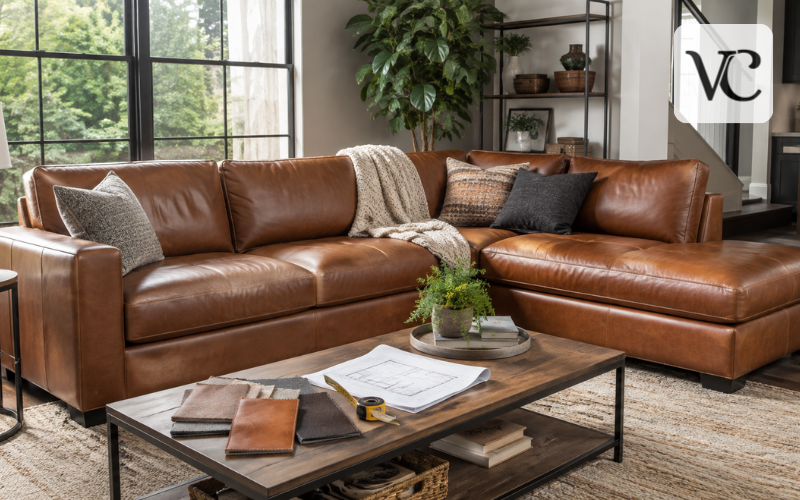
A leather sectional is a large sofa made in connected pieces that create one seating unit. Unlike a standard sofa, which usually comes as one straight piece, a leather sectional sofa is designed to offer more seating and more layout flexibility. It can include a corner section, chaise, recliner seat, or modular pieces that work together to fit the shape of a room.
Many people choose a leather sectional because it combines comfort, style, and durability in one main furniture piece. It can anchor a living room, make family seating easier, and create a more finished look than mixing separate chairs and sofas. At the same time, choosing the right one is not just about color or appearance. Room size, walking space, comfort, seating needs, and daily lifestyle all matter.
This guide explains the main shapes, leather types, special features, price factors, and care needs to help readers make a practical choice. The goal is not to push one type over another, but to help you understand what fits your home best.
Snippet-Ready Definition:
A leather sectional is a multi-piece sofa upholstered in real or synthetic leather, designed to provide flexible seating in L-shaped, U-shaped, chaise, modular, or reclining configurations for different room sizes and lifestyles.
Quick Guide: Leather Sectional Comparison
| Type | Best For | Main Benefit | Consider Before Buying |
| L-Shaped Leather Sectional | Small to medium rooms | Uses corner space efficiently | Check left/right orientation |
| Chaise Sectional | Lounging and relaxing | Built-in leg support | Chaise may block walkways |
| Reclining Leather Sectional | TV and movie rooms | Adjustable comfort | Requires extra space and power |
| Modular Leather Sectional | Flexible layouts | Pieces can be rearranged | Modules may move during use |
| U-Shaped Sectional | Large families and rooms | Maximum seating | Needs significant floor space |
Quick Steps for Choosing a Leather Sectional
- Measure your room: Include walls, doors, windows, and normal walking paths.
- Choose the right shape: Decide between L-shaped, chaise, U-shaped, modular, or reclining layouts.
- Check LAF or RAF orientation: Make sure the extended side fits your room correctly.
- Compare leather materials: Review full-grain, top-grain, leather-match, bonded, and faux leather carefully.
- Test comfort: Consider seat depth, cushion firmness, back support, and reclining features.
- Review construction: Look at the frame, cushion materials, suspension, and warranty.
- Check delivery access: Measure doors, stairs, hallways, and elevators before ordering.
- Compare total cost: Include delivery, assembly, warranty, and maintenance—not only the listed price.
Leather Sectional Styles and Configurations
Leather sectionals come in several common shapes, and each one works differently in a room. Some of the most popular styles include L-shaped layouts, chaise sectionals, U-shaped designs, modular setups, curved sectionals, and reclining versions. A fixed sectional has a set design that stays in one arrangement, while a modular sectional can often be moved and rearranged into different layouts.
The right configuration depends on how the room is used. In a smaller living room, a compact sectional may give plenty of seating without taking over the space. In a larger family room, a wider sectional can help fill the room and create a welcoming place for conversation, movies, or gatherings. Shape also affects traffic flow. A bulky layout can block walkways, while a smart layout can define the space without making it feel crowded.
A good leather sectional should support the way people actually live. Some homes need flexible seating for guests. Others need deep seats for relaxing at the end of the day. Choosing the right shape early makes the rest of the buying process much easier.
L-Shaped Leather Sectionals and the Best Rooms for Them
A leather sectional L shape is one of the most common and practical choices for modern homes. It uses two connected seating runs that meet at a corner, creating a shape that works well in many living rooms. This design can sit neatly in a corner or float in an open-plan space to define a sitting area without needing walls to frame it.
L-shaped sectionals work well in small to medium rooms because they use corner space efficiently. They also suit larger rooms, especially when the seating area needs to feel more connected and structured. In open layouts, floating the sectional away from the wall can help separate the living area from a dining space or kitchen. The longer side usually becomes the main lounging area, while the shorter side helps balance the room.
Still, an L-shape is not always the best fit. If the room is narrow or has several doors and walkways, the sectional may feel restrictive. It can also limit future rearranging if the shape only works in one position. Measuring carefully is the key to making this layout work well.
Leather Sectionals With a Chaise
A chaise sectional includes an extended seat that allows a person to stretch out their legs without needing an ottoman. This makes it especially appealing for people who want a comfortable lounging spot for reading, watching television, or relaxing. A genuine leather sectional with chaise often feels more luxurious because it combines the structured look of a sofa with the comfort of a built-in lounge seat.
Chaise sectionals come in fixed, reversible, and modular versions. A fixed chaise stays on one side, while a reversible chaise gives more flexibility. A modular chaise can sometimes be moved as the room changes. The best option depends on whether the layout is likely to stay the same for years or may need to adapt later.
Placement matters a lot. The chaise should not block a doorway or make it hard to move through the room. It should sit where it feels natural and where the extended seat does not interrupt everyday use. Comfort also matters. A very deep chaise can feel wonderful for lounging, but it should still work for daily sitting and fit the scale of the room.
Leather Sectional With Recliner Features
A leather sectional with recliner adds another level of comfort, especially for homes built around television viewing, movie nights, or everyday relaxation. Some recliners use a manual mechanism, while others use electric controls. Power recliners often come with added features such as adjustable headrests, footrests, USB or USB-C ports, storage consoles, and cup holders.
These features can be very convenient, but they also bring practical considerations. Reclining seats need extra wall and floor clearance so the back and footrest can move properly. A power model also needs access to an electrical outlet, so placement becomes more important. Some sectionals look sleek when closed, but take up much more space when fully extended.
Comfort is the main benefit, but there are trade-offs. Reclining sectionals are often heavier, more expensive, and more complex than non-reclining models. They also include moving parts that may need more care over time. For many households, though, the extra comfort is worth it if the sectional will be used daily.
Modular and U-Shaped Leather Sectionals
Modular leather sectionals are made from separate pieces that can be arranged in different ways. This makes them useful for people who may move, change rooms, or want the freedom to update the layout later. A modular sectional might include corner units, armless chairs, chaise pieces, and ottomans that can be shifted into a new configuration as needed.
U-shaped sectionals are best for larger rooms and larger households. They create a generous seating area that works well for entertaining, family gatherings, or homes where several people often sit together. Because a U-shaped design surrounds the center of the room more fully, it can create a cozy and social atmosphere.
The main benefit of both modular and U-shaped designs is flexibility and seating capacity. However, they are not ideal for every room. In a smaller space, a large sectional may dominate the floor plan and reduce walking space. Before choosing one, it helps to think about how often the room needs to change and whether the size truly matches the room’s footprint.
Genuine Leather Sectional Materials Explained
The term genuine leather sectional sounds simple, but it can cover different materials and quality levels. A shopper should always look beyond the word “leather” and read the full product details. Full-grain leather is usually the most natural and durable type, while top-grain leather is also high quality and often more refined in appearance. Both can age well and develop character over time.
Other terms also matter. Aniline leather has a natural look and soft feel, but it may show marks more easily. Semi-aniline leather has a bit more protection while still keeping much of the natural look. Split leather is made from lower layers of the hide, while bonded leather includes leather fibers mixed with other materials. Faux leather is not real leather, and leather-match upholstery usually means only the seating areas are real leather while the sides or back use another material.
This is why the full description matters so much. A true genuine leather sectional should be clearly explained, and imitation materials should not be treated as the same thing. A careful buyer compares material details, not just marketing terms.
Measuring Your Room and Choosing LAF or RAF
Before buying a leather sectional, measuring the room is essential. Start with the obvious dimensions, such as wall length and width, but also check doors, windows, fireplaces, outlets, and major walkways. A sectional may look perfect online, but if it blocks the path through the room, the layout will quickly become frustrating. Many people find it helpful to mark the sectional footprint on the floor with painter’s tape before ordering.
Delivery access is just as important as room fit. Measure hallways, entry doors, staircases, and elevators so the sectional can actually reach the room. Modular models can help in tight spaces, but even then, each piece should be checked.
Orientation terms also matter. Left-Arm Facing, or LAF, and Right-Arm Facing, or RAF, describe the side of the sectional when you face it from the front. This helps determine where a chaise or extended side will sit. Choosing the wrong orientation can make an otherwise good sectional feel awkward in the room, so it is worth double-checking before placing an order.
Frame, Suspension, Cushions, and Overall Build Quality
A leather sectional is a large furniture investment, so its internal construction matters just as much as its surface appearance. A strong frame helps the sectional keep its shape and feel stable over time. Kiln-dried hardwood or other well-built hardwood frames are often preferred because they tend to resist warping and handle long-term use better than weaker materials.
Cushion construction also makes a real difference in comfort. Foam density, fiber wrapping, and down blends all affect how a seat feels and how well it keeps its shape. Some people prefer attached cushions because they look tidy and require less adjustment. Others like removable cushions because they are easier to rotate and clean around. Suspension systems under the seats also affect support, bounce, and durability.
Comfort should be tested in real terms, not just judged by appearance. Seat depth, seat height, back support, and arm shape all influence how the sectional feels during daily use. Warranty information is also useful. Not all leather sectionals are built to the same standard, so buyers should compare what is inside, not only what is visible on the outside.
Choosing Leather Sectional Colors and Design Details
Color strongly affects how a leather sectional looks and feels in a room. A black leather sectional can create a bold, modern, and high-contrast look, especially in rooms with light walls or clean-lined decor. Brown, cognac, and tan are also popular because they feel warm, timeless, and easy to pair with wood and natural textures. Cream and gray can look softer and lighter, though they may show wear differently depending on the finish.
Natural leather often includes markings, grain variation, and subtle differences in tone. These details are part of the material’s character and can make a sectional feel more authentic. Design style matters too. Some sectionals have a sleek modern form, while others lean mid-century, transitional, traditional, or minimalist.
It is usually better to choose a color that will still work several years from now rather than focusing only on a passing trend. A leather sectional often becomes the visual center of the room, so it should fit well with rugs, walls, metal accents, wood tones, and other existing furniture.
Matching a Leather Sectional to Your Lifestyle
The best leather sectional is not always the one with the most features or the most dramatic shape. It is the one that fits how the household actually lives. A home with children, pets, and regular guests may need a more forgiving finish and a layout that supports daily activity. A quieter home may prioritize style or a more tailored look.
Seat depth is another lifestyle choice. Deep seats can feel ideal for lounging, but some people prefer a more upright sit for conversation or support. Scratches, spills, natural wear, and patina also affect different leather finishes in different ways. Some households enjoy the way leather develops character over time, while others want a more controlled, easy-care look.
Feature choices should also reflect real use. Recliners, built-in charging, consoles, and storage can be helpful in media-focused rooms. Modular flexibility may matter in homes that expect changing seating needs. Thinking about everyday habits usually leads to a better choice than shopping only by looks.
Leather Sectional Prices, Clearance Deals, and Retailer Comparisons
Leather sectional prices vary widely based on size, leather coverage, leather grade, frame quality, brand, and added features. A simple leather sectional sofa with basic construction will usually cost much less than a large modular design with recliners and premium leather. This is why price alone does not tell the full story.
Shoppers looking at a genuine leather sectional clearance sale should take time to check what the discount actually applies to. A clearance offer may be good value, but only if the materials, warranty, and construction still meet the buyer’s needs. It is also important to confirm whether the entire sectional is upholstered in leather or whether only the seating surfaces are leather.
When comparing stores, details such as return policy, delivery cost, assembly service, and old furniture removal can change the real value of the purchase. People who search for a leather sectional Costco option often do so because Costco may offer recognizable pricing and convenient policies, but inventory can change over time. Whether buying from Costco, a furniture retailer, or a direct brand, the better approach is to compare specifications rather than only the price tag.
Leather Sectional Care and Long-Term Maintenance
A leather sectional can last for many years if it is cared for properly. Basic care often starts with regular dusting and gentle vacuuming using soft attachments. Spills should be handled quickly, but cleaning should always follow the manufacturer’s instructions because different leather finishes can require different care methods.
Harsh household cleaners should not be used automatically on leather. Products that work on other surfaces may dry out, stain, or damage the finish. Direct sunlight and strong heat sources can also affect leather over time, leading to fading, drying, or cracking. Placement away from intense sun or heating vents can help preserve the material.
Some leather sectionals benefit from conditioning, but only when the manufacturer recommends it. Removable cushions can sometimes be rotated or fluffed to support even wear. It is also important to understand that some wrinkles, markings, color changes, and patina are natural. These signs are often part of leather’s normal aging, while deep cracks, peeling, or damage point to a different issue.
Conclusion
Choosing a leather sectional is really about balance. The right option should fit the room, support the way the household lives, and offer a level of comfort that feels right over the long term. Shape, orientation, leather type, and build quality all matter, and each one should be considered before appearance alone.
A thoughtful buyer measures carefully, compares materials honestly, and looks beyond surface style. Comfort, traffic flow, warranty details, delivery access, and care needs all affect whether a sectional will feel like a good choice after the first few weeks. Even a beautiful piece can become frustrating if it is too large, poorly placed, or made from materials that do not suit the home.
In the end, the smartest choice is not always the biggest sectional or the most expensive one. It is the leather sectional that fits your space well, feels comfortable every day, and matches your real needs with lasting value.
FAQs
Is a leather sectional good for everyday use?
Yes. A well-made leather sectional can work well for everyday family seating. Durability depends on leather quality, frame construction, cushion materials, maintenance, and how heavily the sofa is used.
What is the best leather for a sectional sofa?
Full-grain and top-grain leather are commonly preferred for durability and natural appearance. However, the best choice depends on budget, maintenance preferences, children, pets, and the amount of daily use.
Is an L-shaped leather sectional suitable for a small living room?
It can be. A compact L-shaped sectional may use corner space more efficiently than separate sofas and chairs, but accurate measurements are important to prevent it from blocking doors or walkways.
What is the difference between LAF and RAF on a sectional?
LAF means Left-Arm Facing, while RAF means Right-Arm Facing. The direction is determined while standing in front of and looking directly at the sectional piece.
Are leather sectionals difficult to maintain?
Usually not, but care depends on the leather finish. Regular dusting, quick spill cleanup, protection from excessive sunlight and heat, and following the manufacturer’s cleaning instructions can help preserve the upholstery.
Disclaimer: This article provides general information about leather sectional sofas, materials, layouts, features, pricing factors, and care. Product specifications, leather composition, warranties, prices, availability, and maintenance requirements vary by manufacturer and retailer. Always verify current product details, measurements, care instructions, return policies, and warranty terms before making a purchase.
Enjoyed this article? Discover more helpful ideas and fresh inspiration on Vogue Cultures.