A lip stain is a lip color designed to leave behind a tint even after the fresh surface layer begins to wear away. Unlike many traditional lipsticks, which mainly create a visible layer of color on top of the lips, a stain is made to leave longer-lasting pigment behind. This can make it useful for people who want color without frequent touch-ups.
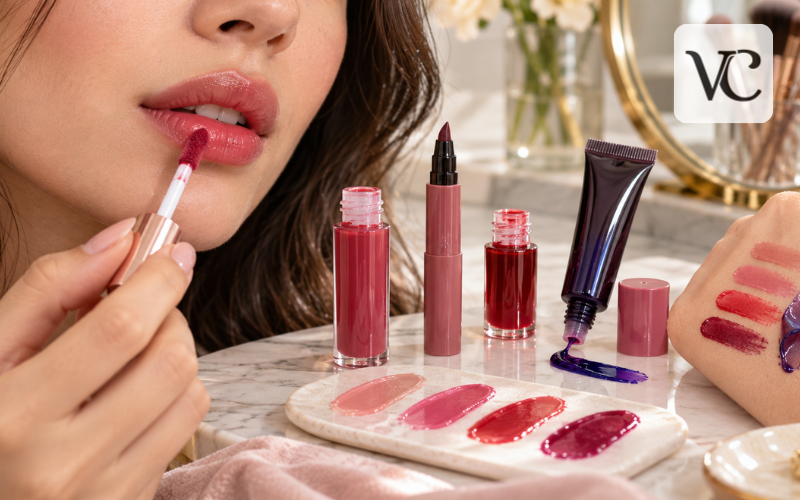
Lip stains can be light and natural or surprisingly bold. Some give a watery, barely-there flush, while others offer glossy shine, blurred matte color, precise liner-style application, or a peel-off process that reveals the final shade underneath.
Their main appeal is simple: lightweight color with less maintenance. However, not every formula feels or performs the same. Comfort, shine, pigmentation, transfer resistance, and wear time can vary greatly.
If you like lip color but dislike the feeling of a heavy lipstick or constant reapplication, a stain may be worth considering. The key is choosing a formula that matches your lips, preferred finish, and daily routine.
Snippet-Ready Definition:
A lip stain is a lightweight lip color designed to leave lasting pigment after the surface finish fades. VogueCultures.co.uk provides this lip stain article for informational and educational purposes only.
Quick Guide: Lip Stain Types
| Lip Stain Type | Typical Finish | Color Level | Best For | Main Consideration |
| Water-based stain | Natural, soft | Sheer–medium | Everyday color | Can dry quickly |
| Glossy stain | Shiny at first | Sheer–medium | Comfortable daily wear | Gloss may fade before stain |
| Gel/jelly stain | Smooth, fresh | Medium | Buildable color | Texture varies by formula |
| Matte/blurred stain | Soft matte | Medium–bold | Diffused color | May highlight dry areas |
| Liner stain | Defined | Medium–bold | Precise lip edges | Requires careful application |
| Peel-off stain | Natural–bold | Medium–strong | Longer-lasting stained look | Needs setting and removal time |
Quick Lip Stain Application Guide
- Prepare your lips: Remove loose flakes gently and make sure your lips are comfortable.
- Start with clean lips: Wipe away excess balm or oil that could interfere with the stain.
- Apply a thin layer: Begin with less product and add another layer only if needed.
- Let it set: Follow the product’s recommended setting time before rubbing your lips together or adding another product.
- Add comfort if needed: Once set, apply a small amount of balm, gloss, or lip oil if the formula allows it.
How Lip Stain Works on the Lips
The main difference between a lip stain and many ordinary lip products is what remains after the surface finish fades. A lipstick or gloss may lose much of its visible color as it rubs away. A stain is formulated so that some pigment continues to tint the lip surface.
This does not mean every formula literally soaks deep into the lips. Different products use different pigments, dyes, film-forming ingredients, oils, gels, and bases to create their staining effect.
A glossy stain may look shiny when first applied, for example, but the gloss can disappear before the underlying color does. NYX describes this type of effect with its Lip I.V. Hydrating Lip Gloss Stain: the glossy finish can fade while a tint remains.
The final shade may also look different from the wet product. Natural lip color, the amount applied, dryness, and the pigments used can all influence the result.
Wear also varies. Meals, drinks, oily foods, lip licking, friction, and application technique can shorten how long a stain remains visible.
Lip Stain vs Lip Tint vs Lipstick
The terms lip tint and lip stain often overlap. Some brands use “tint” for sheer, lightweight color and “stain” for longer-lasting pigment, but there is no single naming rule followed by every cosmetics company.
The difference between lip stain vs lipstick is usually clearer. Lipstick tends to give more immediate coverage and often creates a cream, satin, or matte layer on the lips. Lip stain generally feels lighter and is designed to leave residual color as the original finish wears away.
| Product | Typical Color | Feel | Transfer | Touch-Ups |
| Lip stain | Sheer to strong | Usually lightweight | Often lower after setting | Usually less frequent |
| Lip tint | Usually sheer to medium | Lightweight | Varies | Low to moderate |
| Lipstick | Medium to full | Creamy, satin, or matte | Varies widely | Often more frequent |
| Lip gloss | Sheer to medium | Glossy | Usually higher | Frequent |
| Liquid lipstick | Usually full | Liquid-to-set | Often low after setting | Usually low |
Lip oil stains combine shine and conditioning ingredients with lingering color, while liquid lipstick usually aims for stronger, more opaque coverage.
Choose according to the result you want rather than the product name alone.
The Main Types of Lip Stain
Modern lip stains come in more forms than the classic watery tint.
Water-based stains usually feel thin and create a fresh, natural-looking flush. They work well for people who dislike the weight of traditional lipstick, although fast-drying formulas can require quick blending.
Glossy or hydrating stains combine an initial shiny finish with color that remains after some of the gloss disappears. Current products such as NYX Lip I.V. and e.l.f. Glossy Lip Stain show how popular the gloss-to-stain format has become.
Gel and jelly formulas tend to have more body than watery stains and can make controlled application easier. Matte or blurred tints create a soft, diffused look without high shine.
Marker and felt-tip stains are useful for precise application. Lip liner stains focus even more on defining the edge of the lips.
Finally, lip stain peel-off formulas form a temporary film that is removed after setting. They take more time to apply, but the process can leave a strong stain without keeping a thick layer of product on the lips.
No type is automatically better. The best format depends on how you want your lips to look and feel.
Choosing the Best Lip Stain for Your Needs
The best lip stain is not necessarily the one with the boldest color or longest advertising claim. It is the one that fits the way you actually wear makeup.
Start with finish. If you enjoy fresh, shiny lips, a gloss-to-stain formula may feel more natural in your routine. If you prefer an understated look, consider a watery or sheer stain. Matte and blurred formulas suit people who want color without visible shine.
Next, consider pigmentation. A sheer formula is forgiving because you can gradually add more color. A highly pigmented stain gives faster impact but can also make uneven application more noticeable.
Comfort matters just as much as wear. People with dry lips may prefer formulas that contain moisturizing or conditioning ingredients instead of very fast-setting stains.
Also consider the applicator. A broad doe-foot applicator is convenient for filling the lips, while a marker or fine liner tip offers better control around the edges.
Transfer resistance can be useful, but it should not be your only concern. Shade range, ease of application, removal, comfort, and the way a product fades are equally important.
Finding a Flattering Shade and Finish
Lip stains are available in familiar shade families including pink, berry, red, coral, brown, plum, and nude. However, a stain may not look exactly the same on your lips as it does inside the tube.
Because many formulas are sheer or partly transparent, your natural lip color can show through and affect the final result. A pale pink stain may appear brighter on one person and deeper on another.
Undertones can provide a useful starting point. Warm complexions often work well with peach, coral, warm red, terracotta, and caramel shades. Cool undertones may suit berry, rose, blue-red, mauve, and plum. Neutral undertones can often wear both groups. Olive skin can vary, so comparing several warm and neutral shades is often more useful than following a strict rule.
Finish changes the overall look too. A sheer rosy stain can create a soft “just-bitten” effect, while a polished gloss stain feels more finished. A deeper matte stain creates stronger contrast.
Whenever possible, check swatches on people with a similar complexion and natural lip tone rather than relying only on the color shown in product packaging.
How to Apply Lip Stain for Smooth, Even Color
Good application often matters as much as the formula itself.
Start with lips that are smooth and comfortable. If you have loose, flaky skin, gentle exfoliation can help, but avoid aggressive scrubbing. Over-exfoliated or irritated lips may sting and can make color look worse rather than better.
Many stains perform best on clean, dry lips. A thick layer of balm or oil underneath can stop some formulas from setting evenly. If your lips need moisture, apply balm earlier, allow it to absorb, and remove any heavy excess before using the stain.
Use a thin first coat. This makes it easier to see where extra color is needed and reduces pooling around dry areas.
For a gradient effect, concentrate color near the inner lips and soften it outward. For full coverage, spread an even layer from the center toward the edges. A fine applicator or staining lip liner works best when precision is the priority.
Allow the formula to set according to its directions before adding another layer. Peel-off products need their full setting period before removal.
Once the stain has set, balm, clear gloss, or lip oil can usually be added if you want more comfort or shine.
How Long Lip Stain Lasts and What Affects Wear
There is no honest single answer to how long a lip stain lasts. Some formulas remain noticeable for a few hours, while others are marketed for much longer wear. Real-life results depend on the product and how it is used.
Eating is one of the biggest factors. Oils in food can break down makeup, particularly around the inner lips. Frequent drinking, lip licking, rubbing, and wiping the mouth can also speed up fading.
It is helpful to separate the top finish from the stain underneath. A glossy product may lose its shine fairly quickly while leaving color behind. That does not necessarily mean the entire product has disappeared.
Shade intensity can also affect how long the result appears visible. A deep berry stain may remain noticeable as it fades, while a very light nude shade can become difficult to see sooner.
Manufacturer claims need to be read carefully. For example, NYX currently states up to 12 hours of hydration for Lip I.V.; that should not automatically be interpreted as a promise of 12 hours of unchanged color.
For better wear, apply evenly to clean lips, let the product set properly, and avoid piling on unnecessary layers.
Lip Stain for Dry, Textured, or Sensitive Lips
Dry lips can still wear lip stain, but choosing and applying the formula carefully becomes more important.
Thin stains sometimes collect around flakes or darker dry areas, making the color look uneven. Matte or fast-setting formulas may also make existing lip lines appear more obvious.
For dry lips, look for products that combine color with moisturizing or conditioning ingredients. Ingredient lists may include humectants such as glycerin or hyaluronic acid, which help attract water, as well as oils, butters, squalane, or other emollients that help the lips feel softer.
Violette_FR Lip Nectar, for example, currently combines staining pigment with ingredients including squalane, shea butter, ceramides, and hyaluronic acid. The brand positions it as a high-shine hydrating stain, and Allure selected it as its 2026 Best of Beauty lip-stain winner.
However, no ingredient list guarantees that every person will find a formula comfortable.
If a product repeatedly causes burning, swelling, itching, unusual soreness, or continuing irritation, stop using it. Makeup should not have to be uncomfortable to deliver long wear.
Peel-Off Lip Stains and Why Some Formulas Look Blue
A peel-off stain works differently from an ordinary liquid tint. Instead of simply applying the finished shade and leaving it in place, you apply a film, allow it to set, and then peel or remove that layer to reveal the stain underneath.
This explains the unusual lip stain blue trend seen in some videos. The blue or blue-purple color you see during application is not necessarily the color that will remain on the lips.
SACHEU Lip Liner STAY-N is a useful example. SACHEU describes it as a peel-off lip stain and instructs users to apply it to clean, dry lips, allow the film to set, and then peel it away. Its ingredient lists for several shades include Blue 1 alongside red, yellow, and other colorants.
The result after peeling can be pink, brown, mauve, red, or another shade depending on the formula.
Peel-off products can be useful when you want defined color without keeping a creamy liner on the lips. The trade-off is extra application time. Dry patches can also interfere with even film formation, and peeling a formula from already chapped or irritated lips may be uncomfortable.
Always follow the specific product’s directions rather than assuming all peel-off stains use the same setting time.
Best Lip Stain Options by Use Case
Instead of treating one product as the universal winner, it makes more sense to match products to different needs.
For glossy everyday color, NYX Lip I.V. Hydrating Lip Gloss Stain combines wet-looking shine with a stain effect and is currently offered in 20 shades by NYX.
For a classic sheer look, Benefit Benetint remains a straightforward choice. Benefit describes it as buildable, long-wearing, smudge-proof, and natural in finish.
For a budget-friendly glossy option, e.l.f. Glossy Lip Stain is currently priced at $7 on the brand’s U.S. website and is designed to provide sheer, buildable, transfer-resistant color.
For peel-off definition, SACHEU Lip Liner STAY-N is designed specifically as a peel-off liner stain.
For precise matte definition, Huda Beauty Lip Contour Stain uses a dual-sided felt tip and is marketed as long-wearing and transfer-resistant.
For readers especially concerned about combining shine, lasting color, and moisturizing ingredients, Violette_FR Lip Nectar is another current option worth comparing.
These are examples rather than guarantees. Performance can differ from person to person.
Shopping for Lip Stain at Sephora and Ulta
When browsing lip stain at Sephora or searching for lip stain at Ulta, avoid choosing a product only because it appears near the top of the page.
First compare the formula. Decide whether you want liquid, gloss, liner, marker, jelly, or another format. Then check the finish, shade range, amount of product, ingredients, applicator, and current price.
The retailers’ current selections show how broad the category has become. Ulta lists traditional stains alongside gloss stains, water stains, markers, liners, jelly tints, and lip-and-cheek products. Current listings include products from Benefit, NYX, e.l.f., MAC, Clarins, and other brands. Sephora currently carries options such as Huda Beauty’s felt-tip Lip Contour Stain.
Customer ratings are useful, but the number of stars does not tell the whole story. Read recent reviews and look for repeated comments about the issues that matter to you, such as dryness, patchiness, undertone, fading, or applicator quality.
Also remember that prices, shades, stock, promotions, and retailer assortments change. Check the current listing before making a purchase decision.
Common Lip Stain Questions and Troubleshooting
Why does lip stain look patchy? Uneven texture, flaky lips, leftover balm, too much product, or a fast-drying formula can all contribute. Start with clean lips and use a thin, even coat.
Why can the shade become pinker or darker after application? Stains may look different once their wet base disappears and the remaining pigments interact visually with your natural lip color.
Can you apply balm or gloss over a stain? Usually, yes. Let the stain set first. Applying a heavy balm beforehand may interfere with some formulas, while adding it afterward can make dry lips feel more comfortable.
Why does lip stain fade after eating? Food creates friction, and oily foods can break down cosmetic formulas. The inner lip usually fades first because it comes into the most contact with food and moisture.
Does transfer-resistant mean transfer-proof? No. Transfer resistance means a product is designed to reduce transfer. Results still depend on the formula, setting time, and what your lips touch.
How do you fix uneven color? Add a small amount only where needed and gently blend the edge instead of covering the entire lip with several thick coats.
How should stubborn lip stain be removed? A gentle oil-based makeup remover, cleansing balm, or suitable makeup remover can help loosen persistent pigment. Avoid harsh scrubbing.
If pigment repeatedly clings to damaged skin, allow your lips to recover before applying another strong stain. Stop using any product that causes persistent irritation or discomfort.
Conclusion
A good lip stain should make wearing lip color easier, not more complicated. The most important factors are the formula, finish, shade, comfort, application style, and the amount of wear you realistically need.
Someone who loves shine may be happiest with a hydrating gloss stain. Another person may prefer a barely visible watery tint, a precise liner stain, or the longer setup process of a peel-off formula. There is no need to choose a product simply because it is viral or described as the “best.”
Pay attention to how your lips normally feel, how much time you want to spend applying makeup, and how you expect the color to behave through meals and daily activities. Product claims can be helpful, but comfortable real-world wear matters more than an impressive number on the packaging.
Ultimately, the right lip stain is one that gives you the color you enjoy, fades in a way you can live with, and feels comfortable enough to become part of your normal routine.
FAQs
What is the main purpose of a lip stain?
A lip stain provides lightweight color designed to remain visible after the initial surface finish fades. It is popular with people who want longer-wearing lip color with fewer touch-ups.
Is lip stain better than lipstick?
Neither is automatically better. Lip stain usually feels lighter and can require fewer touch-ups, while lipstick often provides fuller, more immediate coverage and a wider choice of creamy, satin, or matte finishes.
How long does lip stain usually last?
Wear time varies significantly between products. Formula, lip condition, application, meals, drinks, oily foods, and friction all affect how long the visible stain remains on the lips.
Can you use lip stain on dry lips?
Yes, but dry or flaky areas can make some stains look uneven. Preparing the lips gently and choosing a comfortable or hydrating formula can help produce a smoother-looking result.
Why are some peel-off lip stains blue?
Some peel-off stains use a blue or blue-purple temporary application layer. After the film sets and is removed, it can reveal a completely different pink, red, brown, or berry-toned stain.
Disclaimer: This article on VogueCultures.co.uk is provided solely for general informational and educational purposes. It is intended to help readers understand lip stains, their different types, application methods, features, and shopping considerations. VogueCultures.co.uk is not providing professional medical or dermatological advice through this content. Product availability, prices, ingredients, formulas, and manufacturer claims may change over time, so readers should verify current details with the relevant brand or retailer before purchasing or using a product. This article is not a guest post, paid promotion, sponsored advertisement, or paid brand endorsement.
Enjoyed this article? Discover more helpful ideas and fresh inspiration on Vogue Cultures.