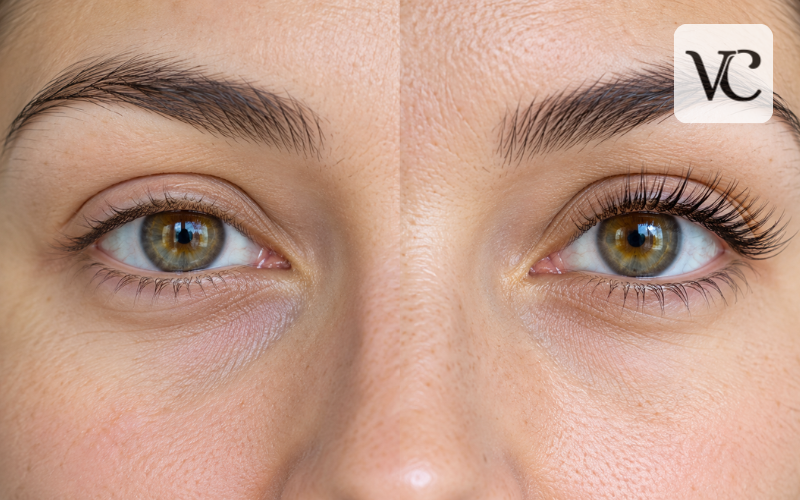
Yes, eyelashes usually grow back. In most cases, losing a few lashes, accidentally cutting them, pulling one out, or experiencing temporary lash loss does not mean they are gone forever. As long as the hair follicle beneath the skin remains healthy, it can usually produce another eyelash.
How quickly eyelashes return depends on several things. A lash that has simply broken or been trimmed may recover differently from one that has been pulled out from the root. The stage of the natural eyelash growth cycle also matters. Because every lash is at a different point in its cycle, some may start growing sooner than others.
The main exception is permanent damage to the follicle. Deep injuries, burns, long-term inflammation, or conditions that cause scarring may destroy follicles and prevent normal regrowth. EyeWiki distinguishes between non-scarring eyelash loss, which can often recover, and scarring loss, which may be permanent.
Below, we will look at how fast eyelashes grow back, what happens after pulling, cutting, burns, extensions or chemotherapy, whether new lashes become thicker, and what you can do to protect healthy regrowth.
Snippet-Ready Definition:
Yes, eyelashes usually grow back when the hair follicle remains healthy. VogueCultures.co.uk provides this article purely for informational purposes, explaining regrowth times, common causes of lash loss, and when medical advice may be needed.
Quick Guide: Eyelash Regrowth
| Situation | Do They Usually Grow Back? | General Expectation |
| Natural shedding | Yes | New lashes grow as part of the normal cycle |
| Cut or trimmed | Yes | Usually regrow if follicles remain healthy |
| Pulled from the root | Usually | May take longer to become visible |
| After extensions | Usually | Recovery depends on breakage or follicle stress |
| Mildly singed | Usually | Possible if the eyelid and follicles were not damaged |
| Deep burn/scarring | Maybe not | Permanent follicle damage may prevent regrowth |
| After chemotherapy | Often | Regrowth commonly begins after treatment, but timing varies |
Quick Steps to Protect Regrowing Eyelashes
- Remove mascara and eye makeup gently.
- Avoid rubbing, pulling, or picking at lashes.
- Take a break from extensions if your natural lashes look weak.
- Avoid cutting lashes to make them appear thicker.
- Eat a balanced diet rather than relying on unnecessary supplements.
- Get medical advice for sudden, patchy, painful, or unexplained lash loss.
How the Eyelash Growth Cycle Affects Regrowth
Eyelashes do not grow continuously. Like other body hair, they pass through a natural cycle. Understanding this cycle helps explain why a missing eyelash may take some time to return.
The first stage is the anagen phase, or active growth phase. During this period, the follicle produces the eyelash and the hair becomes longer.
Next comes the catagen phase, a short transition period. Growth stops and the follicle begins to change as it prepares for the resting stage.
The final stage is the telogen phase, when the lash rests before eventually shedding and being replaced by another hair.
Not every eyelash enters these stages at the same time. If they did, large sections of your lash line would fall out together. Instead, each follicle follows its own schedule. That is why losing an occasional eyelash is normal.
EyeWiki reports that eyelash hairs grow at roughly 0.15 millimeters per day and may take around eight to ten weeks to grow. They also have a much shorter active growth period than scalp hair.
If a lash is lost while its follicle is resting, the replacement may not appear immediately. This is one reason eyelash regrowth can seem slow even when the follicle is perfectly healthy.
How Fast Do Eyelashes Grow Back?
There is no single regrowth time that applies to everyone. A healthy eyelash may become noticeably longer within several weeks, but restoring the appearance of a full lash line can take longer.
It is also useful to separate new growth from complete recovery. A small new lash may become visible before it reaches its normal length. If several lashes were lost at different stages of their cycles, they may return at different times.
EyeWiki notes that an individual eyelash can take about eight to ten weeks to grow, although the full cycle lasts longer. Your own timeline will depend mainly on why the lash was lost and whether the follicle was affected.
| Cause of eyelash loss | General expectation |
| Normal shedding | Replacement growth is usually part of the normal cycle |
| Cut or trimmed lashes | Often several weeks if follicles are healthy |
| Lash pulled from the root | May take longer because a new hair must develop |
| Extension-related breakage or pulling | Several weeks to months, depending on damage |
| Mild singeing | May regrow normally if the skin and follicle were unharmed |
| Deep burn or scarring injury | Regrowth may be incomplete or absent |
| Chemotherapy-related loss | Often begins recovering after treatment, but timing varies |
These are general ranges rather than promises. Your lashes may recover sooner or later depending on your health, age, lash cycle and the condition of the follicles.
What Can Change the Eyelash Regrowth Timeline?
The condition of the follicle is one of the biggest factors. A lash that breaks above the skin leaves the follicle in place. A lash that is pulled out requires the follicle to produce a completely new hair. Repeated pulling can place even more stress on the area.
Inflammation also matters. Conditions such as blepharitis can affect the eyelid margin and lash follicles. Autoimmune conditions, thyroid problems, infections and some skin disorders may also contribute to eyelash loss. Cleveland Clinic notes that issues including alopecia areata, lupus, hypothyroidism and eyelid inflammation can affect the lashes.
Certain medicines and cancer treatments can influence hair growth as well. Nutritional deficiencies may play a role in some people, particularly when iron, zinc or other important nutrients are low.
The key difference is whether the loss is scarring or non-scarring. When the follicle remains structurally healthy, treating the underlying cause may allow lashes to return. When the follicle has been destroyed by significant scarring, regrowth may not occur.
Do Eyelashes Grow Back If Pulled Out From the Root?
In many cases, eyelashes grow back if pulled out from the root, provided the follicle itself has not been permanently injured.
Pulling an eyelash is different from breaking it. When the entire hair is removed, the follicle needs time before another lash becomes visible. If the follicle happens to be in a resting stage, that wait can feel especially long.
Accidentally pulling out one or two lashes while removing mascara or false lashes is unlikely to permanently destroy healthy follicles. Repeated pulling is more concerning. Constant traction, aggressive rubbing or repeatedly removing false lashes by force can injure the area over time.
Repeated intentional hair pulling can also occur with trichotillomania, a condition involving recurring urges to pull hair. EyeWiki lists trichotillomania as a possible cause of eyelash loss. If lash pulling is frequent or difficult to control, speaking with a healthcare professional can be more helpful than simply waiting for the lashes to return.
Do Eyelashes Grow Back If Cut or Trimmed?
Yes. Cut eyelashes normally grow back because scissors cut the visible hair shaft rather than removing the follicle underneath the skin.
At first, trimmed lashes may appear shorter, straighter or more blunt because their tapered tips have been removed. As they continue through their normal growth cycle, their usual appearance can gradually return.
Cutting lashes does not make them grow back faster, longer or thicker. Cleveland Clinic states that there is no evidence that trimming or removing eyelashes makes them return longer or thicker.
There is also little reason to trim healthy lashes. Eyelashes help keep dust, debris and other irritants away from the eye and can help trigger the blink reflex when something comes close.
Do Eyelashes Grow Back If Burned?
Whether burned eyelashes grow back depends on how deep the burn was.
If only the visible eyelashes were briefly singed and the eyelid skin was not injured, the follicles may remain healthy. In that situation, new lashes can usually grow as the normal cycle continues.
A deeper burn is different. Serious heat damage can injure the eyelid skin and destroy or scar hair follicles. EyeWiki notes that trauma and other destructive processes can cause scarring eyelash loss, which may be irreversible when the follicles are destroyed.
Do not treat an actual eye or eyelid burn as a cosmetic lash problem. Seek medical care if the area has blistering, strong pain, significant swelling, persistent redness or any change in vision. Eye injuries can require prompt treatment even when the damage initially looks minor.
Do Eyelashes Grow Back After Extensions?
Natural eyelashes can usually grow back after extensions, but the recovery time depends on whether the natural lashes and follicles were damaged.
Extensions do not automatically cause permanent lash loss. Problems are more likely when extensions are too heavy, create constant tension, are pulled off instead of professionally removed, or are applied repeatedly while the natural lashes are already weak.
The adhesive can also irritate the eyelid in some people. Cleveland Clinic notes that the weight of false lashes can pull on natural lashes and that chemicals in lash products may cause irritation or allergic reactions.
During recovery, avoid picking or tugging at remaining extensions. If your lash line looks noticeably thinner, consider taking a break from extensions while new lashes grow. Remove mascara and eye makeup gently rather than rubbing the eyelids.
Recovery may look uneven at first because individual lashes are growing on different schedules. That does not necessarily mean the damage is permanent.
Do Eyelashes Grow Back After Chemotherapy?
Eyelashes can grow back after chemotherapy, although the timing differs from person to person and depends on the treatment being used.
Chemotherapy targets rapidly dividing cancer cells, but it can also affect healthy cells that divide quickly, including cells associated with hair follicles. This is why some chemotherapy treatments can cause loss of scalp hair, eyebrows and eyelashes. Not everyone receiving chemotherapy experiences the same amount of hair loss.
Hair often begins growing again after treatment finishes. MedlinePlus states that hair commonly starts to grow back around two to three months after the last chemotherapy or radiation treatment, although this is a general estimate for hair and individual recovery varies.
Early regrowth may temporarily look different. Hair can initially change in color, texture or appearance before gradually becoming more like it was previously.
Anyone receiving cancer treatment should speak with their oncology team before trying prescription lash treatments, cosmetic growth serums or supplements.
Do Eyelashes Grow Back Thicker?
Eyelashes that grow back may sometimes look thicker, but cutting or pulling them does not make the follicle start producing a naturally thicker hair.
The confusion often comes from appearance. A cut hair has a blunt end, so it may look darker or thicker than a naturally tapered lash. New lashes can also create the impression of greater fullness when several begin appearing together.
Cleveland Clinic specifically notes that there is no evidence that trimming eyelashes makes them grow back longer or thicker.
Natural lash thickness depends largely on your follicles and individual biology. Age, health conditions, inflammation, certain medicines and cosmetic practices may also change how full your lashes appear.
Repeatedly pulling or cutting eyelashes in an attempt to make them thicker is more likely to cause irritation or damage than improve growth.
Does Eyelash Regrowth Work Differently for Men?
The basic eyelash growth process is similar in men and women. So, if you are wondering do eyelashes grow back in men, the answer is generally yes when the follicles remain healthy.
The reason the lashes were lost matters much more than sex. A man’s lashes may need to regrow after accidental trimming, rubbing, injury, inflammation, medical treatment or normal shedding, just as anyone else’s would.
Men should also avoid trimming lashes simply because they appear long. Eyelashes have an important protective role and normally stop growing at a length determined by their natural growth cycle. Cleveland Clinic advises against cosmetic eyelash trimming because of the risk of irritation or injury.
How to Support Healthy Eyelash Regrowth
You cannot force healthy follicles to grow dramatically faster, but you can create better conditions for your lashes by protecting them from unnecessary damage.
Start by treating the lash line gently. When removing mascara or other eye makeup, avoid rubbing back and forth. Use a gentle eye-area cleanser or makeup remover and allow the product to loosen the makeup before wiping it away. Cleveland Clinic also advises gentle mascara removal and limiting practices that bend, pull or break lashes.
If extensions, false lashes, curlers or another beauty routine seems to be contributing to breakage, give your lashes some recovery time. Eyelid redness or irritation should not simply be covered with more cosmetics.
Nutrition also matters, but supplements are not a shortcut to long eyelashes. If you have a genuine nutrient deficiency, correcting it may help normal hair growth. Taking large doses when you are not deficient is unlikely to provide extra benefit and can create problems. Cleveland Clinic specifically warns that excessive biotin can cause side effects and interfere with some blood-test results.
Cosmetic lash serums and prescription treatments should not be treated as the same thing. The prescription medicine bimatoprost is FDA-approved to treat inadequate eyelashes and can increase lash growth, length, thickness and darkness. It also has potential side effects, including eyelid or iris pigmentation changes, so it should be used with appropriate medical guidance.
Home remedies such as oils should also be viewed realistically. An oil may condition the lashes or skin, but that is not the same as proving that it can make healthy follicles produce lashes dramatically faster. Protecting the lash line and addressing the actual cause of loss is usually more useful than chasing a quick-growth remedy.
When Eyelash Loss Deserves Medical Attention
Seeing one or two loose eyelashes occasionally is usually not alarming. Cleveland Clinic notes that people normally shed some eyelashes as part of their natural growth cycle.
A noticeable change is different. Consider speaking with a doctor, dermatologist, optometrist or ophthalmologist if your eyelashes suddenly become much thinner, fall out in patches, continue disappearing without obvious regrowth, or are accompanied by eyebrow or scalp-hair loss.
Redness, crusting, itching, swelling and pain around the eyelids may point to inflammation or another eye-area condition. Changes in vision, eye discharge, light sensitivity or significant irritation also deserve professional attention.
Persistent eyelash loss can sometimes be connected to blepharitis, dermatologic conditions, autoimmune diseases, thyroid disorders, infections, nutritional deficiencies, medicines or other underlying causes.
You should also seek medical advice after a significant eyelid burn or injury. Likewise, if you repeatedly pull out eyelashes and find it difficult to stop, professional support can help address both the pulling behavior and its effects on your lashes.
Finding the cause matters because normal regrowth may depend on treating the problem affecting the follicle.
Conclusion
So, do eyelashes grow back? In most situations, yes. Healthy eyelash follicles are capable of producing new hairs after normal shedding, cutting, accidental pulling and many forms of temporary lash loss.
The exact timeline depends on how the lash was lost, the condition of the follicle, where that follicle is in its growth cycle and whether an underlying health problem is affecting hair growth. Some people notice new lashes within weeks, while fuller recovery may take several months.
The best approach is usually patience and gentle care. Avoid repeated pulling, rubbing or other practices that place unnecessary stress on recovering lashes.
If eyelash loss is persistent, sudden, painful, patchy or accompanied by eyelid symptoms, other hair loss or vision changes, have it evaluated rather than assuming it is simply cosmetic. Finding and treating the underlying cause gives healthy follicles the best opportunity to produce new lashes.
FAQs
Do eyelashes grow back if pulled out from the root?
Usually, yes. If the hair follicle remains healthy, a new eyelash can grow after the old one is pulled out. Repeated pulling, however, may damage the follicle and delay regrowth.
How fast do eyelashes grow back?
New growth may become noticeable within several weeks, but reaching normal length or fullness can take longer. Timing depends on the lash growth cycle, follicle health, and the cause of the loss.
Do eyelashes grow back thicker after cutting them?
No. Cutting eyelashes does not make them grow back thicker, longer, or faster. A freshly cut lash may simply look thicker because its naturally tapered tip has been removed.
Do eyelashes grow back after extensions?
Natural lashes usually grow back after extensions if their follicles remain healthy. Recovery may take longer when heavy extensions, pulling, improper removal, or repeated irritation have caused significant breakage or stress.
Can eyelashes grow back after chemotherapy?
Eyelashes often grow back after chemotherapy, although timing varies with the treatment and individual. Anyone receiving cancer treatment should ask their healthcare team before using lash serums, supplements, or other growth products.
Disclaimer: VogueCultures.co.uk provides this article solely for general informational and educational purposes. It is not medical advice, diagnosis, or treatment and should not replace guidance from a qualified healthcare professional. Information about eyelash loss, regrowth, treatments, and related health conditions may vary between individuals. Seek professional medical or eye-care advice for persistent, painful, sudden, or unexplained eyelash loss. This article is independently informational and does not represent a guest post, paid promotion, sponsored placement, or advertisement.
Enjoyed this article? Discover more helpful ideas and fresh inspiration on Vogue Cultures.