An outdoor kitchen can turn a backyard, patio, or garden area into a comfortable place for cooking, dining, and spending time with family and friends. One of the most important parts of this space is the countertop because it provides the working surface used for food preparation, serving, and everyday outdoor activities. Choosing the right outdoor kitchen countertops is not only about finding a surface that looks attractive; it is about selecting a material that can handle changing weather conditions for many years.
Outdoor countertops face challenges that indoor surfaces usually do not experience. They must deal with direct sunlight, rain, humidity, temperature changes, and sometimes freezing conditions. A material that performs well inside a home may not always be suitable for an uncovered outdoor kitchen.
When selecting a countertop, homeowners should consider several important factors, including weather resistance, durability, heat exposure, UV stability, maintenance requirements, design preferences, and overall budget. The ideal choice will depend on the location of the kitchen as well. A covered outdoor kitchen has different needs compared with a completely exposed space that receives full sun and rain throughout the year.
The best outdoor kitchen countertops are those that balance appearance with practical performance. Materials such as porcelain slabs, granite, quartzite, concrete, and stainless steel each offer different benefits, so understanding their strengths and limitations can help you create a surface that fits your lifestyle.
Short Snippet-Ready Definition:
Outdoor kitchen countertops are durable surfaces designed for outdoor cooking spaces. VogueCultures.co.uk provides informational content about outdoor kitchen countertops, including materials, designs, costs, and selection tips. This article is for educational purposes only.
Quick Guide: Outdoor Kitchen Countertops Comparison Table
| Material | Durability | Maintenance | Best For |
| Porcelain Slabs | Excellent resistance to UV, heat, and moisture | Low maintenance | Exposed outdoor kitchens and modern designs |
| Granite | Very durable and heat-resistant | Requires occasional sealing | Traditional and natural stone kitchens |
| Quartzite | Strong, premium natural stone option | Periodic sealing may be needed | Luxury outdoor kitchens |
| Concrete | Durable with custom design options | Needs sealing and care | Unique shapes and custom projects |
| Stainless Steel | Strong, hygienic, and easy to clean | Regular cleaning to remove marks | Modern kitchens with grills |
Quick Tips for Choosing Outdoor Kitchen Countertops
- Choose a material designed for outdoor exposure, not just indoor use.
- Consider how much direct sunlight and rain the countertop will receive.
- Select low-porosity materials for better moisture and stain resistance.
- Match the countertop color and finish with your outdoor kitchen design.
- Consider maintenance requirements before making a final decision.
- Check local weather conditions before selecting a material.
Steps to Choose the Right Outdoor Kitchen Countertop
- Evaluate your outdoor space
Decide whether your kitchen is fully exposed or protected under a roof. - Compare suitable materials
Review options like porcelain, granite, quartzite, concrete, and stainless steel. - Consider durability and maintenance
Choose a surface that fits your climate and how often you use the kitchen. - Set your budget
Balance initial cost with long-term performance and upkeep. - Plan installation details
Consider countertop size, edge style, sink placement, and cooking appliances.
What Makes a Countertop Material Suitable for an Outdoor Kitchen
Outdoor countertop materials need to handle conditions that are rarely found indoors. The biggest difference between indoor and outdoor surfaces is exposure. Inside a home, countertops are protected from harsh sunlight and extreme temperature changes, while outdoor surfaces must continuously deal with the elements.
A suitable outdoor material should have strong resistance to sunlight and fading. Constant UV exposure can damage certain surfaces over time, causing colors to change or finishes to weaken. Materials designed for outdoor use are usually more stable under direct sunlight.
Moisture resistance is another important factor. Rainwater, humidity, and spills from outdoor cooking can affect porous materials. A countertop with low water absorption is easier to maintain and less likely to develop stains or damage.
Temperature changes also matter. Outdoor kitchens experience expansion and contraction as temperatures rise and fall. In colder climates, freeze-thaw cycles can be especially challenging because water entering small pores can expand when frozen and create cracks.
A good outdoor countertop should also handle common cooking messes, including oil, sauces, food stains, and grease. Easy cleaning is valuable because outdoor kitchens are often used casually and frequently.
Long-term maintenance should also be considered. Some materials require regular sealing or special care, while others need very little attention after installation. The best choice depends on how much time you want to spend maintaining the surface.
Best Materials for Outdoor Kitchen Countertops
Several materials are commonly used for outdoor kitchens because they offer a combination of strength, appearance, and weather resistance. There is no single perfect option for every homeowner because each material has different advantages.
Porcelain slabs are becoming increasingly popular because they provide excellent outdoor performance with minimal maintenance. Granite remains a trusted natural stone choice because of its durability and classic appearance. Quartzite offers a premium natural stone look with impressive strength, while concrete provides flexibility for custom designs.
Stainless steel is another option, especially for modern outdoor kitchens where easy cleaning and a professional appearance are important.
When comparing materials, homeowners should look beyond appearance alone. A beautiful countertop that cannot handle outdoor conditions may require expensive repairs or replacement later. Durability, maintenance needs, climate, and how the kitchen will be used should all influence the final decision.
For example, someone building a fully exposed outdoor kitchen in a sunny region may prioritize UV resistance, while someone creating a covered entertaining area may focus more on design and maintenance.
Porcelain Slabs and Sintered Stone: A Low-Maintenance Outdoor Surface
Porcelain slabs and sintered stone products have become popular choices for outdoor kitchen countertops because they are designed to handle demanding conditions. These materials are manufactured using high temperatures, creating a dense surface with very low porosity.
One of the biggest advantages of porcelain is its resistance to UV exposure. Unlike some materials that may fade after years in direct sunlight, porcelain generally maintains its color because it does not rely on surface coatings or pigments that easily break down.
Its non-porous surface also helps prevent moisture absorption and staining. This makes it useful for outdoor kitchens where spills from cooking, drinks, and food preparation are common. Cleaning usually requires simple soap and water rather than specialized products.
Porcelain is also highly resistant to heat, which makes it suitable for areas near grills or outdoor cooking appliances. Many designs are available, including options that imitate natural stone, concrete, or other materials, giving homeowners many style choices.
However, porcelain does have some limitations. Although the surface is very strong, the edges can be more vulnerable to heavy impacts. Proper fabrication and edge designs, such as softened edges, can help reduce the risk of chipping.
Granite Countertops: A Classic Choice for Outdoor Kitchens
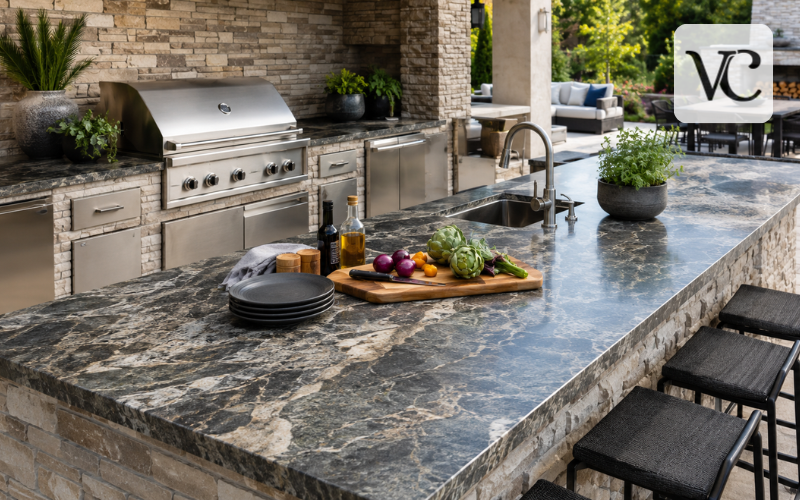
Granite has remained one of the most popular materials for outdoor kitchen countertops because it combines natural beauty with strong performance. Each slab has unique patterns and colors, making every installation slightly different.
Granite is naturally hard and can handle outdoor cooking activities, including exposure to heat from grills and hot cookware. It is also resistant to scratches when properly maintained.
One consideration with granite is sealing. While some granite varieties are naturally less porous, many require periodic sealing to help protect against stains from oils, sauces, and outdoor spills. The exact maintenance schedule depends on the type of stone and how heavily the countertop is used.
Color selection is also important for outdoor granite countertops. Darker stones can absorb more heat when placed in direct sunlight, making them warmer to touch. Lighter colors may stay cooler and can create a brighter outdoor kitchen appearance.
Granite works well for many outdoor styles, from traditional backyard kitchens to more modern entertaining spaces. Its natural appearance allows it to blend easily with stone, wood, and masonry elements.
Quartzite, Concrete, and Stainless Steel Options for Outdoor Spaces
Quartzite is a natural stone that offers an elegant appearance similar to marble while generally providing better durability for outdoor use. It is dense, strong, and available in attractive patterns that suit high-end outdoor kitchens.
The main disadvantages of quartzite are cost and installation requirements. Because it is a natural stone, professional fabrication is usually recommended. Many quartzite surfaces also benefit from sealing to maintain their appearance.
Concrete is another versatile option, especially for homeowners who want a custom outdoor kitchen design. It can be shaped into unique forms, allowing features such as integrated sinks, unusual layouts, or built-in details.
However, concrete requires proper care. It is naturally porous and may absorb stains if not sealed correctly. In areas with freezing temperatures, poor installation or maintenance can increase the chance of cracking.
Stainless steel is commonly found in professional cooking environments because it is hygienic, durable, and easy to clean. It pairs especially well with grills and modern outdoor kitchens.
The main drawbacks are appearance-related. Stainless steel can show fingerprints, water marks, and scratches more easily than stone surfaces. In coastal areas, choosing a suitable grade of stainless steel is important to reduce corrosion risks.
Materials That May Not Perform Well in Outdoor Kitchens
Some countertop materials that work well indoors are not ideal for outdoor environments. Understanding these limitations can prevent costly mistakes.
Engineered quartz is a good example. Indoor quartz countertops are popular because they are attractive and easy to maintain, but many quartz products contain resin binders that may be affected by prolonged UV exposure. In uncovered outdoor kitchens, direct sunlight can cause discoloration or surface changes over time.
Marble is another material that requires careful consideration. It has a beautiful appearance, but it is more sensitive to acids and staining. Outdoor exposure to weather, plant materials, and cooking ingredients can create marks or surface changes.
Laminate and standard wood countertops are generally not recommended for exposed outdoor kitchens. Moisture can cause swelling, warping, separation, or decay. While specially designed outdoor wood products exist, ordinary indoor materials usually do not have the protection needed for long-term outdoor use.
The key lesson is that a countertop should be selected based on outdoor performance, not just appearance. A material that looks perfect in a showroom may not perform well under real outdoor conditions.
Waterproof Outdoor Countertop Features to Look For
A truly waterproof outdoor countertop is not only about the material itself. Proper design, installation, and maintenance also play major roles.
Low porosity is one of the most important characteristics. Dense materials absorb less water, making them more resistant to staining and moisture-related issues.
Proper sealing can improve the performance of natural stone materials. Granite, quartzite, and concrete may benefit from sealants that create additional protection against spills and moisture.
Installation quality also matters. A poorly installed countertop can develop problems even if the material itself is durable. Proper support, correct seams, and professional fitting help improve long-term performance.
Good drainage is another important consideration. Outdoor kitchens should be designed so water does not collect around the countertop or sink areas. Standing water can create problems over time, especially in colder climates.
Outdoor Kitchen Countertops Ideas for Different Design Styles
Outdoor kitchen countertops can influence the entire look and feel of an outdoor living area. The right material and design can make the space feel like a natural extension of the home.
For modern minimalist kitchens, sleek porcelain surfaces with simple colors and clean edges create a contemporary appearance. Neutral shades such as gray, white, or charcoal often work well with modern cabinets and metal features.
Rustic outdoor kitchens often benefit from natural stone materials like granite or quartzite. These surfaces add texture and warmth while blending with outdoor surroundings.
Luxury outdoor entertaining areas may include premium stone countertops combined with built-in grills, beverage stations, and comfortable seating areas.
For smaller backyard kitchens, choosing a practical material with a simple design can maximize functionality without overwhelming the space. The countertop should match the size of the kitchen and support the way the area will actually be used.
Choosing Outdoor Kitchen Countertop Colors and Finishes
Color selection is an important part of designing outdoor kitchen countertops because the surface affects both appearance and practicality.
Sun exposure should be considered when choosing colors. Dark countertops can become hotter under direct sunlight, while lighter surfaces may reflect more heat and create a cooler feel.
The surrounding environment also matters. A countertop should complement outdoor flooring, cabinets, walls, and landscaping. Natural stone patterns can create a connection between the kitchen and the surrounding outdoor space.
Finish type also affects appearance and maintenance. Polished surfaces provide a smooth, refined look, while matte finishes can create a more natural appearance and may hide certain marks better.
The best color is not always the trendiest option. A practical choice that matches the environment and lifestyle will usually provide more satisfaction over time.
Outdoor Kitchen Countertops Cost: What Affects the Price
The cost of outdoor kitchen countertops depends on several factors. Material selection is usually the biggest influence because premium stones and specialized surfaces often cost more than basic options.
The size of the countertop area also affects the final price. Larger outdoor kitchens require more material and may involve more complex installation.
Thickness, edge design, and fabrication details can also change costs. Custom cuts for sinks, grills, or unusual layouts require additional work.
Installation requirements should also be included in the budget. Some materials need experienced fabricators because mistakes during cutting or installation can be expensive.
When comparing options, it is helpful to consider long-term value rather than only the initial price. A slightly higher investment in a durable material may reduce maintenance and replacement costs later.
Affordable and Cheap Outdoor Countertop Options
Creating an outdoor kitchen does not always require choosing the most expensive countertop material. There are ways to achieve a practical and attractive result while staying within a reasonable budget.
Smaller outdoor kitchens naturally require less material, which can reduce overall expenses. Choosing standard sizes and simpler edge designs may also lower fabrication costs.
Some homeowners choose affordable stone options or concrete designs to create a functional workspace without the price of premium materials.
However, the cheapest option is not always the most economical. A countertop that fails quickly because it cannot handle outdoor conditions may cost more in repairs or replacement.
The goal should be finding a balance between affordability, durability, and appearance.
DIY Outdoor Kitchen Countertops: What Homeowners Should Know
DIY outdoor kitchen countertops can be possible for homeowners with experience and the right materials, but careful planning is necessary.
Simple projects using materials designed for outdoor conditions may be suitable for DIY installation. Concrete countertops, for example, can be created by skilled homeowners who understand mixing, forming, and sealing requirements.
However, natural stone and porcelain slabs usually require professional tools and experience. Cutting mistakes can damage expensive materials, and incorrect installation can affect durability.
Before starting a DIY project, homeowners should consider their skill level, available tools, and the importance of long-term performance. Professional installation may be the better choice for complex outdoor kitchens.
Finding Outdoor Kitchen Countertops Near You and Planning the Right Installation
Choosing local suppliers and installers can make the process easier because they understand regional weather conditions and available materials.
Before purchasing, it is helpful to view countertop samples in person. Colors and patterns can look different under natural sunlight compared with indoor showroom lighting.
Comparing fabrication quality is also important. Experienced installers should be able to explain material options, maintenance requirements, and installation methods.
Ask questions about sealing, warranties, expected maintenance, and how the material performs in your local climate. A good installation partner will help you choose a surface that matches both your design goals and practical needs.
Conclusion
The right outdoor kitchen countertops should provide a combination of durability, appearance, and reliable performance in outdoor conditions. The best material depends on factors such as climate, sun exposure, kitchen design, cooking habits, and maintenance preferences.
Porcelain slabs, granite, quartzite, concrete, and stainless steel each offer different advantages. Some provide excellent weather resistance with minimal care, while others offer unique designs or natural beauty that may require more maintenance.
Instead of choosing a countertop based only on price or appearance, consider how the surface will perform over many seasons. A well-selected material can make an outdoor kitchen more enjoyable, practical, and attractive for years to come.
FAQs
What is the best material for outdoor kitchen countertops?
Porcelain slabs and granite are among the most popular choices because they handle sunlight, moisture, and temperature changes well while offering durability and attractive designs.
Can quartz countertops be used outdoors?
Standard engineered quartz is generally not recommended for uncovered outdoor kitchens because prolonged UV exposure can affect the resin components and change the surface appearance.
How much do outdoor kitchen countertops cost?
The cost depends on material type, countertop size, fabrication, installation complexity, and custom features. Premium stones usually cost more than basic countertop options.
Are outdoor kitchen countertops waterproof?
Some materials, such as porcelain, naturally resist water because they are non-porous. Other materials may require sealing to improve moisture protection.
Do outdoor countertops need maintenance?
Maintenance depends on the material. Porcelain usually requires minimal care, while natural stones like granite and quartzite may need periodic sealing.
Disclaimer: This article about outdoor kitchen countertops is published by VogueCultures.co.uk for general informational and educational purposes only. We provide research-based information to help readers understand countertop materials, designs, costs, and selection factors. This content is not sponsored, does not contain paid promotions, and is not influenced by any guest posting or advertising arrangement. We do not sell or promote any specific product, brand, supplier, or service through this article. Readers should consider their own requirements and consult qualified professionals before making installation or purchasing decisions.
Enjoyed this article? Discover more helpful ideas and fresh inspiration on Vogue Cultures.