
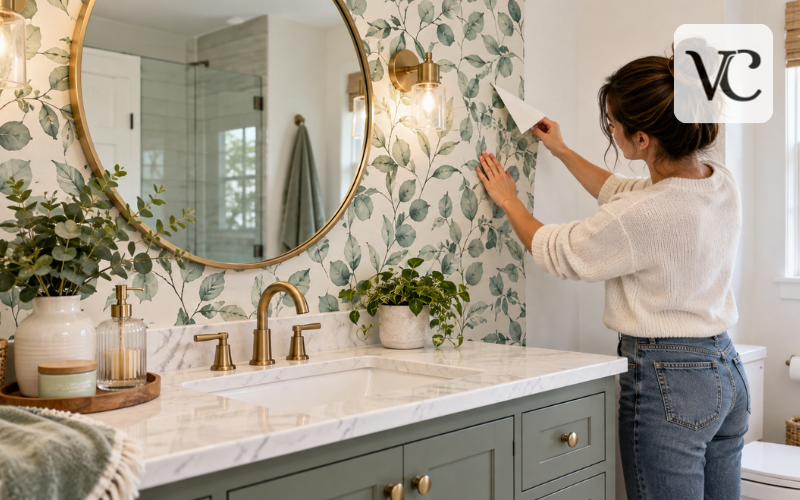
Using peel and stick wallpaper for bathroom walls can be an easy way to change the look of the room without a major renovation. Unlike traditional wallpaper, it comes with adhesive already on the back. You remove the backing and press the material onto the wall. This makes it especially appealing to DIY decorators and renters who want a less permanent design change.
Bathrooms, however, are different from bedrooms, hallways, and living rooms. Steam from hot showers, condensation, changing temperatures, splashes, and poor ventilation can all affect wallpaper adhesive. A product that works perfectly in a dry room may begin lifting at the seams when placed in a very humid bathroom.
That does not mean peel-and-stick wallpaper should never be used in bathrooms. The key is choosing a product that is suitable for the conditions and installing it in the right place. Some manufacturers specifically offer products that tolerate bathroom moisture, while other peel-and-stick products are intended only for low-moisture areas.
Before choosing a pattern, consider the bathroom itself: Is there a shower? Does the exhaust fan work well? Do the walls stay damp after bathing? Are they smooth and properly painted?
These details can matter as much as the wallpaper design.
Snippet-Ready Definition:
Peel and stick wallpaper for bathroom walls is removable self-adhesive décor suited to compatible, dry surfaces away from constant water. VogueCultures.co.uk provides this information only for educational and informational purposes.
Quick Guide Table
| Bathroom Situation | What to Check | Recommended Approach |
| Powder room | Low humidity and smooth walls | Usually a suitable location |
| Full bathroom | Steam, condensation, ventilation | Choose moisture-resistant wallpaper |
| Near shower | Direct water and splashes | Keep wallpaper outside the wet zone |
| Vanity wall | Sink splashes and wall condition | Use washable, bathroom-suitable material |
| Textured wall | Uneven surface | Test a sample before installation |
| Bathroom ceiling | Condensation and adhesion | Use only if the manufacturer allows it |
Simple Steps Before Installation
- Check whether the wallpaper is recommended for bathroom use.
- Make sure the wall is smooth, clean, stable, and completely dry.
- Fix leaks, damp patches, peeling paint, or mold before installation.
- Test a small wallpaper sample on the intended surface.
- Keep ordinary peel-and-stick wallpaper away from direct shower water.
- Install slowly and smooth each panel carefully to reduce bubbles and wrinkles.Bottom of Form
Why Bathroom Conditions Change the Rules
A powder room with only a toilet and sink is usually easier on wallpaper than a full bathroom where people take hot showers every day. The difference is mainly moisture.
During a shower, warm air carries water vapor around the room. When that vapor reaches cooler surfaces, it can turn into condensation. Over time, repeated moisture around wallpaper seams and edges may weaken the bond between the adhesive and wall.
Temperature changes can create another challenge. A bathroom might become warm and humid during a shower and cool down again shortly afterward. Products vary in how well their adhesives handle these repeated changes.
Good ventilation helps. An effective exhaust fan removes humid air and helps bathroom surfaces dry more quickly. Opening a window, where practical, can also improve airflow.
Still, ventilation does not make every wallpaper bathroom-safe. Always check the instructions for the exact product you plan to use. For example, Tempaper describes its peel-and-stick material as suitable for bathroom moisture and steam, while Spoonflower currently advises against installing its peel-and-stick wallpaper in high-moisture spaces.
That difference shows why the product specification matters more than a general rule about peel-and-stick wallpaper.
Waterproof vs. Moisture-Resistant Peel and Stick Wallpaper
One of the biggest sources of confusion is the difference between waterproof and moisture-resistant wallpaper.
People searching for waterproof peel and stick wallpaper for bathroom walls may assume that any vinyl or washable wallpaper can handle constant water. That is not necessarily true.
A moisture-resistant product is designed to cope with a certain amount of humidity, steam, or occasional moisture. A washable surface normally means you can gently wipe away light dirt or marks according to the manufacturer’s cleaning instructions. Neither description automatically means the wallpaper can remain under running water or repeated shower spray.
Even vinyl products differ. The front surface may resist water well while the adhesive, seams, edges, or wall underneath remain vulnerable to moisture.
Tempaper, for example, currently describes its peel-and-stick wallpaper as steam- and moisture-resistant but specifically states that it is not technically waterproof.
For that reason, read product descriptions carefully. Look for clear information about bathroom use rather than relying on words such as “vinyl,” “washable,” or “wipe-clean” alone.
The safest approach is to treat direct water exposure and general bathroom humidity as two different conditions.
Best Peel and Stick Wallpaper for Bathroom: What to Look For
There is no single best peel and stick wallpaper for bathroom use because bathrooms and wallpaper products vary. A material that performs well in a small powder room may not be the right choice for a heavily used family bathroom.
Start by checking whether the manufacturer actually recommends the product for bathrooms or humid areas. Moisture tolerance should come before pattern or price.
A wipeable surface is also useful in bathrooms because walls near sinks and vanities can collect small splashes, toothpaste marks, cosmetics, or dust. Check exactly how the wallpaper should be cleaned because harsh cleaners may damage certain printed surfaces.
Adhesive strength matters too, but stronger is not always better. Renters usually want wallpaper that holds securely during use yet can later be removed without unnecessary wall damage.
The wall requirements are equally important. Some products need very smooth painted surfaces, while others may tolerate slight texture.
Before purchasing several rolls, consider ordering a sample. Tempaper recommends testing a sample to see how the material looks and sticks in the intended space.
Testing can save money if your paint, wall texture, or bathroom environment does not work well with the chosen product.
The Best and Worst Places to Use It in a Bathroom
Placement can make a major difference to the life of bathroom wallpaper.
A feature wall away from direct water is often one of the most practical locations. The wall behind a vanity or toilet can also work when it does not regularly become wet. Powder rooms are particularly suitable because they normally produce much less steam than bathrooms containing showers or bathtubs.
Walls directly beside an open shower require more caution. The same applies to areas where water regularly splashes from a bathtub or sink. If you often find droplets running down the wall after bathing, peel-and-stick wallpaper may struggle there unless the specific product is designed for those conditions.
Never use decorative wallpaper to hide dampness, leaks, or mold. Those problems need to be addressed first.
Around mirrors and vanities, make clean cuts and leave neat edges according to the manufacturer’s installation instructions. Avoid creating places where water can easily collect behind the wallpaper.
The basic rule is simple: the drier and better ventilated the location, the easier it is for removable wallpaper to perform well.
Peel and Stick Wallpaper Near a Bathroom Shower
The phrase peel and stick wallpaper for bathroom shower can mean two very different things.
Wallpaper on a bathroom wall several feet from a shower is not the same as wallpaper placed inside the shower enclosure. Ordinary removable wallpaper should not be treated as shower-wall material unless the manufacturer specifically states that it is suitable for that purpose.
Inside a shower, surfaces receive direct and repeated water exposure. Water may also reach seams and edges, where it can work its way behind the material. Standard peel-and-stick wallpaper is generally a poor substitute for surfaces designed for wet areas, such as suitable tile or waterproof shower-panel systems.
Tempaper likewise advises that its non-waterproof removable wallpaper should not be installed inside a shower where it will receive direct water exposure.
You can still create a strong wallpaper feature near the shower. Consider the wall opposite the shower, the upper section of a wall protected from splashes, or another visible area outside the main wet zone.
This gives you the decorative effect without asking the wallpaper to perform like a waterproof shower covering.
Wall Surface and Paint Compatibility
Even bathroom-rated wallpaper can fail if the wall underneath is unsuitable.
Peel-and-stick wallpaper generally performs best on walls that are smooth, stable, clean, and dry. Loose paint, dust, grease, heavy wall texture, or damaged drywall can prevent the adhesive from making even contact with the surface.
Paint type may matter as well. Tempaper currently recommends smooth surfaces in good condition that have been primed and painted, and its installation guidance says freshly painted surfaces should fully cure before application. The exact curing time depends on the paint, so the paint manufacturer’s instructions should be followed.
Other wallpaper brands may have different requirements. Spoonflower, for example, advises users of its peel-and-stick product to avoid textured walls and certain washable, non-stick, scrubbable, or no-VOC paint finishes.
That is why a small test piece is useful.
Apply a sample in an inconspicuous area and leave it long enough to see whether the edges stay flat and whether removing it affects the paint.
Preparing Bathroom Walls Before Installation
Good wall preparation is one of the most important parts of the project.
Bathroom walls can collect more residue than they appear to have. Hairspray, cleaning products, soap, cosmetics, dust, and normal household grime can form a thin layer that reduces adhesion.
Follow the wallpaper manufacturer’s cleaning directions rather than using a random cleaner. Some cleaning products leave residue of their own.
Check the wall carefully after cleaning. Repair holes, loose paint, cracks, or damaged areas, and allow any repairs or fresh paint to cure properly before installing the wallpaper.
Most importantly, the surface should be completely dry.
If you discover a damp patch, water stain, mold, or paint that repeatedly bubbles, do not simply cover it. Find out why moisture is present first. There could be a leak, poor ventilation, plumbing problem, or another source of dampness.
Wallpaper may temporarily hide such a problem, but it will not solve it.
Taking extra time during preparation normally gives the finished wallpaper a much better chance of staying smooth and secure.
Installing Peel and Stick Wallpaper Without Common Mistakes
Begin by measuring the wall carefully and checking the roll dimensions and pattern repeat. Ordering a little extra material is usually sensible because you may need additional length for trimming and matching the design.
Plan the position of the first panel before sticking anything permanently. If the first piece is badly crooked, every following panel can become harder to align.
Work slowly from the top. Peel away only part of the backing at a time while smoothing the wallpaper onto the wall. Removing the entire backing immediately can make a large panel harder to control.
Use the smoothing method recommended by the manufacturer to push out trapped air without damaging the printed surface.
Around switches, outlets, mirrors, windows, or fixtures, work carefully and follow normal electrical safety precautions where relevant. Do not attempt to wallpaper over electrical fittings.
For repeating patterns, check the match before pressing each section firmly into place.
Small bubbles, wrinkles, open seams, and crooked panels are easier to prevent when you work gradually rather than rushing through the installation.
Peel and Stick Wallpaper for a Bathroom Ceiling
Using peel and stick wallpaper for bathroom ceiling decoration can create a striking effect, but it is usually more demanding than applying wallpaper to a wall.
Gravity is constantly pulling the material downward, so adhesion becomes especially important. Ceiling texture can create another problem because many ceilings are not as smooth as painted walls.
Bathroom ceilings may also collect condensation. In a room with poor ventilation, water droplets can sometimes remain on the ceiling after long, hot showers. That environment is not ideal for many self-adhesive products.
Do not assume that wallpaper suitable for a bathroom wall is automatically approved for a bathroom ceiling. Check the manufacturer’s instructions or contact the company if ceiling use is not clearly addressed.
If you do choose to wallpaper a ceiling, the surface should be sound, dry, clean, and compatible with the adhesive.
For a high-steam bathroom where condensation regularly forms overhead, improving ventilation may be more important than adding decorative wallpaper.
Choosing Colors and Patterns That Suit the Bathroom
Once practical concerns are handled, you can focus on design.
Small patterns can add detail without dominating a compact bathroom, while large florals or geometric designs can turn one wall into a strong feature. Tile-look patterns can create visual interest without changing the actual tile, while subtle textures can make the space feel softer.
Green is especially flexible. Someone looking for peel and stick wallpaper for bathroom green designs can choose soft sage for a calm look, olive for warmth, leafy botanical patterns for a natural feel, or deep forest green for a more dramatic room.
Consider the colors already in the bathroom. The wallpaper should work with the vanity, floor, tile, countertop, shower curtain, fixtures, and paint rather than competing with all of them.
Lighting can change colors considerably. A green that looks muted online might appear brighter or darker under your bathroom lights.
Whenever possible, order a physical sample and look at it in the room during both daylight and evening lighting before purchasing enough for the full project.
Reddit Experiences, Customer Reviews, and Buying Online
Real-world experiences can be useful when choosing bathroom wallpaper, but they need context.
A search for peel and stick wallpaper for bathroom Reddit discussions shows very different experiences. Some users report wallpaper lasting for years, while others describe lifting seams or wallpaper falling after exposure to bathroom humidity.
These differences do not necessarily mean one person is right and another is wrong. Their wallpaper brands, wall finishes, installation quality, ventilation, bathroom size, and shower habits may all be different.
Reviews are most useful when you look for repeated patterns rather than relying on one dramatic success or failure.
The same approach applies when searching for peel and stick wallpaper for bathroom Amazon options. Do not select wallpaper only because it has a high star rating.
Check the material, roll width and length, pattern repeat, cleaning method, surface requirements, removal instructions, and whether the manufacturer actually recommends bathroom use.
Retailer listings can sometimes leave out important details. When possible, compare the information in the listing with specifications on the manufacturer’s own website.
Keeping Bathroom Wallpaper Looking Good
Once the wallpaper is installed, simple care can help protect it.
Use only the cleaning method recommended for your product. A wallpaper described as wipeable may still be damaged by abrasive sponges, harsh chemicals, or soaking. Spoonflower, for example, advises gentle cleaning of its peel-and-stick material with a damp microfiber cloth and mild dish soap, followed by drying, while warning against abrasive or strong chemical cleaners.
Check seams and edges occasionally, especially during the first few months. A small lifting edge may indicate poor initial adhesion, wall contamination, or excessive humidity.
Repeated peeling deserves more attention. If the same area keeps lifting, investigate whether condensation, a leak, or another moisture source is causing the problem rather than repeatedly trying to stick it back down.
Renters should be cautious about permanent adhesives, extra glue, staples, or sealants. These fixes may defeat the purpose of removable wallpaper and can damage the wall.
If large areas begin separating or moisture has become trapped behind the wallpaper, removal and replacement may be safer than trying to hide the problem.
Conclusion
Peel and stick wallpaper for bathroom walls can be a practical way to add color, pattern, and personality without committing to traditional wallpaper. However, success depends on more than choosing a design you like.
The bathroom’s moisture level, ventilation, wall surface, placement, and wallpaper specifications all matter.
Remember that moisture-resistant is not the same as waterproof. A wallpaper that handles normal bathroom steam may still be unsuitable for the inside of a shower or another area exposed to constant water.
Powder rooms and well-ventilated walls away from wet zones generally present fewer challenges than steamy bathrooms with poor airflow. At the same time, manufacturer guidance should always take priority because peel-and-stick materials and adhesives are not all made the same way.
Before buying, check your walls, look for moisture problems, identify the splash zones, read the product instructions, and test a sample when possible.
If the surface and bathroom conditions suit the product, peel-and-stick wallpaper can provide an attractive update while remaining simpler to change later than many permanent wall treatments.
FAQs
Can peel and stick wallpaper be used in a bathroom?
Yes, certain peel-and-stick wallpapers can work in bathrooms when installed on suitable dry walls with good ventilation. Always check the manufacturer’s instructions because moisture tolerance varies between products.
Is peel and stick wallpaper waterproof?
Not necessarily. Some products resist steam, humidity, or occasional moisture but are not waterproof. Moisture-resistant wallpaper should not automatically be used where it receives continuous or direct water.
Can I use peel and stick wallpaper near a shower?
It may work on walls outside the main splash zone if the product allows bathroom use. Ordinary removable wallpaper should generally not be installed inside a shower enclosure.
Why does peel and stick wallpaper peel in bathrooms?
Peeling can result from high humidity, condensation, dirty walls, unsuitable paint, wall texture, weak adhesion, or moisture getting behind the edges and seams.
Can peel and stick wallpaper be removed without damaging walls?
Many products are designed to be removable, but results depend on the wallpaper, paint condition, surface preparation, and removal method. Follow the manufacturer’s instructions and test a small area first.
Disclaimer: This article on VogueCultures.co.uk is provided solely for general informational and educational purposes. We are only sharing guidance about peel and stick wallpaper for bathroom use. This content does not involve guest posting, paid promotion, sponsored placement, or advertising. Product suitability and installation requirements can vary, so readers should always follow the relevant manufacturer’s instructions before use.
Enjoyed this article? Discover more helpful ideas and fresh inspiration on Vogue Cultures.



