Learning how to get rid of mice is not simply a matter of placing one trap in the kitchen and hoping the problem disappears. A trap may remove an individual mouse, but it does not close the gap that allowed it indoors, remove the food attracting it, or deal with other mice already hiding in the building. Lasting control requires several actions working together.
The most reliable approach has three parts: remove the mice that are inside, seal their entry points, and make food and nesting materials difficult to reach. This method is often called integrated pest management. It focuses first on inspection, prevention, sanitation, and targeted control rather than depending on poison alone. The U.S. Environmental Protection Agency also recommends sealing holes, removing nesting areas, and cleaning up food and water sources as key parts of rodent prevention.
This guide explains how to get rid of mice in the house fast while keeping expectations realistic. It also looks at natural methods, trap-free options, sound devices, safe cleanup, and the everyday habits that help prevent another infestation.
Quick Guide Table
| Method | Best Use | Effectiveness | Important Note |
| Snap traps | Active indoor infestations | High | Place along walls near droppings |
| Entry-point sealing | Long-term prevention | High | Use metal mesh, steel wool, and caulk |
| Food control | Reducing mouse activity | High | Store food in sealed containers |
| Natural repellents | Temporary support | Low | Scents do not remove established mice |
| Ultrasonic devices | Additional deterrence | Limited | Should not replace trapping and sealing |
| Professional pest control | Large or persistent infestations | High | Useful when activity continues after treatment |
Step-by-Step Guide to Getting Rid of Mice
- Inspect the house: Look for droppings, gnaw marks, nests, scratching sounds, and small entry holes.
- Remove accessible food: Clean crumbs, empty rubbish, store pantry products securely, and remove pet food overnight.
- Set multiple traps: Place traps along walls, behind appliances, and near clear signs of mouse activity.
- Seal entry points: Close gaps around pipes, doors, vents, foundations, and cabinets with durable mouse-resistant materials.
- Clean safely: Spray droppings with disinfectant before wiping them up. Avoid sweeping or vacuuming dry waste.
- Monitor the area: Keep checking for fresh droppings, food damage, sounds, or trap activity.
- Call a professional when needed: Seek expert help if the infestation continues, spreads, or involves hard-to-reach spaces.
Signs You Have Mice in the House
Mice are mostly active when the house is quiet, so you may notice evidence before seeing one. Common signs include small droppings in drawers or cupboards, scratching in walls or ceilings at night, gnaw marks on food packaging, and shredded paper, fabric, or insulation used for nests. A stale or musky smell can become noticeable when activity is heavy.
During the day, mice usually hide in dark, protected places close to food and warmth. Check behind refrigerators and stoves, under sinks, inside lower cabinets, around water heaters, in garages, and in cluttered storage rooms. They may also nest inside wall spaces, loft insulation, boxes, or the back of large furniture.
Fresh activity is easier to confirm after contaminated areas have been cleaned safely. If new droppings, urine marks, or gnawing appear in the same location, mice are still present. The CDC notes that recurring droppings after cleanup are a useful sign of active rodent activity. Focus your inspection and traps where several signs appear together rather than spreading your effort evenly throughout the house.
Find Out How Mice Are Getting Inside
Before closing gaps, inspect both the inside and outside of the building. Begin at ground level and examine the foundation, exterior doors, garage door edges, air vents, damaged screens, pipe openings, cable lines, and spaces beneath siding. Then check higher areas, including roof edges, attic vents, eaves, and gaps around attached structures.
Inside, look beneath sinks, behind cabinets, around heating pipes, and where wires pass through walls or floors. Small openings can be enough. House mice can enter through gaps about one-quarter of an inch wide, so a hole that appears unimportant may still provide access. Greasy rub marks, droppings, chewed edges, or loose insulation can help reveal a regular route.
Do not inspect only the room where you saw the mouse. It may be feeding in the kitchen but entering through the garage, basement, attic, or a utility opening several rooms away. Mark each suspected gap so you can close it as part of one organized repair job.
Seal Mouse Entry Points Properly
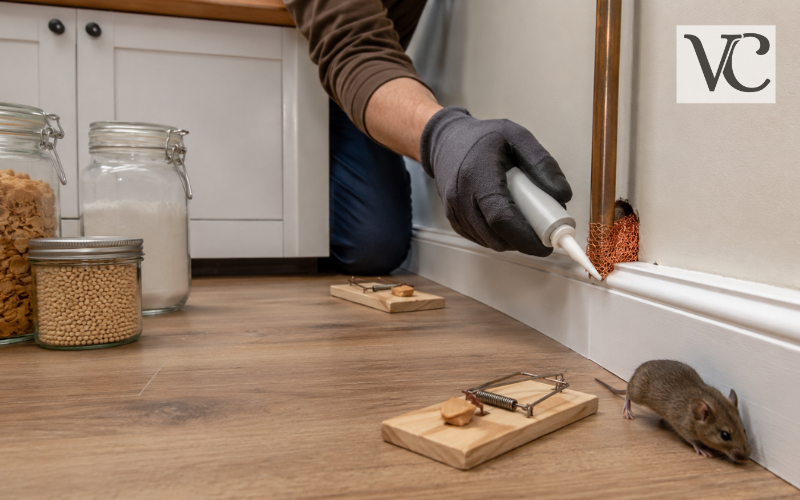
For small holes, pack the opening firmly with stainless steel wool or copper mesh and secure it with an appropriate sealant. For larger openings, use metal hardware cloth, sheet metal, cement, or another durable building material. Fit tight door sweeps to exterior and garage doors, repair damaged vents, and replace torn screens.
Expanding foam can help fill space, but it should not be the only barrier in a mouse-accessible opening. Mice can gnaw through many soft materials. A metal layer combined with caulk or another suitable repair material provides a stronger finish. EPA guidance specifically identifies steel wool and wall repair as simple exclusion measures, while university pest-management guidance also recommends wire screen or coarse steel wool for small openings.
Seal exterior entry points promptly, but keep traps active indoors during the repair period. If you close every visible route while mice remain inside, they may search for new paths through walls, cupboards, or living areas. Continue monitoring until there are no fresh signs and no captures for at least several days.
Choose the Most Effective Mouse Traps
Traditional snap traps are usually the best first choice for a household mouse problem. They are inexpensive, reusable, and capable of killing quickly when they are correctly sized and placed. Enclosed snap traps can be useful in homes where people prefer not to see the captured mouse. Electronic traps are another option, although they cost more and require battery checks.
Live-catch traps may sound kinder, but they create practical and health concerns. Current CDC guidance recommends traditional snap traps and advises against glue traps and live traps because frightened rodents may urinate, increasing exposure to contaminated material. Relocation is also unreliable; house mice may return or fail to survive after release in an unfamiliar area.
In homes with children or pets, place traps inside secure, tamper-resistant boxes or in locked areas that cannot be reached. Never place an exposed trap where a child, cat, dog, or other animal could touch it. Check all traps daily so captured mice can be removed quickly and traps can be reset.
Use the Right Bait and Trap Placement
A small amount of peanut butter, chocolate spread, soft candy, oats, or another attractive food can work well as bait. Use only enough to create a scent and make the mouse touch the trigger. A large lump may allow it to feed without setting off the trap. When mice have plenty of food nearby, a small piece of nesting material secured to the trigger may sometimes attract their attention.
Placement matters more than using a special bait. Mice usually move beside walls and objects rather than crossing open floors. Set snap traps at a right angle to the wall, with the trigger end touching the baseboard. Good locations include behind appliances, inside cabinets, beside droppings, and along narrow routes between hiding places and food.
Do not rely on one or two traps. Use several at the same time in active areas, especially when signs appear in more than one room. Guidance from pest-management programs commonly recommends placing traps along walls and adding more where activity is concentrated. If bait disappears without a capture, use less bait, check that the trigger works freely, and adjust the trap position.
How to Get Rid of Mice in the House Fast
The fastest safe approach is a focused 24-to-72-hour response, not a single miracle product. On the first day, remove open food, clean preparation areas, inspect for entry points, and set multiple snap traps in protected locations. Store pet food before nightfall and take household rubbish outside in a lidded container.
During the next morning, check the traps and look for fresh droppings. Disinfect any contaminated areas before wiping them. Reset successful traps in the same location because more than one mouse may use the same route. Move untouched traps closer to walls, droppings, or gnaw marks rather than changing every location at once.
Over the following two days, close confirmed exterior gaps, continue trapping, and remove cardboard, fabric scraps, or clutter that could provide nesting material. The “easy trick to get rid of mice and rats” is not peppermint, sound, or a secret bait. It is consistent action across removal, exclusion, and sanitation. That combined method removes present mice while cutting off the conditions that allowed the problem to grow.
Can You Get Rid of Mice Overnight?
It is possible to catch a single mouse overnight, especially when its route is known and several traps are placed correctly. However, seeing one mouse does not prove that only one is present. Droppings in different rooms, repeated scratching, food damage, or new signs after a capture suggest a wider problem.
To reduce activity during the first night, clean crumbs and spills, put all food into secure containers, remove pet bowls, empty indoor rubbish, and set several traps along walls. Close obvious exterior gaps that can be repaired safely, but keep monitoring indoors.
Do not declare the problem solved after one quiet night. Continue checking for droppings, gnawing, sounds, and trap activity. If new signs continue for a week despite correct trapping and sealing, reassess the species and entry routes or contact a qualified pest professional. CDC guidance also recommends further action when new droppings, urine spots, or gnawing continue after a week of trapping.
How to Get Rid of Mice Naturally
People searching for how to get rid of mice naturally often want to avoid toxic bait. The strongest natural approach is not a scent-based remedy; it is physical exclusion and strict sanitation. Metal mesh, repaired gaps, secure food storage, reduced clutter, and frequent monitoring do not depend on poison and address the conditions mice need.
Peppermint oil, cayenne, vinegar, ammonia, and other strong smells may make a small area unpleasant for a short time. However, their scent fades, coverage is uneven, and a hungry mouse may simply take another route. Essential oils can also be unsafe around some pets or cause irritation when used heavily, so they should not be treated as harmless simply because they are natural.
A mice repellent can be used as a minor supporting measure in a clean, sealed area, but it will not remove an established nest. For dependable results, make access physically difficult and remove available food. If mice remain inside, use an effective removal method or professional help rather than repeatedly applying household scents.
How to Get Rid of Mice Without Traps
Trap-free control is most realistic when mice have only begun exploring a property and have not established an indoor nest. Seal gaps, improve door seals, remove food and water, clear nesting material, and reduce outdoor shelter close to the walls. These steps can stop new mice from entering and may make a lightly used area less attractive.
However, exclusion alone does not guarantee that mice already indoors will leave. They may survive on small spills, pet food, insects, or hidden pantry items. They can also remain inside wall spaces after outside gaps have been closed. That is why trap-free methods require careful monitoring for fresh signs.
For an established infestation, professional removal may be the safest trap-free option for the resident. A licensed pest professional can identify concealed routes, choose suitable control methods, and advise on repairs. Poison should not be used casually as a substitute for traps; it can expose children, pets, and wildlife if used incorrectly, and rodents may die in inaccessible spaces. When rodenticides are necessary, use only products registered for the intended use and follow the label exactly. EPA guidance says traps and baits must always be kept where children and pets cannot reach them.
Mice Repellent and Sound Devices: What Really Works
Ultrasonic devices claim to get rid of mice with sound that people cannot hear. The idea is appealing because it promises a clean, effortless solution. In practice, sound is blocked by furniture and walls, weakens with distance, and does not reach every nesting or travel area.
Mice may react to a new sound at first, but they can become used to repeated noise. Updated guidance from the University of California’s Integrated Pest Management program states that high-frequency electronic devices are not effective for house-mouse control and that there is little evidence sound, magnetic, or vibration devices will remove an established population.
Plug-in devices should therefore not replace sealing, cleaning, and trapping. The same caution applies to scent repellents. A temporary change in activity can make it seem as though the mice have gone, while they may simply have moved to another room or wall space. Judge success by the absence of fresh droppings, damage, sounds, and captures over time.
Remove Food, Water, and Nesting Materials
Mice need very little food, so everyday crumbs can support continued activity. Wipe counters and dining areas each evening, clean grease and food from beneath appliances, and avoid leaving dirty dishes overnight. Store cereal, flour, rice, seeds, snacks, and baking ingredients in glass, metal, or sturdy containers with tight lids. Thin bags and cardboard boxes are not reliable barriers.
Feed pets at set times and remove leftover food and bowls after feeding, especially overnight. Keep bulk pet food and birdseed in chew-resistant containers. Repair dripping pipes where possible, dry wet areas beneath sinks, and avoid leaving standing water in trays or buckets.
Reduce shelter as well as food. Recycle unused cardboard, store fabric off the floor, and organize crowded cupboards, garages, and storage rooms. Outdoors, move firewood away from the foundation, trim thick growth touching the building, remove rubbish and leaf piles, and keep bins tightly covered. These changes make inspection easier and reduce the protected spaces mice use for nesting.
Clean Mouse Droppings and Contaminated Areas Safely
Do not dry sweep or vacuum mouse droppings, urine, or nesting debris before disinfection. Those actions can stir contaminated dust into the air. The CDC advises wearing rubber or plastic gloves, soaking the material with an EPA-registered disinfectant or bleach solution, and leaving it wet for five minutes or for the contact time stated on the product label.
After soaking, wipe up the waste with paper towels and place it in a covered rubbish container. Mop or sponge hard surfaces with disinfectant. Wash gloved hands before removing the gloves, then wash bare hands with soap and warm water. For a dead mouse or nest, wet it with disinfectant, allow the required contact time, place it and the used materials in a plastic bag, seal that bag, and place it inside a second sealed bag.
Ventilate closed sheds, cabins, garages, or storage spaces before cleaning, and avoid disturbing dusty material. Heavy infestations, large amounts of waste, HVAC contamination, or confined spaces may require extra protective equipment and professional cleanup. People who are pregnant, immunocompromised, or concerned about exposure should seek advice from a healthcare professional or local public-health authority rather than handling a severe cleanup alone.
Prevent Mice From Returning
Prevention is an ongoing part of how to get rid of mice, not a final step that can be forgotten. Recheck repaired gaps after weather changes or building work. Inspect door sweeps, vents, screens, pipe openings, garages, storage areas, and loft spaces. Replace damaged sealants and loose mesh before small faults become new entrances.
Keep food-storage and cleaning habits consistent even after activity stops. Check rarely used cupboards, move appliances occasionally for cleaning, and watch for new droppings or packaging damage. Outdoors, keep bins closed, reduce clutter, and prevent dense vegetation or stored materials from resting against the building.
The lasting answer to how to get rid of mice is a practical combination of removal, exclusion, sanitation, and monitoring. Traps deal with mice already indoors, durable repairs block their return, and food control makes the property less attractive. When these steps are followed together, the result is more reliable than any overnight trick, scent, sound device, or single product.
Frequently Asked Questions
What is the fastest way to get rid of mice?
The fastest approach combines several traps, secure food storage, careful cleaning, and immediate entry-point repairs. One product alone rarely solves an established infestation.
Can mice be removed from a house overnight?
You may catch one mouse overnight, but a larger infestation usually takes longer. Continue trapping and monitoring until no new droppings, damage, or sounds appear.
Do peppermint oil and other natural repellents work?
Strong scents may discourage mice temporarily, but they do not usually remove nests or established populations. Natural methods work best alongside sealing, sanitation, and monitoring.
Can ultrasonic sound devices get rid of mice?
Ultrasonic devices may briefly affect mouse movement, but results are often limited. Furniture and walls block sound, and mice may become accustomed to it.
When should I call a pest control professional?
Contact a professional when mice remain after repeated trapping and sealing, contamination is heavy, or activity occurs inside walls, ceilings, ventilation systems, or inaccessible areas.
Disclaimer: This article provides general information about household mouse control and prevention. Infestations can vary depending on the building, mouse activity, and local conditions. Always follow product labels, keep traps and pest-control products away from children and pets, and use appropriate protective equipment when cleaning contaminated areas. Contact a licensed pest-control professional or local health authority if the infestation is severe, persistent, or creates a possible health risk.
Enjoyed this article? Discover more helpful ideas and fresh inspiration on Vogue Cultures.