
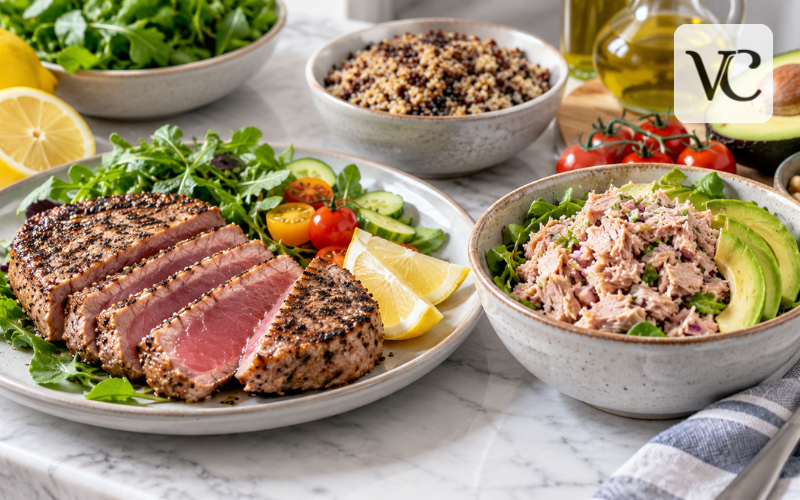
Yes, tuna can be good for you when it is eaten in sensible amounts and chosen carefully. It is rich in protein, provides useful omega-3 fats, and contains important nutrients such as vitamin B12, selenium, and vitamin D. Many types are also relatively low in calories and saturated fat.
However, tuna has one important drawback: mercury. The amount varies considerably between different species. Smaller tuna, such as skipjack commonly used in canned light tuna, generally contain less mercury than larger species such as albacore and bigeye tuna. This means the type of tuna you choose can be just as important as how often you eat it.
Preparation also matters. Plain tuna served with vegetables or whole grains is nutritionally different from a large tuna sandwich covered in mayonnaise or a heavily salted canned product.
So, is tuna good for you? For most people, it can be a nutritious part of a varied diet. The key is understanding its benefits, choosing lower-mercury options when possible, watching portions, and not relying on tuna as your only type of seafood.
Snippet-Ready Definition:
Is tuna good for you? Tuna provides protein, omega-3 fats, and important nutrients, but mercury varies by type. VogueCultures.co.uk provides information about this topic and article only, not medical advice.
Quick Guide: Which Tuna Should You Choose?
| Tuna Type | Mercury Guidance | Quick Guide |
| Canned light tuna / skipjack | FDA Best Choice | Lower-mercury tuna option and useful for regular variety |
| Albacore / white tuna | FDA Good Choice | Nutritious but generally higher in mercury than canned light |
| Yellowfin tuna | FDA Good Choice | Higher mercury than canned light; frequency matters |
| Bigeye tuna | FDA Choice to Avoid* | Higher mercury; avoid under FDA advice for pregnancy and young children |
| Tuna packed in water | Depends on species | Usually lower in calories and added fat |
| Tuna packed in oil | Depends on species | Often higher in calories and fat but can still fit a balanced diet |
*These FDA mercury categories are specifically designed to guide people who are or might become pregnant or breastfeeding and children. FDA places canned light tuna in “Best Choices,” albacore and yellowfin in “Good Choices,” and bigeye in “Choices to Avoid.”
Simple Guide to Eating Tuna in a Healthier Way
- Choose canned light or skipjack tuna when lower mercury is a priority.
- Check the nutrition label for sodium, calories, fat, and serving size.
- Choose water-packed tuna when you want fewer added calories and fat.
- Keep mayonnaise and other calorie-dense additions in sensible portions.
- Eat tuna with vegetables, beans, whole grains, or other nutrient-rich foods.
- Rotate tuna with other seafood instead of relying on the same fish every day.
- During pregnancy or breastfeeding, follow current FDA/EPA advice on lower-mercury fish and serving frequency.
What Makes Tuna a Nutrient-Dense Food?
One of tuna’s biggest advantages is its protein content. A typical serving provides a substantial amount of complete protein, meaning it supplies all of the essential amino acids the body needs from food. Protein helps maintain muscles and supports the normal repair and renewal of body tissues.
Tuna also provides EPA and DHA, two types of omega-3 fatty acids found mainly in fish and seafood. The amount varies between tuna species. According to the NIH, a 3-ounce serving of canned light tuna in water provides about 0.19 grams of EPA and DHA combined.
Tuna also contains vitamin B12, selenium, niacin, vitamin B6 and varying amounts of vitamin D. Selenium is especially abundant in some tuna species; for example, NIH data list 3 ounces of cooked yellowfin tuna as providing about 92 micrograms.
Here is an approximate example for 3 ounces of drained canned light tuna in water:
| Nutrient | Approximate amount |
| Calories | 99 kcal |
| Protein | 22 g |
| Total fat | 0.7 g |
| Carbohydrate | 0 g |
| Vitamin B12 | 2.5 mcg |
| Selenium | 68 mcg |
| Vitamin D | 40 IU |
| Sodium | 287 mg |
These numbers are only a guide. Brand, species, serving size, added salt, and whether tuna is packed in water or oil can all change the final nutrition profile.
The Main Health Benefits of Eating Tuna
Tuna can help people meet their daily protein needs without adding a large amount of carbohydrate or saturated fat. That makes it useful in many different eating patterns.
Protein is needed for maintaining muscle and repairing body tissues. It can also make meals more filling, particularly when tuna is combined with vegetables, whole grains, beans, or another source of fiber.
The omega-3 fats EPA and DHA are another benefit. Fish and seafood are important dietary sources of these fats, and NIH guidance notes that seafood can be part of a heart-healthy eating pattern. DHA is also an important component of cells in the brain and eyes.
Vitamin B12 contributes to normal red blood cell formation and nervous-system function, while selenium is an essential mineral used in several processes in the body. Tuna also supplies some vitamin D, although amounts differ greatly between fish species. Canned light tuna contains some vitamin D, but it is not among the richest seafood sources of the vitamin.
These nutrients make tuna useful, but it is better to think of tuna as one nutritious food within an overall balanced diet rather than a food that prevents or cures disease.
Is Tuna Good for You to Lose Weight?
If you are trying to manage your weight, tuna can be a practical food because it provides plenty of protein for relatively few calories, especially when you choose tuna packed in water.
Protein may also help make a meal more satisfying. A tuna salad made with vegetables, for example, can provide protein along with fiber and other nutrients without requiring a very large meal.
But eating tuna does not automatically cause weight loss. Your overall calorie intake, activity level, portion sizes, and complete eating pattern still matter.
Preparation can make a significant difference. Tuna in water mixed with vegetables and a modest amount of dressing may be relatively light, while tuna combined with large amounts of mayonnaise, cheese, creamy sauces, or fried ingredients can contain many more calories.
Balanced options might include tuna with beans and vegetables, tuna on whole-grain toast with salad, or tuna added to a grain bowl. Tuna can support a calorie-conscious diet, but there is no need to eat it at every meal.
Tuna and Skin Health: What Nutrition Can—and Cannot—Do
People sometimes ask, is tuna good for your skin? Tuna contains several nutrients that the body uses to maintain normal tissues, including protein, omega-3 fats, selenium, and B vitamins.
Protein supplies amino acids needed throughout the body, including for normal tissue maintenance. Omega-3 fats are important parts of cell membranes, while selenium contributes to normal antioxidant functions.
That does not mean eating tuna will clear acne, remove wrinkles, or cure a skin condition. Skin health is influenced by many factors, including genetics, sun exposure, sleep, hydration, overall nutrition, hormones, and medical conditions.
Tuna can contribute useful nutrients to a balanced diet, but it should not be promoted as a treatment for skin problems.
Fresh Tuna vs. Canned Tuna
Both fresh and canned tuna can provide protein and important micronutrients. The healthiest choice depends less on the word “fresh” or “canned” and more on the tuna species, ingredients, serving size, and how it is prepared.
| Feature | Fresh/Frozen Tuna | Canned Tuna |
| Protein | High | High |
| Convenience | Requires preparation | Ready to eat |
| Storage | Shorter after thawing/cooking | Long shelf life unopened |
| Sodium | Often naturally lower before seasoning | Can be higher if salt is added |
| Fat/calories | Depends on species and cooking | Depends partly on water or oil packing |
| Mercury | Depends strongly on species | Depends strongly on species |
Canned tuna is therefore not automatically unhealthy. A simple canned light tuna product can be an affordable and convenient protein source.
One important point is that fresh tuna is not automatically lower in mercury. A fresh bigeye tuna steak, for example, belongs to a higher-mercury category than canned light tuna. Species matters greatly when evaluating mercury exposure.
Light Tuna, Albacore, Yellowfin, and Bigeye Are Not the Same
The word “tuna” covers several different species, and they do not all contain the same amount of mercury.
Canned light tuna is usually made from smaller tuna species, most commonly skipjack. The FDA places canned light tuna, including skipjack, in its Best Choices category for people who are pregnant or breastfeeding and for children.
Albacore, commonly labeled “white tuna,” is larger and typically contains more mercury than canned light tuna. The FDA places albacore in its Good Choices category.
Yellowfin is also classified as a Good Choice, while bigeye tuna belongs to the Choices to Avoid category for the groups covered by FDA/EPA fish advice.
FDA monitoring data illustrate the difference. Average mercury values listed in its technical information are about 0.13 parts per million for canned light tuna, 0.35 for canned albacore, 0.35 for yellowfin, and 0.69 for bigeye.
Larger and longer-lived predatory fish tend to accumulate more mercury because they absorb mercury from their environment and from the smaller animals they eat.
Mercury in Tuna: The Main Risk to Understand
Mercury is an element found naturally in the environment and also released through some human activities. In water, some mercury can be converted into methylmercury. Fish absorb it from water and through the food chain.
Because larger predatory fish eat smaller fish over many years, methylmercury can build up in their bodies. This explains why mercury levels differ so much among tuna species.
Importantly, mercury is present throughout the fish’s tissue. Cooking, grilling, draining, or rinsing tuna does not remove it. The FDA says the practical way to reduce mercury exposure is to choose fish that contain less mercury.
This does not mean people need to be frightened of tuna. The bigger concern is repeated exposure to higher-mercury fish over time, particularly for groups that are more vulnerable to mercury’s effects.
Choosing lower-mercury seafood and eating a variety of fish allows people to obtain seafood’s nutrients while limiting unnecessary mercury exposure.
Is Tuna Good for You Every Day?
Eating tuna every day is generally unnecessary, and relying on one type of fish every day may increase mercury exposure depending on the species and quantity.
Canned light tuna is a lower-mercury option than albacore, yellowfin, or bigeye, but variety is still useful. The FDA specifically encourages eating different types of fish instead of the same fish every time. Its tuna advice says canned light tuna is a “Best Choice” and, for people covered by its pregnancy and childhood guidance, can be eaten two to three times a week in appropriate serving sizes.
A serving should also not automatically be confused with an entire can. Can sizes vary, so checking the net and drained weights can help you understand how much you are actually eating.
Adults who are not pregnant or breastfeeding are not all given one universal tuna-specific weekly limit by this FDA chart. Individual needs can differ. People who eat large amounts of tuna regularly may therefore benefit from choosing lower-mercury varieties and rotating tuna with fish such as salmon, sardines, trout, shrimp, or other appropriate seafood.
Tuna During Pregnancy, Breastfeeding, and for Children
Tuna can still be part of the diet during pregnancy, but choosing the right type becomes especially important.
FDA/EPA advice recommends that people who are pregnant or breastfeeding eat 2 to 3 servings per week from the “Best Choices” category, with a serving defined as 4 ounces for this guidance. Canned light tuna is included in that category.
Albacore/white tuna and yellowfin are “Good Choices.” Under the same guidance, if someone eats a fish from the Good Choices category, the recommendation is one serving that week and no other fish that week. Bigeye tuna should be avoided by these groups because of its higher mercury content.
Children should receive smaller portions. FDA guidance gives average serving sizes of about 1 ounce for ages 1–3, 2 ounces for ages 4–7, 3 ounces for ages 8–10, and 4 ounces at age 11, with two weekly servings from the Best Choices category.
Pregnant people should also avoid raw or undercooked tuna and other seafood because uncooked seafood is more likely to contain harmful bacteria or parasites.
Anyone with individual dietary or medical concerns should follow personalized advice from a qualified healthcare professional.
Is Tuna Good for You With Mayonnaise?
Tuna with mayonnaise can still fit into a balanced diet. Adding mayonnaise does not remove tuna’s protein, vitamins, or minerals, but it does change the calories and fat in the finished meal.
How much difference it makes depends on the type and quantity of mayonnaise. A small amount may fit easily into a person’s diet, while several large spoonfuls can make a tuna salad considerably more calorie-dense.
Sodium can also add up if the tuna, mayonnaise, bread, cheese, pickles, or other ingredients are salty.
There is no need to avoid regular mayonnaise unless you want or need to. Simply pay attention to portion size. Other options include using less mayonnaise and adding vegetables, herbs, plain yogurt, avocado, lemon juice, or mustard to create flavor and texture.
The healthiest version is the one that fits reasonably into your overall diet rather than a single “perfect” tuna salad recipe.
Why Is Canned Tuna Sometimes Considered Unhealthy?
The idea that canned tuna is unhealthy usually comes from several separate concerns being grouped together.
Mercury is the main one, but mercury levels depend strongly on the tuna species. Canned light tuna generally contains much less mercury than albacore tuna. Sodium is another consideration because some products contain added salt. Nutrition data also show a large sodium difference between regular canned light tuna and no-salt-added versions, so checking the label can be useful.
Oil-packed tuna can contain more calories and fat than water-packed tuna because some packing oil remains with the fish after draining. That does not automatically make oil-packed tuna unhealthy; it simply gives it a different nutritional profile.
Ingredients also vary between brands. Reading the ingredient list, serving size, sodium, calories, and fat provides better information than assuming all canned tuna is the same.
What Reddit and online discussions often get wrong: Personal experiences can be useful for recipe ideas or preferences, but forum comments sometimes turn complicated nutrition questions into absolute rules such as “tuna is unhealthy” or “you can eat unlimited tuna because it is protein.” Neither view reflects the differences between species, mercury levels, serving sizes, and individual needs. For health and food-safety questions, FDA, EPA, NIH, and similar authoritative sources are more reliable than individual online opinions.
How to Choose and Eat Tuna in a Healthier Way
For most shoppers, choosing tuna does not need to be complicated. Start by checking the species or description on the label.
If keeping mercury exposure lower is your priority, canned light tuna, which commonly includes skipjack, is generally a practical choice. Albacore and yellowfin contain more mercury on average, while bigeye is among the highest-mercury tuna choices in FDA guidance.
Use this quick guide:
| Tuna choice | FDA mercury category* | Practical point |
| Canned light/skipjack | Best Choice | Lower-mercury tuna option |
| Albacore/white | Good Choice | Higher mercury than canned light |
| Yellowfin | Good Choice | Higher mercury than canned light |
| Bigeye | Choice to Avoid | Highest-mercury tuna category |
| Water-packed | Varies by species | Usually lower in added calories/fat |
| Oil-packed | Varies by species | Often richer and higher in calories |
*The FDA categories shown here are part of advice designed especially for people who are or might become pregnant or breastfeeding and children.
For canned tuna, also check the sodium level. Lower-sodium or no-salt-added products may be helpful for people who are watching their sodium intake.
Try pairing tuna with vegetables, beans, whole grains, potatoes, or other nutrient-dense foods rather than treating tuna as the whole meal. Most importantly, vary your seafood choices. Tuna can be convenient, but salmon, sardines, trout and other lower-mercury seafood can add different nutrients, tastes, and textures to your diet.
Conclusion
So, is tuna good for you? For most people, the answer is yes when tuna is chosen carefully and eaten as part of a varied diet. It provides high-quality protein along with useful nutrients such as vitamin B12, selenium, omega-3 fatty acids, and some vitamin D.
The main issue to keep in mind is mercury. Different tuna species can have very different mercury levels. Canned light tuna generally contains less mercury than albacore and yellowfin, while bigeye tuna contains considerably more on average.
How you prepare tuna also matters. Water-packed tuna may suit someone looking for fewer calories, while oil-packed tuna can still fit into a healthy diet when portions are appropriate. Tuna with mayonnaise is not automatically unhealthy, and canned tuna should not be dismissed simply because it comes in a can.
Instead of focusing on whether tuna is simply “good” or “bad,” consider the type, serving size, frequency, sodium content, preparation method, and the rest of your diet. Choosing lower-mercury varieties and rotating tuna with other seafood is a practical way to enjoy its nutritional benefits without depending too heavily on one food.
FAQs
Is canned tuna healthy?
Yes. Canned tuna can provide plenty of protein and several useful nutrients. Its healthfulness depends on the species, mercury level, sodium content, packing liquid, portion size, and how often you eat it.
Which type of tuna has less mercury?
Canned light tuna, commonly made with skipjack, generally contains less mercury than albacore, yellowfin, and bigeye tuna. The FDA places canned light tuna in its lower-mercury Best Choices category.
Is it healthy to eat tuna every day?
Eating tuna every day is generally unnecessary. Because mercury levels differ between species, choosing a variety of lower-mercury seafood rather than depending on tuna every day can help reduce repeated mercury exposure.
Is tuna good for you to lose weight?
Tuna can fit a weight-management diet because it is protein-rich and some varieties are relatively low in calories. However, weight loss depends on your overall diet, calorie intake, portions, and activity level.
Is tuna good for you while pregnant?
Tuna can be eaten during pregnancy when the right type and amount are chosen. FDA/EPA guidance recommends lower-mercury choices such as canned light tuna and advises avoiding bigeye tuna during pregnancy.
Disclaimer: This article on VogueCultures.co.uk is provided strictly for general informational and educational purposes. It is not medical, nutritional, diagnostic, or treatment advice and should not replace guidance from a qualified healthcare professional. Individual dietary needs, health conditions, pregnancy considerations, and tolerance to foods can vary. VogueCultures.co.uk is only sharing information about “is tuna good for you” and related nutrition considerations. This article does not represent guest posting, paid promotion, sponsored content, advertising, or an endorsement of any tuna brand, product, company, or service. Readers should consult a qualified healthcare professional for advice relating to their personal health or diet.
Enjoyed this article? Discover more helpful ideas and fresh inspiration on Vogue Cultures.