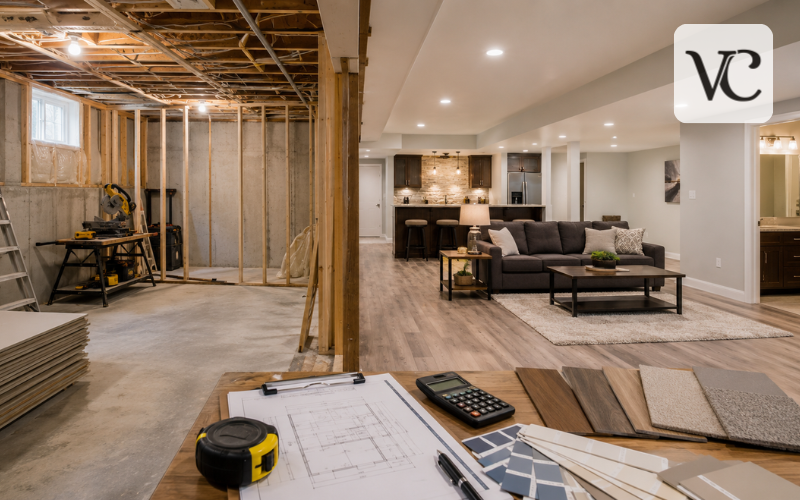
Finishing a basement means turning a bare or partly completed lower level into safe, comfortable living space. A typical project may include moisture control, insulation, framed walls, drywall, flooring, a finished ceiling, lighting, electrical outlets, heating or cooling, paint, doors, and trim. More complex plans may also add a bathroom, bedroom, office, wet bar, laundry room, or home theater.
So, how much does it cost to finish a basement in 2026? A useful national starting point is about $32,000, while many projects fall between $15,000 and $75,000. Very small or limited projects may cost less, while large, high-end renovations can pass $100,000. Current cost guides also show that “finishing” is not defined the same way by every contractor. A low estimate may cover simple walls, flooring, and paint, while a full quote may include permits, waterproofing, plumbing, electrical upgrades, HVAC work, and custom rooms.
The final price depends on the basement’s size, present condition, floor plan, local labor rates, and material choices. A dry, open basement with nearby utilities will usually cost less than a damp space that needs repairs, several rooms, new plumbing, or structural changes. Prices also vary greatly between cities, so national figures should be treated as planning ranges rather than fixed quotes.
Quick Basement Finishing Cost Guide
| Project type | Estimated cost |
| Small or basic basement finish | $15,000–$30,000 |
| Standard professional finish | $30,000–$60,000 |
| High-end basement remodel | $60,000–$100,000+ |
| Cost per square foot | $30–$100+ |
| 1,000 sq. ft. basement | $30,000–$50,000 |
| 1,500 sq. ft. basement | $45,000–$75,000+ |
| Basement bathroom addition | $8,000–$20,000 |
| Wet bar or kitchenette | $5,000–$20,000+ |
| Egress window installation | $2,700–$5,900 |
Steps to Estimate Your Basement Finishing Cost
- Measure the basement’s total square footage.
- Check for leaks, mold, cracks, or drainage problems.
- Decide how many rooms you want to create.
- Choose basic, standard, or premium materials.
- Add bathrooms, bedrooms, bars, and egress windows separately.
- Include permits, labor, delivery, and waste removal.
- Keep 10% to 20% available for unexpected expenses.
- Compare detailed quotes from local contractors.
Average Cost to Finish a Basement in 2026
A basic basement finish may cost roughly $15,000 to $30,000 when the space is small, dry, open, and does not need major plumbing or structural work. This level often includes simple flooring, painted drywall, standard lighting, and budget-friendly trim.
A standard professional project commonly lands around $30,000 to $60,000. That budget may cover a family room, office, or guest area with better flooring, more outlets, improved lighting, insulation, and heating or cooling extensions. A high-end basement with several rooms, custom built-ins, a bathroom, wet bar, premium flooring, soundproofing, or a home theater may cost $60,000 to $100,000 or more.
It is helpful to separate cosmetic work from a complete build. Painting exposed walls and installing basic flooring is not the same as creating code-compliant living space from bare concrete. Structural repairs, active leaks, mold, low-ceiling problems, outdated wiring, or difficult drain placement can increase the cost before decorative work even begins. HomeAdvisor reports a current national average of $32,000 and a common range of $15,000 to $75,000, while HomeGuide places many full finishing projects around $30 to $50 per square foot.
Because labor and permit costs are local, homeowners should collect at least two or three detailed estimates. Each quote should describe the same rooms, materials, utility work, permits, cleanup, and finish level.
How Much Does It Cost to Finish a Basement per Square Foot?
The cost per square foot depends mainly on what the estimate includes. Some national guides list $7 to $23 per square foot for straightforward finishing. However, a completely unfinished basement that needs several trades may run closer to $30 to $100 per square foot, especially when plumbing, moisture work, room divisions, and better materials are included. HomeGuide uses about $30 to $50 per square foot for many standard projects, while Rocket Loans distinguishes lower-cost partial finishing from a full build starting with unfinished space.
For practical budgeting, basic open-plan work often falls near $30 to $40 per square foot. A standard family-room conversion with more electrical work and better finishes may reach $40 to $60 per square foot. Premium projects with bathrooms, kitchens, custom rooms, or major repairs may reach $60 to $100 or more per square foot.
A smaller basement can cost more per square foot because fixed expenses do not shrink with the room. Permits, inspections, a new electrical circuit, a sump pump, or one egress window may cost nearly the same whether the basement is 500 or 1,000 square feet. Always check whether a square-foot quote includes design, permits, waterproofing, HVAC, plumbing, fixtures, and final painting.
Basement Finishing Cost by Size
The following table provides broad planning estimates for a professionally finished basement. The basic column assumes a mostly open layout. Mid-range projects use better materials or include more divided rooms. High-end estimates allow for premium finishes and costly additions.
| Basement size | Basic finish | Mid-range finish | High-end or additions |
| 500 sq. ft. | $15,000–$20,000 | $20,000–$30,000 | $40,000–$50,000+ |
| 750 sq. ft. | $22,500–$30,000 | $30,000–$45,000 | $60,000–$75,000+ |
| 1,000 sq. ft. | $30,000–$40,000 | $40,000–$60,000 | $80,000–$100,000+ |
| 1,200 sq. ft. | $36,000–$48,000 | $48,000–$72,000 | $96,000–$120,000+ |
| 1,500 sq. ft. | $45,000–$60,000 | $60,000–$90,000 | $120,000–$150,000+ |
These estimates are based on common planning rates and align with HomeGuide’s 2026 open-plan and multi-room ranges. Its current figures place a 1,000-square-foot project around $30,000 to $50,000 and a 1,500-square-foot project around $45,000 to $75,000 before unusually expensive upgrades.
Costs do not always rise evenly with size. A simple 1,200-square-foot open room may cost less than an 800-square-foot basement containing a full bathroom, bedroom, and wet bar. Room count, plumbing, egress work, and finish quality may matter as much as total floor area.
Cost to Finish a 1,000 Sq Ft Basement
The cost to finish a 1,000 sq. ft. basement is commonly $30,000 to $50,000 for a standard project. A simple open recreation room may stay near the lower end. A divided layout with a bedroom, office, storage area, upgraded lighting, and better flooring may reach $50,000 to $60,000 before a bathroom or kitchenette is added.
Within that budget, framing may cost roughly $1,100 to $4,500, insulation about $600 to $4,600, and drywall anywhere from $750 to $8,300 depending on wall area and finish. Flooring can vary from a few thousand dollars for carpet or basic vinyl to much more for tile, engineered wood, or a premium subfloor. Electrical work may range from about $2,000 to $13,500 when new circuits, recessed lights, outlets, or a subpanel are needed. These categories overlap differently in every quote, so they should not simply be added without checking the contractor’s scope.
An open plan needs fewer walls, doors, outlets, and trim pieces. Multiple rooms require more framing, drywall, wiring, labor, and heating or cooling adjustments. Material quality also matters: stock doors, simple baseboards, and basic vinyl flooring cost far less than custom millwork, soundproof walls, or premium tile.
How Much Does It Cost to Finish a 1,500 Sq Ft Basement?
A basic 1,500-square-foot basement may cost about $45,000 to $60,000, while a standard multi-room layout may reach $60,000 to $75,000 or more. A premium design with a full bathroom, bar, theater, guest suite, or custom storage can move past $100,000, with some projects reaching $120,000 or higher. HomeGuide’s 2026 estimates place an open 1,500-square-foot finish at $45,000 to $60,000 and a three-room layout at $60,000 to $75,000.
Larger basements require more flooring, drywall, insulation, ceiling material, paint, outlets, and lighting. Several enclosed rooms also need separate switches, doors, supply vents, and return-air planning. If the existing heating and cooling system cannot handle the extra living space, duct extensions or separate equipment may be required.
A larger electrical load can also expose limits in the current panel. A home theater, kitchenette, electric fireplace, office equipment, or many new circuits may require a subpanel or service upgrade. This decision should be based on a load calculation by a licensed electrician, not on basement size alone.
Cost to Finish a 1,000 Sq Ft Basement With a Bathroom
The general finishing work for 1,000 square feet may cost $30,000 to $50,000. Adding a basement bathroom commonly adds around $8,000 to $20,000, bringing a realistic combined budget to roughly $38,000 to $70,000. A simple half bath near existing pipes may cost less, while a full bathroom with a shower, tile, ventilation, and difficult drainage may exceed that range. Current guides place basement bathroom work around $8,000 to $15,000 in many cases, while broader bathroom-addition data shows that new bathrooms can cost considerably more when the project requires major construction.
Plumbing location is the main issue. If the builder already installed rough drain and supply lines, the bathroom can be much easier to complete. Without them, workers may need to cut and remove part of the concrete slab, install new drain lines, reconnect to the main sewer, and repair the floor. An ejector pump may be needed when waste cannot flow by gravity.
The budget should also include a toilet, sink, shower or tub, waterproof surfaces, an exhaust fan, lighting, outlets, permits, and inspections. Keeping every fixture close to existing plumbing is one of the best ways to control cost.
Cost to Finish a Basement That Is Already Framed
An already-framed basement can cost less to complete, but only when the existing work is straight, dry, safe, and approved. Framing, insulation, and rough electrical work may represent several thousand dollars of the total budget. HomeGuide currently estimates basement framing at about $1,100 to $4,500 and insulation at roughly $600 to $4,600, so usable existing work can create meaningful savings.
The savings are not automatic. A contractor or building inspector may find walls with incorrect spacing, untreated moisture damage, missing fire blocking, unsafe wiring, poor insulation, or work completed without permits. Correcting hidden mistakes can cost more than starting fresh.
When framing is acceptable, the remaining budget usually covers drywall, ceiling work, flooring, paint, interior doors, baseboards, lighting fixtures, outlets, HVAC adjustments, and final inspections. A framed 1,000-square-foot basement without a bathroom might therefore cost noticeably less than a bare-concrete build, but the only reliable estimate comes after the existing work has been inspected.
Basement Finishing Cost by Project Component
Component pricing helps explain why two basements of the same size can receive very different quotes.
| Project component | Typical planning range |
| Waterproofing | $1,900–$6,300 |
| Framing | $1,100–$4,500 |
| Insulation | $600–$4,600 |
| Drywall | $750–$8,300 |
| Painting | $800–$2,500 |
| Ceiling | $1,000–$6,000 |
| Flooring | $1,000–$36,000 |
| Electrical work | $2,000–$13,500 |
| HVAC work | $5,000–$11,000 |
| Plumbing | $2,500–$20,000 |
These broad 2026 ranges come from national project estimates and vary with basement size, access, location, and material grade.
Framing creates the room layout, while insulation improves comfort and may help meet local energy rules. Drywall, taping, sanding, priming, and painting create finished walls. Flooring may need a moisture barrier or raised subfloor before the visible surface is installed. Ceiling choices also affect cost: drywall usually looks seamless, while a suspended ceiling costs more in some cases but keeps pipes, valves, and wiring easier to reach.
Electrical, plumbing, and HVAC work should be priced separately in a detailed quote. These systems can become major expenses when the basement is far from existing connections or the home’s current capacity is limited.
Costs of Bathrooms, Wet Bars, Bedrooms, and Other Additions
Bathrooms are among the most expensive basement additions because they combine plumbing, electrical work, ventilation, waterproof surfaces, and fixtures. A kitchenette or wet bar may add $5,000 to $20,000 or more, depending on cabinets, counters, appliances, sinks, and new water lines. HomeGuide lists a similar range for basement kitchenettes.
A room cannot simply be called a legal bedroom because it contains a bed. Local rules may control ceiling height, smoke alarms, ventilation, and emergency escape. The International Residential Code generally requires basements and sleeping rooms to have an operable emergency escape and rescue opening, although local adoption and exceptions vary. An egress window often costs about $2,000 to $5,000, especially when excavation and a window well are required. Homeowners should confirm the exact rule with their local building office.
Other upgrades can widen the budget quickly. Built-in storage, soundproofing, theater wiring, gym flooring, laundry plumbing, an electric or gas fireplace, and custom lighting may each seem manageable alone, but together they can add tens of thousands of dollars. Prioritize features by how often they will be used.
Moisture Control, Permits, and Hidden Expenses
Moisture problems should be solved before walls and flooring cover the concrete. Possible work includes sealing cracks, improving exterior drainage, adding a sump pump, installing an interior drain, or waterproofing foundation walls. National guides place common waterproofing work around $1,900 to $6,300, although serious exterior excavation can cost far more.
Permits may be required for building, electrical, plumbing, and mechanical work. Depending on local fees and project scope, basement-related permits may cost a few hundred dollars or reach about $2,000. Never assume that work completed without a permit will be accepted later.
Radon is another important issue in below-grade living space. The U.S. Environmental Protection Agency recommends testing before finishing a basement because mitigation is often easier and less expensive during renovation. EPA guidance also recommends testing again after major structural work is complete.
Other hidden expenses may include mold treatment, pest damage, debris removal, design fees, inspections, stair repairs, low-duct changes, and foundation work. A practical budget should include a 10% to 20% contingency rather than spending every available dollar on the original quote.
Finishing a Basement Without Major Additions or Under $10,000
Finishing a basement under $10,000 is possible only in limited situations. The space usually needs to be dry, structurally sound, already supplied with safe utilities, and free from major code problems. The plan would normally avoid a bathroom, kitchenette, legal bedroom, custom ceiling, and major room divisions.
A low-budget project may focus on cleaning, crack sealing, moisture-resistant paint where suitable, simple lighting, an open ceiling, basic vinyl flooring or carpet tiles, and a small amount of trim. Reusing sound framing and existing circuits can also help. However, cosmetic finishes should never hide leaks, mold, unsafe wiring, or damaged foundations.
DIY labor can reduce painting, flooring, trim, and cleanup costs, but electrical, plumbing, HVAC, structural changes, and some waterproofing jobs should be handled by qualified professionals. HomeGuide estimates many full DIY basement finishes at $10,000 to $30,000, so a budget below $10,000 is more realistic for partial finishing or a small space than for a complete code-ready conversion.
Using a Basement Cost Calculator and Building a Realistic Budget
A useful basement cost calculator begins with accurate measurements. Record the total floor area, the linear feet of new walls, ceiling height, number of rooms, doors, windows, outlets, lights, and heating or cooling points. Then select a basic, standard, or premium material level and add planned features such as a bathroom, wet bar, egress window, laundry area, or built-in storage.
Do not rely on one square-foot number. Create separate allowances for moisture repairs, framing, insulation, drywall, ceiling, flooring, paint, electrical, HVAC, plumbing, fixtures, permits, delivery, cleanup, and contingency. This makes it easier to see where the budget is growing.
When comparing quotes, make sure every contractor is pricing the same plan. Check whether demolition, materials, permit handling, inspections, disposal, fixtures, paint, and final cleaning are included. A low quote may simply leave out important work.
Resale value can support the decision, but it should not be treated as guaranteed profit. Current estimates place the return from finishing a basement at roughly 64% to 71% of project cost, depending on the market and project. The best value usually comes from creating flexible, comfortable space without spending far beyond neighborhood standards.
Conclusion
How much does it cost to finish a basement? In 2026, a reasonable national starting point is about $32,000, with many projects ranging from $15,000 to $75,000. A standard professional build often costs around $30 to $50 per square foot, while premium, plumbing-heavy, or repair-heavy projects can reach $60 to $100 per square foot or more.
Size matters, but it is only one part of the answer. Moisture conditions, room count, material quality, plumbing distance, electrical capacity, local labor, and additions such as bathrooms or egress windows may have a greater effect than square footage alone.
Before choosing flooring or paint, solve water, structural, radon, and code concerns. Then prepare a clear project scope and compare detailed local estimates. Most importantly, leave room in the budget for unexpected work. A basement project is far easier to manage when the financial plan is based on the full job rather than the most attractive low-end estimate.
Frequently Asked Questions
How much does it cost to finish a basement per square foot?
A professionally finished basement generally costs $30 to $100 or more per square foot. Open layouts with basic materials cost less, while bathrooms, bedrooms, plumbing, and premium finishes raise the price.
What is the cost to finish a 1,000 sq. ft. basement?
Finishing a 1,000-square-foot basement usually costs approximately $30,000 to $50,000. A bathroom, wet bar, divided rooms, upgraded flooring, or electrical improvements can push the total considerably higher.
Can you finish a basement for under $10,000?
It may be possible when the basement is small, dry, already framed, and needs only simple cosmetic improvements. A complete professional conversion with plumbing, several rooms, and permits will usually cost more.
Is it cheaper to finish a basement that is already framed?
Yes, usable framing can reduce material and labor costs. However, existing walls, insulation, and wiring should be inspected because correcting unsafe, damaged, unpermitted, or poorly installed work may reduce the expected savings.
How much does a basement bathroom add to the project?
A basement bathroom commonly adds around $8,000 to $20,000. Costs increase when workers must cut the concrete floor, install drainage, add an ejector pump, or run plumbing far from existing connections.
Disclaimer: The prices in this article are general national estimates provided for educational and budgeting purposes. Actual basement finishing costs may vary based on location, labor rates, material choices, permits, structural conditions, moisture problems, and the exact project scope. Local building codes and permit requirements also differ. Homeowners should obtain detailed estimates from licensed local contractors and consult qualified professionals before beginning structural, electrical, plumbing, HVAC, waterproofing, or radon-related work.
Enjoyed this article? Discover more helpful ideas and fresh inspiration on Vogue Cultures.