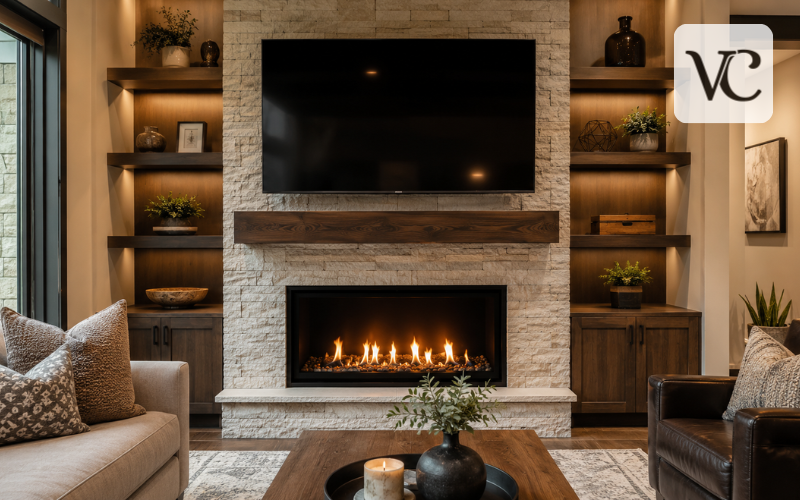
A TV over fireplace layout is popular because it places the two main living-room features on one wall. It can create a clean focal point, free other walls for furniture, and make a small or open-plan room easier to organize. It also looks polished when the television, fireplace, mantel, wiring, and storage are planned together.
However, this setup is not right for every home. Rising heat may shorten a television’s life, while a high screen can cause neck discomfort. Hidden cables, safe wall support, fireplace clearances, and access to media devices also need attention. Samsung, for example, advises against exposing a TV to a heat source and states a maximum temperature for its televisions. Fireplace makers require installers to follow the clearance rules for each model.
The best result depends on the fireplace type, firebox and mantel height, seating position, and mount. Comfort and safety should come before appearance.
TV Over Fireplace Quick Guide
| Factor | Recommended Approach | Why It Matters |
| Fireplace type | Check the exact manufacturer’s manual | Electric, gas, and wood fireplaces produce and direct heat differently |
| TV height | Keep the screen as close to seated eye level as possible | Reduces neck and shoulder discomfort |
| Heat protection | Test the temperature at the planned TV location | Excess heat may damage the television |
| Mantel | Follow fireplace clearance and material requirements | A suitable mantel may help redirect rising heat |
| TV mount | Use fixed, tilting, full-motion, or pull-down hardware | The right mount improves comfort and access |
| Wall support | Secure the mount to suitable studs or approved masonry | Prevents movement and mounting failure |
| Wiring | Install approved recessed power and media connections | Keeps cables hidden without creating electrical risks |
| Final test | Mark the TV outline with painter’s tape | Helps check size, height, and balance before drilling |
Step-by-Step TV Over Fireplace Planning Guide
- Check the fireplace manual
Find the required clearances, ventilation rules, and restrictions for the exact fireplace model. - Review the TV requirements
Check the television manufacturer’s temperature, airflow, and wall-mounting instructions. - Measure the complete wall
Record the fireplace, mantel, ceiling, TV, seating distance, and available mounting space. - Test the viewing height
Mark the screen outline with painter’s tape and view it while seated normally. - Check heat exposure
Run the fireplace and measure the temperature where the television would be installed. - Choose the correct mount
Select a fixed, tilting, full-motion, or pull-down mount based on the screen height and room layout. - Plan safe wiring
Arrange approved power, cable routing, streaming-device storage, and future access before closing the wall. - Confirm wall support
Make sure the framing, brick, or masonry can safely hold the television and mount.
Why a TV Over Fireplace Works in Some Rooms
A fireplace is often the natural center of a living room. Placing the television above it avoids creating two competing focal points on different walls. This can work well in open-plan homes where windows, doors, hallways, or kitchen openings leave few suitable places for a large screen.
The arrangement can also save wall space in a compact room. Instead of using one wall for the fireplace and another for a media unit, both features share the same area. Built-in cabinets can then provide storage without making the room feel crowded.
Still, convenience does not guarantee comfort. A TV over fireplace may be a poor choice when the mantel is high, the seats are close, or strong heat reaches the screen. Compare it with placing the TV beside the fireplace, on another wall, or on a low console. The best location allows relaxed viewing without heat or installation problems.
Essential Rules for Hanging a TV Over Fireplace
Read the instructions for the television, fireplace, and wall mount before planning the installation. There is no single safe clearance for every combination. A gas fireplace with an approved heat-management kit may allow a different layout from an older wood-burning fireplace. Heatilator and Napoleon direct owners to the model-specific manual for mantel, combustible-material, and appliance clearances.
Measure the fireplace opening, surround, mantel, ceiling, TV, mount, and seated eye level. Confirm that the wall plate can be secured to sound framing or masonry with hardware approved for the surface and total load.
Never assume the area above a fireplace is empty. It may contain a chimney, metal flue, gas line, electrical cable, vent, or part of a listed fireplace system. Do not drill until these hidden parts have been identified. Use a qualified installer when the structure is uncertain.
Heat Safety for Electric, Gas, and Wood-Burning Fireplaces
Electric fireplaces are often easier to combine with a television because many models send less heat upward or allow the heater to operate separately from the flame effect. Their manuals still specify ventilation, framing, and clearance requirements.
Gas fireplaces vary widely. Direct-vent units, open-front designs, linear models, and systems with heat-duct options can send heat in different directions. Some modern fireplaces support a lower TV position when approved heat-management parts are installed. Heatilator, for example, describes an optional system on one model that permits a television closer to the fireplace, but the model manual remains the final authority.
Wood-burning fireplaces usually need the most caution because they produce strong heat and may release ash or soot. Samsung notes that ash can collect on a TV and its vents.
Run the fireplace as it would normally be used and measure the temperature at the planned screen location. Compare the highest reading with the TV maker’s limit. A mantel, recess, or heat deflector may help, but it does not replace required clearances.
Finding the Right TV Height and Viewing Angle
For comfortable viewing, keep the center of the screen as close as practical to seated eye level. Samsung recommends eye-level placement, and SANUS uses about 42 inches from the floor to screen center as a common starting point. Actual eye height changes with the sofa, viewer, and posture.
A fireplace often pushes the television higher. Sit in the main seat and look naturally forward. You should not need to lift your chin sharply or hold your neck upward. A longer viewing distance can make a moderately raised screen easier to watch, while a close sofa makes the same height feel more extreme.
Use the dimensions of the actual TV, not only its diagonal size. Before drilling, mark the screen outline with painter’s tape or cardboard and check it from every main seat. If the television must remain above eye level, a tilting mount can aim it downward and reduce glare, but tilt cannot fully correct an uncomfortably high screen.
What to Do When the TV Above Fireplace Is Too High
A TV is probably too high when viewers lean their heads back, slide down in the sofa, or feel neck and shoulder tension. The problem is usually more noticeable during films, gaming, or long sports events.
The simplest answer is to lower the screen. In a new fireplace wall, this may mean choosing a shorter firebox or redesigning the surround and mantel while following the fireplace manual. In an existing room, a pull-down mount can bring the TV forward and closer to eye level. Some current models include heat-warning features. The television should not remain lowered in front of an active fireplace when that position exposes it to unsafe heat.
Greater viewing distance or naturally reclined seating may improve a moderate angle, but furniture should not excuse a clearly uncomfortable setup. When the fireplace forces the screen near the ceiling, another wall is usually the better choice.
Choosing the Right TV Over Fireplace Mantel
A mantel creates visual separation and may redirect some rising heat away from the television. It is not a universal heat shield. Its safe height, depth, and material depend on the fireplace design. Installation manuals often show how a deeper combustible mantel must sit farther above the opening.
Non-combustible materials such as properly specified stone, concrete, tile, or metal may offer more flexibility, but they must still follow the listed fireplace assembly and local requirements. A wood mantel cannot be moved closer simply because it is thick.
For a balanced look, the mantel should relate to the width of the fireplace and TV. It can visually anchor the arrangement without becoming oversized. Keep tall frames, candles, and seasonal decorations away from the screen, ventilation openings, and hot areas. The goal is a clear break between the two features without blocking airflow or forcing the TV higher than necessary.
Best Mounting Options for a TV Above Fireplace
A fixed mount gives a clean, shallow look, but it suits only a TV that is already at a comfortable height. A tilting mount is more useful above eye level because it can angle the picture toward the seats. SANUS recommends downward adjustment for higher placements such as above a fireplace.
A full-motion mount adds swivel and easier access to ports. It can help in open rooms with seats at different angles, although the extended screen places more leverage on the wall. A pull-down mount directly addresses excessive height by moving the TV lower for viewing and raising it afterward.
Confirm that the mount supports the TV’s weight, size, and VESA hole pattern. Attach the wall plate to suitable framing or an approved masonry system. Brick, stone veneer, drywall, and framed chimney chases require different methods. Veneer alone may not carry the load, and old masonry may need professional assessment.
Hidden Wiring and Media Storage Solutions
The cleanest wiring plan usually uses a properly installed recessed power outlet and a separate low-voltage media opening behind the screen. A conduit or accessible cable path makes it easier to replace HDMI or network cables later.
Power and low-voltage wiring should follow local electrical rules, fireplace requirements, and any fire-rated wall conditions. Do not place an ordinary detachable TV power cord or loose extension lead inside the wall. Extension cords can create shock and fire risks when damaged, overloaded, or used incorrectly. Use an approved permanent power solution instead.
Streaming sticks may fit behind the screen, but larger boxes, game systems, and receivers need ventilation and access. Store them in side cabinetry and connect them through conduit. Plan for the soundbar, including its power, weight, and distance from the fireplace. Do not seal electronics inside a small unventilated nook just to keep the wall empty.
Modern TV Over Fireplace Ideas
A linear electric fireplace beneath a recessed screen creates a sleek modern wall, especially when both features are centered and cables are concealed. A shallow niche can make the television appear flush, but it must provide the ventilation and access required by the maker. LG manuals, for example, specify space around certain TVs for airflow, so design the niche for the exact model rather than copying a picture.
A frame-style television is useful when a large black screen would dominate the room. Samsung’s Frame range can display artwork or personal photos in Art Mode, and its 2026 models continue the slim picture-frame approach.
Other TV over fireplace ideas include floor-to-ceiling stone, large tile, smooth plaster, and built-in cabinets. Wood slats add warmth, but combustible finishes must remain outside restricted areas unless the approved assembly allows them. Use TV above fireplace ideas pictures for inspiration, then adapt the proportions, clearances, and materials to the actual wall.
Traditional Fireplace With TV Above
A traditional fireplace with TV above works best when the screen respects the architecture instead of covering it. Brick, carved wood, stone, and detailed mantels already have strong character, so a television that is too large or too close to the trim may make the wall feel crowded.
Begin with the width of the chimney breast or surround. The TV does not always have to be narrower than the firebox, but it should fit comfortably within the main architectural area. A dark frame or art-style screen can help it blend with an older interior.
A substantial mantel provides a visual break, yet it may also raise the TV. Do not preserve a decorative arrangement at the cost of comfort. In some rooms, a television in a cabinet beside the fireplace works better.
Symmetrical bookcases, lower cabinets, wall lights, and simple mantel decor can connect the wall. Hide modern components behind ventilated doors, and avoid cutting historic brickwork or timber until the structure and fireplace path are understood.
TV Over Fireplace DIY Planning
Begin with a measured drawing. Include the firebox, surround, mantel, studs, outlets, vents, ceiling, and cabinets. Add the exact TV dimensions and mount position. Mark the plan on the wall with tape or cardboard and test it from the seating area.
A stud finder can help, but it cannot identify every flue, pipe, or protected fireplace part. Review the fireplace model and manual before opening the wall. Use fasteners approved for the surface and strong enough for the combined load of the TV, mount, soundbar, and accessories.
DIY work should stop where specialist knowledge begins. An electrician may be needed for a recessed outlet. A fireplace technician should review work near a gas unit, vent, chimney, or heat-management system. Professional TV installation may be sensible for heavy screens, stone walls, moving mounts, or uncertain framing. Planning these services before finishing the wall is easier than correcting hidden mistakes later.
Common Mistakes and Lessons From TV Over Fireplace Reddit Discussions
TV over fireplace Reddit discussions repeatedly focus on screens mounted too high, heat that was never tested, and cables hidden without enough planning. These posts show real rooms and regrets, but the advice is anecdotal and often mixed with humor or personal taste. Recent threads commonly suggest testing the TV outline with tape or cardboard and considering another wall when the angle feels uncomfortable.
Another mistake is choosing a screen only to fill the wall or cover outlets. A TV wider than the fireplace is not automatically wrong, but poor proportions can make the wall look top-heavy. Choose the size for the viewing distance and full feature wall.
Homeowners also underestimate future access. Cables fail, devices change, and outlets need service. Create an accessible route rather than sealing everything behind stone. Most importantly, do not use Reddit comments as clearance or electrical instructions. Use them for ideas, then confirm safety decisions with product manuals and qualified local professionals.
Conclusion
A successful TV over fireplace setup needs more than a stylish appearance. The screen should feel comfortable from the main seats, stay within the maker’s heat limits, attach securely to the wall, and have wiring that is safely hidden yet accessible.
Plan the fireplace, mantel, TV, mount, soundbar, storage, and finishes as one wall. In a new build, coordinate the firebox height, heat management, framing, outlets, and niches from the start. In an existing room, careful measurement may show that a tilting or pull-down mount will help—or that another TV location is wiser.
Appearance should never come before comfort or safety. Follow the exact manuals for the television, fireplace, and mount, check local building and electrical requirements, and use qualified help whenever the structure, heat path, gas system, chimney, or wiring is uncertain.
Frequently Asked Questions
Is it safe to put a TV over a fireplace?
It can be safe when the television stays within its permitted temperature range, the fireplace clearances are followed, and the mount is attached securely. Safety depends on the exact TV, fireplace, wall, and mantel.
How high should a TV be above a fireplace?
There is no universal height. Keep the screen center as close to seated eye level as the fireplace allows, while maintaining all required clearances. Test the proposed position with painter’s tape before installation.
Does a mantel protect a TV from fireplace heat?
A mantel may redirect some rising heat, but it does not guarantee protection. Its material, depth, and position must comply with the fireplace manual, and the temperature at the TV location should still be tested.
What should I do if my TV above the fireplace is too high?
Consider lowering the screen, using a tilting or pull-down mount, increasing the viewing distance, or moving the television to another wall. A comfortable position should not require viewers to hold their heads upward.
Which fireplace type is best for mounting a TV above it?
Many electric fireplaces are easier to combine with a television because their heat can be easier to control. However, suitability depends on the model’s vent direction, heat output, clearances, and installation instructions.
Disclaimer: This article provides general information about planning a TV over fireplace installation. Fireplace clearances, temperature limits, wall structures, electrical requirements, and building codes vary by product and location. Always follow the exact instructions supplied with the television, fireplace, and mounting system. Consult a qualified electrician, fireplace technician, or professional installer when working near wiring, gas lines, chimneys, vents, masonry, or uncertain wall framing.
Enjoyed this article? Discover more helpful ideas and fresh inspiration on Vogue Cultures.