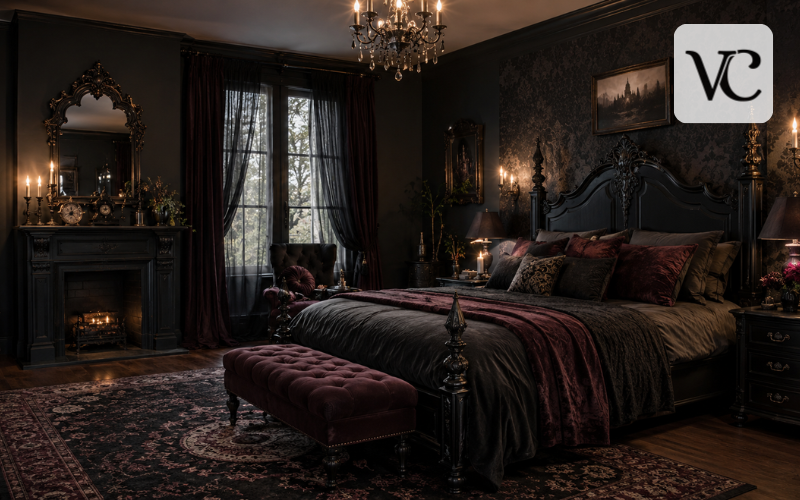
A gothic bedroom is a sleeping space that combines dark colors, dramatic details, rich textures, and a strong sense of personality. Although black is often associated with Gothic interiors, the style is much broader than simply painting everything dark. A well-designed Gothic bedroom can feel elegant, warm, romantic, peaceful, and surprisingly comfortable.
The style can take several forms. A traditional Gothic room often includes dark wood, carved furniture, iron details, and architecture inspired by old European interiors. A Victorian gothic bedroom adds luxurious fabrics, decorative patterns, antique-style furniture, and romantic lighting. Modern Gothic rooms keep the darker mood but use cleaner furniture and fewer decorative pieces. Romantic Gothic and Whimsigoth bedrooms soften the look with velvet, lace, plants, celestial patterns, and warm lighting.
The key is balance. Colors, furniture, walls, lighting, fabrics, and decorative pieces should work together rather than compete for attention. You do not need a large room or an unlimited budget. With thoughtful choices, gothic bedroom ideas can work in apartments, small bedrooms, modern homes, and traditional properties.
Snippet-Ready Definition:
A gothic bedroom is a dark, dramatic bedroom style that blends rich colors, vintage-inspired furniture, layered textures, moody lighting, and decorative details to create an elegant, cozy, and highly personal space.
Quick Guide: Gothic Bedroom Styles
| Style | Main Features | Best Colors | Overall Feel |
| Traditional Gothic | Carved wood, iron details, ornate decor | Black, burgundy, deep purple | Dramatic and historic |
| Victorian Gothic | Canopy beds, velvet, damask, antique-style pieces | Crimson, plum, gold, charcoal | Elegant and romantic |
| Modern Gothic | Simple furniture, dark walls, metallic accents | Black, gray, navy, silver | Clean and sophisticated |
| Romantic Gothic | Soft fabrics, candles, flowing curtains | Burgundy, purple, emerald | Warm and intimate |
| Whimsigoth | Celestial decor, plants, vintage accents | Jewel tones, black, gold | Dreamy and creative |
Simple Steps to Create a Gothic Bedroom
- Choose a dark base color such as charcoal, black, navy, or deep green.
- Make the bed the main focal point with dark wood, iron, or upholstered furniture.
- Add rich textures through velvet, rugs, curtains, and layered bedding.
- Use warm lamps, sconces, or indirect lighting instead of relying only on bright ceiling lights.
- Finish with a few meaningful Gothic, vintage, botanical, or celestial accessories.
What Creates a True Gothic Room Aesthetic?
A true gothic room aesthetic is created through atmosphere rather than a collection of themed decorations. The room should feel deep, layered, slightly dramatic, and personal. Dark colors usually provide the foundation, while furniture shapes, fabrics, lighting, artwork, and metal finishes build the character.
Traditional Gothic interiors often feature arches, carved wood, tall furniture, decorative frames, and rich patterns. Layered materials such as velvet, heavy curtains, patterned rugs, dark wood, and metal prevent the room from looking flat. Vintage-style mirrors, framed artwork, and carefully chosen lighting can add historic character without making the bedroom feel like a movie set.
Modern Gothic design takes a simpler approach. Instead of several ornate pieces, you might choose one dramatic bed, a charcoal wall, dark bedding, and a sculptural lamp. Current bedroom design in 2026 is also leaning toward layered lighting, darker cocooning colors, texture, and spaces that feel personal and comfortable, all of which work naturally with Gothic interiors.
Whether ornate or minimalist, the most successful Gothic bedroom still needs to function as a comfortable place to sleep and relax.
Gothic Bedroom Color Palettes Beyond Basic Black
Black may be the best-known Gothic color, but using it alone can make a bedroom feel heavy. A richer palette usually creates a more interesting and comfortable space.
Charcoal, graphite, deep gray, midnight blue, and near-black colors work well as foundation shades. They provide the dark atmosphere associated with Gothic design without making every surface look identical. Jewel tones can then bring more personality into the room. Burgundy and crimson add warmth, while plum and deep purple create a romantic feeling. Emerald green can make the room feel luxurious, while navy gives a softer alternative to pure black.
Metallic details also influence the mood. Antique brass and aged gold suit Victorian and romantic rooms, while silver, chrome, or black metal can make a modern gothic bedroom feel cleaner and more contemporary.
Rooms with limited daylight do not need to be completely dark. Warm beige, muted taupe, cream, dusty gray, or soft stone shades can be used on ceilings, bedding, rugs, or selected walls. These lighter areas provide contrast while allowing the darker Gothic elements to remain the main focus.
Gothic Bedroom Walls That Set the Mood
Walls have a major influence on the atmosphere of a Gothic bedroom. Matte charcoal, black, deep green, navy, or burgundy paint can create a dramatic background without requiring complicated decoration.
Patterned wallpaper provides another option. Damask designs work especially well in traditional interiors, while dark floral, botanical, or vintage patterns can make the room feel more romantic. A wallpaper design with subtle contrast is usually easier to live with than an extremely busy pattern across every wall.
Architectural details can add depth to gothic bedroom walls. Decorative molding or wall paneling can make a plain room feel more traditional, while stone-look finishes and exposed brick effects can create an older, slightly medieval atmosphere. Authentic materials are not necessary if they are outside the budget; the goal is visual depth rather than imitation for its own sake.
In a small bedroom, one dark feature wall behind the bed can create drama while keeping the remaining walls lighter. Larger rooms can usually handle deeper colors on all four walls. Ceiling height, window size, artificial lighting, and furniture color should also influence the decision.
Gothic Bedroom Furniture: The Pieces That Matter Most
The bed is normally the strongest piece of gothic bedroom furniture, so it makes sense to design the room around it. A carved dark-wood bed can support a Victorian style, while wrought iron creates a lighter visual appearance. Upholstered beds in velvet or other textured fabrics can add softness to romantic Gothic rooms.
Canopy and four-poster beds are another natural fit because they add height and architectural interest. Canopy beds have also returned strongly to bedroom design in 2026, with both traditional wooden versions and thinner metal frames being used in modern interiors.
Other furniture should support rather than compete with the bed. Dark nightstands, a wooden dresser, wardrobe, bench, or occasional chair may be enough. A common mistake is choosing every piece with heavy carvings and oversized proportions. This can quickly make the room feel crowded.
Mixing styles often produces a more natural result. An ornate antique-inspired bed can sit beside simple nightstands, or a streamlined modern bed can be paired with an aged mirror and vintage dresser. This contrast helps a Gothic bedroom feel collected over time rather than purchased as a matching set.
Victorian Gothic Bedroom for Classic Dark Elegance
A Victorian gothic bedroom combines Gothic drama with the richness associated with nineteenth-century interiors. Dark wood, detailed furniture, decorative patterns, luxurious fabrics, and traditional lighting usually form the foundation.
A carved wooden bed or canopy frame can become the main focal point. Tufted upholstery is another option, particularly in deep red, green, purple, or charcoal. Fabrics such as velvet, damask, cotton, and lace add visual softness and prevent heavy furniture from dominating the room.
Lighting can include an ornate chandelier, decorative table lamps, or candle-style wall sconces. Mirrors with carved or antique-style frames help reflect light around a darker room. Framed botanical prints, landscapes, portraits, or architectural artwork can further support the historic mood.
The goal is not to fill every surface with decorative objects. Too many antique-style pieces can make the bedroom feel theatrical. A better approach is to allow a few strong elements, such as the bed, wallpaper, chandelier, or mirror, to carry the Victorian character while keeping everyday areas comfortable and practical.
Victorian Gothic Bedroom Ideas for a Modern Home
You do not need to live in an old house to use Victorian gothic bedroom ideas. Traditional details can be introduced gradually into a modern room without changing the entire interior.
Start with one or two strong features. A carved bed, antique-style mirror, dark floral wallpaper, or traditional chandelier can immediately change the atmosphere. Keep surrounding furniture simpler so those elements have room to stand out.
Modern comfort should remain important. A Victorian-inspired wooden bed can be paired with supportive contemporary bedding, practical bedside storage, and simple window coverings. Dark wood furniture also works well with plain cream, charcoal, or white bedding when you want a cleaner result.
Smaller bedrooms benefit from restraint. Instead of using a massive four-poster bed, consider a slim iron frame or an upholstered headboard with a traditional shape. A patterned feature wall can create the Victorian mood without reducing usable floor space.
Combining old and new makes the style easier to live with. The bedroom can still include modern charging points, storage solutions, comfortable lighting, and practical furniture while maintaining its Gothic character.
Modern Gothic Bedroom With a Cleaner Look
A modern gothic bedroom removes much of the visual complexity found in traditional Gothic interiors but keeps the dramatic mood. This style works especially well for people who like dark rooms but prefer simple furniture and uncluttered surfaces.
Charcoal or matte-black walls provide a strong background. Furniture can have straight lines, smooth finishes, or simple upholstered shapes rather than heavy carving. A platform bed, streamlined nightstands, and a clean dresser may be enough to establish the basic layout.
Metal finishes can provide contrast. Small touches of brass, silver, chrome, or gold on lamps, drawer handles, frames, and side tables can stop dark surfaces from blending together. These details are most effective when repeated carefully rather than mixed randomly.
Abstract artwork, large photography, geometric mirrors, and sculptural lamps can replace traditional Gothic accessories. Indirect or hidden LED lighting can also add depth behind a headboard, shelving unit, or architectural feature.
Modern Gothic design should still feel warm. Soft bedding, rugs, curtains, comfortable seating, and several light sources prevent minimalism from becoming cold or unfinished.
Romantic Gothic and Whimsigoth Bedroom Ideas
Romantic Gothic style brings softness to a dark bedroom. Instead of relying mainly on strong architectural details, it uses rich fabrics, warm lighting, flowing shapes, and decorative elements to create an intimate atmosphere.
Velvet bedding, soft throws, lace details, long curtains, and silk-look fabrics can create layers without requiring major renovation. Deep red, plum, emerald, navy, and muted gold work especially well against black or charcoal backgrounds.
Whimsigoth takes the idea in a more playful direction. It combines darker Gothic elements with celestial, mystical, botanical, and Bohemian influences. Moon and star artwork, vintage-inspired mirrors, plants, patterned textiles, and unusual decorative objects are common features. The style is generally associated with mixing moody Gothic elements with softer and more whimsical influences.
Plants can be particularly useful because green leaves create a natural contrast against dark walls. Real plants should always be chosen according to the amount of light available in the room.
The best romantic or Whimsigoth bedroom feels personal and collected rather than heavily themed.
Gothic Bedroom Lighting for a Warm, Moody Atmosphere
Lighting can completely change how dark colors appear, making it one of the most important parts of a Gothic bedroom. A room that depends on one bright ceiling fixture may look harsh, while a room that is permanently too dim can become uncomfortable.
Layer several light sources whenever possible. General lighting makes everyday tasks easier, while bedside lamps provide practical reading light. Accent lighting can highlight artwork, molding, furniture, or textured walls. Decorative lighting then contributes to the Gothic atmosphere.
Traditional rooms may suit chandeliers and candle-style sconces, while warm table lamps work in almost any version of the style. Modern rooms can use discreet LED lighting behind furniture or along architectural details. Warm white light generally creates a softer feeling than extremely cool light.
Real candles can add atmosphere, but open flames should never be left unattended or placed near bedding, curtains, paper, or other flammable materials. Flameless candles are a safer choice when the visual effect matters more than the flame itself.
Bedding, Curtains, Rugs, and Textures That Add Depth
Texture is what stops a dark room from appearing flat. Two black surfaces can look completely different when one is matte cotton and the other is velvet, polished wood, metal, or woven fabric.
Bedding provides an easy place to introduce these differences. A simple cotton or linen duvet can be paired with a velvet throw, textured cushions, or a satin-look accent. There is no need to cover the bed with dozens of pillows; a few contrasting materials can create enough depth.
Floor-length curtains bring softness and can make windows look taller. Heavy curtains suit dramatic Victorian rooms, while lighter fabrics work better where natural light is limited.
A rug can visually anchor the bed, particularly when the floor is pale or hard. Dark Persian-inspired patterns, distressed vintage designs, simple charcoal rugs, and subtle geometric styles can all work depending on the type of Gothic bedroom.
Mixing smooth, soft, woven, matte, and reflective surfaces creates a richer room even when the color palette remains restrained.
Gothic Bedroom Ideas on a Budget
Creating a Gothic look does not require replacing every item in the bedroom. Some of the most effective gothic bedroom ideas on a budget involve changing surfaces and reusing furniture that is already available.
Paint usually creates one of the biggest visual changes for the cost. A dark accent wall can immediately establish the mood. Removable wallpaper can provide pattern without the commitment of permanent wallpaper, which may be useful for renters.
Existing furniture can sometimes be refreshed with a darker finish or new drawer pulls, although the correct preparation and paint should be used for the furniture material. Changing bedding, curtains, lampshades, frames, or hardware can also shift the style without replacing large pieces.
Secondhand shops, flea markets, and resale platforms can be useful places to look for mirrors, lamps, frames, small tables, and older wooden furniture. Condition matters more than age, especially for large furniture that needs to remain stable and safe.
Instead of buying many inexpensive decorations, put the available budget toward one noticeable feature and build around it gradually.
Common Gothic Bedroom Design Mistakes to Avoid
One of the biggest mistakes is assuming that Gothic design means making every item black. Without differences in color, material, texture, and lighting, an all-black bedroom can lose depth rather than gain drama.
Too many themed decorations can cause a similar problem. Skulls, bats, crosses, candles, celestial symbols, and other Gothic motifs can work as accents, but filling every wall and surface with them may make the room feel temporary or staged.
Furniture scale also matters. Large carved beds and wardrobes may look impressive online but can overwhelm a small bedroom. Measure the space before purchasing furniture and leave comfortable walking paths around the bed.
Do not rely only on weak mood lighting. The room still needs enough illumination for dressing, cleaning, reading, and other everyday activities.
Comfort and function should never be sacrificed for appearance. Proper ventilation, useful storage, comfortable bedding, safe electrical lighting, and accessible furniture remain important.
Finally, avoid mixing Victorian, industrial, minimalist, medieval, romantic, and Whimsigoth elements without deciding which style should lead the room. A clear direction usually creates a calmer and more convincing result.
Conclusion
A successful gothic bedroom is not simply a dark bedroom filled with dramatic decorations. It is a carefully balanced space where color, walls, furniture, lighting, fabrics, textures, and personal details work together.
There is no single correct version of the style. A Victorian Gothic room may feature carved wood, patterned wallpaper, and rich textiles, while a romantic bedroom can focus on velvet, flowing curtains, and jewel tones. A modern Gothic bedroom may use charcoal walls, simple furniture, metallic details, and clean lighting. Whimsigoth offers another option for people who prefer a softer mix of dark colors, plants, celestial elements, and collected decor.
The best approach is to consider the size of the bedroom, the amount of natural light it receives, the furniture you already own, and the amount you want to spend. Build the room gradually instead of adding every Gothic element at once.
When comfort and personality guide the design, a Gothic bedroom can feel dramatic without being overwhelming, dark without being gloomy, and elegant while still remaining a practical, welcoming place to rest.
FAQs
What colors work best in a gothic bedroom?
Black, charcoal, burgundy, deep purple, emerald green, and navy are popular choices. Gold, brass, silver, cream, or muted neutrals can add contrast and prevent the bedroom from feeling too dark.
Can a small bedroom have a Gothic style?
Yes. A small Gothic bedroom can use one dark accent wall, slim furniture, mirrors, layered lighting, and a few dramatic accessories. Avoid oversized furniture and too many decorations.
Does a gothic bedroom have to be completely black?
No. Gothic bedrooms can use burgundy, plum, emerald, navy, gray, and warm neutrals. Mixing dark shades with lighter accents and varied textures usually creates a more balanced room.
How can I create a gothic bedroom on a budget?
Start with dark paint, affordable bedding, thrifted mirrors, vintage-style frames, and updated furniture hardware. Focus on one strong feature instead of replacing all your furniture at once.
What is the difference between Victorian and modern Gothic bedrooms?
Victorian Gothic bedrooms use ornate furniture, rich fabrics, carved details, and antique-inspired decor. Modern Gothic bedrooms keep the dark atmosphere but use cleaner furniture, simpler shapes, and less visual clutter.
Disclaimer: This article is intended for general interior design inspiration and informational purposes only. Colors, furniture, lighting, and decor should be chosen according to your room size, budget, personal preferences, and safety needs.
Enjoyed this article? Discover more helpful ideas and fresh inspiration on Vogue Cultures.