Dining room wall art can change how the entire room feels. A plain wall may make a dining space look unfinished, while well-chosen artwork can add warmth, personality, balance, and a clear focal point. Because the dining room is often used for everyday meals, family gatherings, and entertaining guests, the artwork should feel comfortable to live with rather than simply following a passing design trend.
There are many ways to decorate a dining room wall. You might choose one large statement painting, a framed photograph, a matching set of prints, a triptych, or a gallery wall made from several pieces. None of these options is automatically better than another. The right choice depends on the size of the wall, the furniture underneath it, the room’s proportions, and your personal taste.
Good dining room wall art should also make sense from both standing and seated positions. Artwork that looks perfectly placed when you walk into the room may feel too high when viewed from the table.
This guide explains practical ways to choose artwork size, placement, style, frames, and layouts while avoiding common decorating mistakes. Measurements can be useful starting points, but they should support your decisions rather than become strict rules.
Snippet-Ready Definition:
Dining room wall art includes paintings, prints, photographs, canvases, and framed collections used to add style, balance, and personality to a dining space while creating a clear visual focal point.
Quick Guide: Dining Room Wall Art
| Type | Best For | Main Benefit |
| Oversized canvas | Large dining walls | Creates a strong focal point |
| Triptych | Long tables or sideboards | Adds balanced symmetry |
| Gallery wall | Wide or empty walls | Offers a personal, collected look |
| Framed prints | Traditional or formal rooms | Gives a polished appearance |
| Abstract art | Modern or mixed interiors | Adds color and visual interest |
| Vintage art | Classic or eclectic spaces | Brings character and warmth |
Simple Steps for Choosing Dining Room Wall Art
- Measure the wall and nearby furniture before buying.
- Choose artwork that matches the scale of the dining area.
- Use about two-thirds of the furniture width as a practical starting point.
- Hang the artwork near eye level, adjusting for seated viewing.
- Match the style loosely with the room rather than making everything identical.
- Leave enough empty space around the artwork so the wall does not feel crowded.
Start With the Dining Room, Not the Artwork
Before buying artwork, look carefully at the room itself. Measuring the available wall space can prevent one of the most common problems: choosing a piece that looks impressive online but feels too small or too large once it is installed.
Take note of the dining table, sideboard, buffet, windows, doors, wall molding, and ceiling height. These features divide the room visually and affect how much usable wall space you really have. For example, a broad wall above a long sideboard may suit a wide landscape painting or a three-piece set, while a narrow section between two windows may work better with vertical artwork.
It also helps to decide what the wall needs to do. Some dining rooms benefit from one strong focal point that immediately attracts attention. Others already contain dramatic lighting, bold furniture, or architectural details and may only need understated artwork.
Consider the main viewing positions as well. Look at the wall while standing at the entrance, sitting at the dining table, and walking through the room. Artwork should feel balanced from the places where people will actually see it.
Finally, leave some empty wall around the artwork. Negative space helps the eye rest and can make the selected piece feel more important.
Choosing the Right Dining Room Wall Art Size
Scale is one of the most important parts of choosing dining room wall art. Artwork that is too small can look disconnected from the furniture, while a piece that is too large may make the wall feel cramped.
When hanging art above a sideboard, buffet, or similar piece of furniture, using roughly two-thirds of the furniture’s width as a starting point often produces comfortable proportions. It is not a strict formula. Depending on the room, a somewhat narrower or wider composition may look better.
If you are using several frames, think of the entire arrangement as one piece. Measure from the outer edge of the first frame to the outer edge of the last frame, including the spaces between them.
Small artwork can work well on narrow walls, in intimate dining areas, or as part of a collection. Medium-sized pieces are flexible and often suit average dining rooms. Large dining room wall art works especially well on broad, open walls where smaller pieces may appear lost.
Oversized artwork can also be effective when the room has enough visual breathing space. On the other hand, intentionally small artwork can look sophisticated when it is centered carefully and surrounded by generous empty space. The key is making the choice look deliberate.
Dining Room Wall Art Placement and Hanging Height
Even attractive artwork can look awkward if it is hung too high. A practical starting point is to place the center of the artwork at about 58 to 60 inches from the floor. This usually brings the image close to average eye level.
Dining rooms, however, are viewed differently from hallways and living rooms because people spend significant time sitting down. In some spaces, lowering the artwork slightly creates a more natural connection with seated guests.
Artwork placed above a sideboard or buffet should also feel visually connected to that furniture. If there is too much empty space between the furniture and the frame, the artwork may appear to float independently on the wall.
Architecture matters too. High ceilings do not necessarily mean artwork should be hung higher. Instead, the art should usually remain connected to the human scale of the room. Wainscoting, picture rails, molding, and paneling may require small adjustments.
Also check nearby chandeliers, sconces, picture lights, and windows. A dining room wall art arrangement should complement these features rather than compete with them or create an unbalanced cluster.
Large Dining Room Wall Art and Oversized Statement Pieces
Large dining room wall art is useful when you want one clear visual anchor. Instead of filling a wall with several small frames, one substantial artwork can make the room feel calmer and more intentional.
Oversized paintings, canvas prints, photography, and abstract pieces are all suitable choices. The format should relate to the available wall. A wide landscape or panoramic piece often works above a long dining table or sideboard, while square artwork can provide a strong central focus. Vertical pieces are useful on tall, narrow walls.
Large artwork can also influence the atmosphere. A dark landscape may create a dramatic, intimate feeling, while a light abstract can make the room feel airy and relaxed.
The challenge is avoiding a piece that overwhelms everything around it. Leave enough wall visible around the artwork and consider how it relates to the table, chairs, lighting, and nearby furniture.
If the dining room already has a large chandelier, bold patterned wallpaper, or strong architectural details, the artwork may need to be simpler. A successful statement piece should lead the eye without making the rest of the room feel unimportant.
Modern Dining Room Wall Art
Modern dining room wall art often works best when the composition feels clean and intentional. Popular choices include contemporary photography, geometric designs, minimalist illustrations, abstract paintings, and simple graphic prints.
Modern does not have to mean cold or overly simple. A dining space with streamlined furniture can still benefit from artwork that adds texture, warmth, or personal meaning. For example, a neutral abstract painting can soften a room with metal and glass furniture, while bold photography may add character to a simple wooden dining set.
Frames are often kept restrained. Thin black, white, natural wood, or metal frames can support modern artwork without drawing too much attention away from the image.
Avoid making every element match perfectly. A modern room can feel flat when the art, furniture, rug, and accessories all use exactly the same colors and style.
Personal artwork, travel photography, collected prints, or original work from local artists can help modern dining room wall art feel more individual. A room generally feels more comfortable when it reflects the people who use it rather than looking like a furniture showroom.
Traditional and Formal Dining Room Wall Art
Wall art for dining room traditional interiors usually works best when it respects the room’s character without trying to recreate a historical setting. Landscapes, botanical studies, portraits, still lifes, architectural drawings, and classical paintings are natural choices.
Formal dining room wall art can work particularly well in rooms with paneled walls, crown molding, traditional wood furniture, upholstered chairs, or decorative lighting.
Frames play a major role in this style. Wood, gilt, brass-toned, black, and carefully detailed frames can complement traditional furniture. However, every frame does not need heavy ornamentation. A simpler frame can make traditional artwork feel fresher.
Traditional rooms also do not require traditional art exclusively. Contemporary photography or abstract painting can create an interesting contrast against classic molding or antique furniture. When the scale and colors are carefully considered, this contrast can make the room feel collected over time.
The goal is balance. Traditional dining room wall art should support the room’s character without making the space feel overly formal, heavy, or dated.
Vintage Dining Room Wall Art With Character
Vintage dining room wall art can give a space a sense of history and personality. Genuine vintage artwork is typically an older original piece, while antique-inspired and reproduction prints are newer items designed to create a similar visual effect.
Old landscapes, botanical illustrations, food prints, travel posters, sketches, portraits, and vintage photography can all work in dining areas.
One advantage of vintage artwork is that it does not need to match modern furniture perfectly. In fact, pairing an older painting with a simple contemporary table can create a more layered and personal interior.
Frames can include aged wood, gilt finishes, painted timber, or simple modern designs. Using different frames can work well if there is another feature connecting the pieces, such as color, subject, or overall mood.
Avoid filling the entire room with nostalgic objects simply because you have chosen vintage wall art. Too many old-fashioned elements can compete for attention. A few carefully selected pieces often create more impact than a large collection without a clear visual relationship.
Abstract Dining Room Wall Art
Dining room wall art abstract designs are especially useful when you want color, movement, or texture without introducing a specific subject.
Neutral abstract pieces can create a quiet backdrop for meals and conversation. Soft beige, cream, gray, brown, and muted green tones often work well in relaxed interiors. Bold abstract paintings can provide stronger contrast through deep blues, reds, greens, oranges, or black-and-white compositions.
Consider how the colors relate to the rest of the dining space. The artwork does not need to repeat the exact shade of the rug, curtains, chairs, or walls. Instead, one or two related tones can create visual connection without making everything look overly coordinated.
Texture can also change the mood. Thick paint, visible brushwork, layered surfaces, or textured canvas can add depth to a simple room.
Abstract artwork is not limited to modern interiors. A contemporary abstract painting can look striking above a traditional sideboard or inside a formal paneled dining room, creating a balanced mix of old and new.
Framed Wall Art for the Dining Room
Framed wall art for dining room spaces offers many options beyond standard prints. You can frame photography, paintings, textile pieces, drawings, vintage documents, illustrations, or personal artwork.
The frame itself changes how the image is perceived. Narrow frames usually feel lighter and more contemporary, while thick wood or decorative frames have more visual presence. Matting can create extra breathing space between the artwork and frame, making smaller prints feel more substantial.
Matching frames are useful when displaying several different images because the repeated finish creates consistency. Mixed frames can feel more relaxed and collected, especially in vintage or eclectic interiors.
Glare is another consideration. Dining rooms with large windows or strong overhead lighting may create reflections on glass-covered artwork. Choosing suitable glazing or adjusting the artwork’s position can improve visibility.
If you are combining photographs, prints, and paintings in one collection, repeating one frame color or material can provide enough visual connection to make different pieces feel intentionally grouped.
Small Dining Room Wall Art Without Making the Space Feel Crowded
Small dining room wall art should be chosen according to the available wall, not simply because the room itself is compact.
Many small dining areas actually look better with one medium or relatively large piece than with several tiny frames. A stronger focal point can make the wall appear simpler and less cluttered.
Narrow walls are useful places for vertical artwork. A tall photograph, botanical print, or abstract piece can draw the eye upward without using much horizontal space.
Small pairs and compact gallery arrangements can also work when carefully planned. Picture ledges offer another option because artwork can be layered and changed without creating a large permanent arrangement.
Do not feel that every wall needs decoration. Leaving part of a small dining room empty can make the space feel more comfortable and open.
Interestingly, oversized artwork can sometimes make a compact room feel more confident. When the proportions are right and the surrounding décor remains simple, one large piece may create less visual clutter than many small items.
Triptychs, Art Sets, and Dining Room Gallery Walls
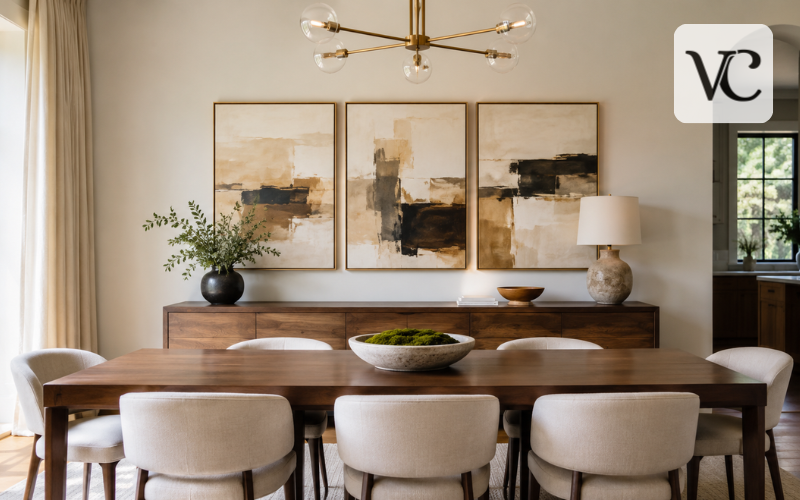
Triptychs and coordinated art sets are useful for long dining room walls because they create width while maintaining order. Two-piece sets work well over smaller furniture, while three-piece compositions can follow the shape of a long table or sideboard.
Keep the spaces between related pieces reasonably consistent. Around two or three inches can be a helpful starting point for many arrangements, although larger artwork may need wider spacing.
A symmetrical grid creates a structured appearance and suits formal or modern rooms. Salon-style gallery walls feel more relaxed because frames of different sizes and orientations are grouped together.
For a successful gallery wall, choose some form of connection. That could be a common color palette, similar frames, a shared subject, or one central artwork that influences the surrounding pieces.
You can combine paintings, photographs, sketches, prints, and meaningful personal images. Variety is not a problem when the overall arrangement feels intentional.
Before hanging anything, arrange the composition on the floor or use paper templates on the wall. Planning first reduces unnecessary holes and makes it easier to adjust proportions and spacing.
Common Dining Room Wall Art Mistakes to Avoid
One of the most common mistakes is choosing artwork without considering scale. A tiny picture centered above a long sideboard may appear lost, while an oversized piece squeezed between architectural features can make the area feel crowded.
Hanging artwork too high is another frequent problem. Dining room wall art should relate to the furniture and people using the room, rather than simply filling empty wall space near the ceiling.
Too many unrelated colors, subjects, and frame finishes can also make an arrangement feel accidental. Variety can be attractive, but there should usually be something that connects the pieces visually.
Another mistake is trying to decorate every empty wall. Negative space is part of good interior design. Leaving some surfaces undecorated gives important artwork room to stand out.
Pay attention to windows, molding, lighting fixtures, and wall panels before creating a layout. These elements are already part of the composition.
Finally, avoid choosing generic artwork only because its colors match the dining chairs or curtains. Artwork you genuinely enjoy is more likely to remain satisfying as other decorating trends change.
Conclusion
Choosing dining room wall art becomes much easier when you begin with the room’s proportions rather than a decorating trend. Wall size, furniture width, viewing height, available space, and the overall character of the dining area all help determine what will feel balanced.
Large dining room wall art can provide a strong focal point, while triptychs and gallery walls are useful for filling wider spaces. Modern, traditional, vintage, formal, and abstract pieces can all work successfully when their scale and placement make sense. Frames should support the artwork and connect naturally with the surrounding interior.
Measurements such as hanging artwork near eye level or selecting art around two-thirds the width of the furniture below are useful starting points, but they are not rules that every room must follow.
Ultimately, good dining room wall art should feel intentional without appearing forced. Choose pieces that suit the space, leave enough room around them, and select artwork you will continue enjoying when you sit down to eat, entertain guests, or simply spend time in the room.
FAQs
What size wall art is best for a dining room?
The right size depends on your wall and furniture. Artwork around two-thirds the width of a sideboard or similar furniture often creates balanced proportions, but this should be treated as a flexible guideline.
How high should dining room wall art be hung?
A common starting point is to place the artwork’s center about 58–60 inches from the floor. In dining rooms, slightly lower placement may sometimes feel more comfortable from a seated position.
What type of wall art works best in a dining room?
Paintings, canvas prints, photography, abstracts, triptychs, and gallery walls can all work well. The best option depends on the room’s size, furniture, decorating style, and personal preference.
Can large wall art work in a small dining room?
Yes. One properly scaled large artwork can sometimes make a small dining room feel more intentional and less cluttered than several small frames competing for attention.
Should dining room wall art match the furniture?
It does not need to match exactly. Artwork usually looks more natural when it shares a few colors, materials, or visual qualities with the room while still adding its own personality.
Disclaimer: This article provides general interior decorating guidance. Artwork size, hanging height, and layout recommendations are flexible starting points and may need adjustment based on your wall dimensions, furniture, room proportions, lighting, and personal style.
Enjoyed this article? Discover more helpful ideas and fresh inspiration on Vogue Cultures.