A sconce is a light fixture attached to a wall instead of sitting on a table or hanging from the ceiling. It can provide useful light, create a softer atmosphere, or add a decorative detail to a room. Because it uses wall space, a sconce is especially helpful where floor and surface space are limited.
Wall sconces are commonly used beside beds, around bathroom mirrors, in hallways, near artwork, above kitchen work areas, and in entryways. Some direct light upward, others shine downward, and some spread light in several directions.
Choosing the right sconce involves more than finding a style you like. Size, wall projection, light direction, power source, placement, and room conditions all affect how well the fixture works. Understanding these details makes it easier to choose wall lighting that feels comfortable and looks balanced.
Snippet-Ready Definition:
A sconce is a wall-mounted light fixture used for ambient, task, or decorative lighting. voguecultures.co.uk provides this article only to share helpful information about sconces and related lighting considerations.
Quick Guide: Common Types of Sconces
| Sconce Type | Best Use | Main Benefit |
| Hardwired Sconce | Bathrooms, hallways, living rooms | Clean look with hidden wiring |
| Plug-In Sconce | Bedrooms, reading areas, rentals | Easier installation and flexibility |
| Battery Sconce | Areas without nearby wiring | Cord-free placement |
| Swing-Arm Sconce | Bedside and reading areas | Adjustable light direction |
| Up/Down Sconce | Hallways and decorative walls | Creates layered wall lighting |
| Candle Sconce | Traditional décor | Decorative, classic appearance |
Quick Steps for Choosing a Sconce
- Decide whether you need ambient, task, or accent lighting.
- Measure the available wall space and fixture projection.
- Choose between hardwired, plug-in, or battery-powered designs.
- Check brightness, bulb type, color temperature, and dimming options.
- Select a size and style that suits the room.
- For bathrooms or exposed areas, check the fixture’s appropriate location rating.
- Position the light where it will not create uncomfortable glare.
What Is a Sconce and How Does It Work?
A wall sconce is a fixture mounted directly to a wall that holds an electric light or, in some traditional designs, a candle. Unlike a ceiling light, it brings illumination closer to eye level or to the surface that needs light. Unlike a table or floor lamp, it does not need a table, shelf, or floor area.
A sconce usually includes a backplate that sits against the wall, a light source, and some form of arm, shade, globe, or cover. Depending on the design, the light may be aimed upward, downward, outward, or in more than one direction.
If you have seen searches for “sconces pronunciation,” the word is simple to say. In American English, “sconce” is pronounced roughly like “skahns,” while British English uses a slightly different vowel sound. Cambridge lists the US pronunciation as /skɑːns/ and the UK pronunciation as /skɒns/.
Modern sconces may use replaceable bulbs or built-in LEDs. The design determines how bright the light feels, where it travels, and whether the fixture works mainly as ambient, task, or accent lighting.
The Main Types of Wall Sconces
Wall sconces come in several forms, and each type creates a different mix of appearance and light.
An armed sconce extends from the wall on a visible arm. Some arms are fixed, while others swing or pivot. Swing-arm sconces are useful beside beds, reading chairs, and desks because the light can often be moved closer to where it is needed.
Flush or close-to-wall sconces have a shallow profile. They work well in hallways, stair areas, small rooms, and other places where a fixture that sticks far into the space could be inconvenient.
Up-light sconces send most of their light toward the ceiling for a softer effect. Downlights direct light toward a lower surface, while up-and-down sconces create light patterns in both directions.
Picture lights and accent sconces highlight artwork, shelves, textured walls, or architectural details. Decorative and sculptural sconces may also function like wall art. The best type depends on whether the main goal is practical light, atmosphere, visual interest, or a mix of these.
Hardwired, Plug-In, and Battery-Powered Sconces
The power source is one of the most important practical differences between sconces.
A hardwired sconce connects directly to the home’s electrical system, usually through an electrical box in the wall. This creates a clean look because there is no visible cord. It is often a good choice for permanent lighting in bathrooms, hallways, and living areas.
A sconce plug-in design mounts to the wall but receives power from a nearby outlet. The cord remains visible unless it is covered or built into the design. Plug-in sconces are useful for renters, bedrooms, reading corners, and rooms where adding new wiring would be inconvenient. Some fixtures can be installed either as plug-in or hardwired models.
Battery-powered and rechargeable sconces offer more flexibility because they do not need a wall outlet or direct wiring. They can work well for decorative or occasional lighting, although battery life and light output vary.
Hardwired work can involve household electrical wiring, so installation should follow the manufacturer’s instructions and local requirements. If the work is beyond your experience or local rules require it, use a qualified electrician. Lowe’s also advises consulting a qualified electrician when there is uncertainty about installation.
Understanding What Kind of Light a Sconce Provides
A sconce can provide ambient, task, or accent lighting, and many fixtures serve more than one purpose.
Ambient light helps create the overall mood of a room. A shaded or upward-facing wall light can soften a space and reduce the need to rely only on a bright ceiling fixture.
Task lighting is more focused. A swing-arm sconce beside a bed can make reading easier, while sconces beside a bathroom mirror can help illuminate the face. In a kitchen or home office, a carefully placed wall light can add brightness to a work area.
Accent lighting draws attention to artwork, shelves, stonework, or architectural features. The shade and direction matter because an exposed bulb can feel harsh at eye level, while frosted glass, fabric, or another diffuser can soften glare.
A sconce can also work with ceiling lights, pendants, lamps, or under-cabinet lighting to create useful layers of light instead of forcing one fixture to do everything.
Popular Sconce Styles, Shapes, and Finishes
Sconces range from very simple to highly decorative. Modern and minimalist designs often use clean lines, plain globes, slim metal arms, or geometric forms. Traditional and vintage-inspired sconces may include curved arms, candle shapes, decorative metalwork, or fabric shades. Industrial styles often use exposed hardware and metal shades, while farmhouse designs may combine metal, glass, and warmer materials.
A black sconce can create a strong outline against a light wall and works especially well where other black details are present, such as window frames, cabinet hardware, or furniture. Brass and bronze add warmth, while chrome and nickel often create a cooler appearance.
Materials may include metal, glass, wood, ceramic, fabric, or combinations of these. Common shapes include globes, cones, cylinders, disks, and sculptural forms.
The search term sconce animal usually refers to decorative sconces shaped like animals or using animal-inspired details. These are a decorative style rather than a separate electrical category. Their lighting function still depends on the bulb, shade, direction, and installation method.
Choosing the Right Sconce Size and Wall Projection
A sconce should feel balanced with the wall and the objects around it. Before buying, check the fixture’s height, width, and depth. Depth is especially important because it shows how far the light projects from the wall.
A large fixture may look impressive on a wide wall but feel crowded beside a narrow mirror or small nightstand. A very small sconce can look lost on a large wall. The goal is not to follow one fixed size formula but to consider the scale of the whole area.
Projection deserves extra attention in hallways, stair areas, and other narrow routes. A shallow sconce is less likely to intrude into walking space. Lowe’s recommends considering depth, height, and width and notes that shallow designs can suit areas with heavier foot traffic.
Use the actual dimensions of your wall, furniture, mirror, artwork, doors, and nearby cabinets rather than choosing by appearance alone.
Where Sconces Work Best Around the Home
Sconces can work in almost every room, but their purpose changes with the location.
In a living room, they can add gentle background light, frame a fireplace, or highlight artwork. In a bedroom, bedside sconces can free space on nightstands and provide reading light. Bathroom sconces are often used near mirrors to improve visibility for grooming.
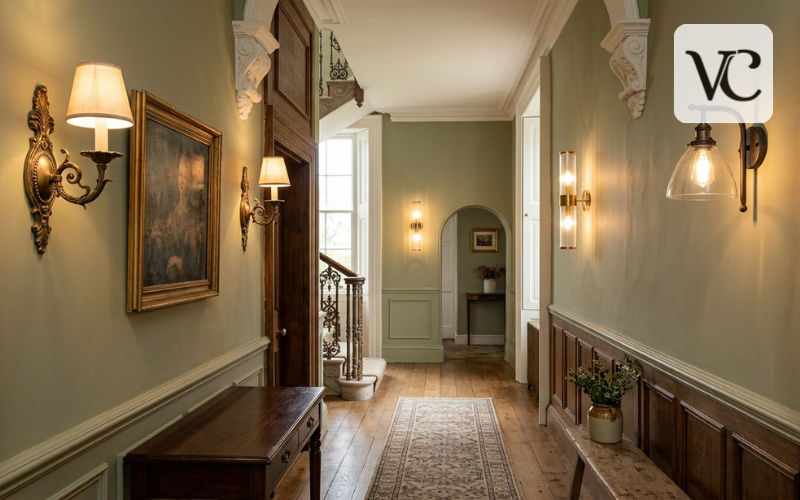
Hallways and stairways benefit from wall lighting because sconces can add visibility and visual rhythm without using floor space. In entryways, they can help light doors, consoles, or artwork.
Dining rooms often use sconces for softer evening light, while kitchens can use them to support task lighting or brighten open shelves and breakfast areas. Reading corners and home offices can benefit from adjustable designs.
The phrase sconce light indoor may appear in product searches, but the important point is the fixture’s intended location and function. An indoor sconce can serve decoration, general lighting, or a practical task depending on where it is mounted and how it directs light.
Getting Sconce Height and Spacing Right
There is no single mounting height that works for every sconce. The ideal position depends on ceiling height, furniture, user height, fixture size, and the job the light needs to do.
For general wall lighting, the fixture should usually sit high enough that it does not create uncomfortable glare at eye level. In a bedroom, a reading sconce should be positioned according to the bed height and the reader’s normal sitting position. Adjustable sconces give more freedom because the light can be moved after installation.
Pairs should usually feel balanced. Around a mirror, matching sconces are commonly placed at similar heights on each side. Along a hallway, repeated fixtures normally look better with consistent spacing, although doors, artwork, and architectural features may affect the layout.
Current placement guides use ranges rather than exact rules. Schoolhouse, for example, suggests roughly 60 to 65 inches from the floor for bathroom sconces beside a mirror and about 60 to 72 inches for entryway sconces. Treat these figures as starting points and test the visual effect before final installation.
Bathroom, Hallway, and Other Special Placement Considerations
Bathrooms require more thought because lighting may be close to mirrors and moisture. Sconces placed on both sides of a mirror can help create more even facial light than a single strong light from above. Kohler guidance places side sconces around 60 to 65 inches from the floor to the midpoint of the backplate in one common vanity layout, but mirror size and user height still matter.
The fixture’s location rating is also important. A dry-location fixture is not automatically suitable for damp or wet areas. UL guidance states that fixtures marked suitable for damp locations are intended for damp or dry areas, while fixtures marked suitable for wet locations may be used where water can drip, splash, or flow against electrical equipment. Always check the specific fixture label and local requirements.
Hallways and stairways have a different concern: clearance. A shallow fixture is usually more practical where people pass close to the wall. Position lights where they improve visibility without becoming an obstacle or causing harsh glare.
Using a Kitchen Sconce Without Sacrificing Function
A kitchen sconce can add useful light and visual character, but placement should support the way the kitchen works.
Good locations may include walls beside a sink, above open shelving, near a coffee station, beside a window, or over a small breakfast area. A directional sconce can also supplement ceiling lighting where a work surface needs more focused brightness.
Clearance is important. A fixture should not interfere with cabinet doors, shelves, windows, or normal movement around a countertop. Its projection also matters if it sits above a busy work area.
Think about cleaning as well. Kitchen surfaces can collect grease and dust, so a complicated shade may require more maintenance than a simple glass or metal design.
Use task-oriented light where visibility matters and decorative light where the main goal is atmosphere. A wall sconce can add character, but it should not replace stronger work lighting where clear visibility is needed for food preparation.
Wall Sconces for Candles and Decorative Lighting
Wall sconces existed long before electric lighting, and traditional wall sconces for candles are still used for decorative purposes. These fixtures hold candles against the wall and can bring a historic, rustic, or formal look to dining rooms, living rooms, hallways, and similar spaces.
Modern electric sconces may copy the appearance of candlelight without using an open flame. Candle-style bulbs, flame-shaped bulbs, and narrow decorative arms can create a similar look while operating as electric fixtures.
Real candle sconces need careful placement. An open flame should be kept away from curtains, paper, wood details, decorations, and other materials that can burn. The candle should sit securely and should never be left burning unattended.
Electric candle-style sconces avoid the open-flame issue, but they still need to be installed and used according to the manufacturer’s instructions.
How to Choose a Sconce That Fits Your Space
Start with the job you want the light to do. For reading, look for a fixture that directs light toward where you sit. For soft background lighting, a shaded or upward-facing design may be better. For artwork or architectural details, choose a fixture that controls the beam more precisely.
Next, measure the wall area. Check height, width, projection, nearby furniture, mirror size, door movement, cabinets, and outlets. Decide whether hardwired, plug-in, battery-powered, or rechargeable lighting makes the most sense.
Also check the light source. If the fixture uses replaceable bulbs, confirm the bulb base, maximum wattage, and any dimmer requirements. With integrated LEDs, review brightness, color temperature, expected life, and replacement options. Color temperature affects how warm or cool the room feels, while brightness should match the task and room size. Lowe’s similarly recommends checking factors such as color temperature, lumens, wattage, and the fixture’s maximum permitted wattage.
Finally, consider style and finish without letting appearance override function. Check damp or wet ratings where moisture may be present, and think about glare, cleaning, access to controls, and future bulb changes.
Common mistakes include choosing a fixture that is too large, allowing it to project too far into a narrow area, mounting it where the bulb shines directly into the eyes, or selecting a design without considering whether it provides enough useful light.
Conclusion
A sconce is practical because it places light where it is needed without using floor or table space. It can provide soft ambient light, focused task lighting, decorative accent light, or a combination of these functions.
The best choice depends on the room rather than on style alone. Consider what the light needs to do, how large the wall area is, how far the fixture projects, how it will receive power, and whether the location has special moisture or clearance requirements.
Placement also matters. A well-positioned wall sconce should feel comfortable at eye level, work with nearby furniture or mirrors, and support the other lighting in the room. Common mounting measurements can help, but they should be adjusted to the actual space and the people using it.
When size, light direction, installation method, and style work together, a sconce can become one of the most useful and visually balanced lighting features in a room.
Frequently Asked Questions
What is the main purpose of a sconce?
A sconce provides wall-mounted lighting without taking up floor or table space. Depending on its design and placement, it can provide ambient, task, accent, or decorative lighting.
Are wall sconces suitable for bedrooms?
Yes. Wall sconces can work well beside beds, especially when nightstand space is limited. Adjustable or swing-arm designs can also provide more focused light for reading.
Can a sconce be installed without electrical wiring?
Yes. Plug-in, battery-powered, and rechargeable sconces are available. Plug-in models require a nearby outlet, while battery or rechargeable designs can work without direct household wiring.
How high should a wall sconce be installed?
There is no single correct height for every room. Fixture size, furniture, ceiling height, user height, and lighting purpose should all be considered before deciding the final mounting position.
Can any wall sconce be used in a bathroom?
No. Bathroom lighting should be suitable for the conditions where it is installed. Always check the manufacturer’s dry, damp, or wet-location rating and follow applicable electrical requirements.
Disclaimer: This article on voguecultures.co.uk is provided for general informational and educational purposes only. It explains sconces, their common types, lighting uses, placement, styles, and general selection considerations. The information should not be treated as professional electrical, installation, construction, or safety advice. Electrical requirements and installation conditions can vary, so readers should follow manufacturer instructions, applicable local rules, and consult a qualified professional when necessary. voguecultures.co.uk is only providing information about the topic “sconce.” This article does not contain or represent guest posting, paid promotion, sponsored placement, advertising, or a commercial endorsement of any product, company, or service.
Enjoyed this article? Discover more helpful ideas and fresh inspiration on Vogue Cultures.