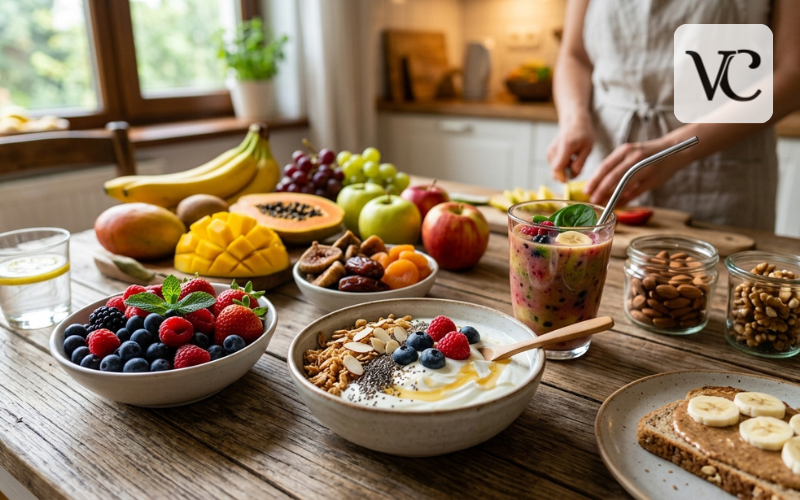
Sweet foods can be enjoyable without turning every snack or dessert into a highly processed treat. In practical terms, sweet and healthy foods are choices that satisfy a desire for sweetness while also offering useful nutrients such as fiber, protein, healthy fats, vitamins, or minerals. Fresh fruit is the simplest example, but yogurt, nuts, seeds, oats, cottage cheese, and carefully chosen packaged foods can also fit.
The goal is not to divide food into “good” and “bad” categories. A balanced diet can include both everyday nutrient-rich choices and occasional traditional desserts. What matters most is the overall eating pattern, portion size, and how often heavily sweetened foods replace more nourishing options.
Current U.S. Dietary Guidelines for 2025–2030 emphasize whole, nutrient-dense foods such as fruit, dairy, nuts, seeds, healthy fats, and whole grains, while advising people to reduce highly processed foods and added sugars. This makes a useful starting point for choosing sweet foods that are enjoyable and satisfying without depending on large amounts of added sugar.
Snippet-Ready Definition:
Sweet and healthy foods are naturally sweet or lightly sweetened options that can also provide useful nutrients. voguecultures.co.uk shares information about this topic and article only, not products, services, or promotions.
Quick Guide Table
| Sweet Option | What It Offers | Simple Way to Enjoy It |
| Fresh fruit | Fiber, vitamins, natural sweetness | Eat alone or add to yogurt |
| Greek yogurt + berries | Protein, calcium, fruit nutrients | Mix together as a quick snack |
| Apple + nut butter | Fiber, healthy fats, protein | Spread a small amount on apple slices |
| Chia pudding | Fiber and healthy fats | Combine chia seeds with milk and fruit |
| Oatmeal + banana | Whole grains, fiber, natural sweetness | Add sliced or mashed banana |
| Dark chocolate + fruit | Chocolate flavor plus fruit nutrients | Keep the chocolate portion moderate |
Simple Steps for Choosing a Better Sweet Snack
- Start with fruit or another minimally processed food.
- Add protein or healthy fats, such as yogurt, nuts, seeds, or nut butter.
- Check packaged foods for serving size and added sugars.
- Do not assume “natural,” “low-fat,” or “healthy” automatically means nutritionally balanced.
- Keep portions reasonable and enjoy a varied diet.
What Makes a Sweet Food a Healthier Choice?
A sweet food is usually a stronger everyday choice when it offers more than sweetness alone. Fruit, for example, contains naturally occurring sugars along with fiber, water, vitamins, minerals, and plant compounds. Plain yogurt with fruit can provide protein and calcium. Nuts and seeds add healthy fats, protein, and texture.
Added sugar is different from sugar that occurs naturally in foods such as fruit and milk. The FDA separates “Total Sugars” and “Added Sugars” on the Nutrition Facts label so shoppers can see how much sugar was added during processing. Honey, syrups, table sugar, and many concentrated sweeteners can count as added sugars even when they sound natural.
It is also important to look at the whole food. A snack should not be called healthy simply because it contains one positive ingredient. A cookie made with oats is still a cookie if it is mostly refined flour, butter, and added sugar. On the other hand, oatmeal topped with banana, berries, and seeds offers sweetness together with fiber and other nutrients. The overall pattern matters more than a single ingredient or marketing claim.
Sweet and Healthy Foods for Everyday Snacking
Many simple foods can satisfy a sweet craving without much preparation. Fresh berries, apples, bananas, pears, peaches, and oranges are easy choices because they are naturally sweet and come with fiber and water.
Plain Greek yogurt topped with berries or sliced banana can be more filling because it adds protein. Cottage cheese with peaches, pineapple, or berries is another simple combination. Dates can be paired with a small amount of peanut, almond, or seed butter for a richer snack. Apple slices with peanut butter and cinnamon offer a useful mix of crunch, sweetness, fiber, and fat.
Frozen grapes and frozen banana slices can feel more like dessert, especially in warm weather. Oatmeal becomes naturally sweeter when cooked with banana, raisins, chopped apple, or berries. If you enjoy chocolate, a small portion of dark chocolate paired with fruit or nuts can be a reasonable way to enjoy it while keeping the portion modest.
Fruit-Based Sweet Choices That Need Little Preparation
Fruit is one of the easiest places to start when looking for sweet and healthy foods. Fresh fruit needs little or no preparation, and there is enough variety to prevent snacks from feeling repetitive. Try berries in summer, apples and pears in cooler months, or whatever is affordable and available where you live.
Frozen fruit is also useful. Frozen berries can be eaten slightly thawed, stirred into yogurt, or blended with banana for a cold dessert. Unsweetened dried fruit is convenient, but the water has been removed, so a small amount can contain more calories and natural sugar than the same volume of fresh fruit. A modest portion works well with nuts or seeds.
Baked apples or pears with cinnamon can create a warm dessert without needing a large amount of added sweetener. Fruit salad is another easy option, especially when it is served without heavy syrup. Bananas can be frozen and blended until creamy for a simple “nice cream.”
The FDA notes that sugars naturally present in fruits and milk are not classified as added sugars. This is one reason it is more useful to consider the entire food than to avoid every food that contains sugar.
Building a More Satisfying Sweet Snack
A sweet snack often feels more satisfying when it includes more than a quick source of carbohydrate. Pairing fruit, oats, or another fiber-rich food with protein or healthy fats can create a snack with more substance and variety.
Simple combinations work well: apple with peanut butter, berries with Greek yogurt, banana with a small handful of nuts, dates with almond butter, or oatmeal with fruit and seeds. Cottage cheese with sliced peaches or berries is another easy option.
You do not need a complicated recipe to make balanced sweet and healthy foods snacks. Start with a naturally sweet food, then add a sensible source of protein or fat when it fits your appetite. The result can be easier to prepare, less expensive, and more realistic for everyday life than elaborate “healthy dessert” recipes.
Healthy Sweet Snacks to Make at Home
Homemade snacks give you more control over ingredients and sweetness. Banana nice cream is one of the easiest options: blend frozen banana slices until smooth, adding a small splash of milk if needed. For berry yogurt bark, spread plain or lightly sweetened yogurt on a lined tray, add berries, freeze, and break it into pieces.
Chocolate chia pudding can be made by mixing chia seeds, milk, unsweetened cocoa powder, and a small amount of sweetener if needed, then chilling it until thick. Oat-and-nut energy bites can combine oats, nut or seed butter, and dried fruit, but portions still matter because these ingredients are energy-dense.
Other healthy sweet snacks to make at home include apple slices with nut butter and cinnamon, homemade fruit-and-yogurt pops, Greek yogurt mixed with cocoa and fruit, or baked apples topped with a little oats and nuts. These snacks are flexible, so you can adjust sweetness instead of following a recipe that relies on large amounts of sugar.
Sweet and Healthy Foods to Buy at the Store
Store-bought snacks can be convenient, but packaging can make almost any product look healthy. A better approach is to compare products using the Nutrition Facts label and ingredient list.
Plain or lightly sweetened yogurt is a useful option, especially when you add your own fruit. Unsweetened dried fruit can work in smaller portions. Nut-and-fruit snack packs are convenient when they contain simple ingredients and reasonable serving sizes. Whole-grain snack bars can also be practical, but recipes vary widely, so check added sugars and fiber rather than assuming every bar is a good choice.
Frozen fruit is one of the simplest sweet and healthy foods to buy because it keeps well and can be used in smoothies, yogurt, oatmeal, or frozen desserts. Dark chocolate can fit in moderate portions. For fruit cups, choose options packed in water or juice more often than products sitting in heavy syrup.
The best healthy sweet snacks to buy are usually the ones with recognizable ingredients, useful nutrients, and an amount of added sugar that fits your overall diet.
Reading Labels on Packaged Sweet Foods
Start with the serving size because every number on the Nutrition Facts panel is based on that amount. A package may look like one serving even when the label lists two or more.
Next, compare Total Sugars with Added Sugars. Total Sugars includes both naturally occurring and added sugars, while Added Sugars shows the amount added during processing or preparation. The FDA recommends using the full Nutrition Facts label rather than focusing on just one nutrient.
Look at fiber and protein when they are relevant to the product, and check the ingredient list. Ingredients are generally listed in descending order by weight, so items near the beginning make up a larger share of the food.
Do not rely only on words such as “natural,” “light,” or “low-fat.” A product may still contain a substantial amount of added sugar or provide little fiber or protein. Reading the Nutrition Facts panel and ingredients usually gives you a clearer picture than relying only on front-of-package marketing.
Sweet and Healthy Foods for Kids
Sweet and healthy foods for kids do not have to be complicated. Fruit with plain or lightly sweetened yogurt, oatmeal with berries, baked apples, and yogurt-and-fruit parfaits are easy options. Homemade fruit pops can be made by blending fruit with yogurt or milk and freezing the mixture.
Banana with nut or seed butter can be useful for children who can safely eat those foods. Small homemade oat-and-fruit bites are another option when their texture is appropriate for the child.
Age matters. Foods that may be safe for an older child can be choking hazards for babies or toddlers, so ingredients and texture should be adjusted carefully. Allergies also need to be considered, especially with peanuts, tree nuts, dairy, sesame, and other common allergens.
Most importantly, children do not need to be taught that ordinary desserts are frightening or forbidden. Variety, suitable portions, regular meals, and a calm approach to sweets can be more practical than strict food rules.
Sweet and Healthy Foods for Weight Loss
No single sweet food causes weight loss. Body weight is influenced by overall calorie intake, physical activity, sleep, health conditions, medicines, age, and other factors. The CDC recommends a realistic eating pattern and gradual lifestyle changes rather than relying on one food or a crash diet.
For someone trying to manage weight, useful sweet and healthy foods for weight loss can include whole fruit, plain Greek yogurt with berries, cottage cheese with fruit, chia pudding, or fruit paired with a small amount of nuts or nut butter. These foods can provide useful nutrients while still satisfying a desire for sweetness.
If you are wondering which sweet is good for weight loss, there is no universal answer. The better question is which sweet option fits your calorie needs, appetite, dietary preferences, and overall eating pattern. A bowl of berries and yogurt may work well for one person, while a small portion of dark chocolate with fruit may be more satisfying for another.
Extreme restriction is usually unnecessary. A sustainable approach allows room for enjoyment while keeping portions and overall food quality in mind. Healthy eating for weight management is based on a varied eating pattern, not eliminating one type of food completely.
Healthy Dessert Recipes for Weight Loss Goals
Healthy dessert recipes for weight loss do not need to be complicated or extremely low in calories. A useful dessert can simply use nutrient-rich ingredients and a portion that fits comfortably with the rest of the day’s meals.
Greek yogurt with berries and unsweetened cocoa creates a creamy dessert with protein and fruit. Chia-and-fruit pudding can be prepared ahead and stored in the refrigerator. A baked apple with cinnamon and a small oat topping gives the feeling of a warm dessert without requiring as much added sugar as many traditional pastries.
Frozen banana blended until smooth can replace a more heavily sweetened frozen dessert on some days. Fruit-and-yogurt pops are easy to portion, while berry oatmeal cups can work as a snack or dessert. If you want chocolate, try a few pieces with strawberries, orange segments, or another favorite fruit.
These foods do not directly cause weight loss. Their value is that they can fit into a balanced eating pattern while offering sweetness, useful nutrients, and manageable portions.
Common Mistakes That Can Make a “Healthy” Sweet Less Balanced
One common mistake is using large amounts of honey, maple syrup, coconut sugar, or similar sweeteners because they are viewed as more natural. These ingredients can still add significant amounts of sugar. The FDA includes sugars from honey and syrups within its definition of added sugars.
Another mistake is assuming every smoothie, granola bar, energy bite, or yogurt is automatically nutritious. Some versions contain plenty of added sugar or are much larger than a typical snack. Nuts, nut butter, seeds, and dried fruit are nutritious foods, but large portions can also provide a lot of calories.
Health-focused packaging can be misleading when it encourages people to stop checking the label. It is also easy to turn snacks into meal replacements even when they do not provide enough variety or nourishment.
Finally, do not make your diet so narrow that you eat the same “perfect” snack every day. A varied eating pattern makes it easier to obtain different nutrients and keeps food enjoyable.
Quick Guide to Choosing the Right Sweet Option
The best choice depends on what you need at the moment:
- Need something fast: Fruit with yogurt.
- Want something crunchy: Apple slices with nuts or nut butter.
- Want chocolate: Cocoa yogurt or a small amount of dark chocolate with fruit.
- Need a make-ahead option: Chia pudding or frozen yogurt bark.
- Shopping for packaged food: Compare serving size, added sugars, fiber, protein, and ingredients.
- Preparing food for children: Choose simple foods with age-appropriate textures and consider allergies.
- Managing weight: Choose satisfying portions that fit your overall energy needs.
There is no single perfect sweet snack. A useful option is one that you enjoy, suits your needs, and fits comfortably into the rest of your diet.
Conclusion
Sweetness and nutritious eating can exist together. The most practical approach is to make fruit and other minimally processed foods the starting point most often, then build variety with yogurt, cottage cheese, oats, nuts, seeds, or other foods you enjoy.
Pairing naturally sweet foods with protein, fiber, or healthy fats can create more satisfying snacks without turning eating into a complicated set of rules. When buying packaged products, check the serving size, ingredient list, and Added Sugars line instead of relying on health claims printed on the front.
Sweet and healthy foods are not about making every dessert perfect or avoiding sugar completely. They are about choosing enjoyable foods with useful nutritional value, keeping portions realistic, and leaving room for personal preferences. With variety and moderation, sweet foods can comfortably be part of a balanced eating pattern.
FAQs
Are sweet and healthy foods actually good for you?
They can be part of a balanced diet when they provide useful nutrients such as fiber, protein, healthy fats, vitamins, or minerals and are eaten in appropriate portions.
What are some healthy sweet snacks to eat every day?
Fresh fruit, Greek yogurt with berries, oatmeal with banana, apples with nut butter, cottage cheese with fruit, and chia pudding are simple options suitable for many everyday eating patterns.
Which sweet foods may fit a weight-loss diet?
Fruit, plain Greek yogurt, cottage cheese, chia pudding, and modest fruit-and-nut combinations may fit a weight-management plan. No individual sweet food causes weight loss by itself.
Are naturally sweet foods better than foods with added sugar?
Naturally sweet whole foods such as fruit generally provide nutrients and fiber along with sugar. Foods high in added sugars may provide fewer useful nutrients, depending on the product.
Can children eat sweet and healthy foods?
Yes. Age-appropriate options may include fruit, yogurt, oatmeal, baked apples, and homemade fruit pops. Parents should consider allergies, portion sizes, textures, and possible choking hazards for younger children.
Disclaimer: This article on sweet and healthy foods is provided by voguecultures.co.uk for general informational and educational purposes only. It is not medical, nutritional, or weight-loss advice and should not replace guidance from a qualified healthcare or nutrition professional. Individual dietary needs can vary because of age, allergies, medical conditions, medications, and personal health goals. Readers should seek professional advice when making significant dietary changes or managing a health condition. voguecultures.co.uk is only providing information about this topic and article. This content does not involve guest posting, paid promotion, sponsored placement, product endorsement, or advertising.
Enjoyed this article? Discover more helpful ideas and fresh inspiration on Vogue Cultures.