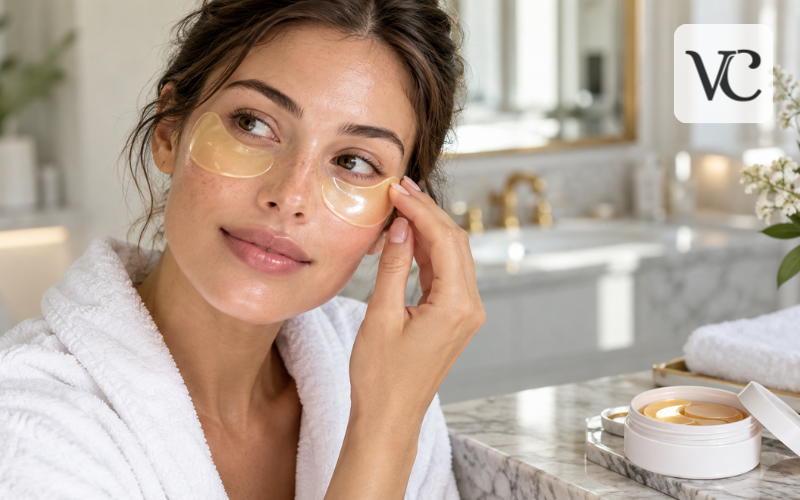
Under eye patches are small skincare masks designed to sit beneath the eyes for a short period of time. Most are made from hydrogel, soft fabric, or silicone and are shaped to follow the curve of the under-eye area. Some come pre-soaked in serum, while reusable versions are used with a separate skincare product.
People usually reach for under eye patches when their skin looks dry, puffy, dull, or tired. They can give the area a quick boost of moisture and a cooling, refreshed feel. Some formulas also target dullness or fine lines.
The important point is that most results are temporary. Dermatologist-informed guidance describes under-eye patches as a short-term way to hydrate and refresh the area rather than a permanent treatment for dark circles or wrinkles. This guide explains what they can realistically do, how types differ, and how to use them safely.
Snippet-Ready Definition:
Under eye patches are small skincare masks designed to hydrate, cool, and refresh the delicate skin beneath the eyes. VogueCultures.co.uk provides this information only for educational purposes about under eye patches.
Quick Guide Table
| Concern | What to Look For | Helpful Option |
| Dry under-eyes | Hyaluronic acid, glycerin | Hydrating hydrogel patches |
| Puffiness | Cooling effect, caffeine | Chilled or cooling patches |
| Dark-looking under-eyes | Niacinamide, vitamin C | Brightening patches |
| Fine dry lines | Hydrating and smoothing ingredients | Moisture-rich patches |
| Sensitive skin | Gentle, fragrance-free formulas | Simple soothing patches |
| Reusable option | Washable silicone | Reusable under eye patches |
Simple Steps for Using Under Eye Patches
- Wash your hands and gently cleanse the under-eye area.
- Place each patch comfortably beneath the eye without touching the lash line.
- Leave it on for the time recommended on the product packaging.
- Remove the patches gently without pulling the skin.
- Pat in any remaining serum and continue with your normal skincare routine.
What Under Eye Patches Actually Do
The main job of an under-eye patch is to keep moisture and skincare ingredients in close contact with the skin. The patch can help reduce water loss while the formula sits on the skin. That can make dry under-eyes feel softer and look smoother for a while.
Hydration can also make very fine dehydration lines look less obvious. Cooling patches may make the area feel calmer and can temporarily reduce the look of mild puffiness. This is why many people use them in the morning or before makeup.
What they cannot do is permanently remove structural eye bags, deep wrinkles, or every type of dark circle. Some concerns come from genetics, pigmentation, thin skin, allergies, or age-related changes. A patch may improve how the area looks for a few hours, but longer-term changes usually depend on regular skincare, lifestyle factors, or professional treatment when appropriate.
Types of Under Eye Patches and How They Differ
Hydrogel patches are among the most common options. They are soft, flexible, and usually contain a water-rich serum. Their cooling feel makes them popular for tired-looking or puffy under-eyes.
Serum-soaked fabric patches use a thin sheet material rather than gel and are often chosen for hydration.
Reusable silicone patches do not usually come pre-soaked. Instead, they sit over a separate serum, eye cream, or moisturizer and help keep it against the skin. They may reduce waste, but they need careful cleaning after each use.
Cooling gel patches are often chosen for morning puffiness because the cool temperature can make swollen-looking skin appear calmer for a short time. When comparing types, focus on fit, ingredients, sensitivity, and your main concern.
Under Eye Patches for Dark Circles
Under eye patches for dark circles can be useful, but only when expectations are realistic. Dark circles are not one single problem. Cleveland Clinic notes that aging, genetics, allergies, lack of sleep, dehydration, pigmentation, thin skin, and tear-trough shadows can all contribute to a darker under-eye appearance.
A hydrating patch may make dry, dull skin look fresher. Brightening ingredients such as niacinamide or vitamin C may support a more even-looking tone when used consistently as part of a wider skincare routine. Cooling can also make darkness caused by temporary puffiness or visible blood vessels look a little less noticeable.
However, patches cannot fill a deep tear trough, permanently change inherited pigmentation, or correct every allergy-related or structural cause. If dark circles are mainly caused by shadows or very thin skin, a patch may provide only a small visual improvement.
Treat patches as one supportive step. Sleep, sun protection, allergy care when needed, and a suitable routine may matter just as much.
Under Eye Patches for Puffiness and Tired-Looking Eyes
Under eye patches for puffiness are most helpful when swelling is mild and temporary. A cool patch can help the area feel less swollen because cold temperatures temporarily narrow blood vessels and may reduce visible puffiness. Cleveland Clinic also recommends cool compresses as one simple way to calm under-eye swelling.
Caffeine is also common in products for puffy-looking eyes, although results vary.
Morning puffiness can follow poor sleep, crying, salty food, allergies, or overnight fluid buildup. A chilled patch may feel refreshing, but refrigeration is optional.
Persistent, painful, sudden, one-sided, or unusual swelling should not simply be covered with skincare. Cleveland Clinic advises seeking professional care when swelling lasts or may be linked to an eye problem.
Ingredients Worth Looking for in Under Eye Patches
The ingredient list matters more than flashy packaging. For dryness, hyaluronic acid and glycerin are useful humectants because they attract and hold water in the upper layers of the skin. They can help the area feel plumper and look smoother for a while.
Caffeine is commonly used in formulas designed for puffiness. Niacinamide can support the skin barrier and help improve the appearance of uneven tone, while vitamin C is often included in brightening products. Peptides are found in many smoothing formulas, although they should not be treated as an instant wrinkle eraser.
Ceramides can be helpful for dry or delicate skin because they support the skin barrier. Soothing ingredients such as allantoin or centella may also be useful.
Retinoid-containing eye products can support longer-term texture goals, but they may irritate sensitive skin. Fragrance, dyes, and strong active ingredients can also be irritating for some people, especially around the eyes. The American Academy of Dermatology notes that fragrance and certain active ingredients may be troublesome for very sensitive skin, so a simpler formula can sometimes be the better choice.
How to Choose the Best Under Eye Patches for Your Skin
There is no single product that deserves the title of best under eye patches for everyone. The right choice depends on your main concern, skin sensitivity, budget, and how often you plan to use them.
For dry under-eyes, look for a moisturizing formula with ingredients such as glycerin, hyaluronic acid, ceramides, or other gentle hydrators. If puffiness is your main concern, a cooling hydrogel patch with caffeine may be more suitable. For dull-looking under-eyes, formulas containing niacinamide or a well-tolerated vitamin C ingredient may be worth considering.
Sensitive skin usually benefits from shorter ingredient lists and fewer potential irritants. If you know fragrance causes problems for you, choose a fragrance-free option when possible.
Practical details matter too. A patch that constantly slides is less useful, even with a strong ingredient list. Check the shape, size, recommended wear time, number of pairs, cost per use, and whether the product is single-use or reusable. The best product is the one that matches your needs and that you can use comfortably and correctly.
How to Use Under Eye Patches Correctly
Start with clean hands and clean, dry skin. Makeup, oil, or a heavy moisturizer can make patches slip and may prevent them from sitting evenly. Place each patch beneath the eye without pushing it too close to the lower lash line or into the eye itself.
Follow the timing printed on the product. Many hydrogel masks are designed for roughly 10 to 20 minutes, but there is no universal rule. Dermatologist-informed guidance recommends using patches on clean skin and following the product’s own directions instead of assuming longer wear will produce better results.
When the time is up, lift the patch gently instead of pulling the skin. If the directions say no rinsing is needed, you can lightly pat the remaining serum into the surrounding skin. Your regular moisturizer can usually follow.
How often you use patches depends on the formula. Follow any schedule given by the manufacturer.
Keeping patches in the refrigerator can add a cooling effect, but it is not essential unless the manufacturer says refrigeration is required.
Under Eye Patches: Which Way Should They Go?
The question “under eye patches which way?” is common because crescent-shaped patches usually have one narrow end and one wider end. There is no single direction that applies to every brand.
A wider end placed toward the outer corner can cover more of the crow’s-feet area. Turning the wider end toward the nose may give more coverage beneath the inner eye and tear-trough area. Neither position is automatically correct. The best orientation depends on the patch shape and the area you want to cover.
Some brands design their masks with a specific top, bottom, or textured side, so always check the packaging first. For example, Grace & Stella currently directs users to place its eye masks on clean, dry skin with the flat side down.
Whichever way you wear them, the patches should sit comfortably beneath the eyes without touching the eyeball, rubbing the lash line, or creating a pulling sensation.
Gold Under Eye Patches: What the Gold Really Means
Gold under eye patches are popular because they look luxurious, but the word “gold” can mean different things. Some patches contain a gold-derived ingredient, while others are simply gold-colored through pigments or reflective materials.
The color itself does not tell you how well the product will work; the supporting ingredients often matter more. A gold-colored patch that contains glycerin and hyaluronic acid may provide useful hydration even if actual gold is not part of the formula.
A good example is the current official ingredient list for Grace & Stella’s gold eye masks. The formula includes glycerin and sodium hyaluronate, while the gold appearance comes from ingredients such as mica and iron oxides; gold itself is not listed. Formulas can change, so shoppers should always check the latest ingredient label.
Sensitive skin should judge gold patches by the ingredient list and skin response, not the luxury theme.
Reusable Under Eye Patches vs Single-Use Patches
Reusable under eye patches are usually made from silicone or another washable material. Unlike pre-soaked hydrogel patches, they are often placed over a small amount of your own serum or moisturizer. Their main advantage is that one pair can be used many times when cared for properly.
Single-use patches are convenient because the serum is included, but they create more waste.
Reusable options require more attention to hygiene. Wash them according to the manufacturer’s instructions after each use, allow them to dry fully, and store them in a clean container. Do not share them with other people.
Disposable patches should not be reused. Once worn, they have been exposed to skin oils and the environment.
The better choice depends on your routine. Reusable patches suit people who already have a serum they like, while single-use patches offer convenience and a ready-made formula.
Popular Shopping Options: Target and Grace & Stella Under Eye Patches
People searching for under eye patches at Target are usually comparing ready-to-buy options rather than looking for one specific formula. The most useful way to shop is to compare the concern listed on the package, the ingredient list, number of patches, wear time, skin-sensitivity information, and cost per pair. Store and online availability can change, so it is better to evaluate the current product page than rely on an old recommendation.
Grace & Stella under eye patches are one recognizable example in the hydrogel category. The brand currently offers several versions aimed at different concerns. Its official listings show options with ingredients such as glycerin, sodium hyaluronate, niacinamide, ceramide, retinyl palmitate, and vitamin C derivatives depending on the version.
One version will not suit everyone. Dry skin may prefer simple hydration, while sensitive skin may need to avoid stronger actives. Reviews are useful for learning about fit, slipping, texture, and comfort, but the ingredient list and your own skin needs should guide the final choice.
Common Mistakes, Side Effects, and When to Skip Under Eye Patches
Avoid patches on irritated, sunburned, broken, or inflamed skin because they may worsen discomfort.
Leaving patches on longer than directed is another mistake. More time does not automatically mean better results. Apply them for the recommended period, remove them gently, and do not reuse a disposable pair.
Stinging, redness, itching, burning, or swelling can be signs that a formula does not agree with your skin. Remove the patches and rinse the area if necessary. If symptoms are strong, persistent, or involve the eye itself, seek medical advice.
It is also important not to expect patches to permanently erase wrinkles, dark circles, or eye bags. Those concerns can have many causes, including genetics, allergies, pigmentation, and aging.
Persistent swelling, swelling under only one eye, pain, discharge, or vision changes deserves medical attention rather than continued cosmetic treatment.
Conclusion
Under eye patches can be a useful addition to a skincare routine when you want quick hydration, a cooling feel, or a temporary fresher appearance. They are especially convenient before makeup, after a poor night’s sleep, or whenever the under-eye area feels dry and looks tired.
Match the formula to your concern. Hydrating ingredients suit dryness, cooling formulas may help mild puffiness, and brightening ingredients may support a more even-looking tone. Sensitive skin needs extra care with fragrance and stronger actives.
Most importantly, keep expectations realistic. Under eye patches can improve how the skin looks and feels for a while, but they are not a permanent treatment for every dark circle, wrinkle, or eye bag. Used correctly, they work best as a simple, supportive skincare step rather than a miracle fix.
FAQs
Are under eye patches actually effective?
Under eye patches can temporarily hydrate, cool, and refresh the skin. They may also reduce the appearance of mild puffiness or dry-looking fine lines, but they do not permanently remove dark circles or wrinkles.
How long should under eye patches stay on?
The correct wear time depends on the product. Many are used for around 10–20 minutes, but it is best to follow the instructions provided by the manufacturer.
Can under eye patches help with dark circles?
They may make some dark circles look less noticeable by improving hydration or brightness. However, dark circles caused by genetics, pigmentation, allergies, thin skin, or facial structure may need different approaches.
Can I use under eye patches every day?
Some gentle patches may be suitable for frequent use, but it depends on their ingredients and product directions. Stronger formulas containing active ingredients may not be suitable for daily use.
Are reusable under eye patches better than disposable ones?
Neither type is automatically better. Reusable silicone patches can reduce waste and work with your own skincare products, while disposable patches are convenient and already contain a prepared serum.
Disclaimer: This article on VogueCultures.co.uk is provided strictly for general informational and educational purposes. It is not medical or dermatological advice and does not replace professional care. No guest posting, paid promotion, sponsorship, or advertising is involved. Product mentions are included only to explain the topic of under eye patches and should not be considered endorsements.
Enjoyed this article? Discover more helpful ideas and fresh inspiration on Vogue Cultures.